SaM ~ Real World Example • Standard RTD Sensor • PT100 Sensor
Jul 31, 20242 min read
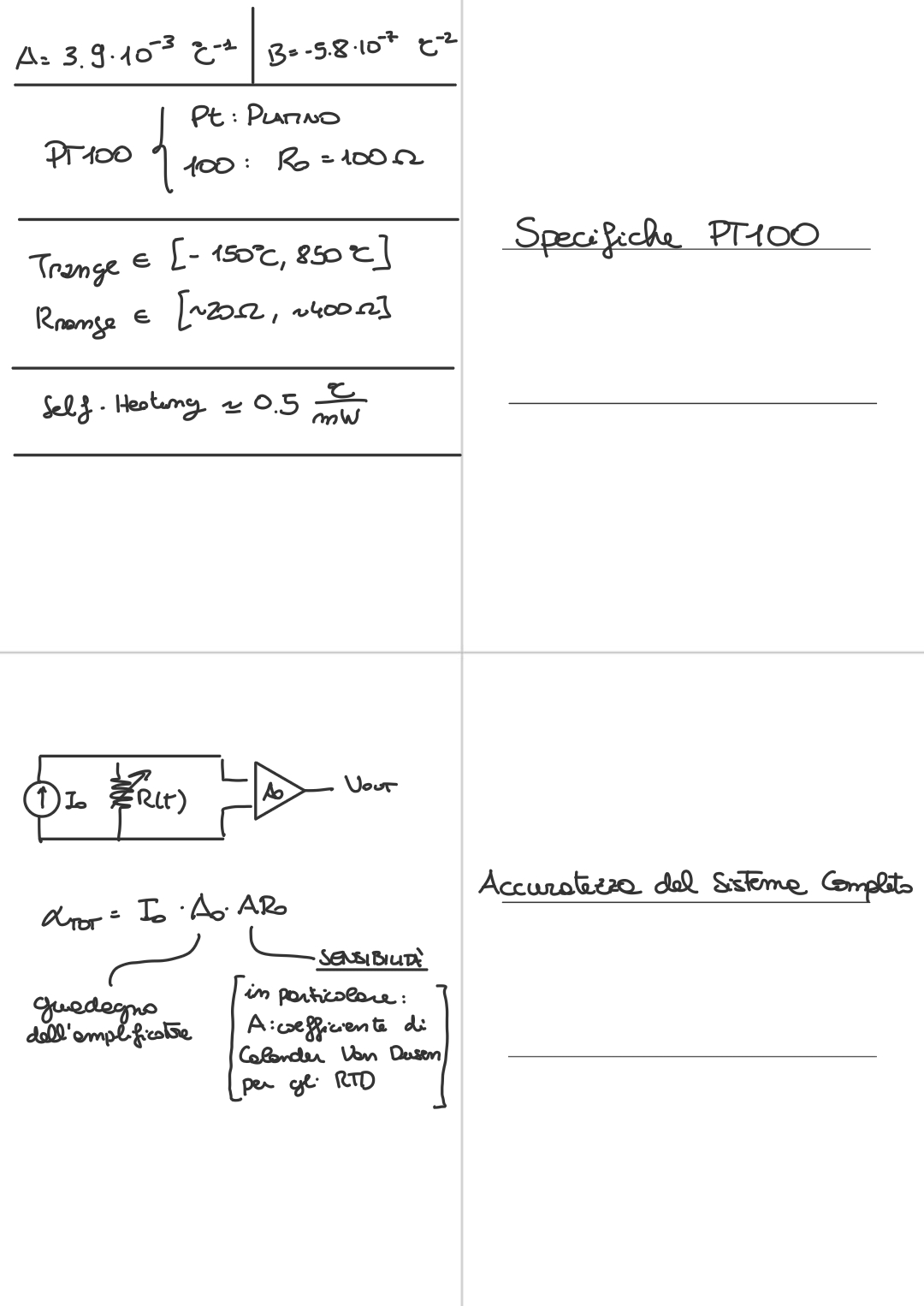
This RTD sensor is made of platinum, it is a standard material very stable, reproducible and resist to oxidation
If we describe this sensor using the Calendar Van Dusen Equation, we usually have this values for the coefficients:
A=3.9×10⁻³°C−1
B=−5.8×10⁻⁷°C−2
C=−4.2×10⁻¹²°C−4
NOTE: We can also see the coefficent temperature A as its sensitivity, but if we want a more accurate sensitivity (for example if we want a more precise accuracy at higher temperature T) we might want to use the following formula:α(T)=R0R0A+2R0BTT=T
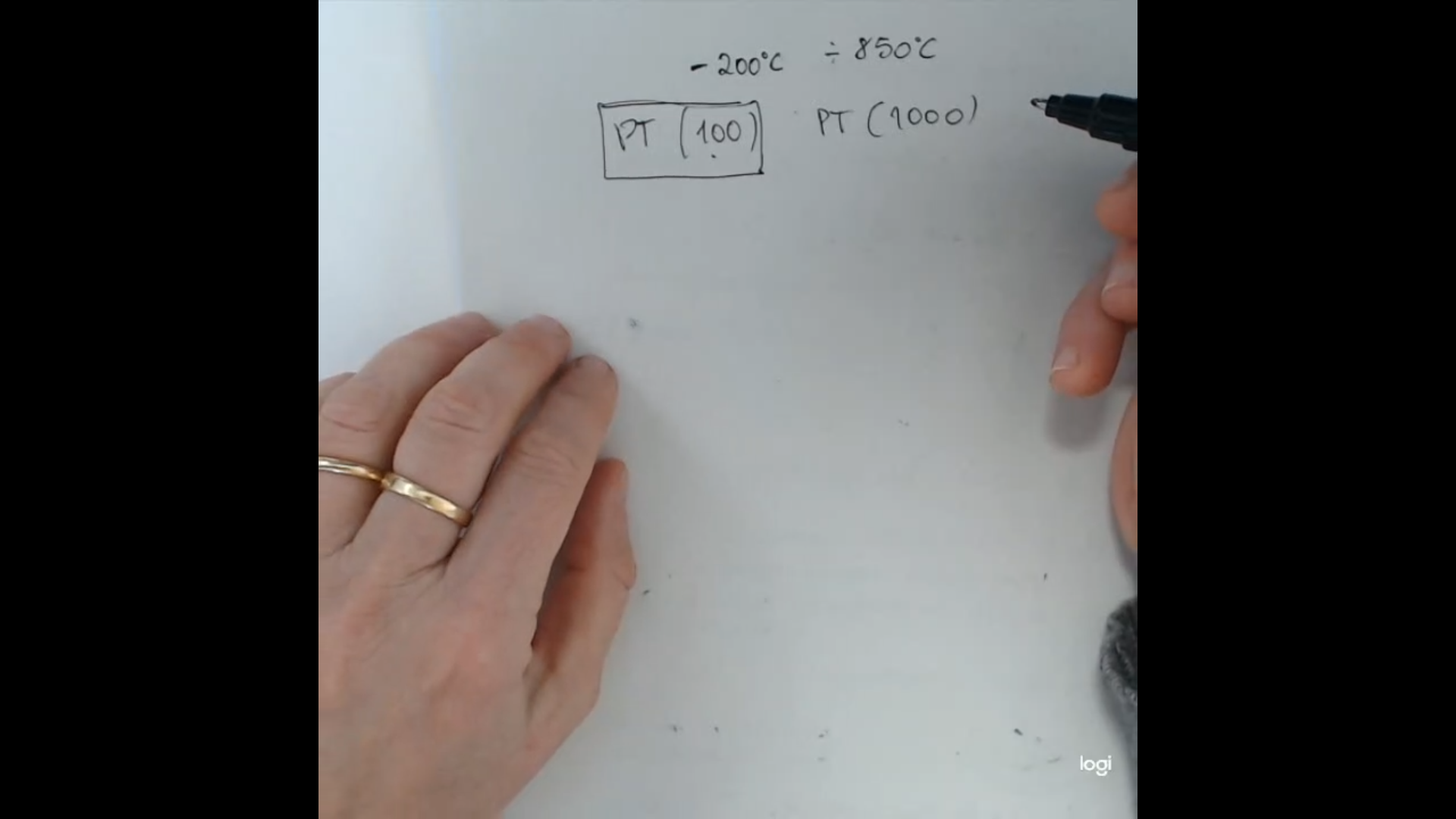
It is called PT100 since it is made of platinum and the its resistance value assumed at 0°C is 100\ohm. While “PT” stands for Platinum.
This sensor is made of platinum, it is a standard material, it is very stable, reproducible and it resist to oxidation
The value assumed by the PT100 at 0°C is called R0 or nominal resistance. And as mention above the PT100 has a nominal resistance R0=100\ohm.
The measured value can also change if the power it’s high enough, so due to self-heating, of about ≃0.5mW°C.