List of things to memorize:
SaM - Electrostatics
Link to original
- SaM - Electric Permittivity • Electric Susceptibility • Electric Field
- SaM - Special Materials for the Electric Permittivity • Paraelectric, Piezoelectric, Ferroelectric
- SaM - Pyroelectric Effect
- SaM - Complex Electric Permittivity
- SaM - Dielectric Materials (Skip)
SaM - Electric Permittivity • Electric Susceptibility • Electric Field:\begin{array}{l}\text{Isotropic}:& \vec D = \kern1px\varepsilon \kern1px \vec E \\ \text{Anisotropic}:& \vec D = \overline{\overline{\varepsilon}} \vec E \end{array}$$$$\varepsilon = \varepsilon_0 \kern2px \varepsilon_r$$$$\varepsilon_0 = 8.85 \times 10^{-12} \, {\text{C}^2 \text{m}^2 \over \text{N}}$$$$\varepsilon_r = 1 + \mathcal{X}$$$$\vec D = \varepsilon_0 \vec E + \vec P$$$$\vec P = \varepsilon_0 \mathcal{X} \vec E For Air, Water and PZT (Lead Zirconate Titanate):
- (@ )
- Also remember that in general: .
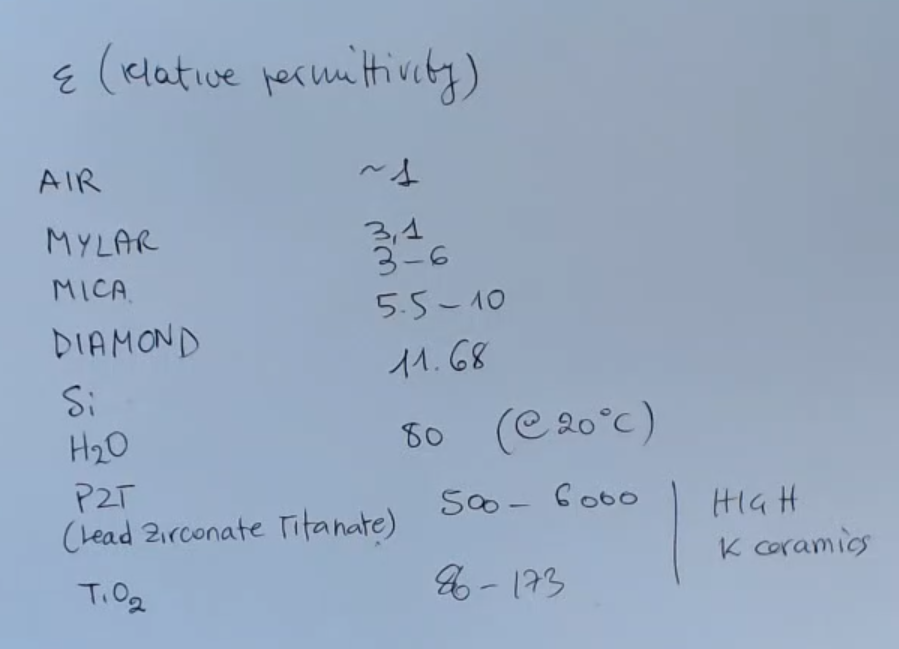
- Terminology:
- : electric permittivity
- : electric permittivity of the void
- : relative electric permittivity
- : electric displacement field
- : electric field
- : polarization vector
- : electric susceptibility
- Si : Silicon.
- PZT : Lead Zirconate Titanate.
SaM - Special Materials for the Electric Permittivity • Paraelectric, Piezoelectric, Ferroelectric:
Paraelectric Materials: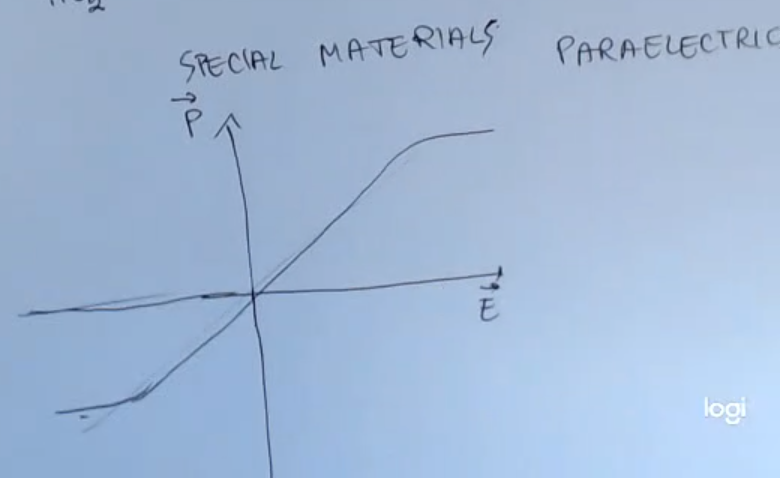
Pyroelectric Materials: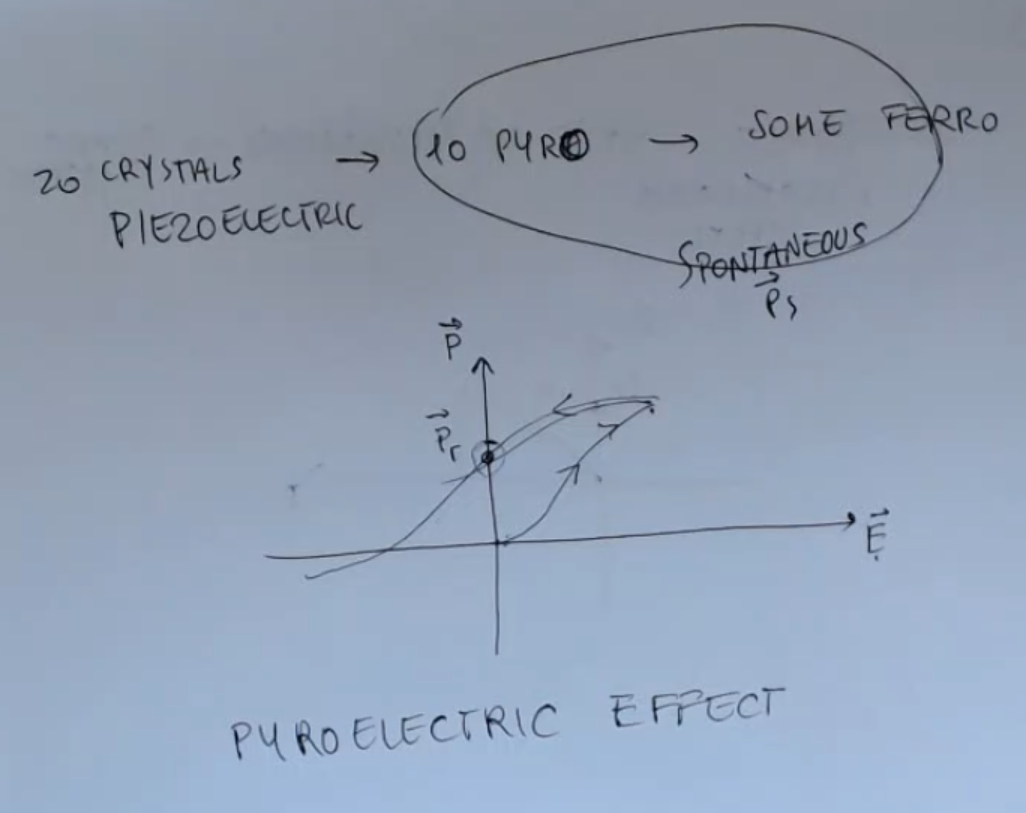
Ferroelectric Materials: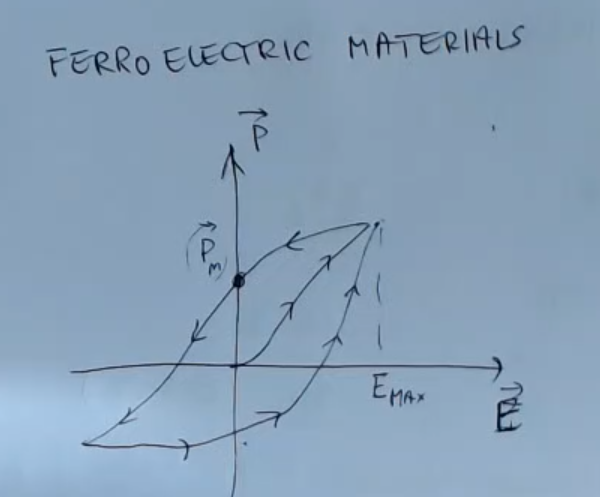
Pyroelectric Materials, pyroelectric effect: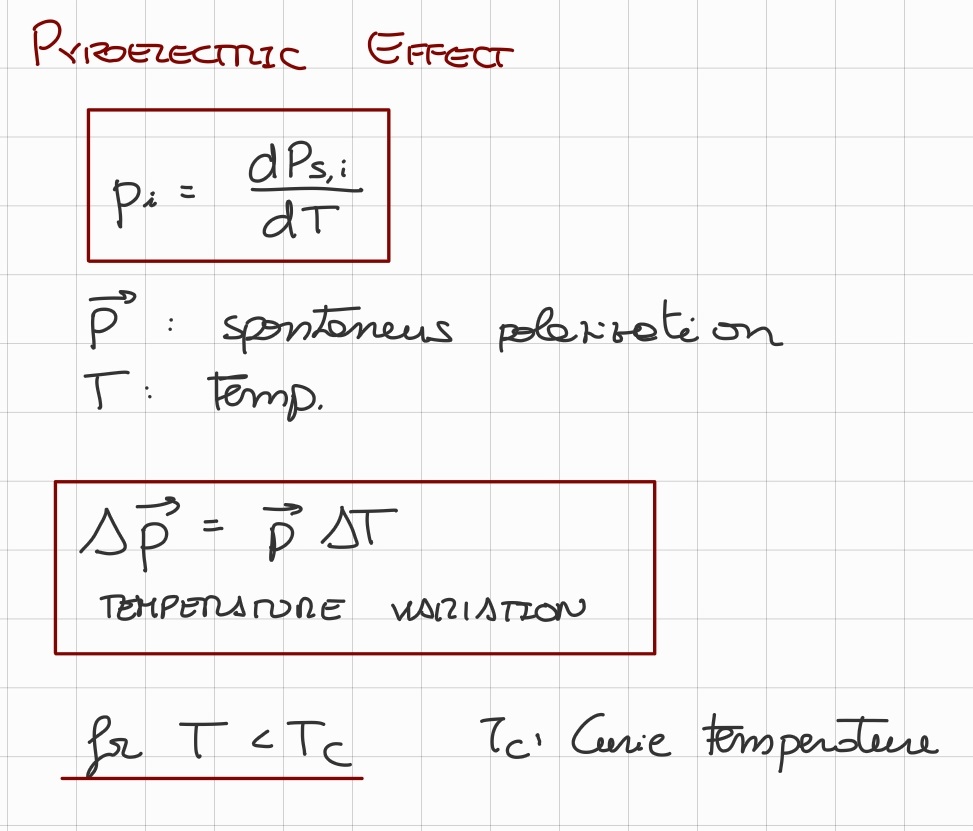
SaM - Complex Electric Permittivity:Static description: Examples:
- ~Ex.: Water: , ⇒ .
- So it’s a good conductor, but a poor dielectric (waves do not propagate well).
- ~Ex.: Vacum: , ⇒ .
- So it’s a perfect dielectric, waves do not attenuate, but does not conduct electricity, at all.
Ratio table: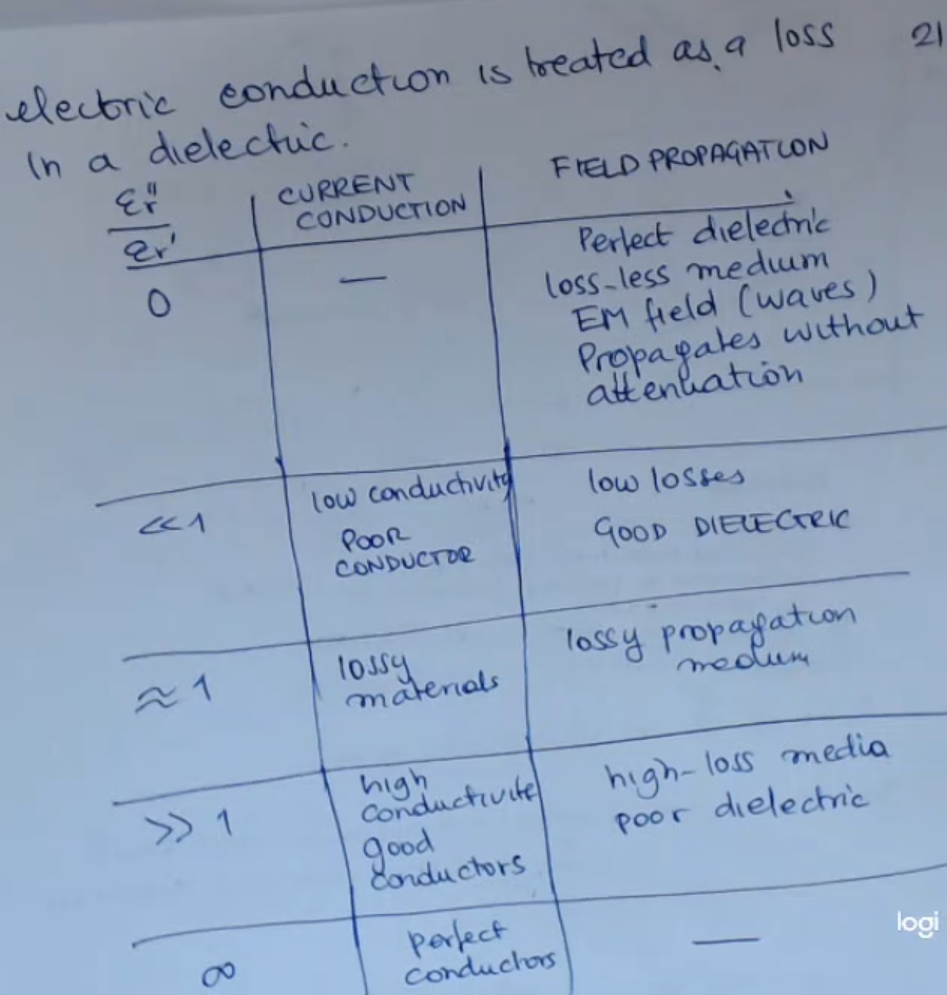
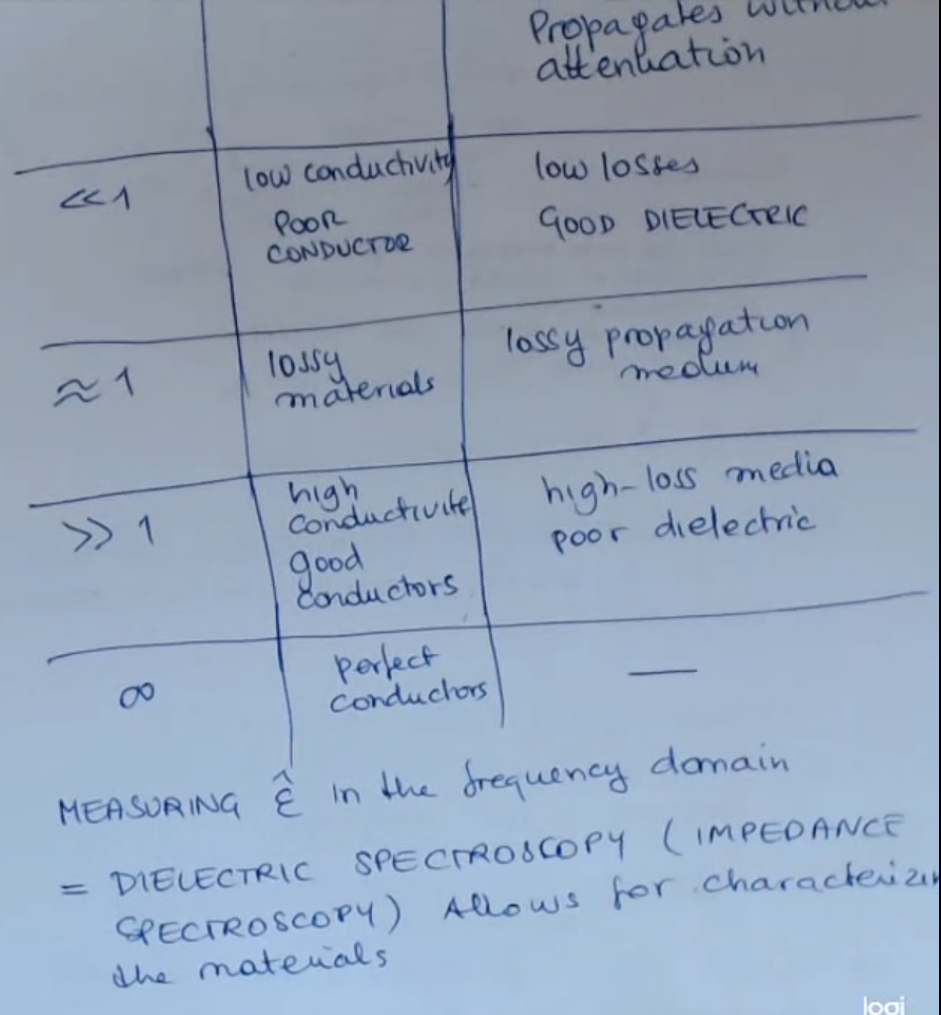
- Terminology:
- : static electric permittivity
- : complex electric permittivity
- : real electric permittivity (represents the material’s ability to store energy as an electric field)
- : imaginary electric permittivity (represents the material’s ability to dissipate energy as heat when subjected to an alternating electric field)
SaM - Dielectric Materials (Skipped)