Remeber:
Now we see a different circuit for an LVDT, with a simple addition of a wire we obtain:
- Just by adding a wire the carrier amplifier is no longer needed.
- The two mutual inductances and of the two windings will be (using a linear approximation):
- .IMPORTANTE
- .IMPORTANTE
- this time is a little more complicated and it is defined as:
So:- is the mutual induction of both and at rest.
We will obtain as an ouptut two voltages, with different values, so a differential output. This two voltages can be converged into one using a differential amplifier. Here is a graph of the two output voltages for different values of :
With respect to the previous LVDT sensor, this time we have a differential amplifiers, instead of a carrier amplifier, but I need an additional LPF, and an additional wire, and this could be more complex in terms of connection and cabling.
⇒ Just becouse of cabiling issues, this solution here it's not always used.
Here’s the IC for Read-Out of 5W LVDT. IC: Integrated Ciruit 5W: 5 Wires LVDT: Linear Variable Differential Transformer
- Specifically, we have used two operational amplifiers, and two LPF (acting as rectifiers and for noise rejectionNOT_SURE_ABOUT_THIS ).
- Finally we can compensate for both and thanks to the differential output, since:
.
.
And both outputs and depend on .
==So the output will just depend on ==.
Memory Card
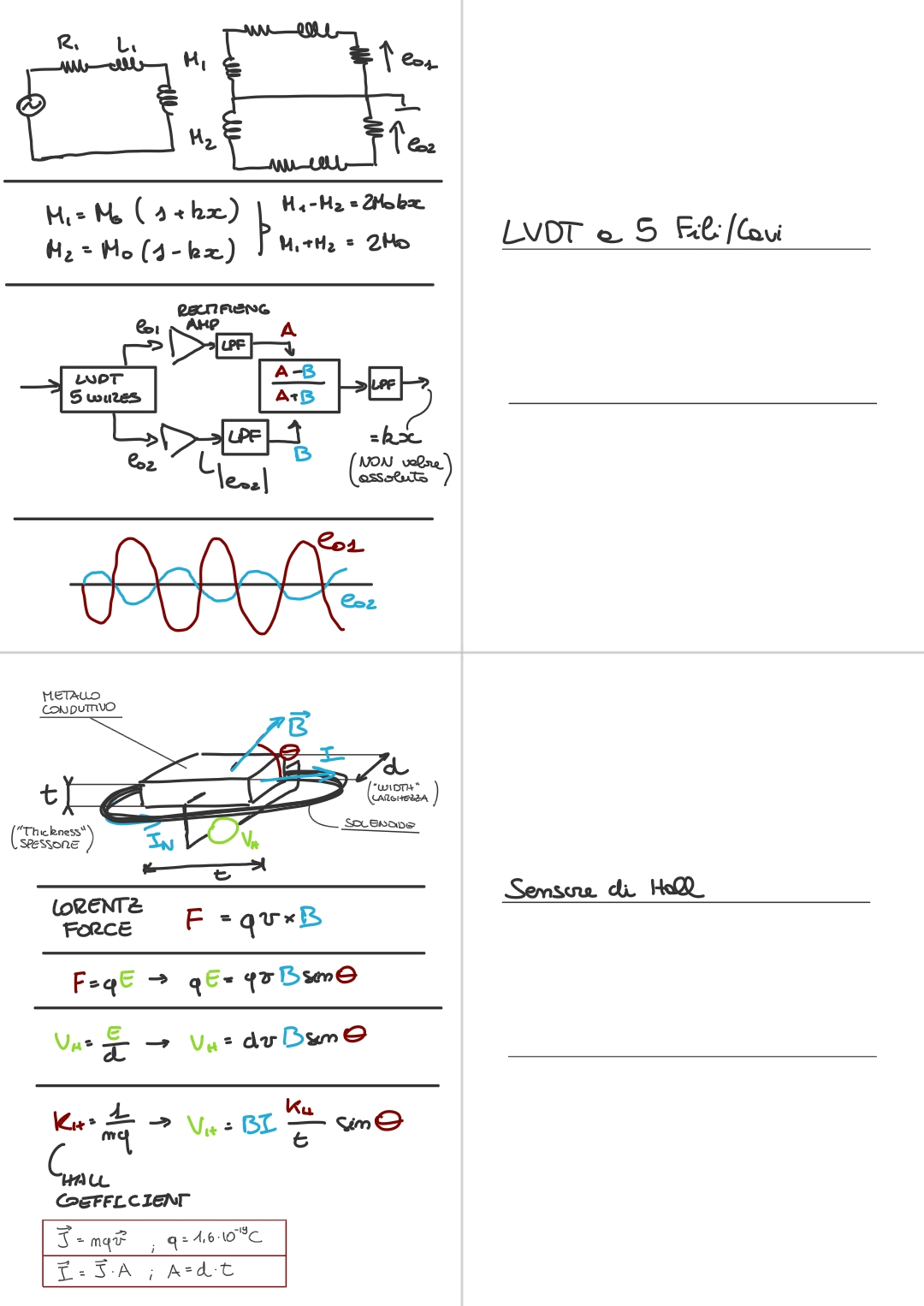
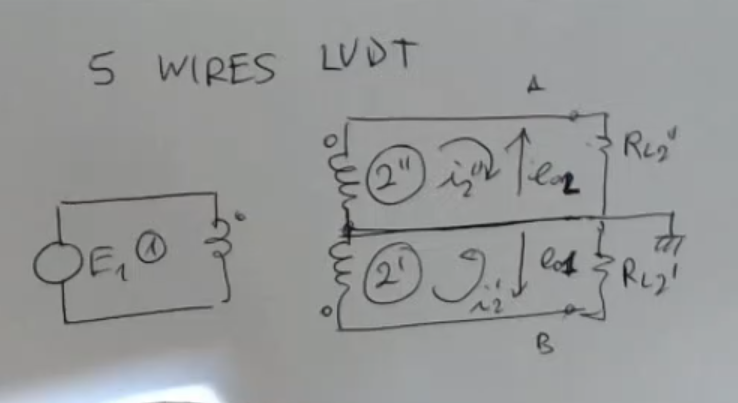
- We just added a reference to ground between the two seondary windings.
Tho just by doing that the carrier amplifier is no longer needed:
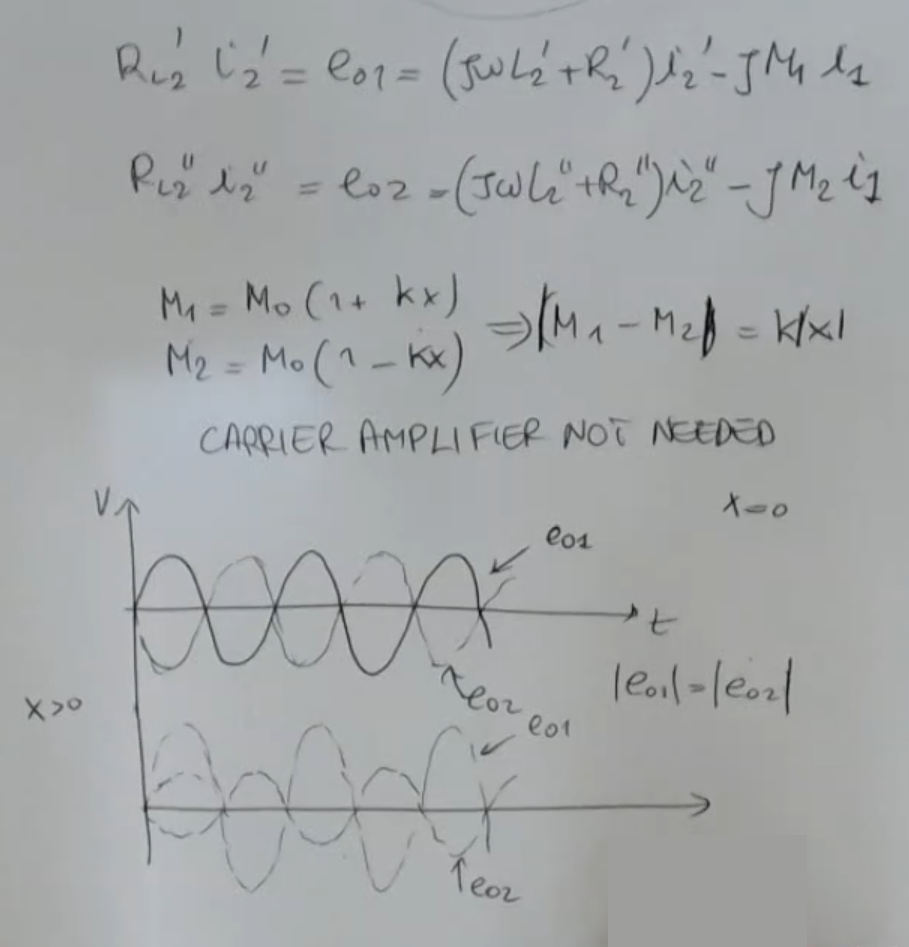
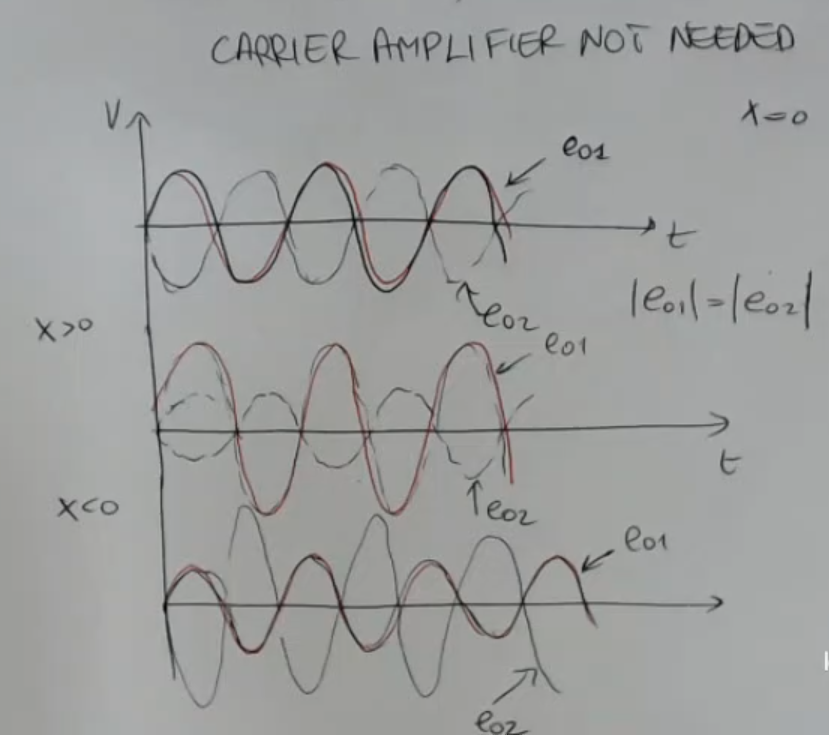
- We will obtain as an ouptut two voltages, equal and opposed, so a differential output, they can be converged into one using a simple differential amplifier.
- So what happens is that I put two different amplifier, and then I need an additional wire, and this could be more complex in terms of connection and cabling.
⇒ Just becouse of cabiling issues, this solution here it’s not always used.
IC for Read-Out of 5W LVDT
IC: Integrated Ciruit
5W: 5 Wires
LVDT: Linear Variable Differential Transformer
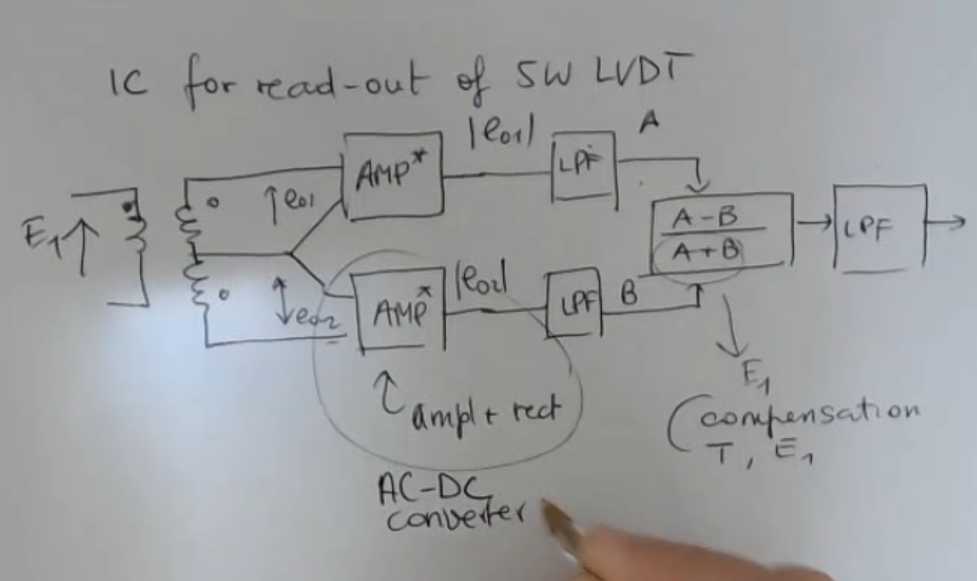
- NOTE: Instead of a simple differential amplifier we have used two Operational Amplifiers, actually 2 Op.Amp plus 2 Rectifier.
- After those we have 2 LPF.
- This way we also “isolate” the output from the value of .