List of things to memorize:

SaM - Thermocouples

Link to original


SaM - Defintion of Thermocouples • Law of Thermocouples • Types of Thermocouples • Extension Wires
  • Thermocuple: two conductive metal wires, of different materials, in a “gradient of temperature.
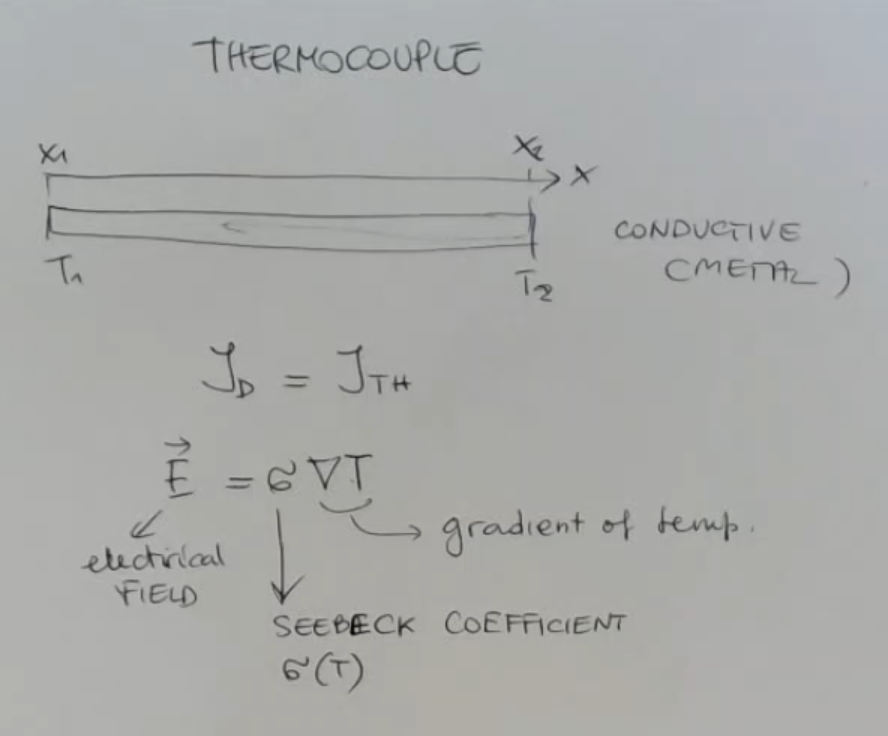
  • Electrical field formed in a single conductive metal immerged in a “gradient of temperature”:
  • Basic example:
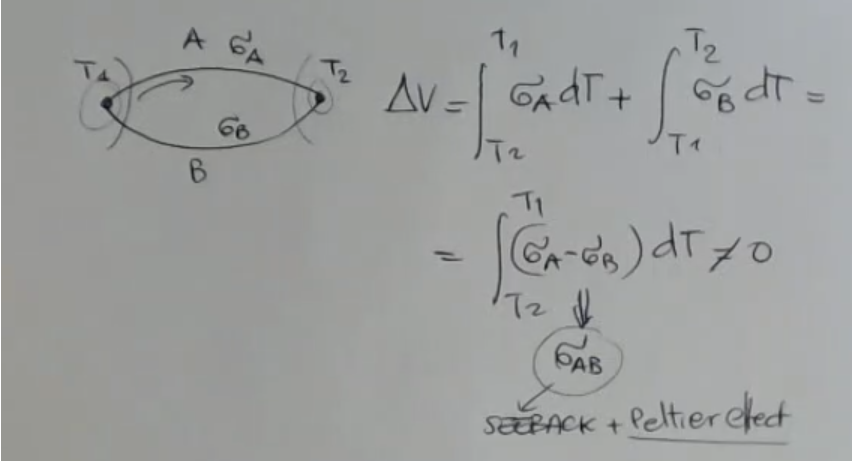
  • Simplest termocouple:
  • Formula:Where: .
  • 6 laws of thermocouples:
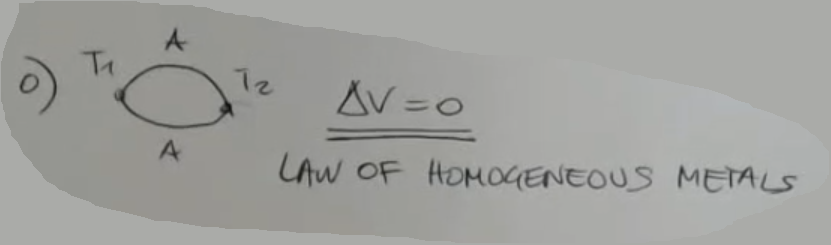
    1. Law of homogeneus metals”:
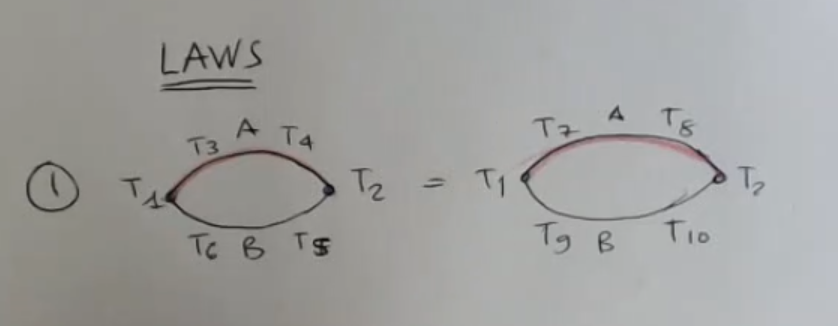
    2. I only care about the two temperature at the junctions:
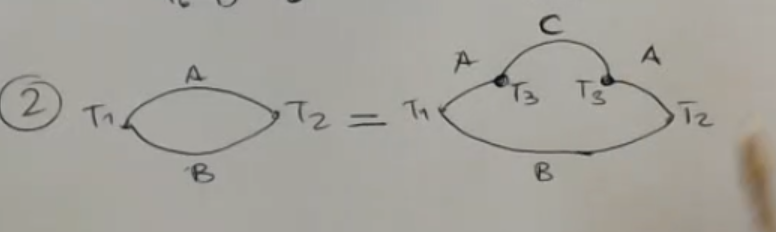
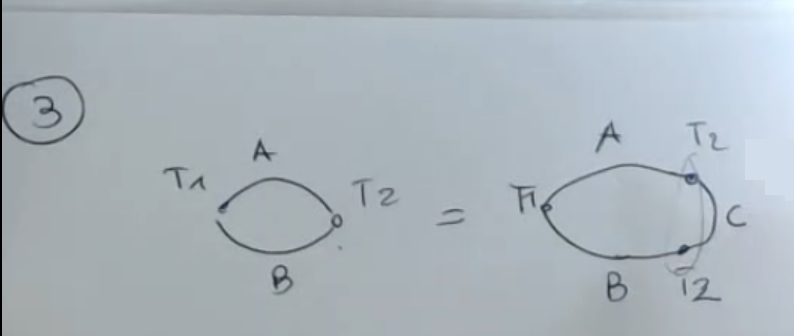
    3. Any piece of material that at his junctions has the same temperature does not change the voltage drop:
    4. Similar to the previous:
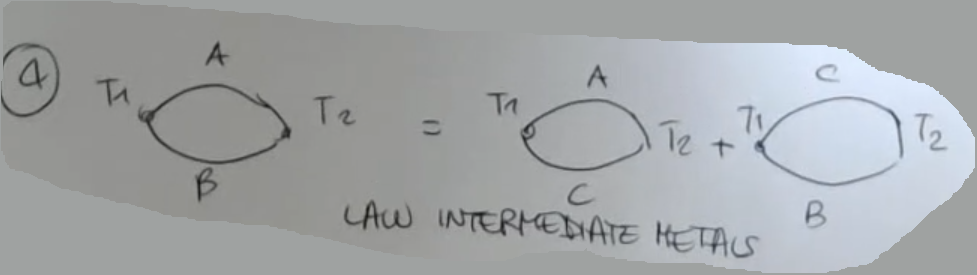
    5. Law of intermediate metals”:
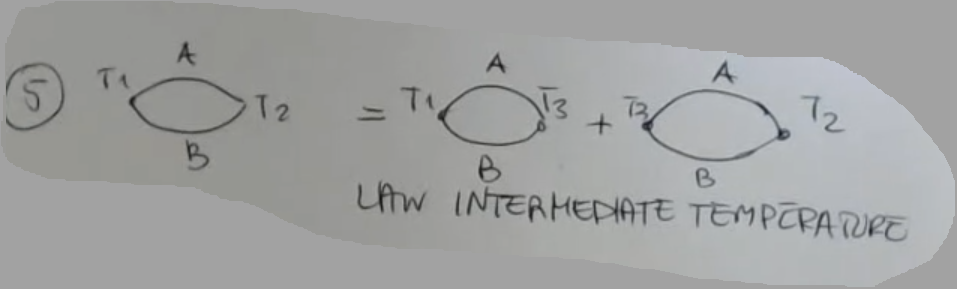
    6. Law of intermediate temperatures”:
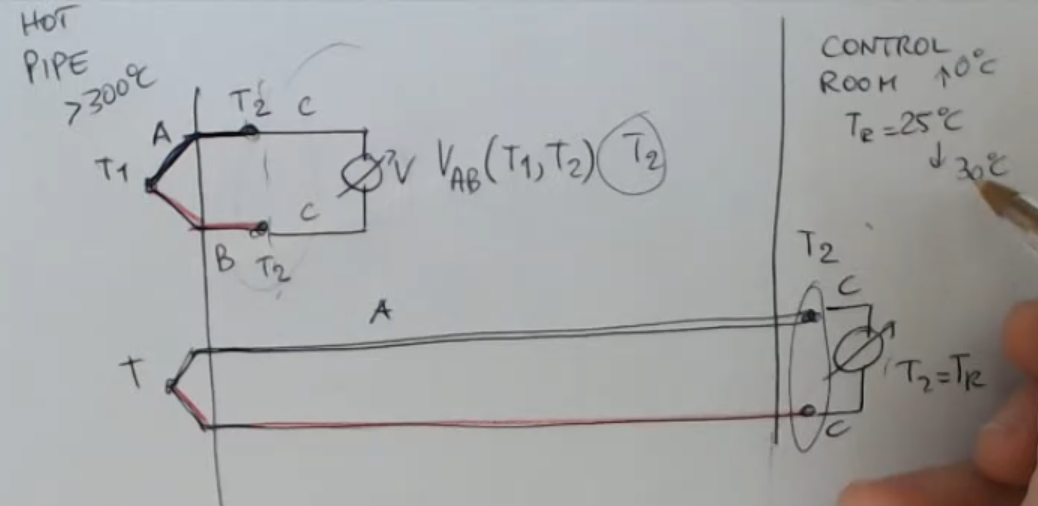
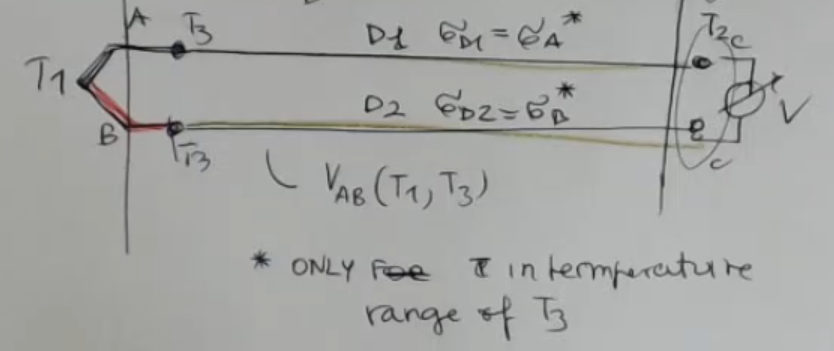
  • Extension wires:

  • Real World Masures:
    • There are are types of thermocouples: K, J, T, N, (B, R, S), I:
      • T is the most accurate ()
      • (B, R, S) have the largest range (up to ).
      • If you take a standard class 1 - J type thermocouples, then you have an accuracy of about at .
  • Terminology:
    • : gradient of temperature.
    • or : “seebeck coefficient”, it’s a function of temperature.

SaM - Cold Junction for Thermocouples
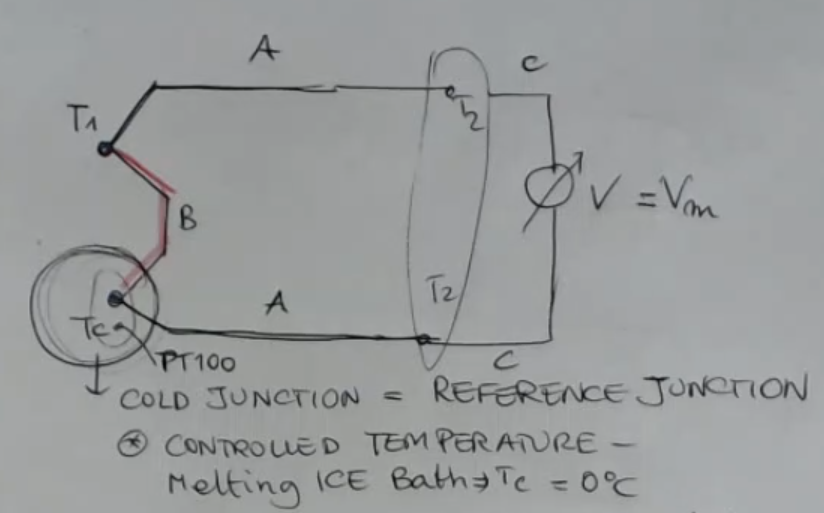
  • Cold junction: we keep one of the junctions of a thermocouple at a controlled temperature.
  • Structure:
    • _In this example, we know the temperature .
  • Cold junction compensation: we know at priori the temperature of the “cold junction”, and we can compensate it from the output.
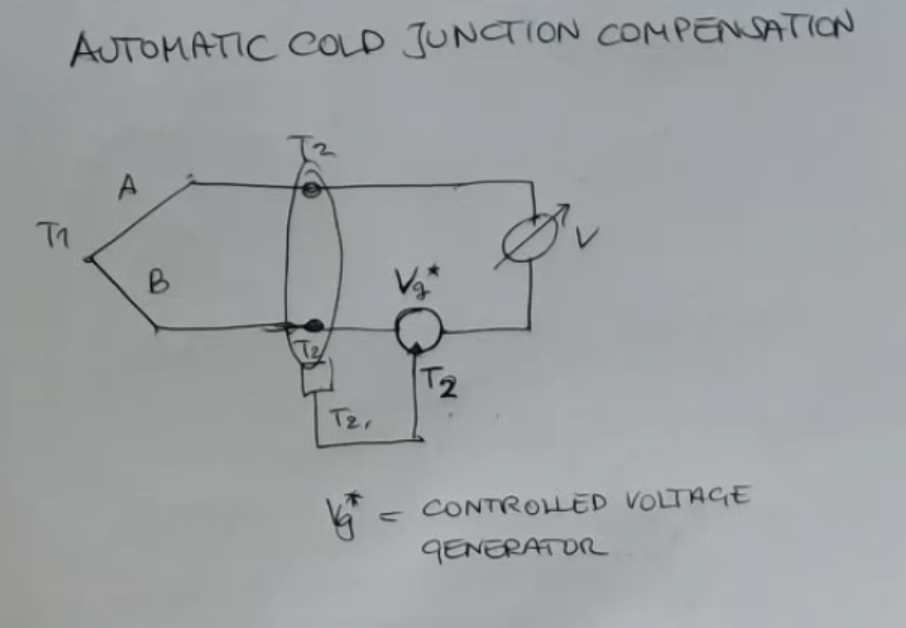
  • Automatic cold junction compensation: we measure the temperature of the “cold junction”:
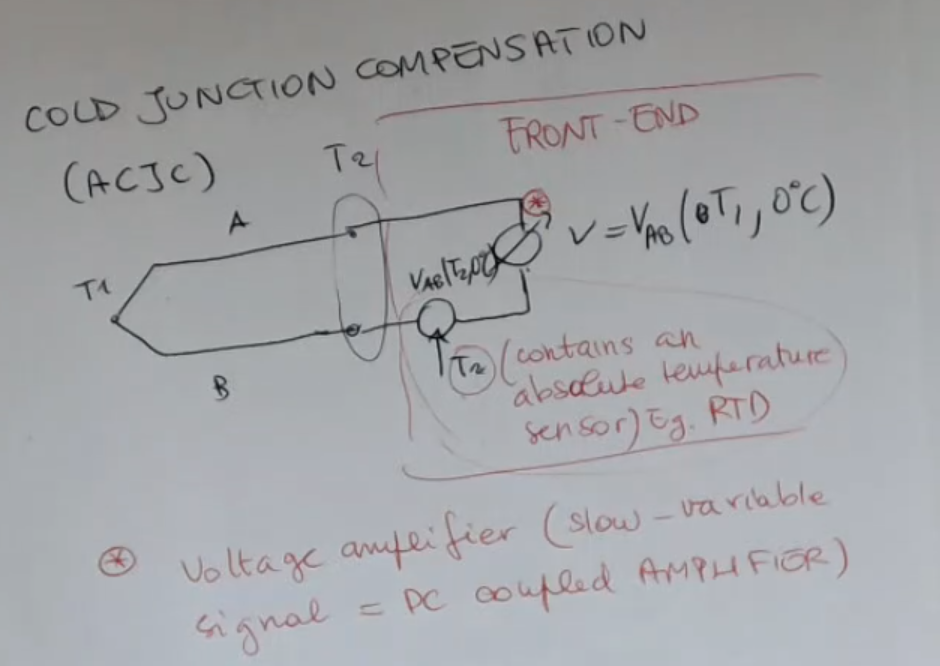
  • Another example for an automatic cold junction compensation, making the thermocouple an absolute sensor:

SaM - Thermal Representation of a Thermocouple
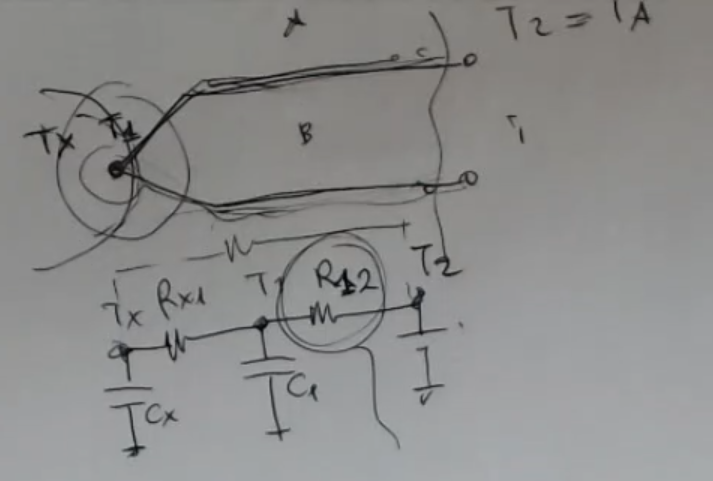
  • The lumped parameter system, specifically the thermal lumped parameter system of a thermocouple:
    • is my the temperature of the target body.
    • is what I sense.
    • ==The thermocouple is characterized by a very small capacitance (), since it is a conductive metal==.
    • : ambience temperature.

SaM - Thermocouples (Class I & II)
  • Reduced Range of thermocouples: The reduced range is a range of temperatures more than the actual measurement range of the devices, in this range the error is “fixed”.
  • Extended Range of thermocouples: While outside the reduced range, you have also to account for an additional error, which scales with temperature, so the more you are outsude the range, the more the total error will be.
  • Class I thermocouples:
    • Reduced range: , reduced range error: .
    • Extended range error:
  • Class II thermocouples:
    • Reduced range: , reduced range error: .
    • Extended range error:
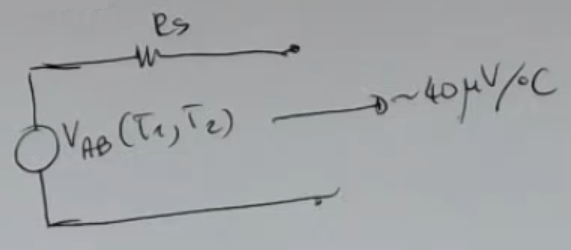
  • Equivalent electrical circuit of a thermocouple:
    • is the resistance given by the thermocouple.
    • represent a common sensitivity for a thermocouple.
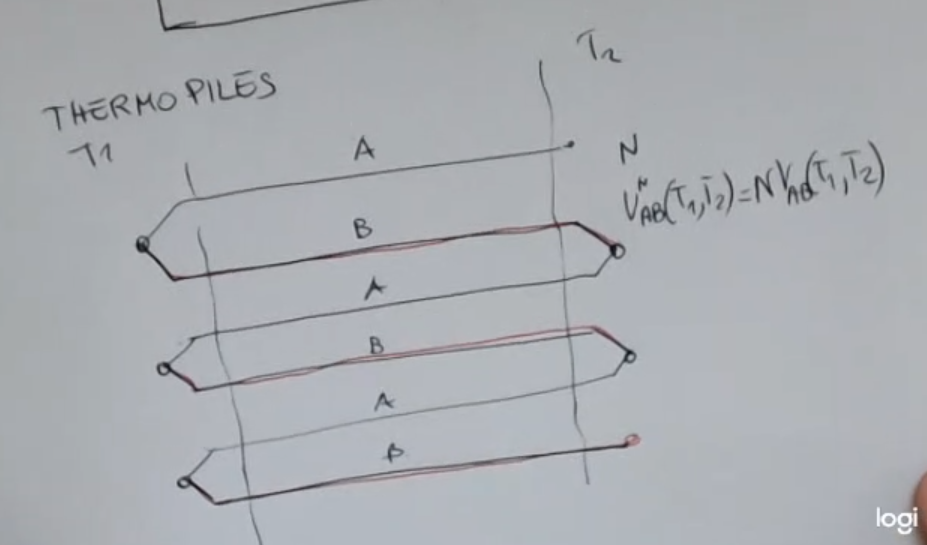
SaM - Thermopiles
  • Structure:
  • Accuracy of a thermopile composed of identical thermcouples:

SaM ~ Real World Example of a Classical Band Gap Based Temperature Sensor
  • You have to add your own thermocouple.
    ⇒ The sensor is linear if your thermocouple is linear.
  • TMP35 sensor’s sensitivity (pre-amplified): .
  • TMP35 sensor’s sensitivity (post-amplified): .