Remeber:
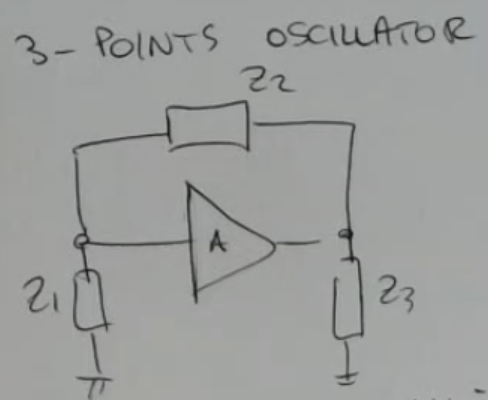
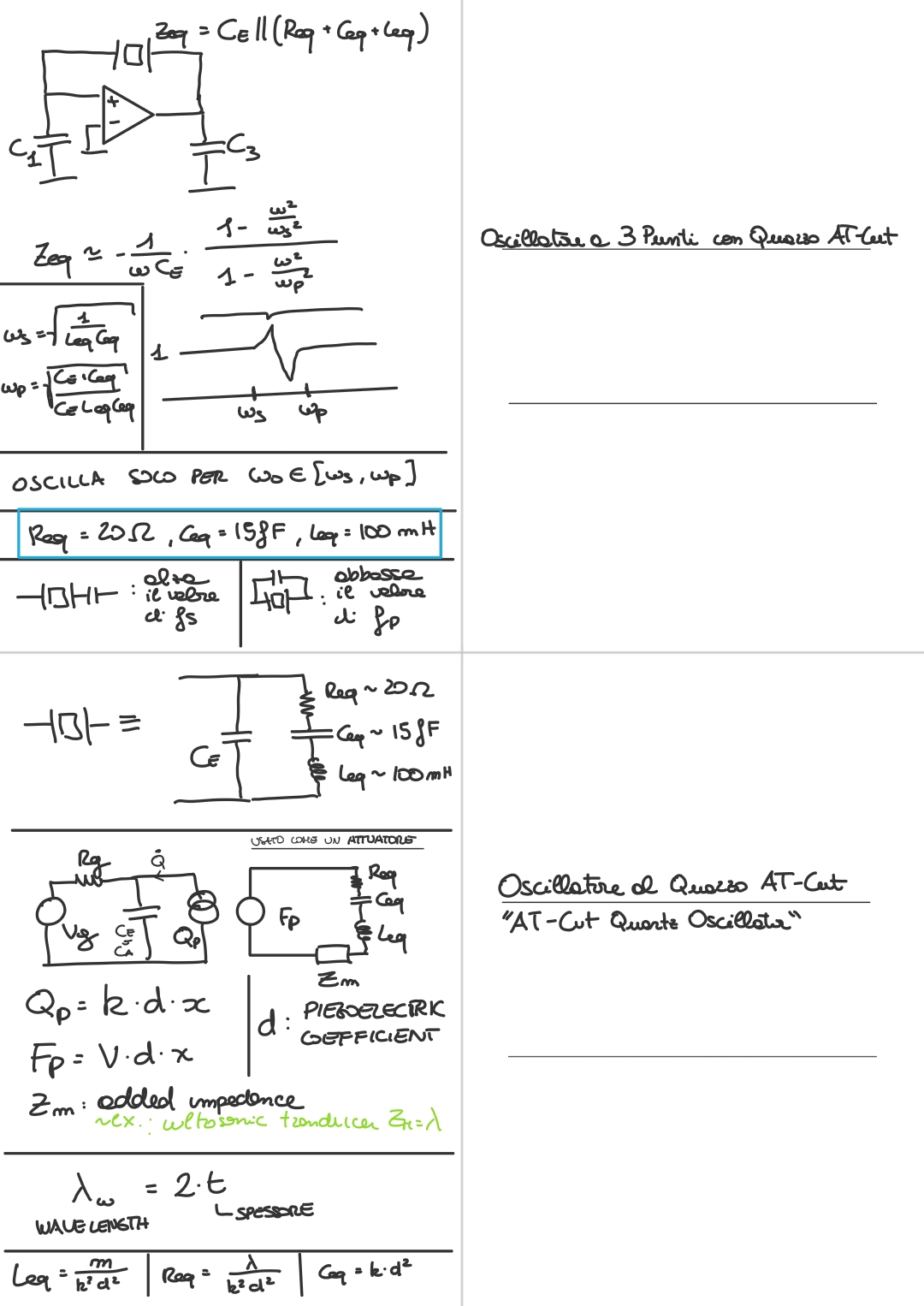
We can create a simple oscillator using only capacitances, inductances and an O.A., like so:
- Moreover, we can create two different oscillators with this structure, the Colpits oscillator and the Hartley oscillator.
- Colpits oscillator: and .
- Hartely oscillator: and .
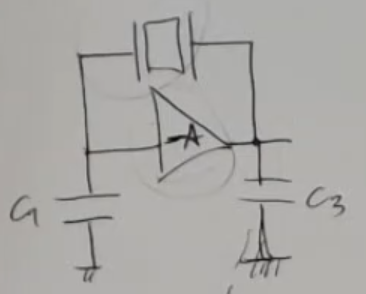
- For AT-Cut quartz we have seen specifically the Colpits oscillator, where the inductance is replaced with the quartz, doing so garatnees that ==this circuit will oscillate only at frequency in which the quartz acts as an inductance, so for in the interval ==:
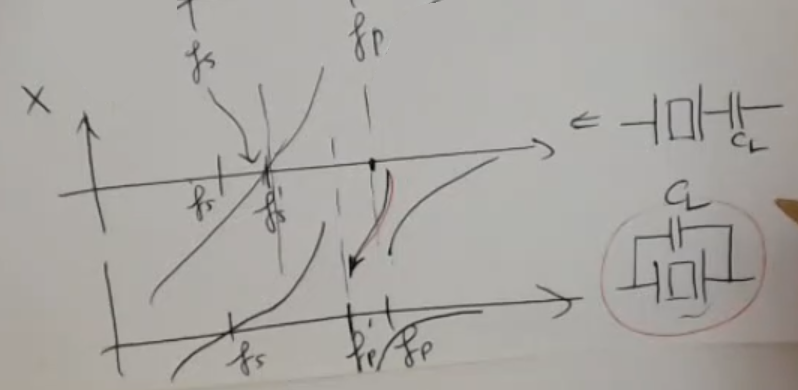
We can add a capacitance in series or in parallel to our quartz, doing so we will shrink the freqency range where the circuit oscillates (fine tuning), but we will also decrease the the -factor value (not good), defined as: Here is the base reference, with no added capacitances, so base range: :
If we add a capacitance in series or in parallel:
- In series: we increase .
- In paralle: we reduce .
- In both cases we reduce the range
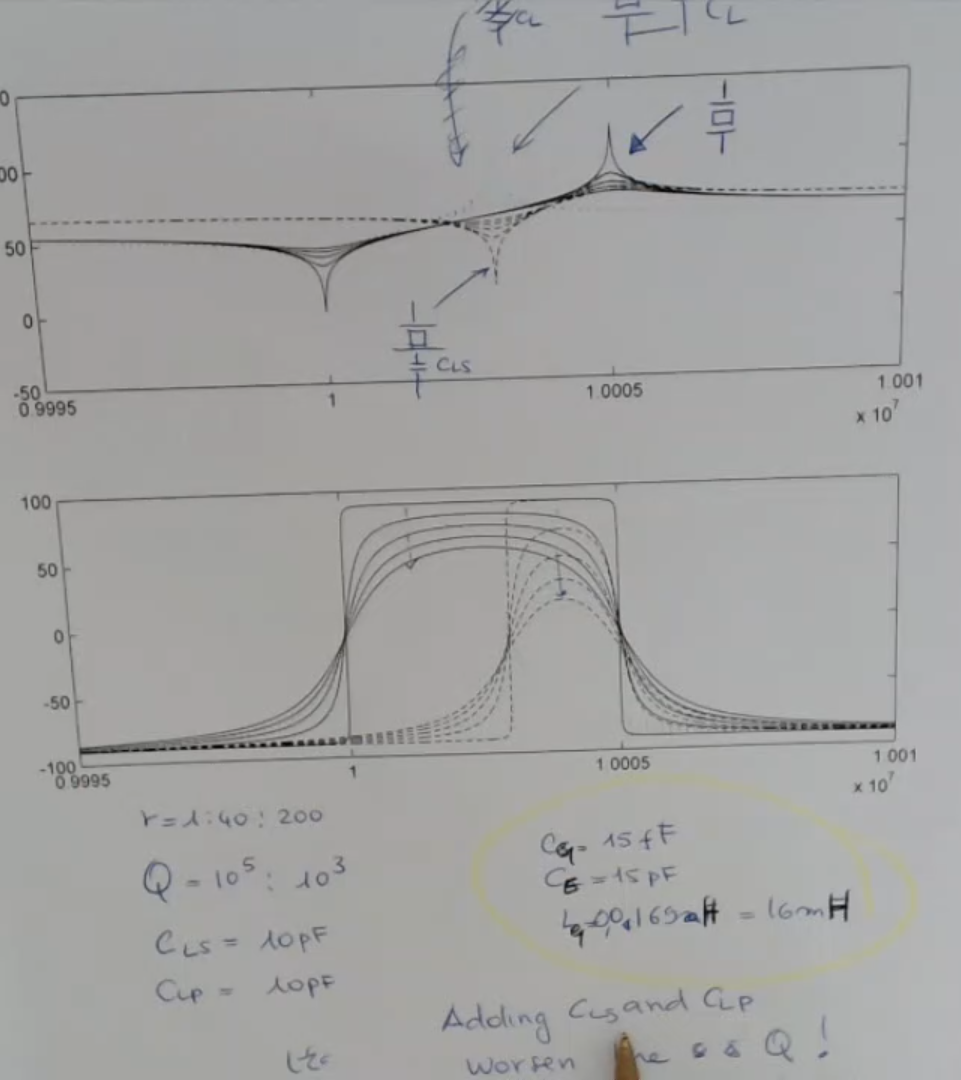
Here is a real life example of tuning with :IMPORTANTE
- Specifically we see how the bode plot changes with a capacitance in series to the quartz.
Memory Card
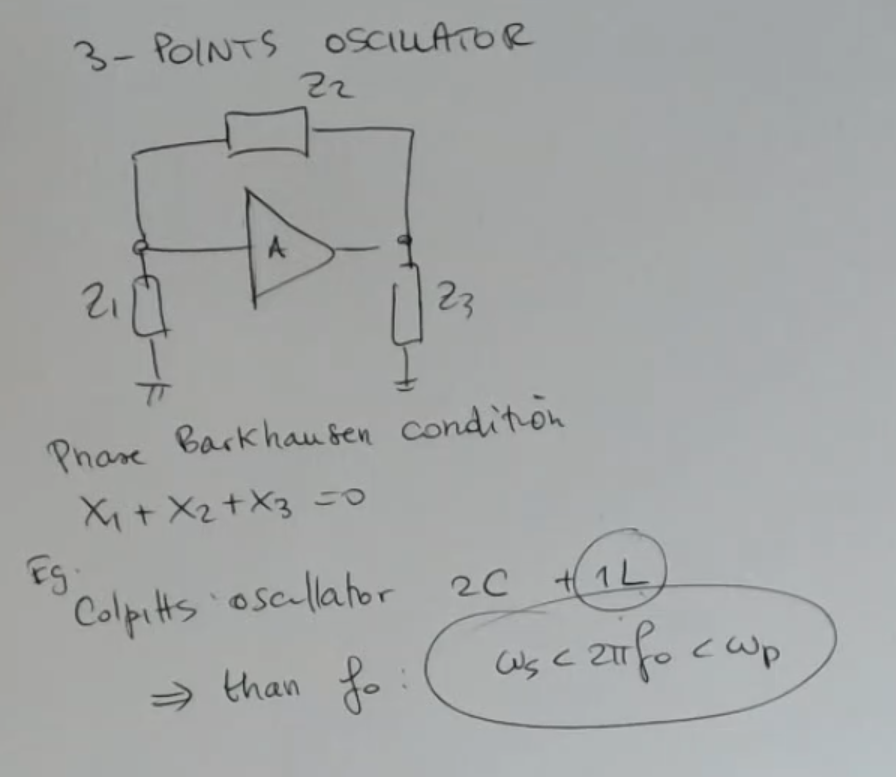
- In principle are reactances (capacitances or inductances)
- In the Colpits Oscillator example, this circuit will oscillate if two s are capacitances and the other is an inductances.
- If we take the Colpits Oscillator if we replace the (inductance) with the AT-Cut Quartz*, then this circuit will oscillate only at frequency in which the quartz acts as an inductance, so for in the interval .
So, here’s an example of a simple Colpits Oscillator:
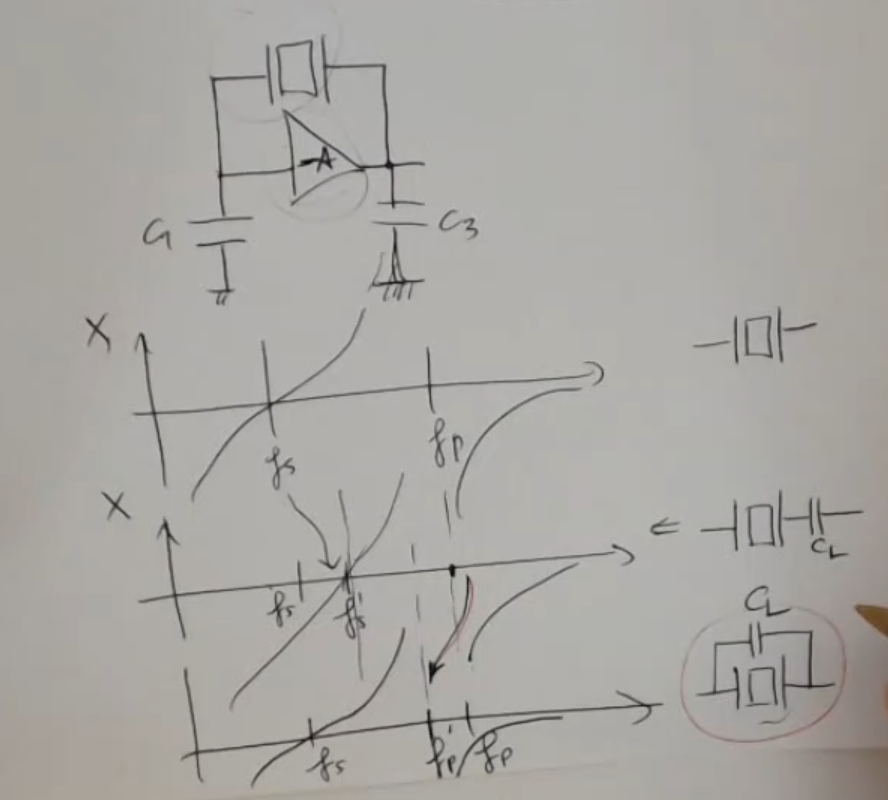
- First graph: ideal situation
- Second graph: If we find a capacitance in series to our quartz.
⇒ There is a shift of . - Third graph: If we find a capacitance in parallel to our quartz.
⇒ There is a shift of . - NOTE: In both the second and third graph, so if we add a capacitance, we shrink the range.
We can tune the frequency in this way.
But this will also change the -factor value, rember it is defined as:So there is a limit in tuning.
Real life example of tuning with :