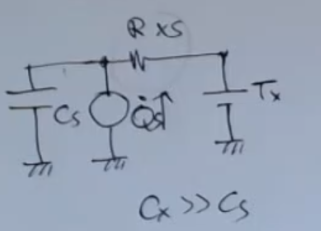
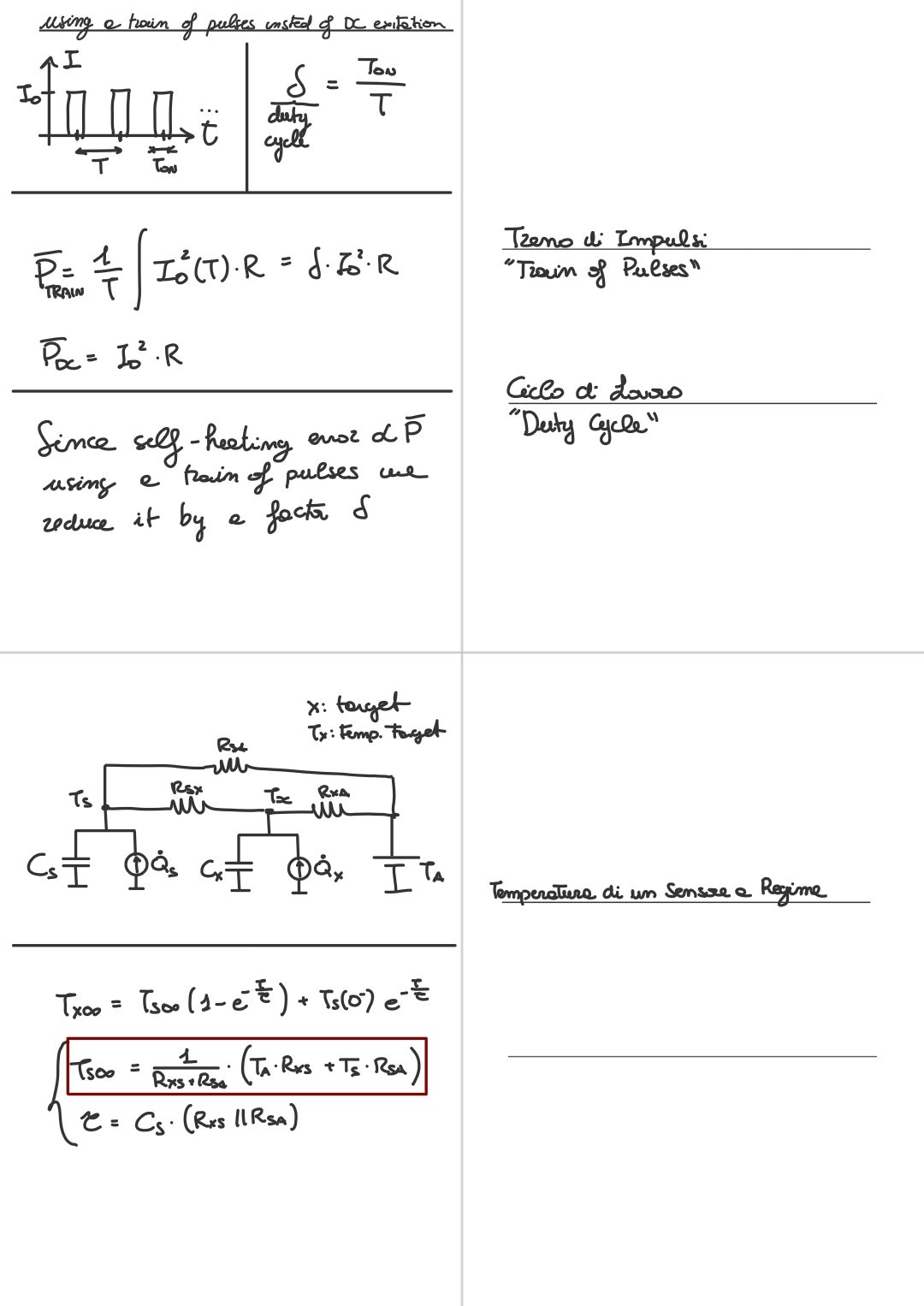
The temperature of the sensor TS is what we measure, we want TS to be as much closer to TX as possible.
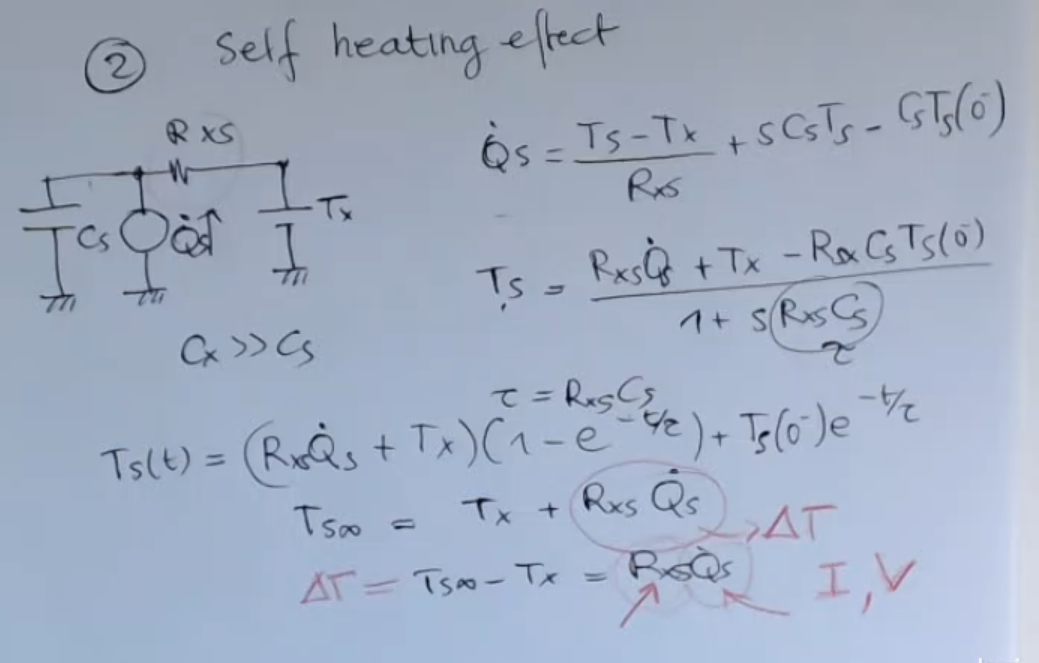
We consider to measure the temperature of the sensor at regime (TS∞), so when the transient has subsided.
As a matter of fact if we perform the calculation we obtain that:TS∞=TX+RXSQ˙SWhere:
We can see RXSQ˙S as the difference ΔT or measurement error.
We also need to say that, the difference between the real and measured temperature:ΔT=RXSQ˙SDepends on:
RXS the Thermal Resistance due to heat convection or conduction, which depends on the motion of matter, and material type both of the sensor and the target, and other properties.
==While more importantly Q˙S depends on the voltage (V) and current (I) feeding into the sensor, from this factor we have the problem of self-heating, since a higher current or voltage will increase Q˙S, so it will increase the difference ΔT==.