Remeber:
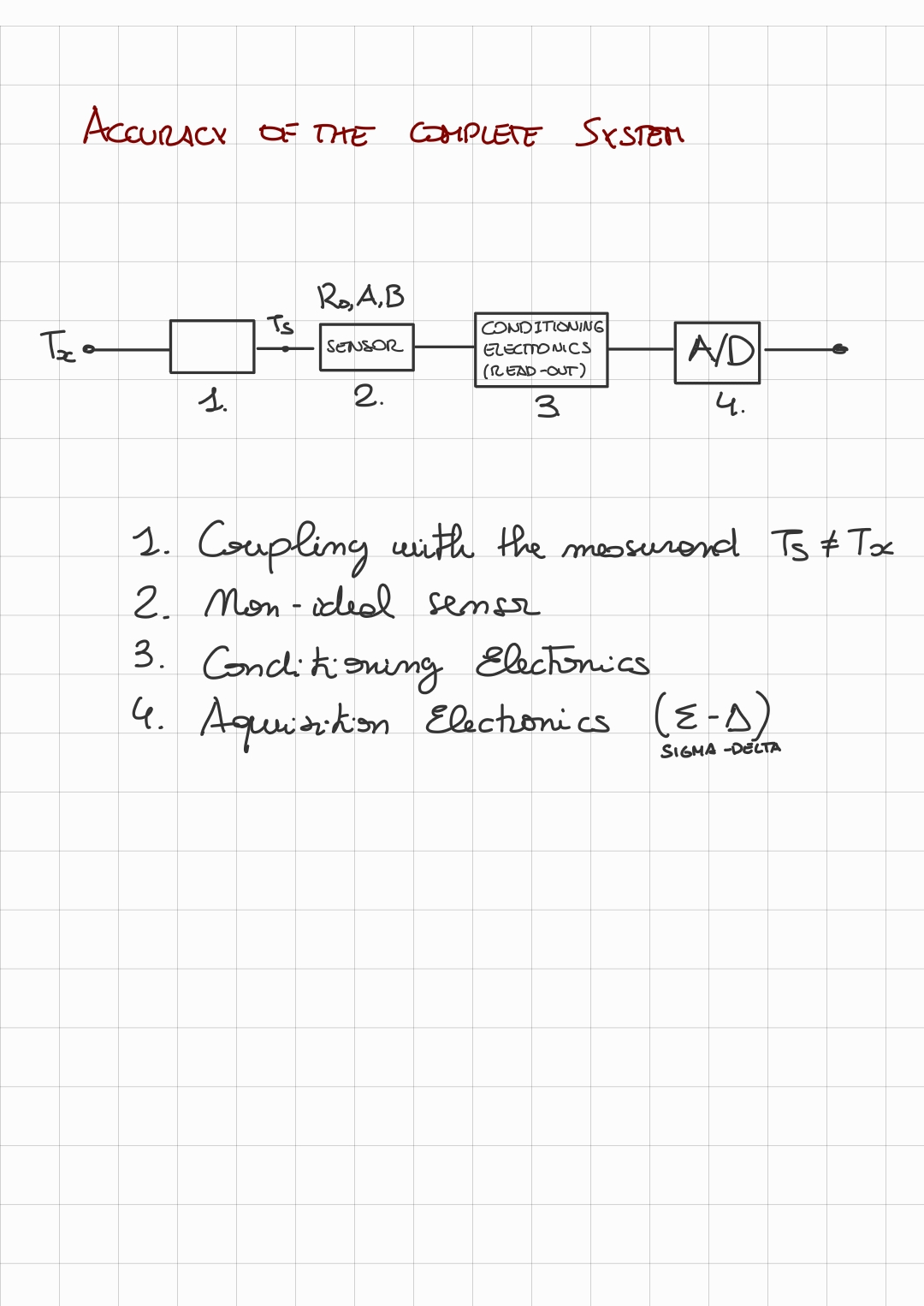
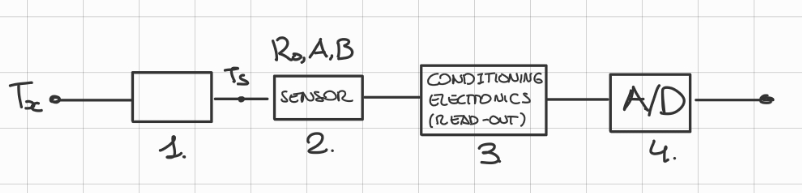
This is the scheme of a complete system for measuring temperature:
Where:
- is the real temperature we want to measure, while is the temperature the sensor measures.
- These two temperatures ( and ) are not the same, since there is a Coupling with the Mesurand (drawned as a blank box ), so remember that we cannot actual measure the real temperature, the temperature, specific heat and other properties of the sensor and all the other electronics will alter the measured value.
- Also we also need to note that other errors are due to the non-idealities of the sensor (), Read-Out Electronics (), and A/D ().
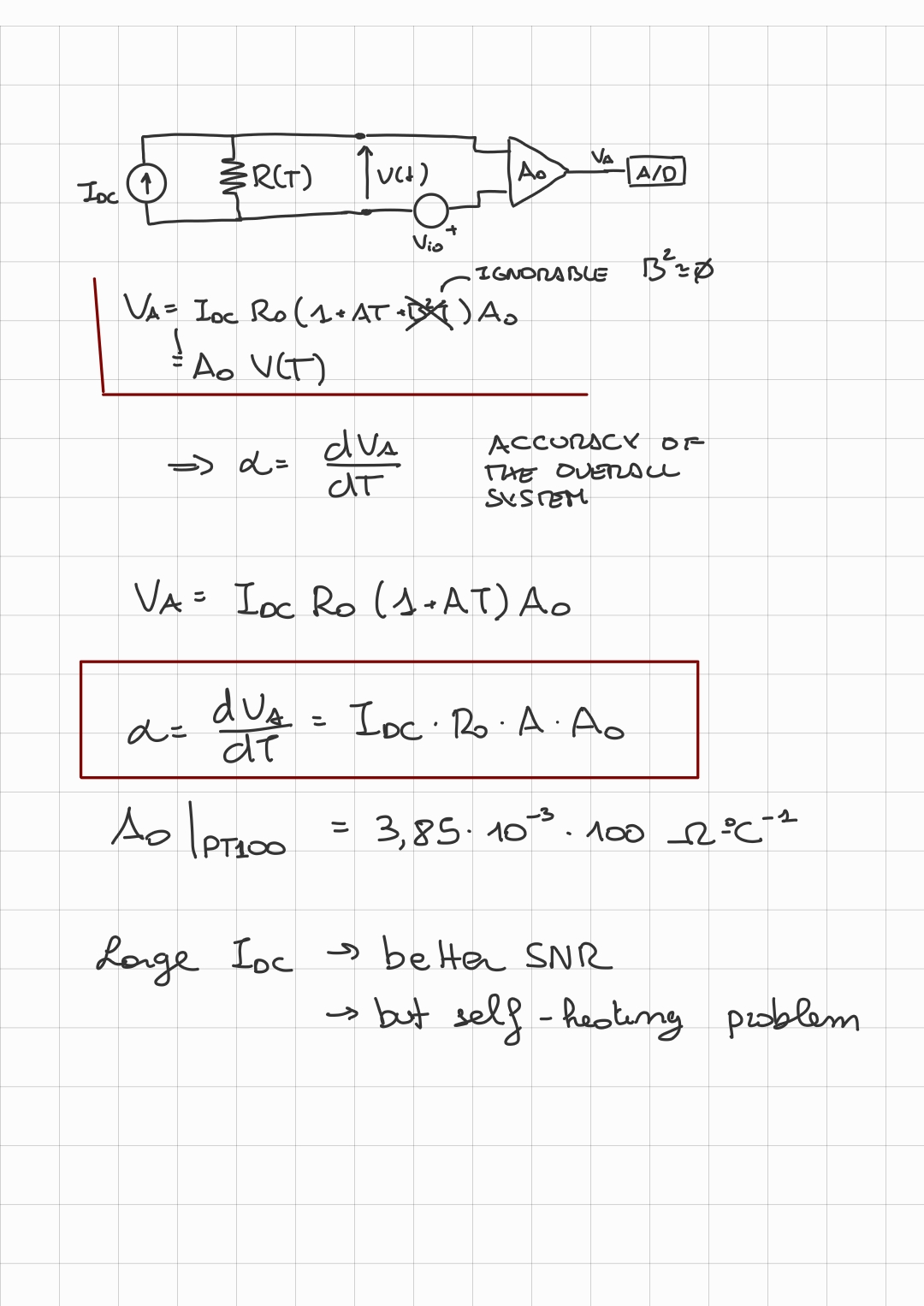
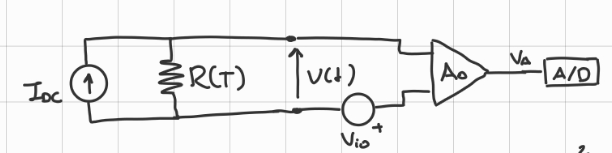
We have also seen a simple example using the PT100 sensor:
- is the current source.
- is the PT100 sensor.
- is the bias voltage of the amplifier (read-out electronics).
- We measure and we will convert it using the A/D, however we don’t account for that in this example.
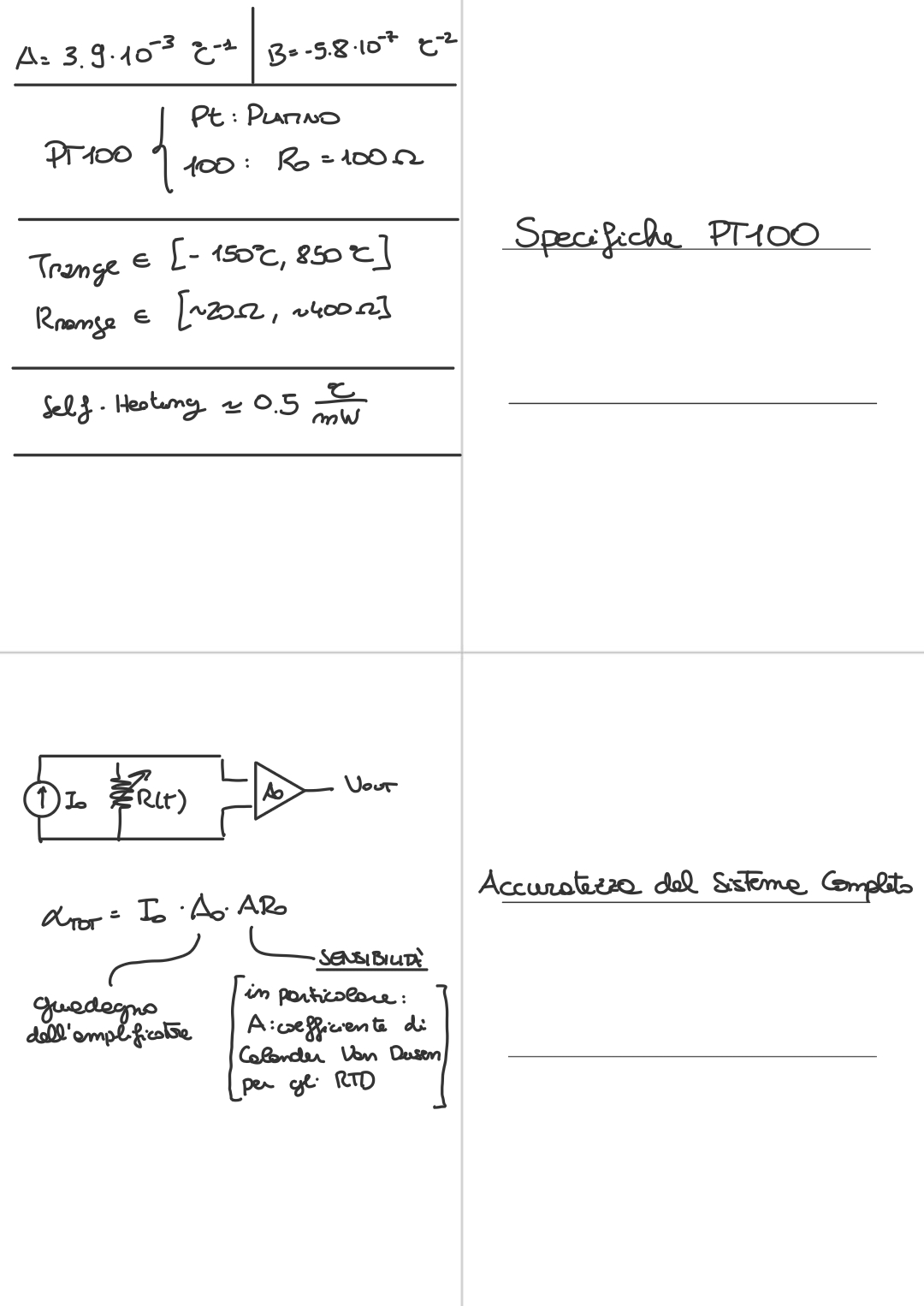
What we account for is the “complete accuracy” of the complete system, which is:Where:
- and are the resistance value at the reference temperature (usually °C), and the first coefficient specific to the platinum resistance sensor, both defined by the Calendar Van Dusen Relationship.
- is the open-loop gain of the amplificator.
- So it is important to notice that the sensitivity of the complete system depends on the current source (), that means that a higher current improves the SNR (Signal to Noise Ratio), however it can create a self-heating problem.
Memory Card