Remeber:
When working with a strain gauge we need to look out for a couple of things:
- Work in the Elastic Regime:
- Check the Bonding with the Substrate.
This check is necessary only for Metal Strain Gauges, or for devices which are physically different from the substrate (so from the object of which you want to measure the strain of).
So if they have a different backing, then you have to ensure bonding between the device (the strain gauge) and the substrate (the object I want to measure).
- Look out for the Dependance on Temperature of the Strain Gauge, more specifically we have three things that we have to look at, which are:
- TCR: variation of resistance.
- TCS: variation of sensitivity.
- Apparent strain, which is related to possible different mismatching between the thermal expansion coefficient of the device and of the substrate.
Obviously, this is something which happens in case you have a device which is bonded to the substrate, and not realized on the substrate.
- Self-Heating.
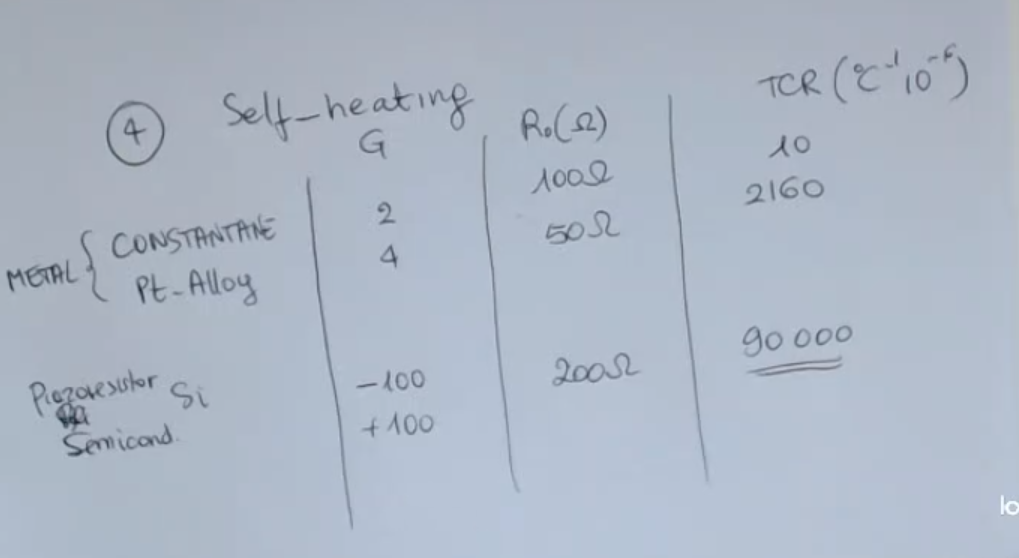
Since they are resistances, you need to power up this resistance to give some power to measure them, and so you cause self-heating.
Here’s a table which shows you the difference between metal, constantant or platinum alloy, and piezo resistive devices based on silicon:IMPORTANTE
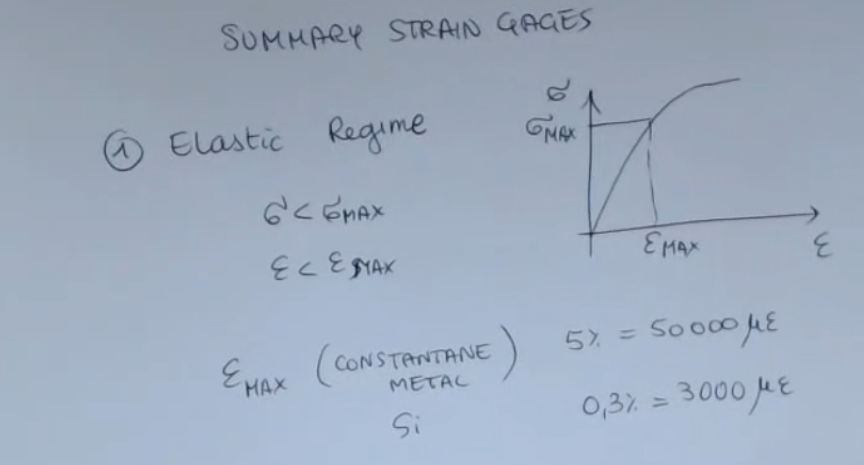
- First of all we are operating in the elastic regime and this means that we can operate these sensors only in those situations in which you have actually a ==linear relationship between stress and strain==.
So you have a limitation, both in stress and in strain. - For context, here’s an image I found on the Internet
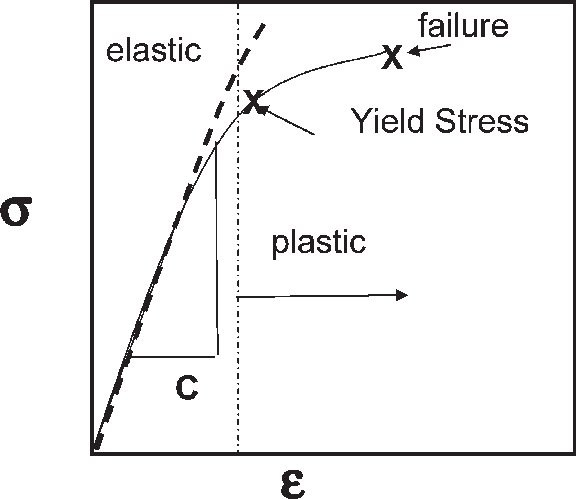
As said before if we work in the elastic regime, the realtionship between stress and strain is linear.
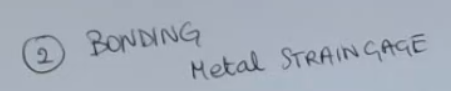
- Only for Metal Strain Gauges, or for devices which are physically different from the substrate (so from the object of which you want to measure the strain of).
So if they have a different backing, then you have to ensure bonding between the device (the strain gauge) and the substrate (the object I want to measure).
 We have three things that we have to look at, which are:
- TCR: variation of resistance.
- TCS: variation of sensitivity.
- Apparent strain, which is related to possible different mismatching between the thermal expansion coefficient of the device and of the substrate.
Obviously, this is something which happens in case you have a device which is bonded to the substrate, and not realized on the substrate.
Then we have to keep an eye on self-heating, because you know that since they are resistances, you need to power up this resistance to give some power to measure them, and so you cause self-heating.
And then here’s a table which shows you the difference between metal, constantant or platinum alloy, and piezo resistive devices based on silicon: