Memory Card
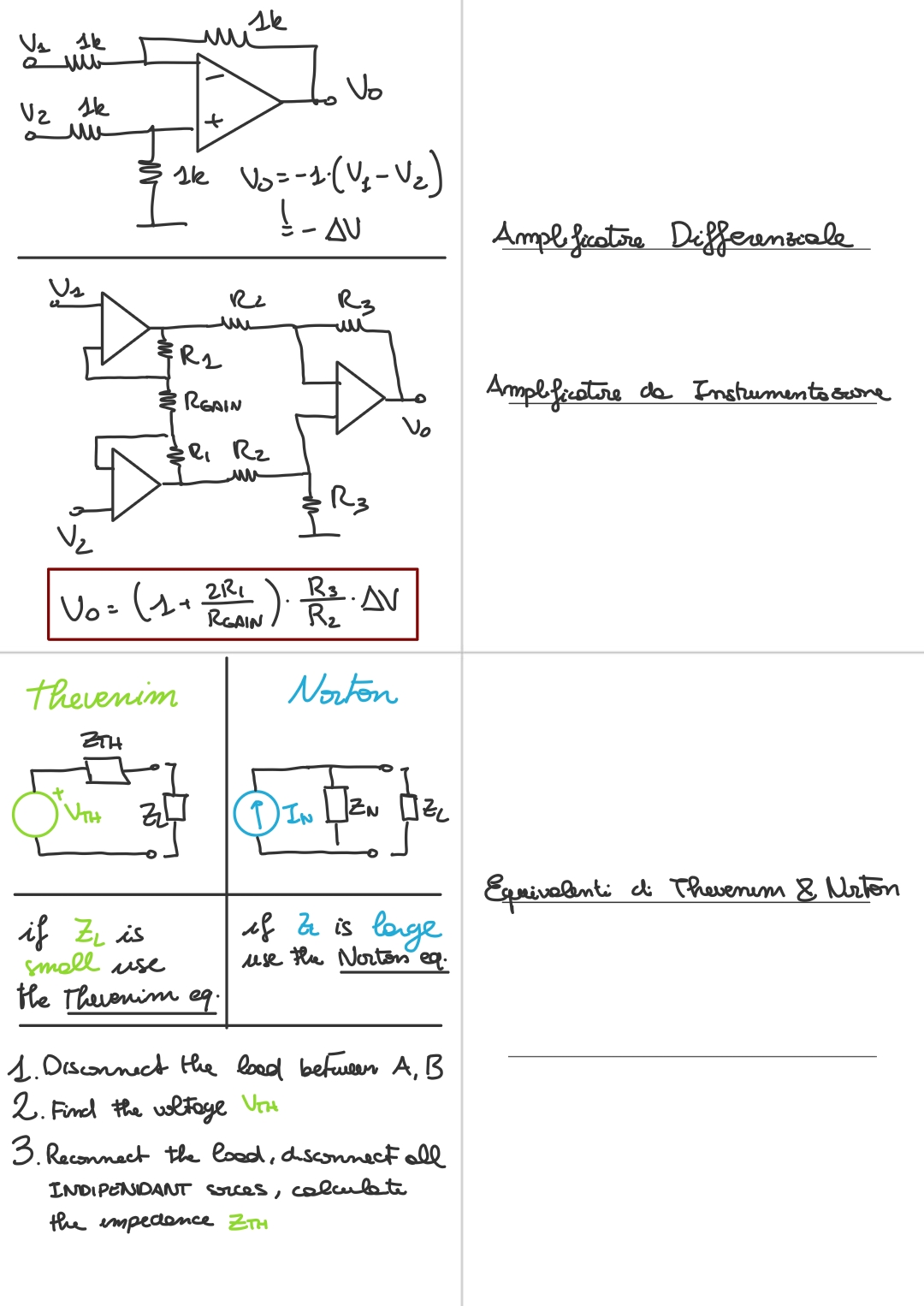
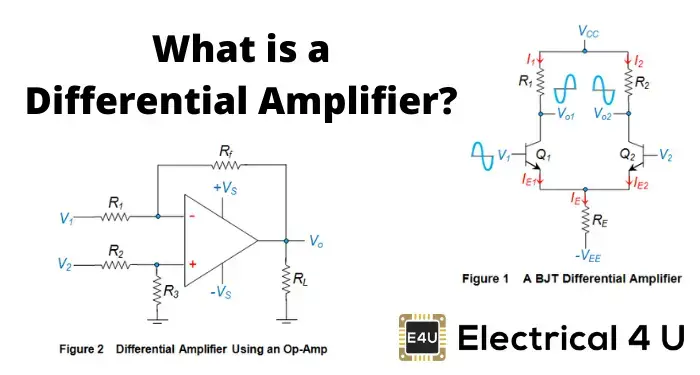
- The definition of “Differential Amplifier” is:
==A Differential Amplifier is a type of amplifier that amplifies the voltage difference between two input signals while rejecting any common-mode signals (signals that are common to both inputs)==. - To measure how effective a Differential Amplifier is at rejecting common-mode signals, we can calculate its CMRR (Common Mode Rejection Ratio).
- ==Here we can see some examples of Differential Amplifers==:
- Circuit (Ideal Differential Amplifier)
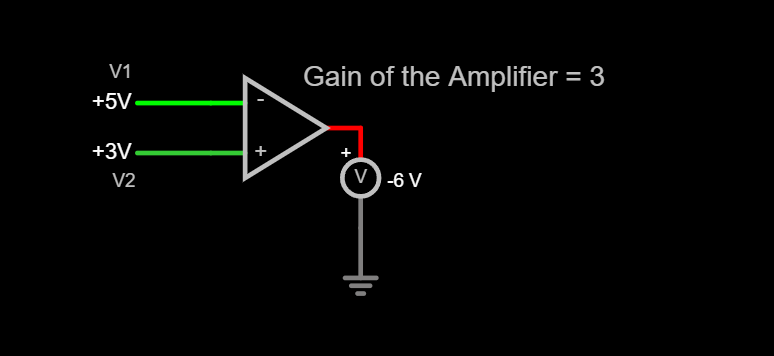
- Circuit (Differential Amplifier made with an O.A.)
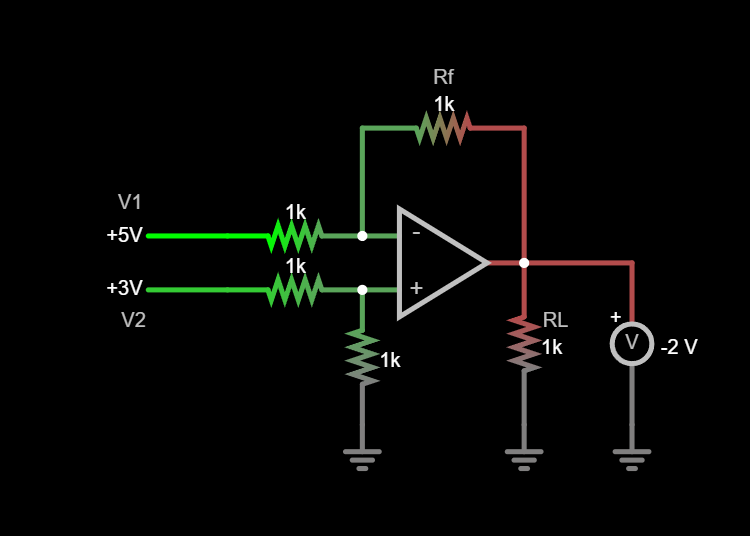
- Circuit (Differential Amplifier made with an O.A.)
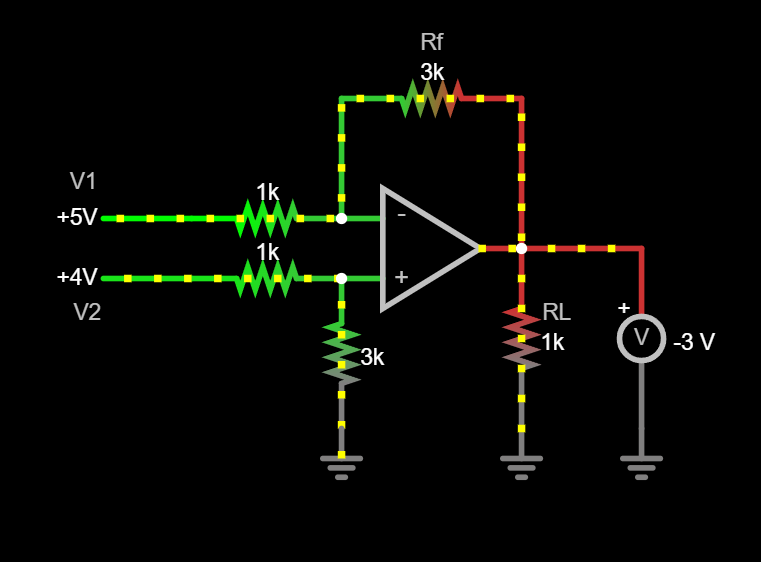
- Circuit (Instrumentational Amplifier):
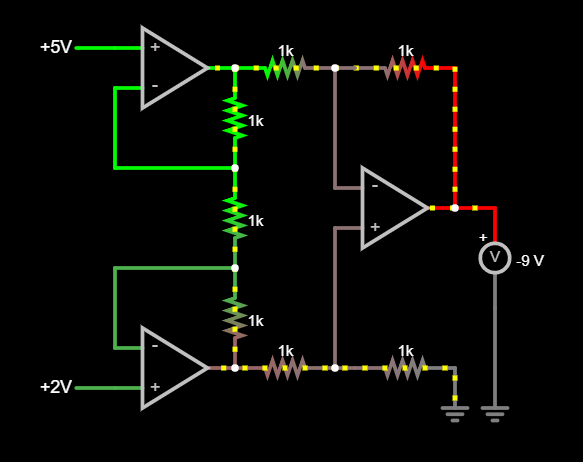
- Circuit (Ideal Differential Amplifier)
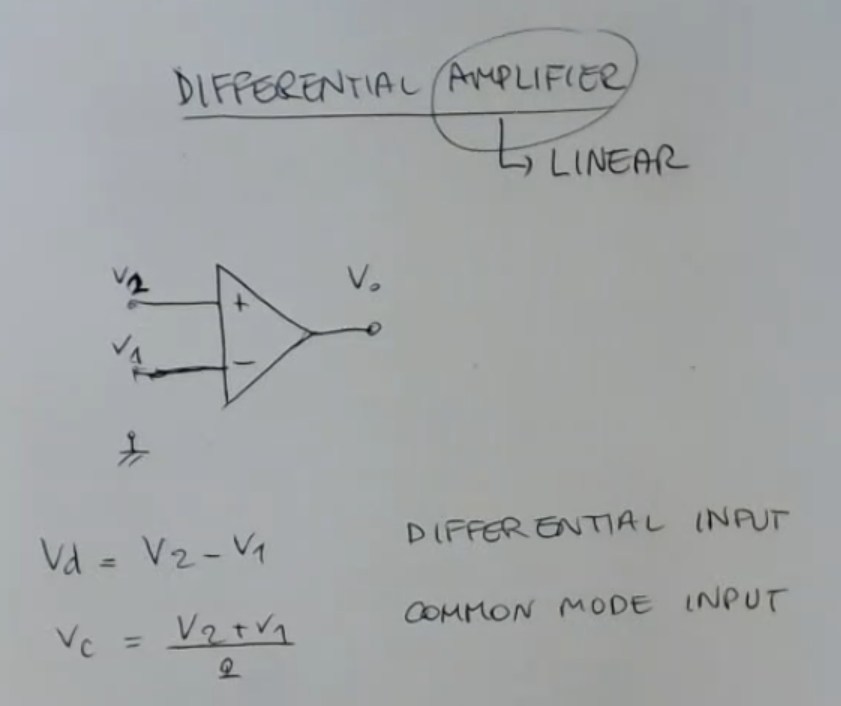
- When you find a single-input amplifier, the second input is supposed to be to a reference and fixed voltage.
- In general, since I’m speaking about amplifier, I suppose that ==it behaves linearly==.
So we have that: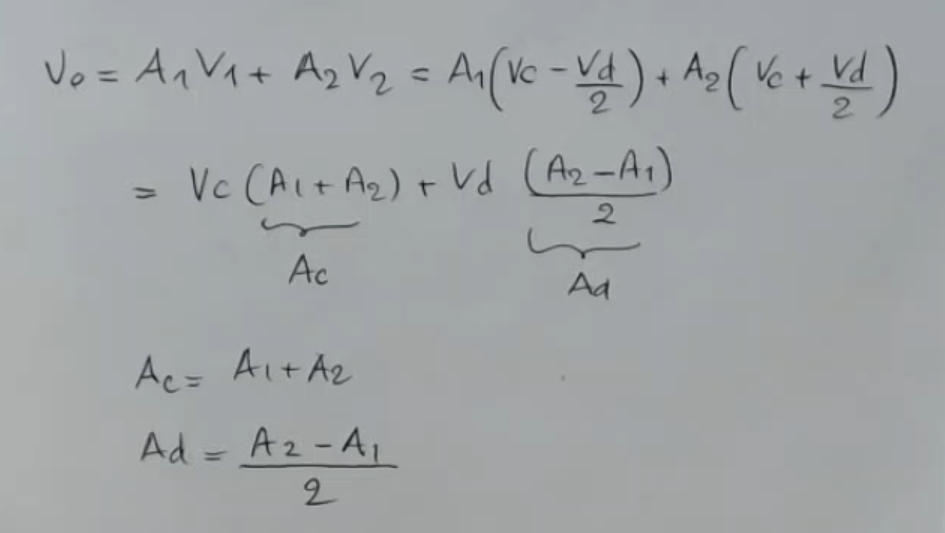
Remember that: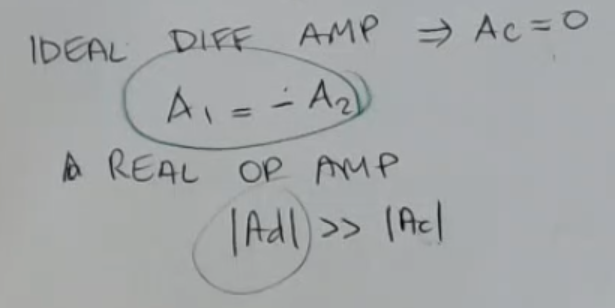
- Real operational amplifier have this quality here, but the common mode gain is not zero.
I accept it because perfect symmetry is not possible, but I have a differential gain which is actually much larger than the common mode gain. - So for an Ideal Differential Amplifier we can write:Instead for a Real DIfferential Amplifier:
- Online Source: Webpage
- Formula:
- If & (this is the specific differential amplifier used for an instrumentational amplifier):
NOTE:
A differential amplifier output functions depends only on the difference: .
Here’s an example of a differential amplifier: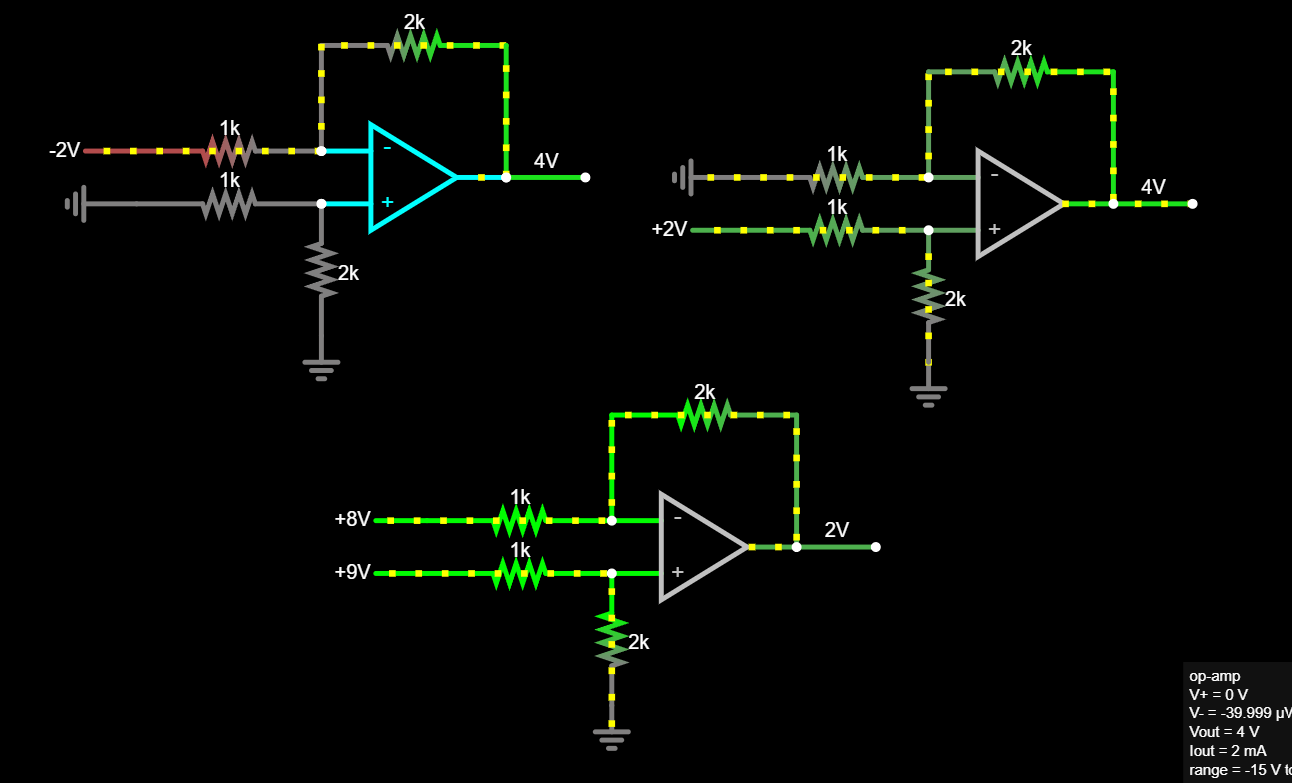 Where the output is:
While here one that is NOT a differential amplifier:
Where the output is:
While here one that is NOT a differential amplifier: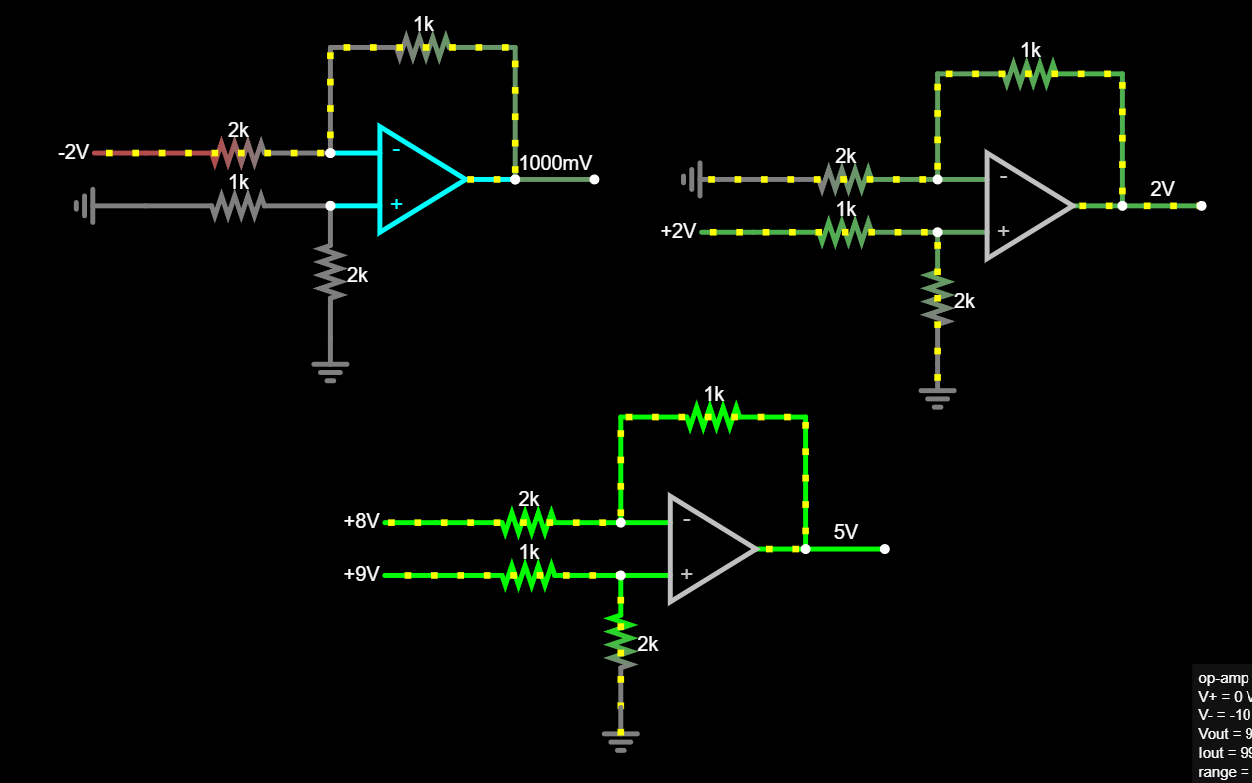 Where the output is: