Memory Card
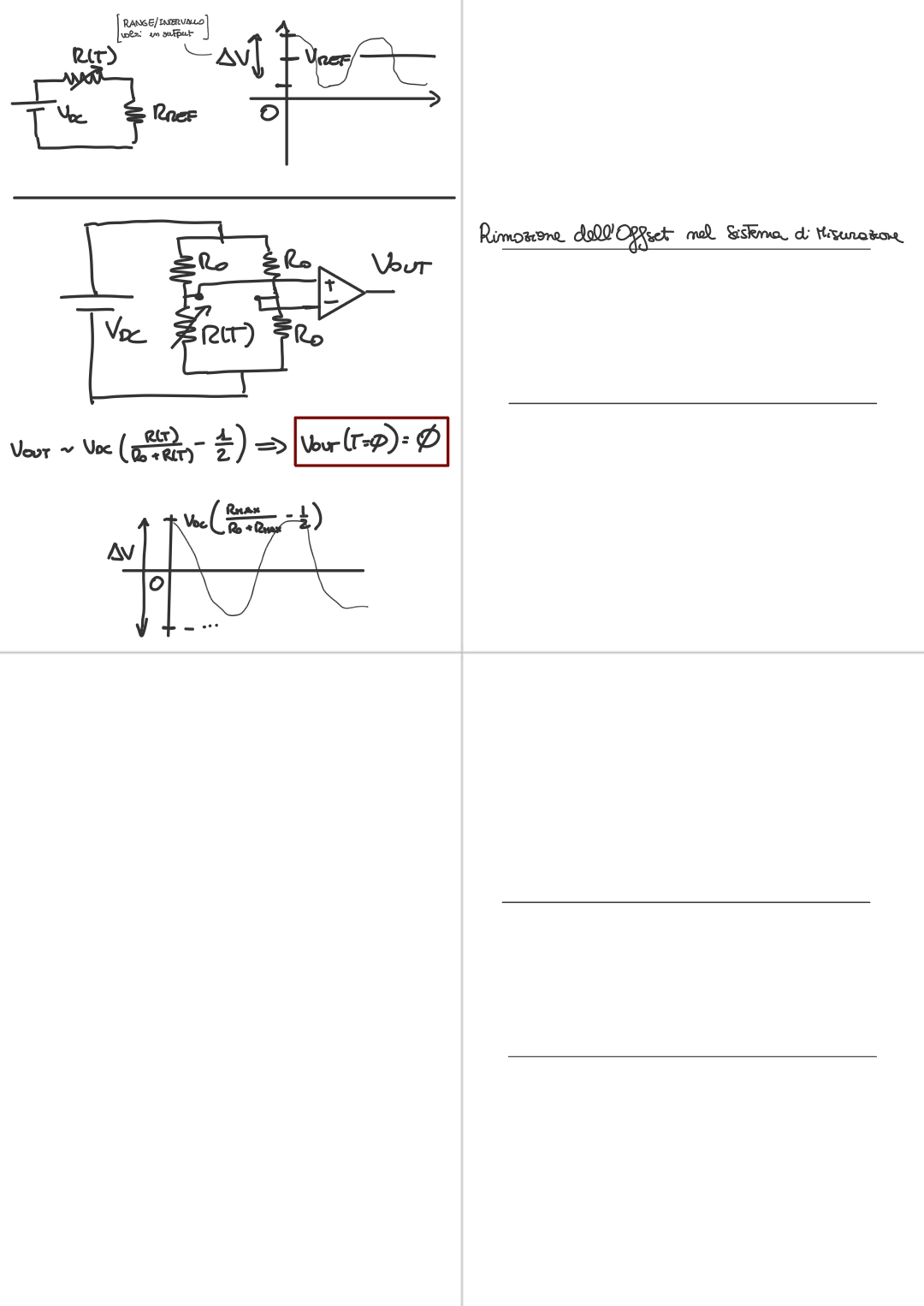
Suppose we want to measure a temperature in a small temperature range .
We measure it with a linear sensor, suppose an RTD, this is its function: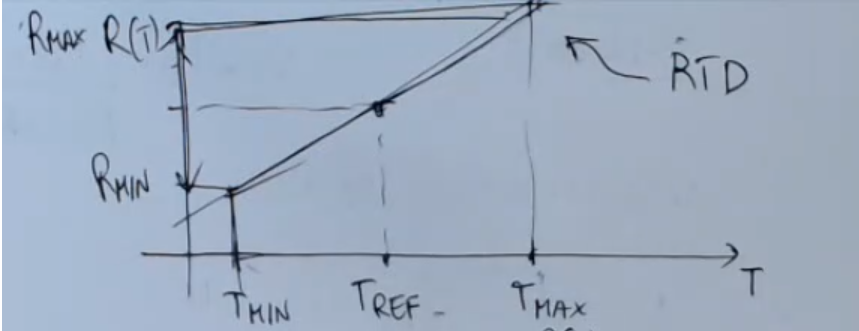
And for the input to the read-out electronics we use a simple voltage divider like so: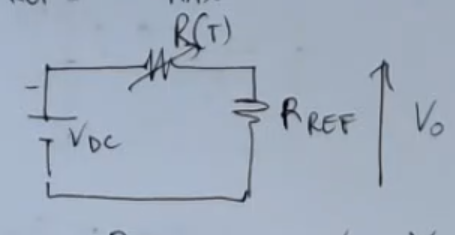
So we will have the output:With a maximum, minum, and the reference value voltage defined as:Where: is taken as .
So the output of this system will have this function: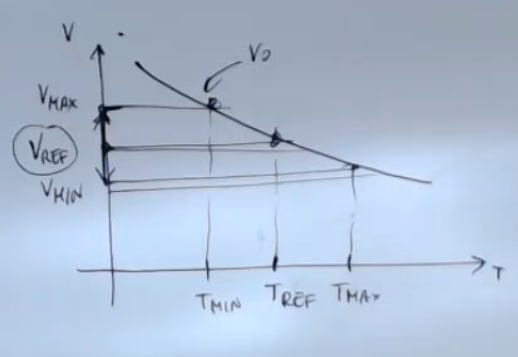
- can be seen as the offset of the system.
- While is its dynamic range, the information given by the sensor lies all in this small range that we will call .
This way we don’t fully utlize the range given by the acquisition system (A/D) in a complete measurement system, that goes for example between . Ideally I wold select an amplifier that amplify the small range into the whole range of the aquisistion sysmtem, so . But in this case we cannot do so becasue we have an offset.
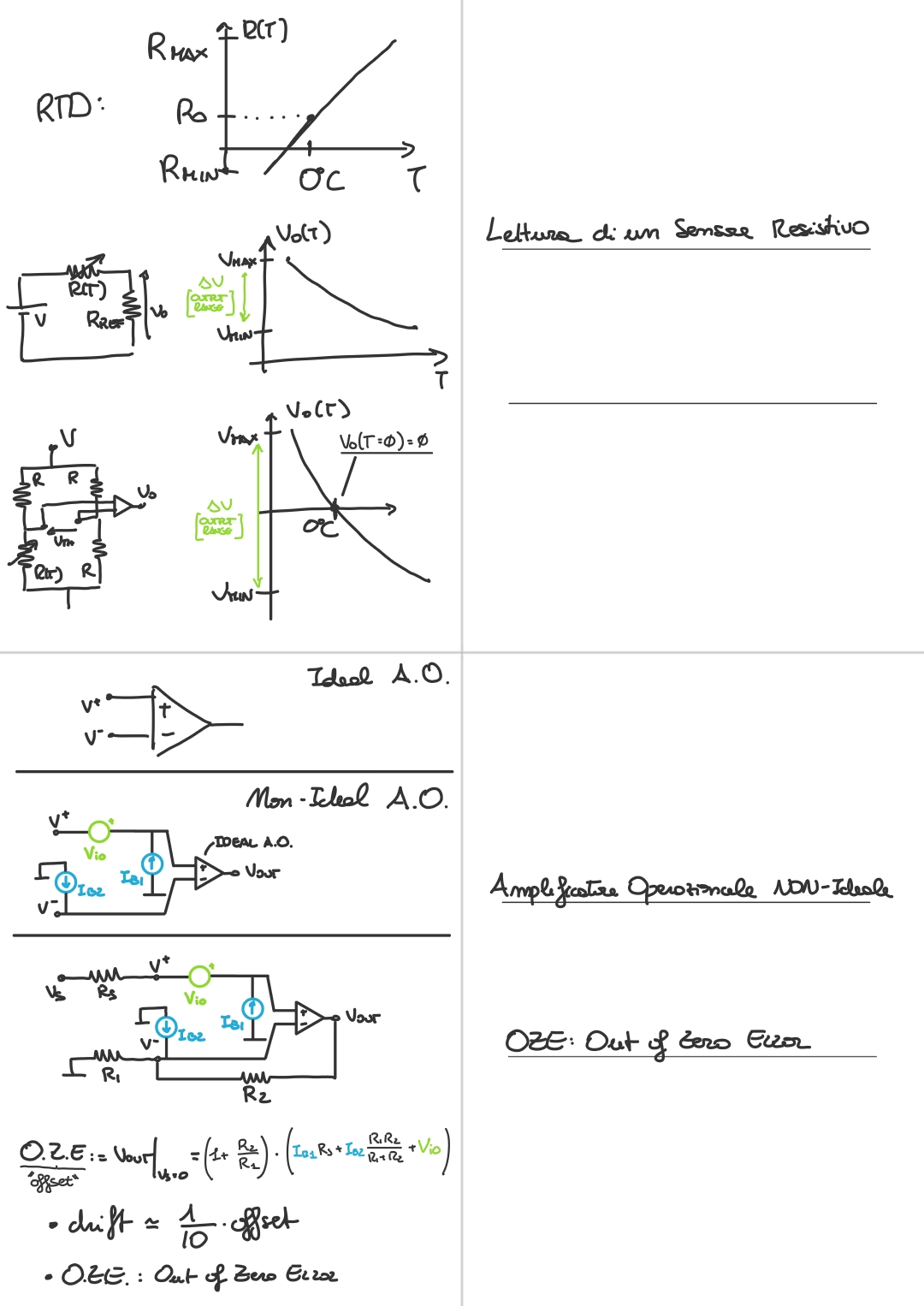
To solve this we need to compensate the offset, so bring the output signal to have a :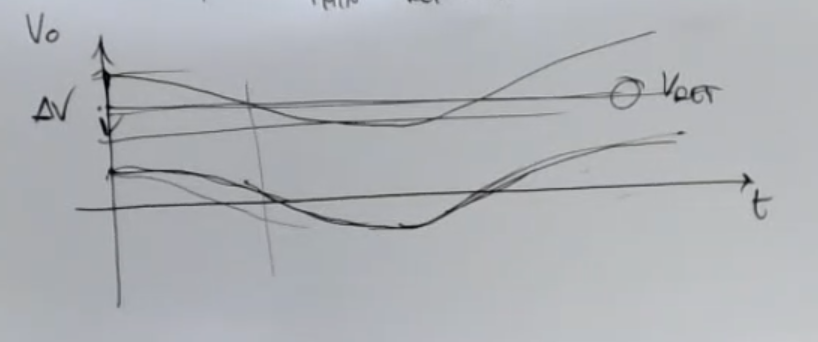 To do so we can use a balanced bridge, instead of a voltage divider, like so: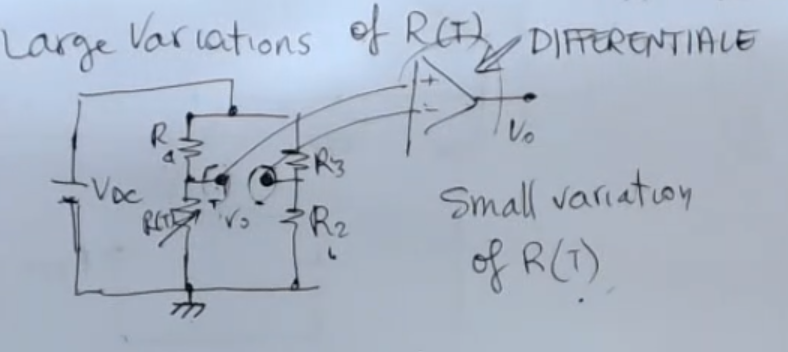
And even if we use a good linear solution for meauring a resisitance sensor: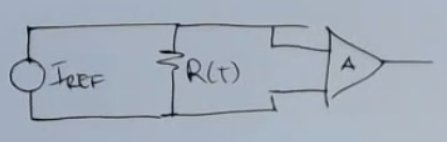 We need to consider that the sensor may be distant from the read-out electroncis, and we might need to consider the wires resistances, and this will result into another offset.
Conclusion on Amplifier’s DC Offsets
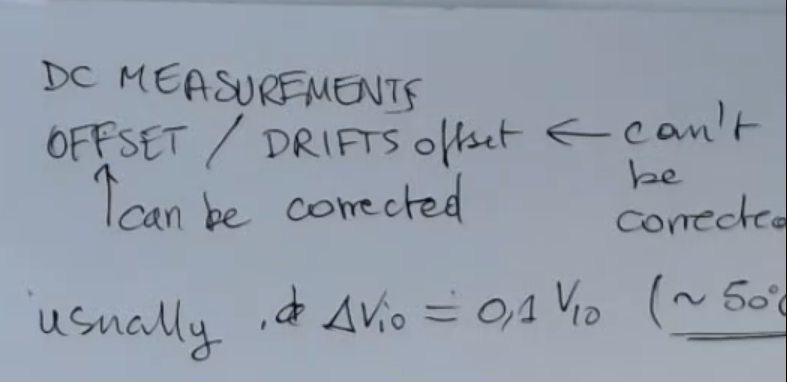
- And the part which cannot be corrected are the drifts of the offset, and this can’t be corrected.
- ==And usually you can consider drift as of the value of the offset==, in a span of about, let’s say, degrees, the whole temperature span, which you can have.