List of things to memorize:
SaM - Temperature Sensors
Link to original
SaM - Different Types of Temperature Sensors
- Table:
(Both RTDs and thermocouples can operate at very high temperatures)
(Thermocouples have a really simple structure and the best accuracy and high repeatability, however they need cold junction compensation to be used as absolute sensors, and they have a low voltage output)
(SaM - Thermistor have the lowest cost)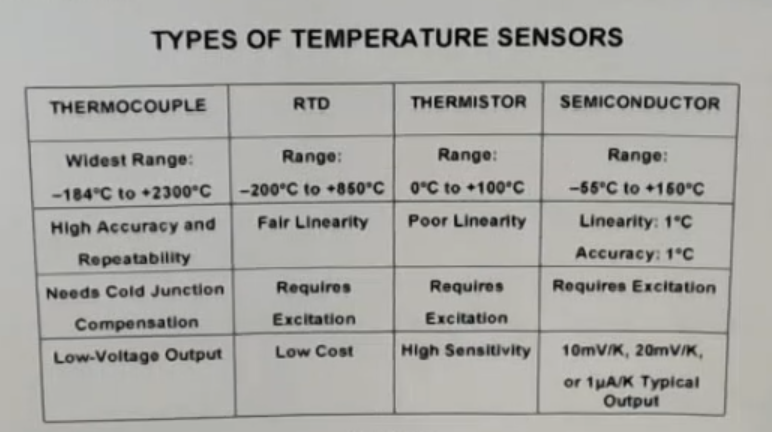
Study these:
SaM - Sensors Based on Silicon Junctions (BJT and Integrated Circuits)
- Characterisitcs:
- Absolute temperature sensors.
- We can find integrated circuits which behave linearly, and have very good performances.
- Limited temperature range, like most IC .
- BjT used as a constant current generator:
(There is a short-circuit between the base and the collector, therefore this device operates in the active region)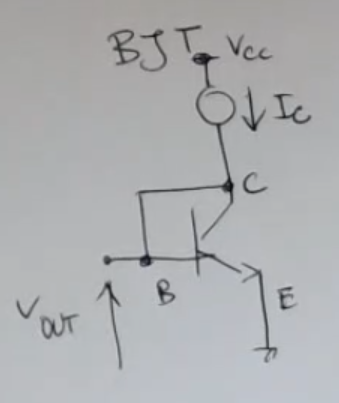
- BjT active region formula:
- Real World Measures:
- For (ambience temperature), so .
- .
- Ideally its sensitivity would be .
- Around if is not compensated, we have .NOT_SURE_ABOUT_THIS (It is a huge difference)
- Terminology:
- C is the collector, E the emitter, and B the base.
SaM - Classical Band Gap Based Temperature Sensor (3 Pins)
- parallel BjTs:
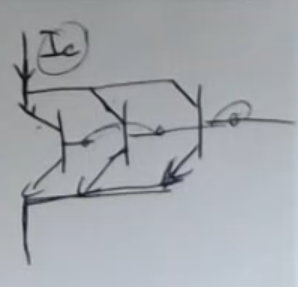
- Formula:Or:
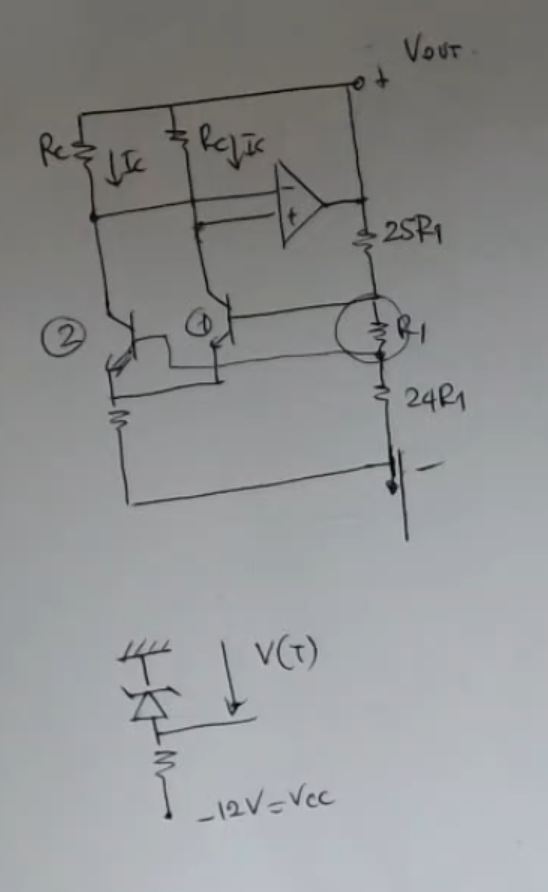
- Classical band gap based temperature sensor structure:
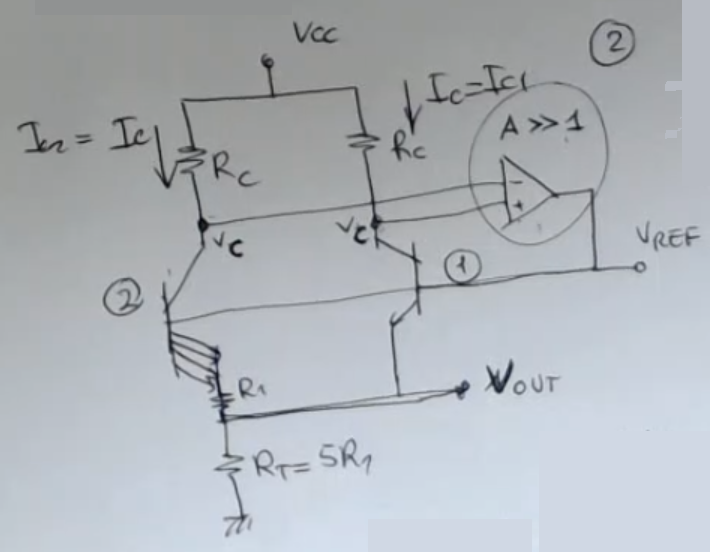
- Output formula:
(It has a linear dependance on temperature) - Real World Measures:
- Usual values for the sensitivity for this kind of devices are in the range:
- Output formula:
SaM - Classical Band Gap Based Temperature Sensor (2 Pins)
- Circuit:
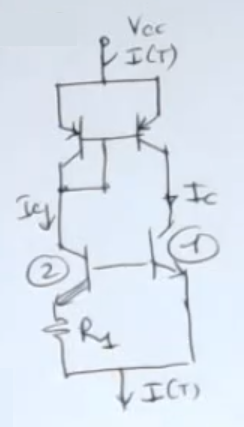
- Equivalent circuit:
(The user has to select the resistance )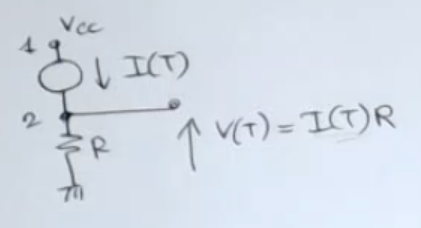
- There are also integrated circuits that behave not as current generators but has voltage generators: