In Italian:IMPORTANTE
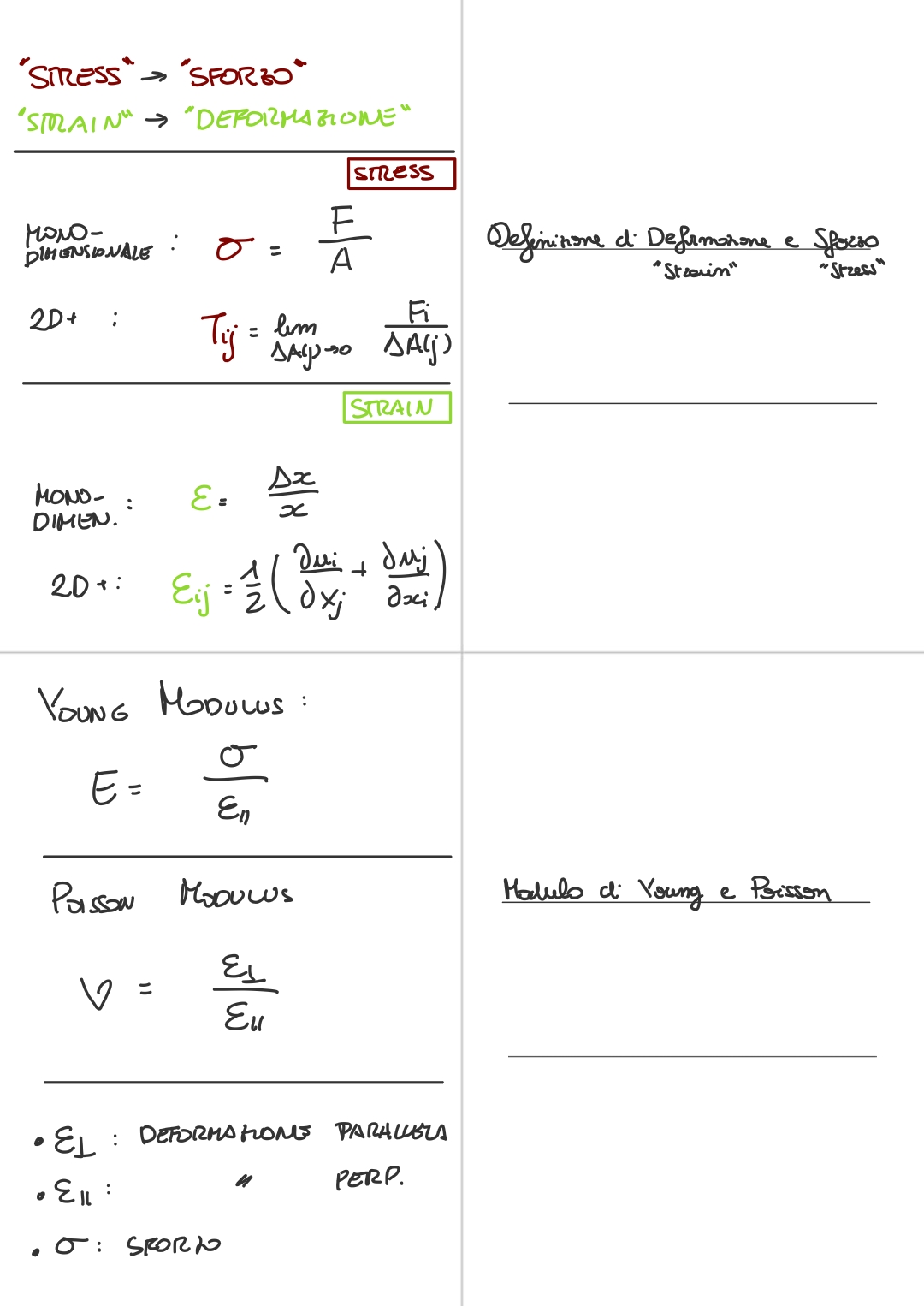
- “Stress” ⇒ “Stress”
- “Strain” ⇒ “Deformazione”
Stress (In 1 Dimension)
While for stress () using this formla:Where: - : force applied, unit of measaure (newton), . - : surface area over which the force () is applied, unit of measure .
Strain (In 1 Dimension)
- We can calculate the strain () as:Where:
- is the size of a body at rest, unit of measure .
- is the size of the deformation, unit of measure .
Stress (In Higher Dimensions)
We define the strain ( or ) as:Where:
- : -th component of the force vector
- : ==an infinitesimal small surface area of the solid, perpendicular to the “normal vector” ==.
We can distinguish between two stresses:
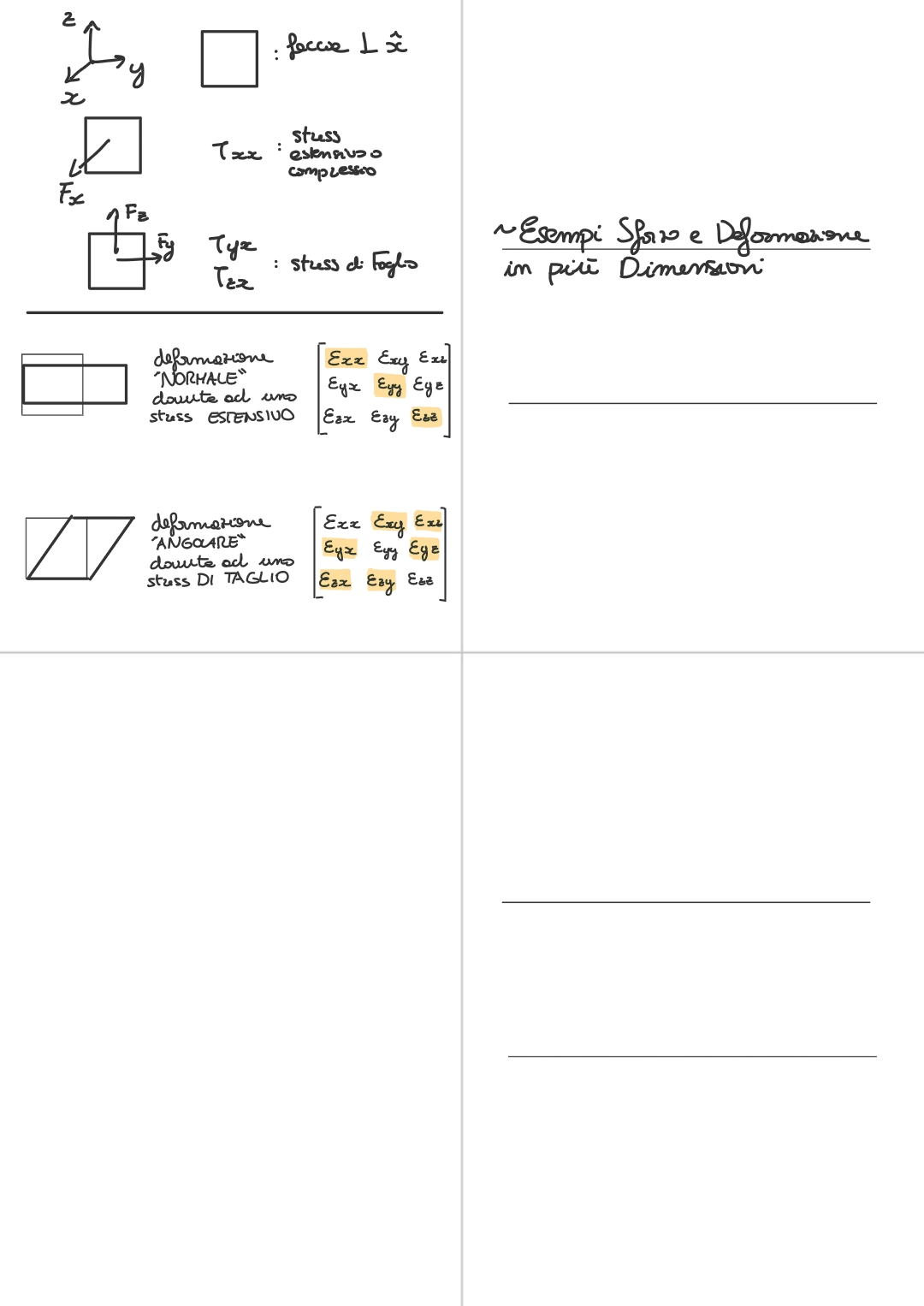
- compressive or extensive preassure: (the force is perpendicular to the face)
- shear stress: .
Here’s an example: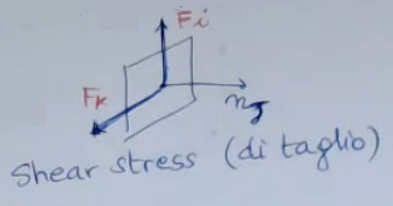
Good explenation, especially for visualizing stress in higer dimensions, can be found here (Youtube) (Don’t listen, skip through the video)
Strain (In Higher Dimensions)
==In higher dimensions both stress and strain are symmetrical tensors==.
The complete formula for strain ( or ) is given by: Where:
- is the strain direction vector, so in which direction the strain is applied, and is one of the dimension of the strain direction vector.
- is the -th axis.
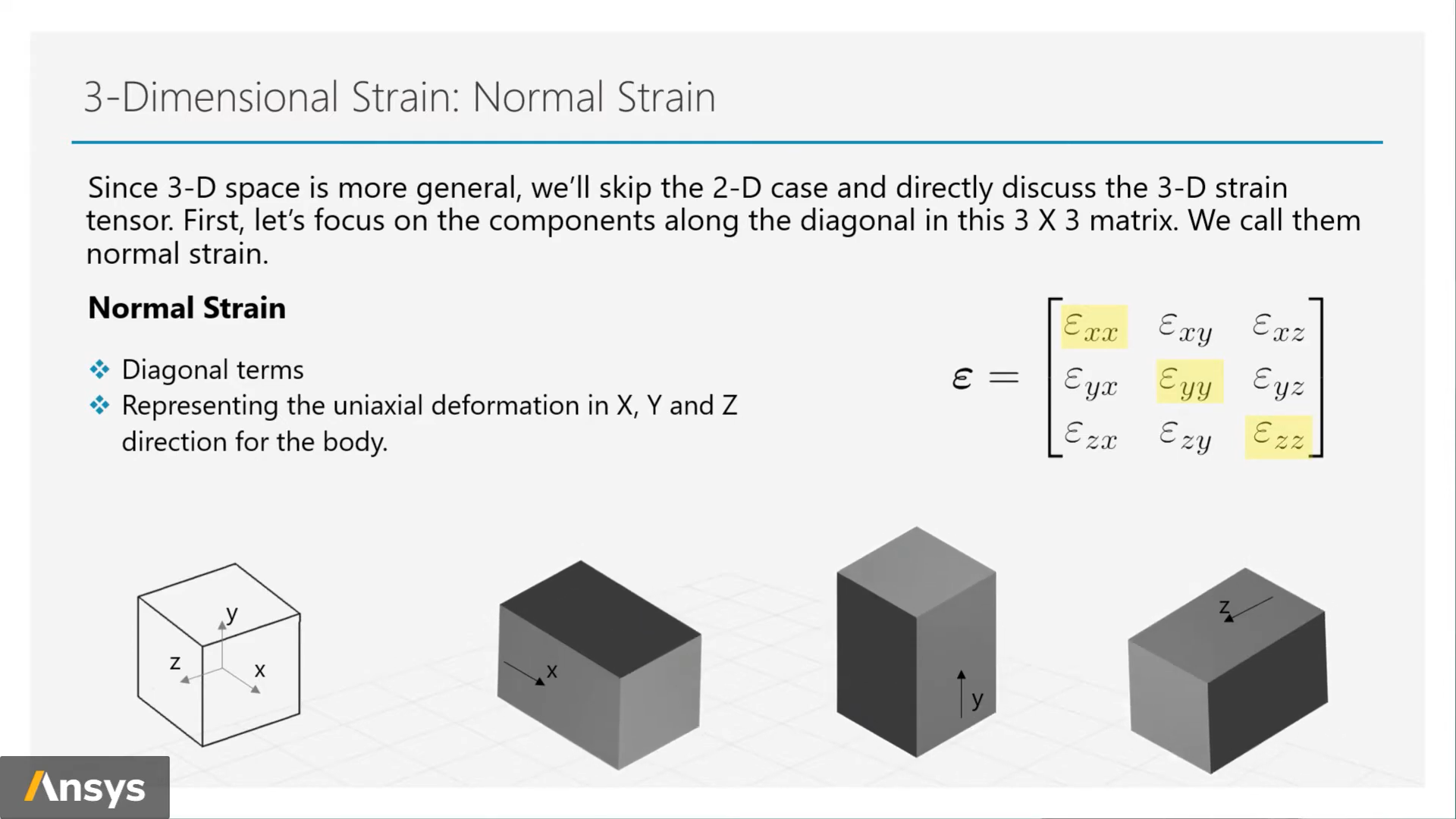
We can distinguish between two stains:
- normal strain: (change in lenght along the direction ).
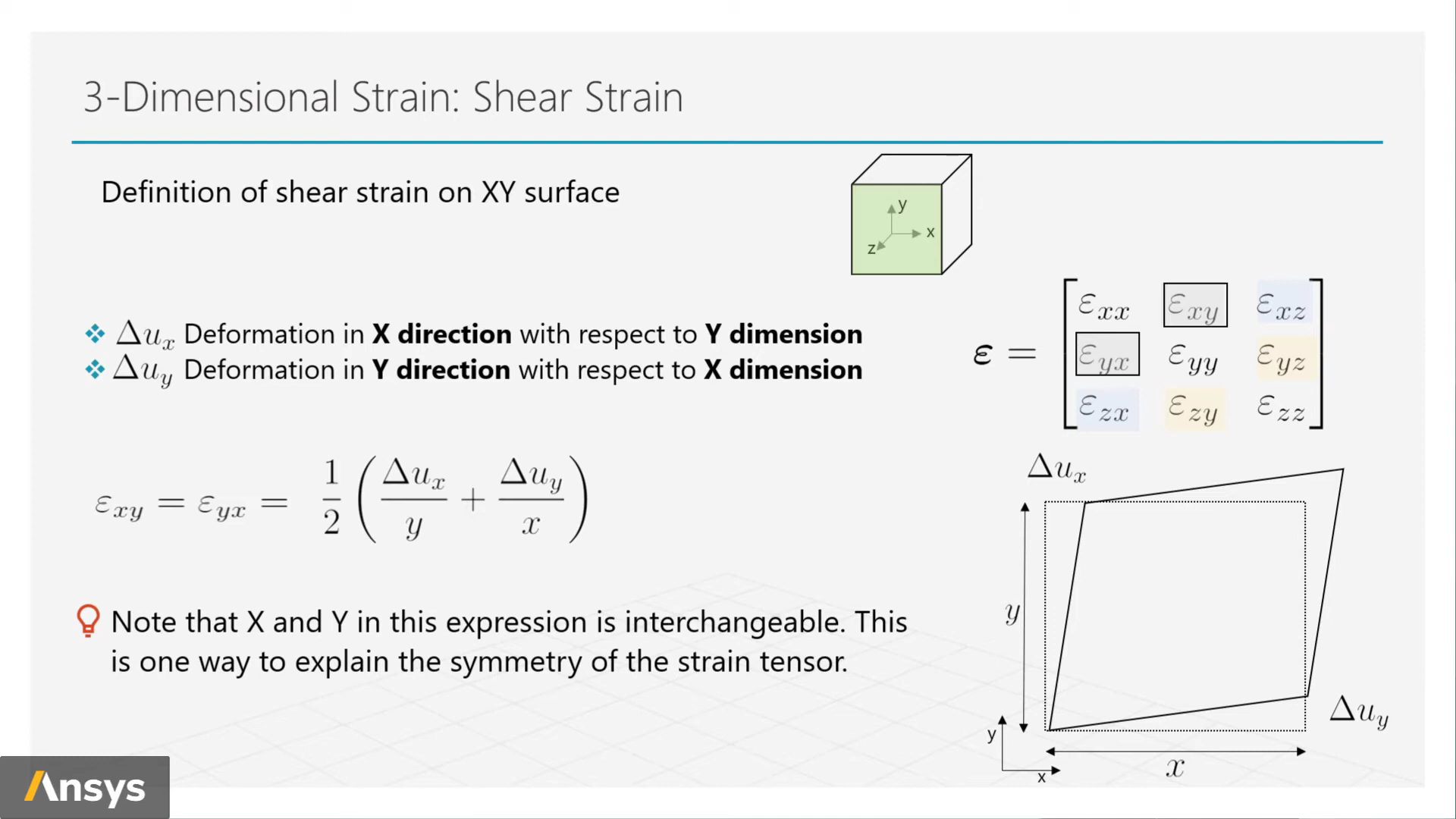
- angular deformation: .
Simple way to understand:
- normal strain: provoked by a compressive or extensive preassure: :
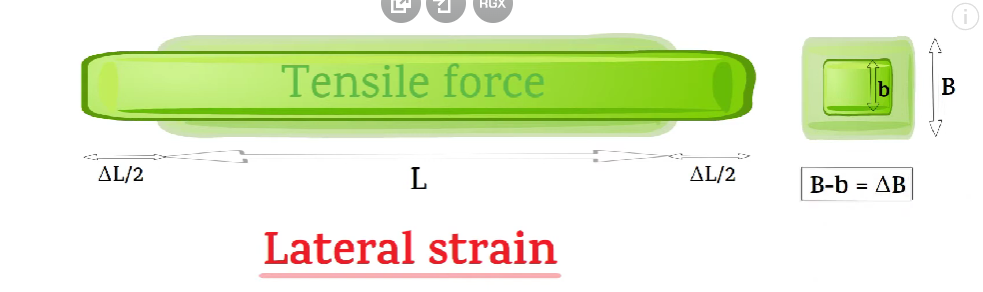
- angular deformation: , provoked by a shear stress: :
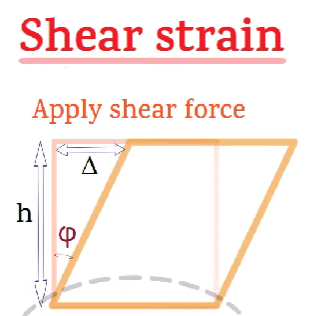
- Source: Youtube
Let’s make two examples, to better understand the strain formula:
- Source: Youtube
- Extensive or compressive strain:
- Shear strain:
Good explenation, especially for visualizing strain in higer dimensions, can be found here (Youtube) (Don’t listen, skip through the video)
- From this definitions we have (specifically when talking about collapsed yieldness tensor for isotropic materials) seen also:
- Defintion of the strain vector:IMPORTANTE And the stress vector is defined:
- Young and Poisson Modulus.
- Hooke’s Law.
Memory Card