Index
- Macro Concepts in this Lecture
- HCR - Definition of ‘Psychophysics’
- HCR - Definition of ‘Absolute Threshold’
- HCR - Definition of ‘Differential Threshold’
- HCR - Sensation Dimensions
- HCR - Absolute Threshold vs Differential Threshold
- HCR - Psychophysical Measurement Methods
- HCR - Methods of Constant Stimuli
- HCR - Psychometric Function
- HCR- YES-NO Procedure
- HCR - nAFC (n Alternatives Forced Choice) Procedure
- HCR - Method of Constant Stimuli (Differential Threshold)
- HCR - PSE (Point of Subjective Equality)
- HCR - Experiments Design Guidelines and Motivations
- HCR - Weber’s Law
- HCR - Method of Limits
- HCR - Interval of Uncertainty
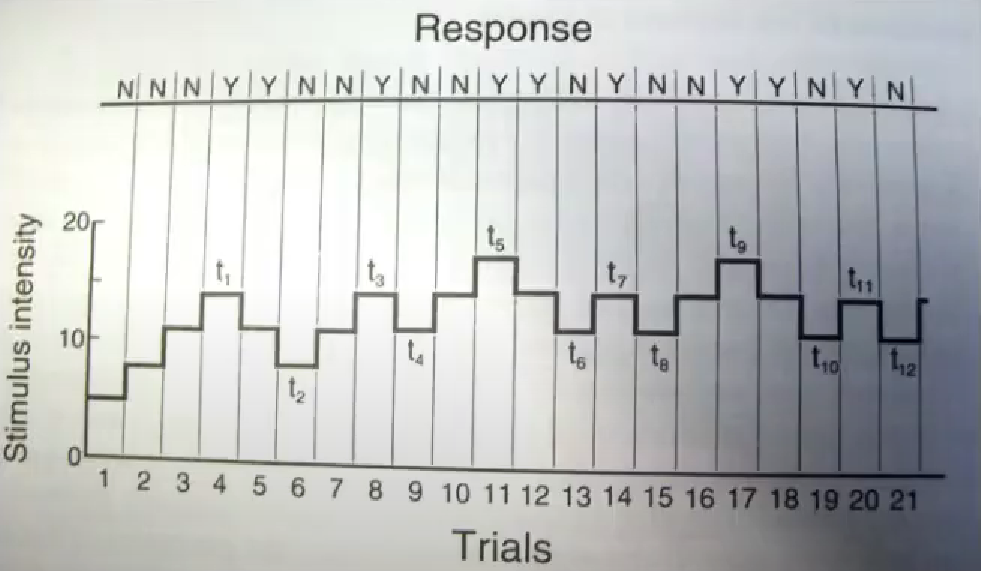
- HCR - Staircase Method
Psychophysics and Concept of Threshold
- What is Psycho-physics?
- History and example experiments
- Concept of threshold
- Concept of absolute sensitivity
- The absolute sensitivity for touch
- Principle of nomination
- The classical psychophysical methods
HCR - Definition of 'Psychophysics'
Psychophysics investigates the relationship between sensation () in the psychological domain and stimuli () in the physical domain.
- Studying perception
- Psychophysics refers to the methodology of studying perception (designing experiments, formulating models).
- Sensation
- For centuries thinkers have recognized the importance of understanding sensation in order to answer many questions like for examples:
- Is the perception an active or passive process?
- Is perception veridical? (is it truthful)
- Can perceptual mechanism be modified?
- Can we integrate different signals from different sensory modalities?
- Can sensory modalities interact?
- Principal Problem
- The goal of perception is to acquire accurate and reliable information about the environment.
- How to establish the relation between perceptions and the underlying brain mechanism?
- Objective
- We need psychophysics because:
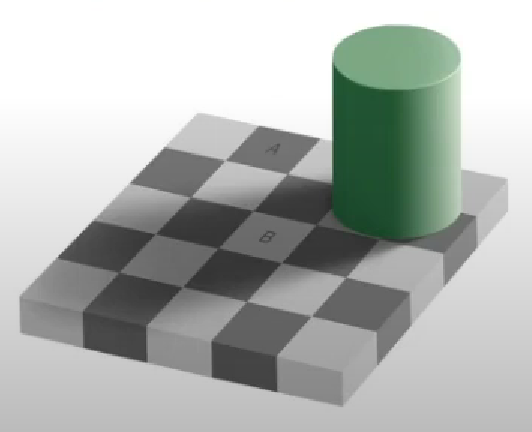
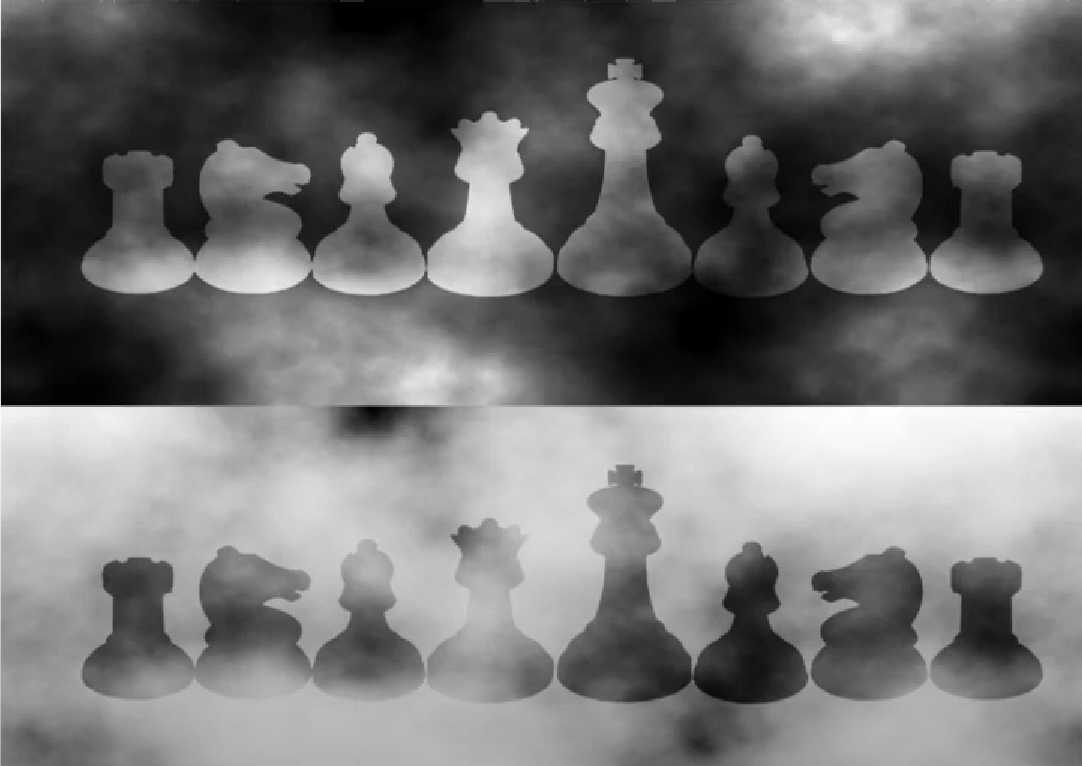
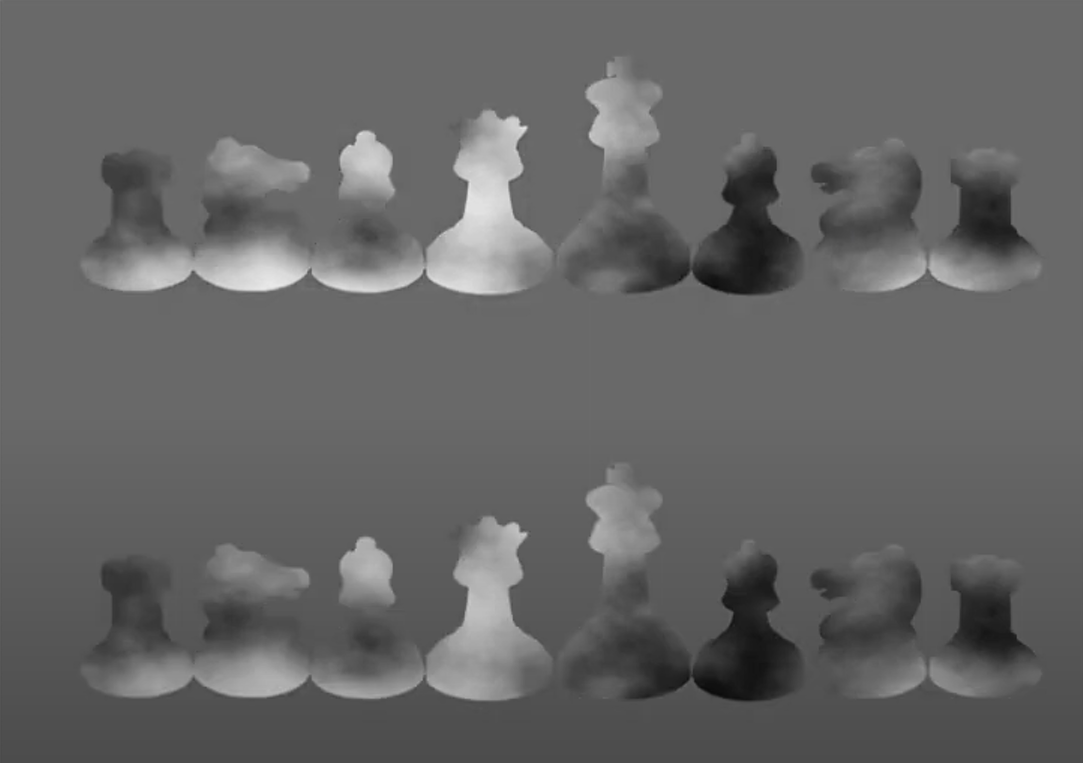
Physical dimensions Perceptual dimensions:- Perception is context dependent:
- Psychophysics helps in understanding how to establish the relation between perceptions and the underlying brain mechanisms.
- Sensory threshold
- The central concept of psychophysics is that of sensory threshold
- Mental events had to be stronger than some critical amount in order to be consciously experienced
Link to original
- Measurement of the sensitivity limits
- Weber and Fechner were interested in the measurement of the sensitivity limits of the human sense organs.
- Using measurement techniques of physics and well trained human observers, were able to specify the weakest detectable sensation in terms of stimulus energy necessary to produce them.
HCR - Definition of 'Absolute Threshold'
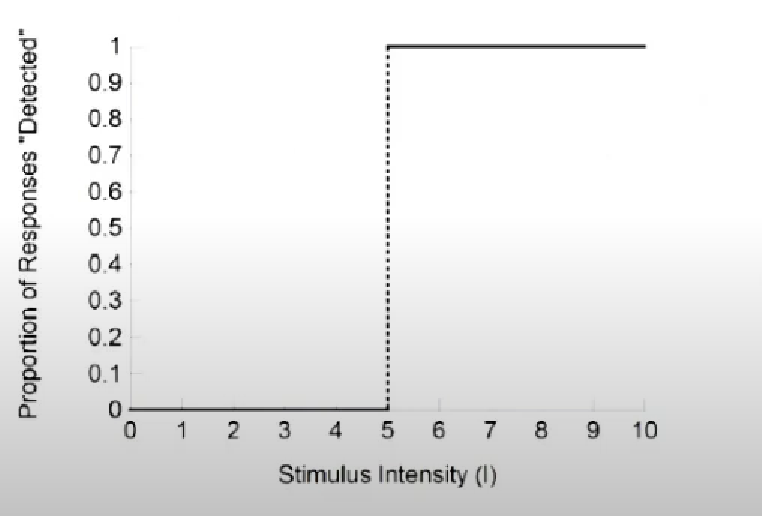
The absolute threshold was defined as the smallest amount of stimulus energy necessary to produce a sensation:
Since an organism’s sensitivity to external stimuli tends to fluctuate somewhere from moment to moment, several measurements of the threshold value of the stimulus are averaged to arrive to an accurate estimation of absolute threshold.
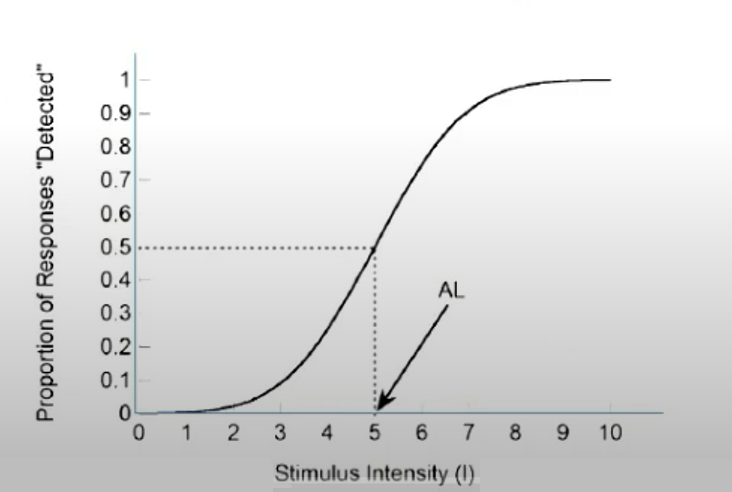
Perceptual representation of a stimulus is not constant; it involves an additive random error. It follows that the psychometric function is not a step-function. Instead it is a -shaped curve.
The A.T. is defined as the 50% percentile point:
Link to original
- Absolute Sensitivity
- Measurement of absolute threshold has led to many significant advances in understanding sensory system.
- For example it has facilitated our understanding of vision, audition, touch.
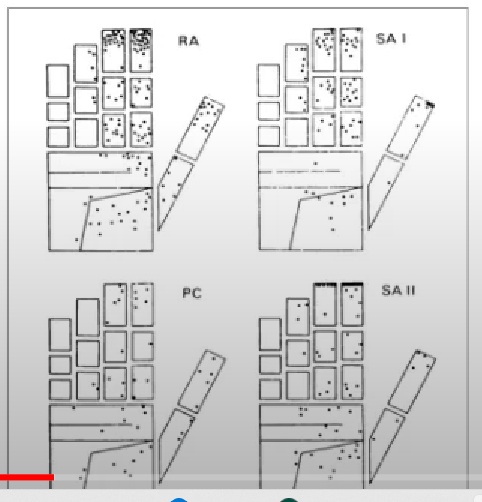
- Sensory receptors in the hands:
HCR - Definition of 'Differential Threshold'
The differential threshold is the smallest difference between two stimuli that can be detected
The differential threshold was defined as the amount of change in a stimulus () required to produce a just noticeable difference (JND) in the sensation.
When a stimulus above the AT is applied to the sense organ, the intensity of the stimulus must be increased or decreased by some critical amount before a person is able to report any change in sensation.
Applying first a little force (above AT) then just a tiny bit more will result in no change of sensation
Instead if we apply first a force equal or above AT then we add a force equal or above DT we have a change in sensation.
Link to original
- ~Ex.: JND (Just Noticeable Difference)
- Intensity stimulus = 10 units
- Stimulus must be increased to 12 units to produce a just noticeable increment in the sensation
⇒ Difference threshold = 2 units
HCR - Sensation Dimensions
Intensity isn’t the only way in which sensation can differ. Sensation can differ an at least four basic dimensions:
- Intensity
- Quality
- Extension
- Duration
By varying along the dimension of “extension”, the DT (Differential Threshold) can be measured for variation in spatial aspect of the physical such as:
Link to original
- Size
- Location
- Separation
- Duration
HCR - Absolute Threshold vs Differential Threshold
The concept of sensory noise provides a principle for understanding absolute and differential threshold:
Link to original
- ABSOLUTE THRESHOLD:
Value of the stimulus intensity needed to increase the neural activity above the sensory noise level by some critical amount.- DIFFERENTIAL THRESHOLD:
Change in the stimulus intensity needed to produce a critical difference in neural activity level associated with two intensity of stimulation.
HCR - Psychophysical Measurement Methods
NOT_SURE_ABOUT_THIS
Old notes taken really fastPsychophysical methods and procedures are useful in determining threshold.For a perfect observer, threshold is the point where the stimulus can just be detected or where you just cannot detect the stimulus.
Humans are not perfect observers, and often thresholds are defined in probabilistic terms: for example, half the points presented would be detected and half would not.
Threshold variability most likely depends on neural noise.
Measurement of visual response can be achieved through several methods.
Link to original
- Psychophysical methods:
- Methods of constant stimuli:
- Method of Limits:
- **AT (Absolute Threshold*).
- DT*** (Differential Threshold).
- Staircase (modified methods of limits).
- Methods of adjustment:
- AT (Absolute Threshold).
- DT (Differential Threshold).
- Adaptive Methods:
- Maximum Likelihood Methods (QUEST).
HCR - Methods of Constant Stimuli
The method of constant stimuli is the procedure of repeatedly using the same set of stimuli (usually between 5 and 9) throughout the experiment.
The 50% range is located between this range.
- The lower end ⇒ should be a stimulus that is never detected.
- The upper end ⇒ should be always detected
As the intensity level is increased within this range, the likelihood of detecting the stimulus will systematically increase in this way the percentage of detections as a function of stimulus intensity and is determined.
- How can we prepare an experiment with this method?
- Preliminary observation should be done in order to locate the approximate range of values in which the stimulus of lowest intensity is rarely perceived and the stimulus of highest intensity is almost always perceived.
Link to original
- How can we construct an experiment with this method?
- The procedure requires that each stimulus be presented repeatedly, usually 100 times or more in a random order.
- During the experiment a count of the number of yes or no response for each stimulus intensity level is kept.
- For each stimulus the proportion (p) of yes responses is then computed and a graph called psychometric function is constructed.
HCR - Psychometric Function
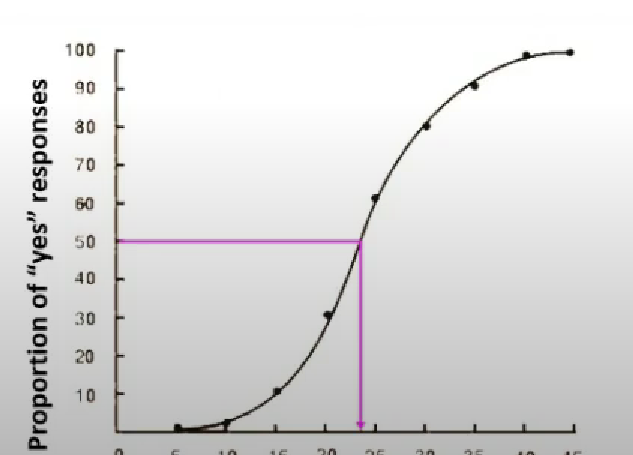
Stimulus intensity is plotted on the abscissa and the proportion of yes responses is plotted on the ordinate.
The absolute threshold is defined as the stimulus intensity for which the proportion of trials resulting in yes response is 50%.
In this case the 50% does not correspond to any of the stimuli used and the curve must be fitted and the threshold estimated.
An ogive curve has been fitted to the points and the stimulus intensity for the 50% point can be estimated as (23 units).
In fact variation of biological and psychological measurement tends to be normally distributed when the frequencies of proportion of measurement of various magnitudes are plotted against the dimension on which variation is occurring, the result is usually the bell-shaped normal distribution curve.
The best fitting curve of the date points in an -shaped function → the psychometric function often follow the ogive shape.
The ogive curve is a cumulative form of this distribution and how the proportion of case below a point on the normal distribution increases as the magnitude of the measurement increases.
The psychometric function can be determined by determining the best fitting through a mathematical technique (~ex.: the method of least squared). The resulting estimation describe the values that minimizes the squared deviations of the empirical values from the function.
Link to original
HCR- YES-NO Procedure
The yes-no procedure involves the subject judging the presence or absence of the signal. A stimulus is presented, during which the subject has to make a yes or no response. Correct responses can range from 0% to 100%.
With this procedure the subject are given a long series of trials, usually more than 300 in a session in which they have to judge the presence or absence of a signal.
Link to original
- Problems with this procedure:
- This method is influenced greatly from the subject subjective criterion.
- An excellent technique for obtaining a measure of the observer’s sensitivity which is uncontaminated by fluctuations in criterion is the forced choice procedure.
HCR - nAFC (n Alternatives Forced Choice) Procedure
This procedure involves forcing the subject to choose from alternative choices, one of which contains the stimulus. A TWO-Alternative Forced Choice (2AFC) describes a subject choosing between two alternatives. Choosing from 4 alternatives is called 4AFC Choosing from 6 alternatives is called 6AFC
Link to original
- 2AFC → 75% Threshold:
- As there is already a 50% chance of a correct response with 2AFC, threshold is commonly considered 75% seen level:
- 4AFC → 62.5% Threshold:
- For 4AFC seeing as the probability of error increases (only 25% of choosing the correct answer), the threshold is lowered to 62.5% (instead of 75% for 2AFC, or 50% for the yes-no procedure)
- 6AFC → 58,33%
- For 6AFC is at 58,33%
-Procedure/../../Notes--and--Images/Pasted-image-20220304152342.png)
HCR - Method of Constant Stimuli (Differential Threshold)
This method can be also used for measuring the differential threshold.
The task of the observer is to examine pairs of stimuli and to judge which produces a bigger magnitude
- One of the two has a fixed value: STANDARD STIMULUS (St)
- The other one has a variable value, and is called COMPARISON STIMULUS (Co) and is changed from trial to trial, being sometimes greater than, sometimes smaller, and sometimes equal to the value of the standard stimulus.
Usually five, seven or nine values of comparison, separated by equal distances on the physical scale, are employed.
The values of the comparison are chosen so that the stimulus of greater magnitude is always judge as greater than the standard and the stimulus of less magnitude is always judge as smaller than the standard.
There are usually the same number of comparison stimuli above and below the standard stimulus and the subject report which has the greater sensory value.
Under ideal conditions standard and comparison stimuli would be presented together in space and time to permit optimal discriminability. Since this ideal is impossible in fact sensation occurring in the same time and initiated at the same receptive areas would blend together and become completely indiscriminable.
The two stimuli must be presented to different receptive areas at the same time, or to the same receptive area at different times.
The particular circumstances of an experiment usually determine whether the stimuli are presented simultaneously or successively and to the same or to different receptive areas.
Both the conditions may lead to certain errors and these have to be controlled.
- Space Errors
- If stimuli are presented to different receptive areas judgment may be affected by differences between the receptive area as well as differences between stimuli.
- To control the effect of space error, the standard stimulus may be presented on half of the trials to one receptor area, and on the half of the trials to the other receptor area.
- In this way the effect of spatial location would be neutralized.
- Time Errors
- To control the effects of time errors, the standard stimulus may be presented on half of the trials first and on half of the trials after the comparison.
- In this way the effect of temporal location would be neutralized.
Link to original
- Unbiased estimates
HCR - PSE (Point of Subjective Equality)
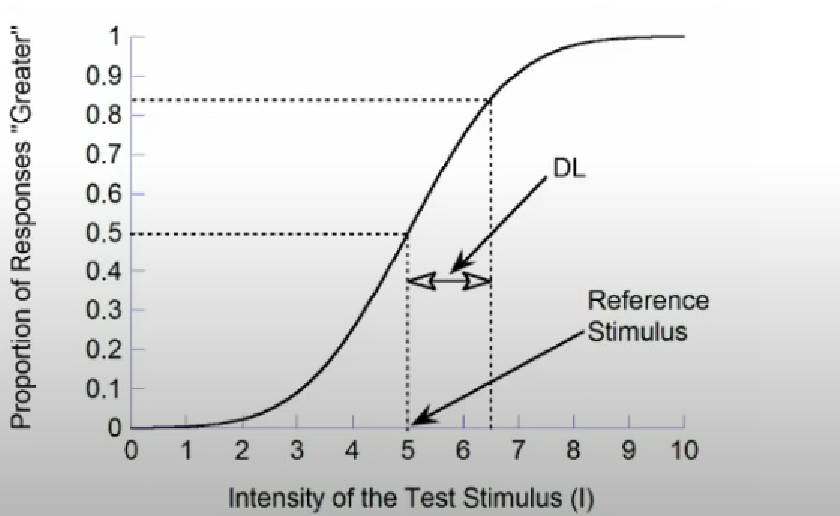
In a discrimination experiment when the observer can’t perceive any difference, we expect the proportions of greater and less responses to be about equal (~ex.: 0.5 point off the 50% threshold).
This point is called PSE: Point of Subjective Equality.
In this point the value of the comparison stimulus, over a large number of trials, is subjectively perceived as equal to the standard stimulus.
The difference between PSE and St is called Constant Error (CE) and reflects some uncontrolled factor’s systematic influence on the measurements being taken: Since PSE represents a complete lack of discrimination, and because 0 and 1 greater than responding is perfect discrimination. The intermediate proportion points of .25 and .75 have been used to find the DT.
We can determine the DT upper and lower, that after are averaged to obtain the final value. The steepness of the PF (Psychometric Function) depends on the observer’s differential sensitivity (step slopes yield small DT).
The slope of PF is something used interchangeably as measures of sensitivity.
~Ex.: Psychometric Curve:
Link to original
- ~Ex.: Psychometric function:
/../../Notes--and--Images/Pasted-image-20220304155940.png)
/../../Notes--and--Images/Pasted-image-20220304160022.png)
HCR - Experiments Design Guidelines and Motivations
- Motivation
- The term experiment is defined as the systematic procedure carried out under controlled conditions in order to discover an unknown effect, to test or establish a hypothesis, or to illustrate a known effect.
- When analyzing a process, experiments are often used to evaluate:
- Which process inputs have a significant impact on the process output.
- What the target level of those inputs should be to achive a desired result (output)
- Experiments can be designed in many different ways to collect this information.
Link to original
- Experiments Design Guidelines
- Uncontrollable factors that include variation under normal operating conditions are referred to as “noise factors”.
- These Factors, such as multiple machines, multiple shifts, raw materials, humidity, … can be built into the experiment so that their variation doesn’t get concentrated into the unexplained, or experiment error.
- A key strength of Designed Experiments is the ability to determine factors and settings that minimize the effect of the uncontrollable factors.
HCR - Weber's Law
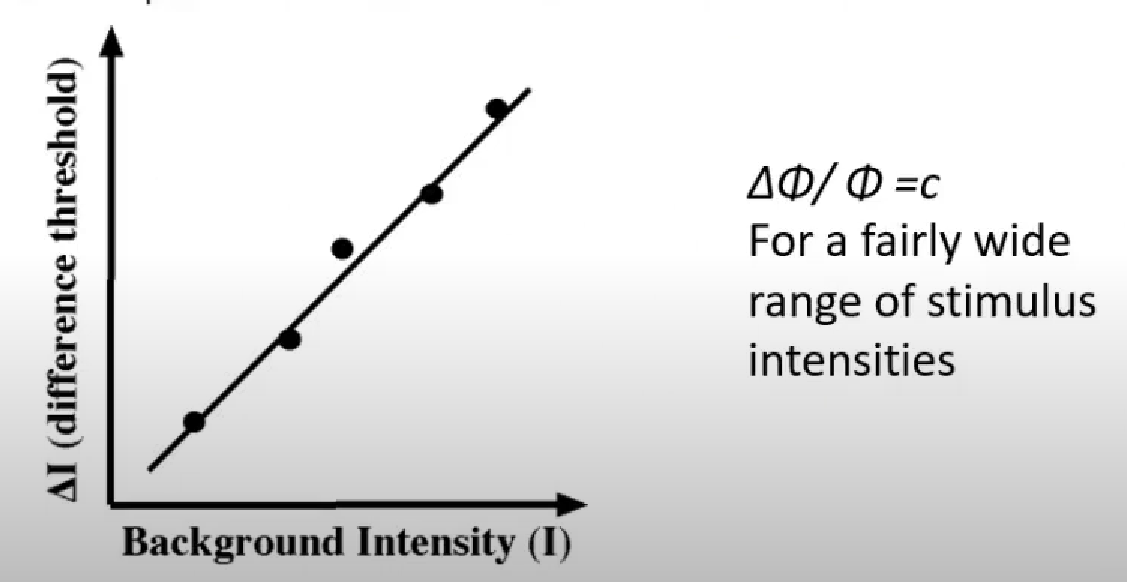
Relation between the differential threshold for intensity and the intensity level of the stimulus:
~ Ex.: DT : 2 units with intensity level of the stimulus = 10 units
What happens when the intensity level of the stimulus is 20, 30, 50, …?
Below is a plot of some hypothetical data showing Weber’s Law. The slope of the line is the Weber Fraction:
Whether the stimulus is applied to eye, skin, nose, tongue or other senses there is a lawful relationship between the size of the difference threshold and the stimulus intensity level.
Valid for a range of stimulus intensities, it’s a good baseline to compere performance.
But it’s not always true ⇒ increase greatly at extremely low stimulus intensities.
Link to original
HCR - Method of Limits
The method of limits is perhaps the most frequently used technique for determining sensory threshold.
The method is less precise than the method of constant stimuli but is far less time consuming and is therefore used much more extensively.
When we have to choose the values for applying the method of constant stimuli, the few minutes taken to estimate the location of the threshold would be well spent by this method.
The experiments starts by presenting a stimulus well above or well below threshold; on each successive presentation, the threshold is approached by changing the stimulus intensity by a small amount until the boundary of sensation is reached.
The stimuli are manipulated in either an ascending series or a descending series.
- If the series is ascending we start with a weak stimuli and increase it until the observer reports its presence, the experiment is stopped.
- Instead if the series is descending we start with the presence of the stimuli and decrease it until the observer cannot perceive it anymore.
These two type of experiments are called respectively:
- Ascending limit
- Descending limit
- Error of Habituation
- Making the same response also when the threshold is reached.
- Can be reduced with clear instruction, demonstration and practice runs.7
Link to original
- Error of Expectation
- May anticipate the arrival of the stimulus.
- Can be reduced by changing series and starting intensity.
HCR - Interval of Uncertainty
The range on the stimulus dimension over which an observer cannot perceive a difference between the comparison and the standard stimuli is called the interval of uncertainty (IU) and is computed by subtracting the mean lower limen (Ll) from the mean upper limen (Lu)
Link to original
- The Lu and Ll are calculated using the ascending and descending limits.
HCR - Staircase Method
A variation of the method of limits.
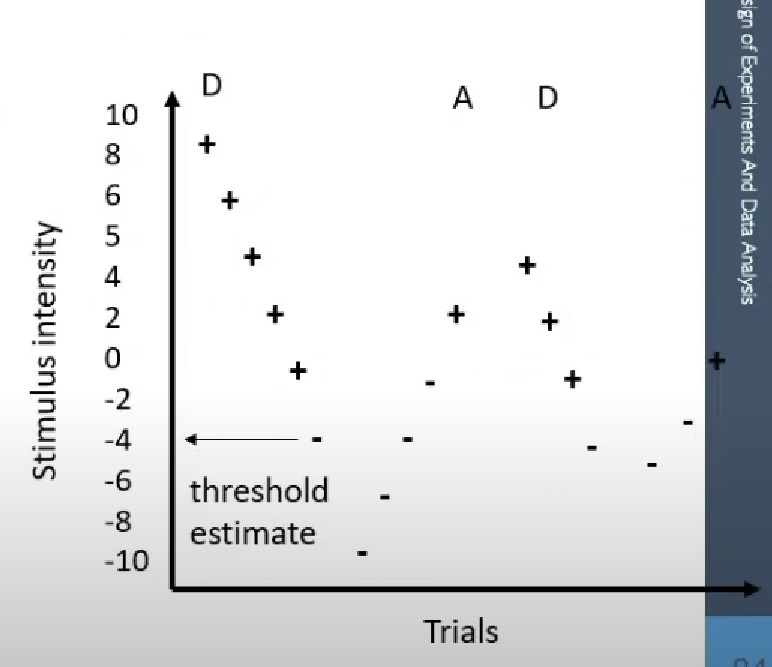
Stimulus intensity is progressively increased (ascending limits) until the observer reports seeing the stimulus, then is progressively reduced (descending limits), until the subject reports not seeing the stimulus.
The size of the steps must be chosen with care:
- Steps too large : the precision is compromised
- Steps too small : many presentation of the stimulus may be necessary.
Threshold is considered the average of several of these reversal points.
Possible Errors:
Staircase problem:
- The observer were trusted to report honestly whether or not they perceived a stimulus.
Link to original
- ~Ex.: Staircase Method