Psychophysics investigates the relationship between sensation () in the psychological domain and stimuli () in the physical domain.
- Studying perception
- Psychophysics refers to the methodology of studying perception (designing experiments, formulating models).
- Sensation
- For centuries thinkers have recognized the importance of understanding sensation in order to answer many questions like for examples:
- Is the perception an active or passive process?
- Is perception veridical? (is it truthful)
- Can perceptual mechanism be modified?
- Can we integrate different signals from different sensory modalities?
- Can sensory modalities interact?
- For centuries thinkers have recognized the importance of understanding sensation in order to answer many questions like for examples:
- Principal Problem
- The goal of perception is to acquire accurate and reliable information about the environment.
- How to establish the relation between perceptions and the underlying brain mechanism?
- Objective
- We need psychophysics because:
Physical dimensions Perceptual dimensions: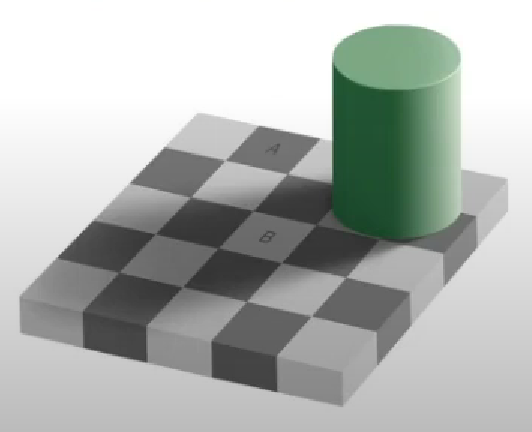
- Perception is context dependent:

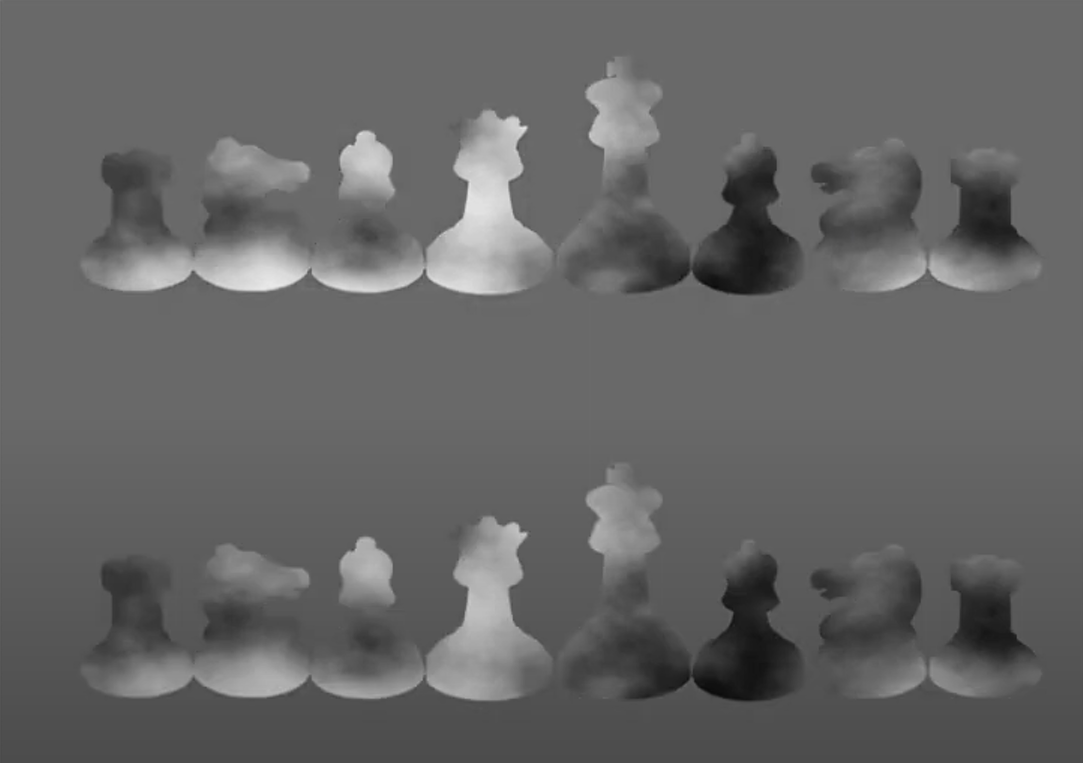
- Psychophysics helps in understanding how to establish the relation between perceptions and the underlying brain mechanisms.
- We need psychophysics because:
- Sensory threshold
- The central concept of psychophysics is that of sensory threshold
- Mental events had to be stronger than some critical amount in order to be consciously experienced
- Measurement of the sensitivity limits
- Weber and Fechner were interested in the measurement of the sensitivity limits of the human sense organs.
- Using measurement techniques of physics and well trained human observers, were able to specify the weakest detectable sensation in terms of stimulus energy necessary to produce them.