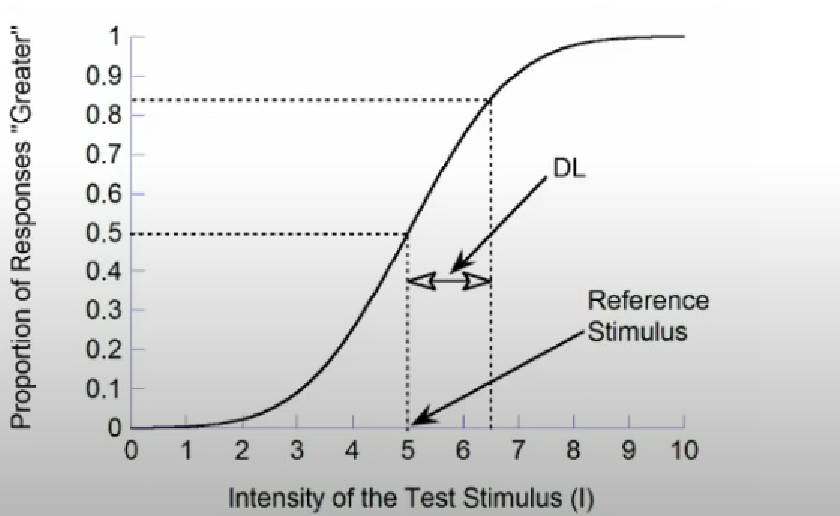
The differential threshold is the smallest difference between two stimuli that can be detected
The differential threshold was defined as the amount of change in a stimulus () required to produce a just noticeable difference (JND) in the sensation.
When a stimulus above the AT is applied to the sense organ, the intensity of the stimulus must be increased or decreased by some critical amount before a person is able to report any change in sensation.
Applying first a little force (above AT) then just a tiny bit more will result in no change of sensation
Instead if we apply first a force equal or above AT then we add a force equal or above DT we have a change in sensation.
- ~Ex.: JND (Just Noticeable Difference)
- Intensity stimulus = 10 units
- Stimulus must be increased to 12 units to produce a just noticeable increment in the sensation
⇒ Difference threshold = 2 units