Remember:
Syncronization happens in particular networks. Syncronization is one of the simpler example of “self-organization”.
Take two equation representing two distinct mass-spring systems:
Leaving the first equaiton untuched (since it serves only to define in terms of ODE equations), we can add a term called “coupling parameter” that depends on a variable of the second system:NOTE: for this term is equal to ⇒ This term is active only when these two variables are different.
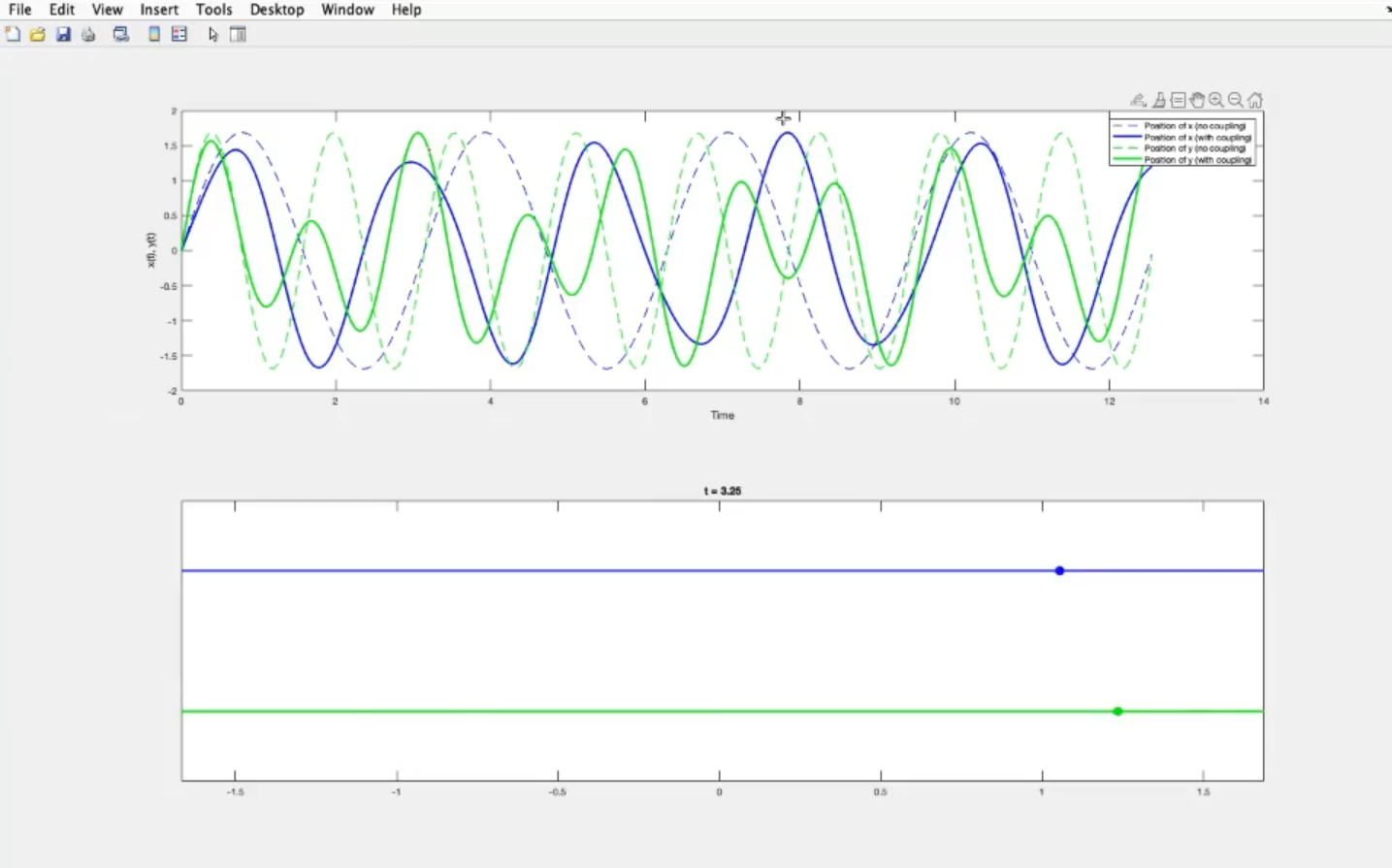
Let’s see how the graph of these two systems change when we increase the or “coupling parameter”.
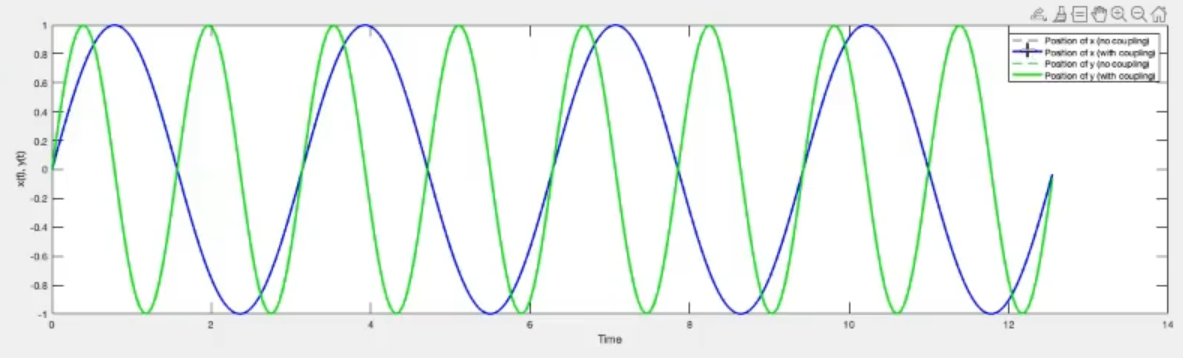
- For :
Here’s the base example, without coupling.- For :
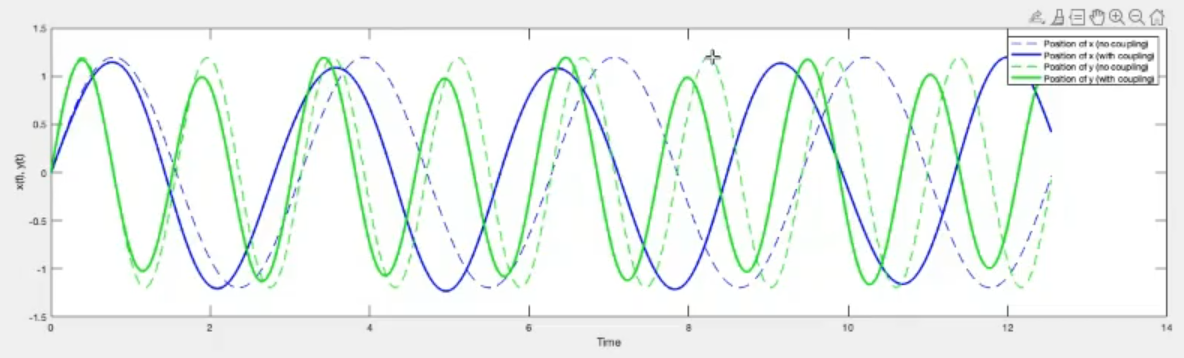
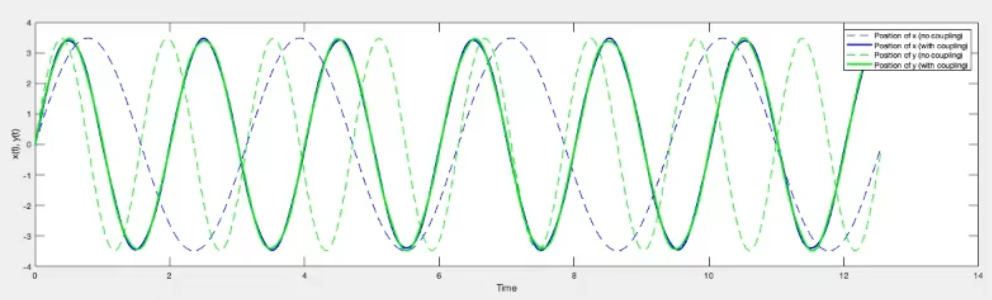
We begin to see some changes, the continous lines are the real systems (with coupling), the dotted line are are the systems without coupling (seen before).- :
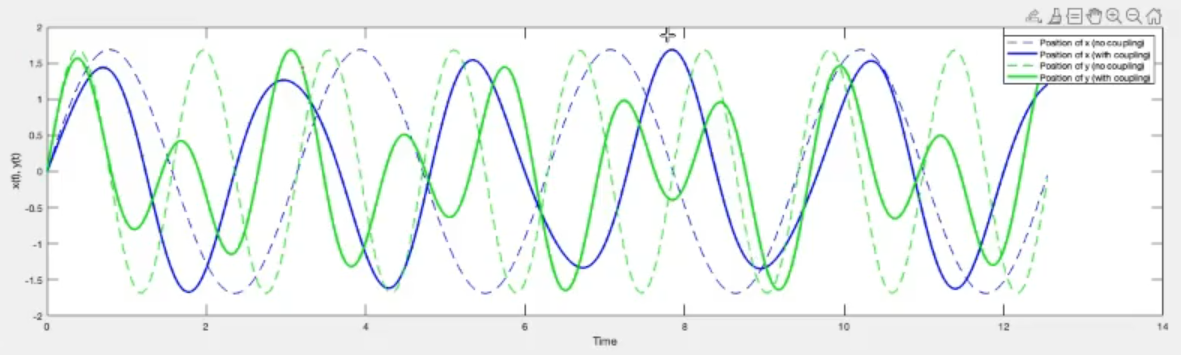
- :
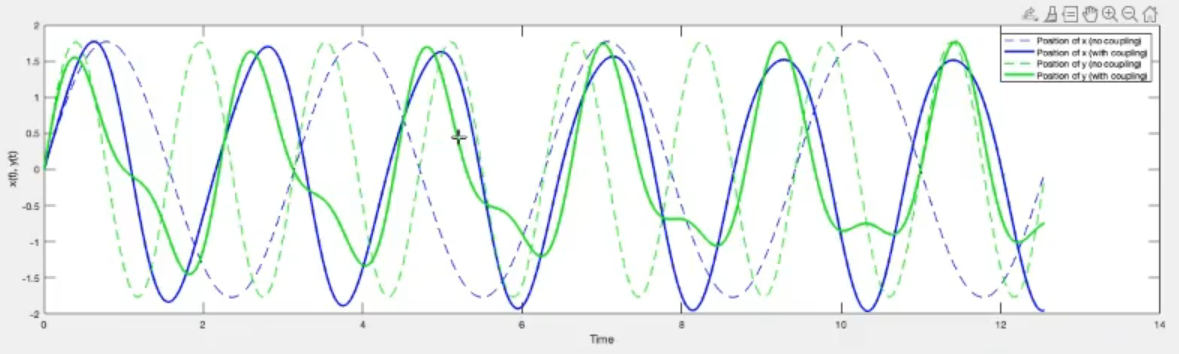
- , here we have an almost perfect matching:
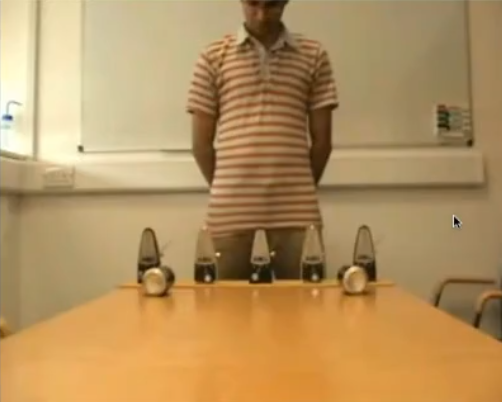
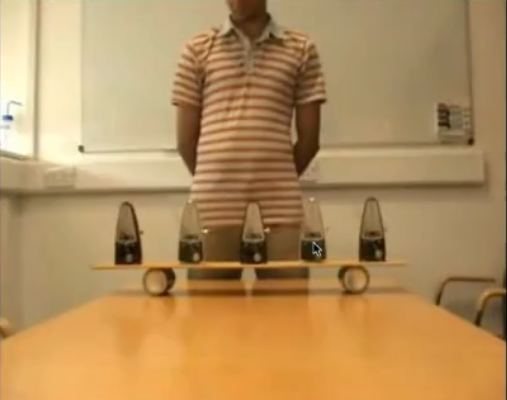
- These metronomes started with different initial conditions, will syncronize, due how the “system is built”.
- Generally we can say that to create a syncronization between multimple systems, we need to create a connection between them, in this example the connection is the plank suspended on two cans of soda.
- Syncronization happens in particular networks.
- Syncronization is one of the simpler example of “self-organization”.
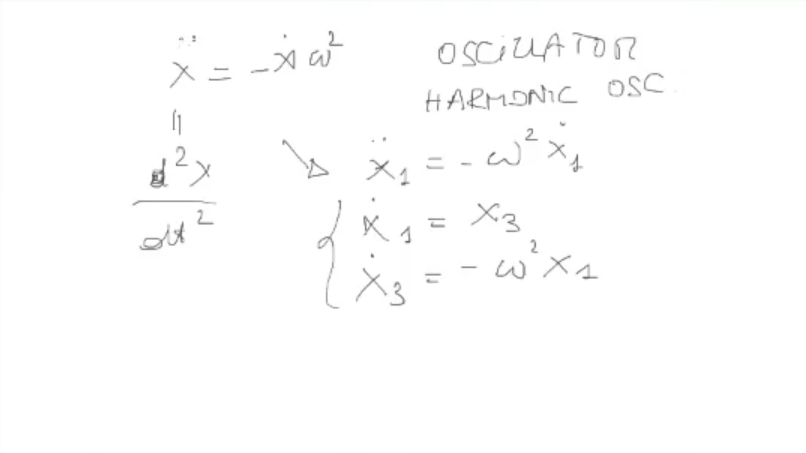
- Simple harmonic oscillator
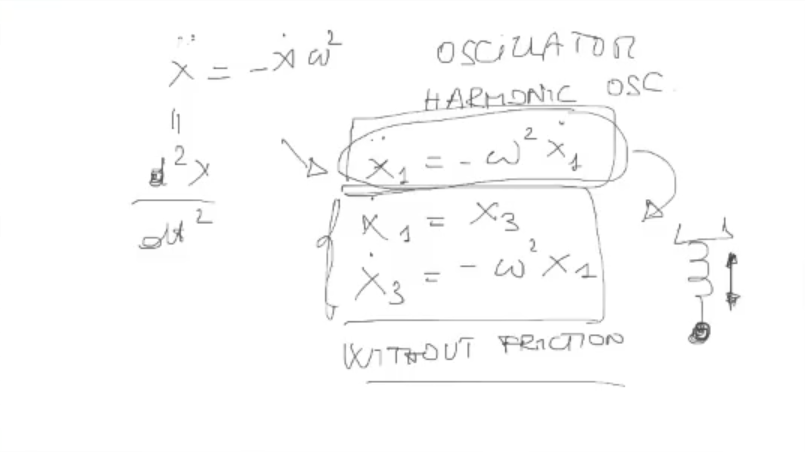
- Represents for example a mass-spring system without friction.
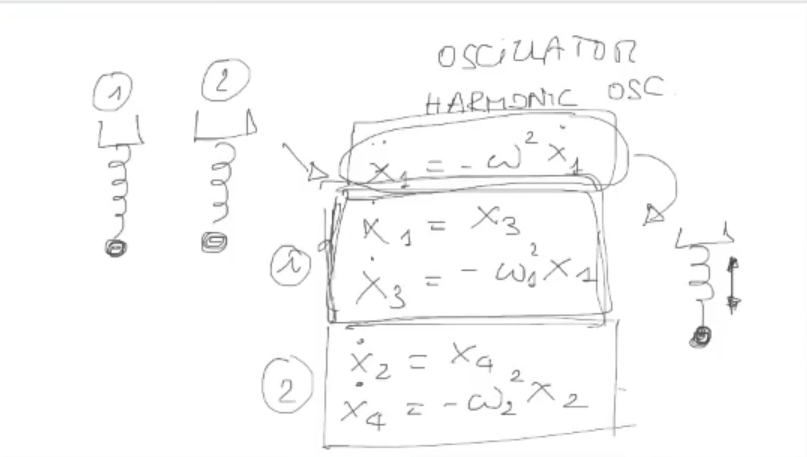
- Consider annother equivalent system (it will have different initial conditions, but same differential equations)
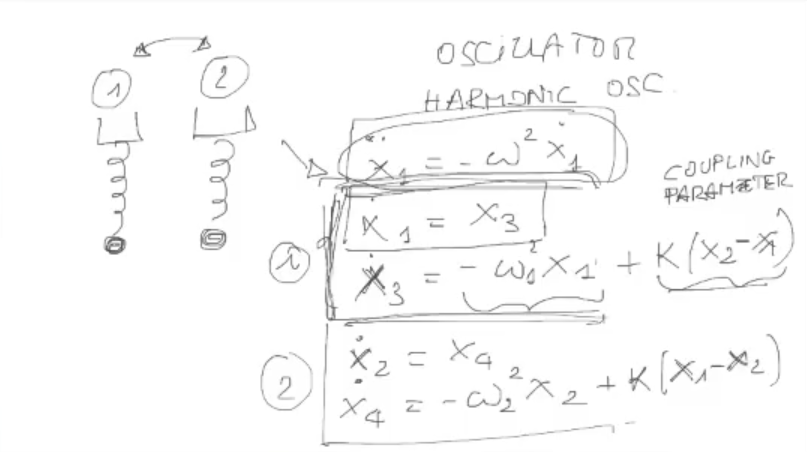
- Leaving the first equaiton untuched (since it serves only to define in terms of ODE equations), we can add a term called “coupling parameter” that depends on a variable of the second system.
- I rewrite here the equations:
- NOTE: for this term is equal to ⇒ This term is active only when these two variables are different.
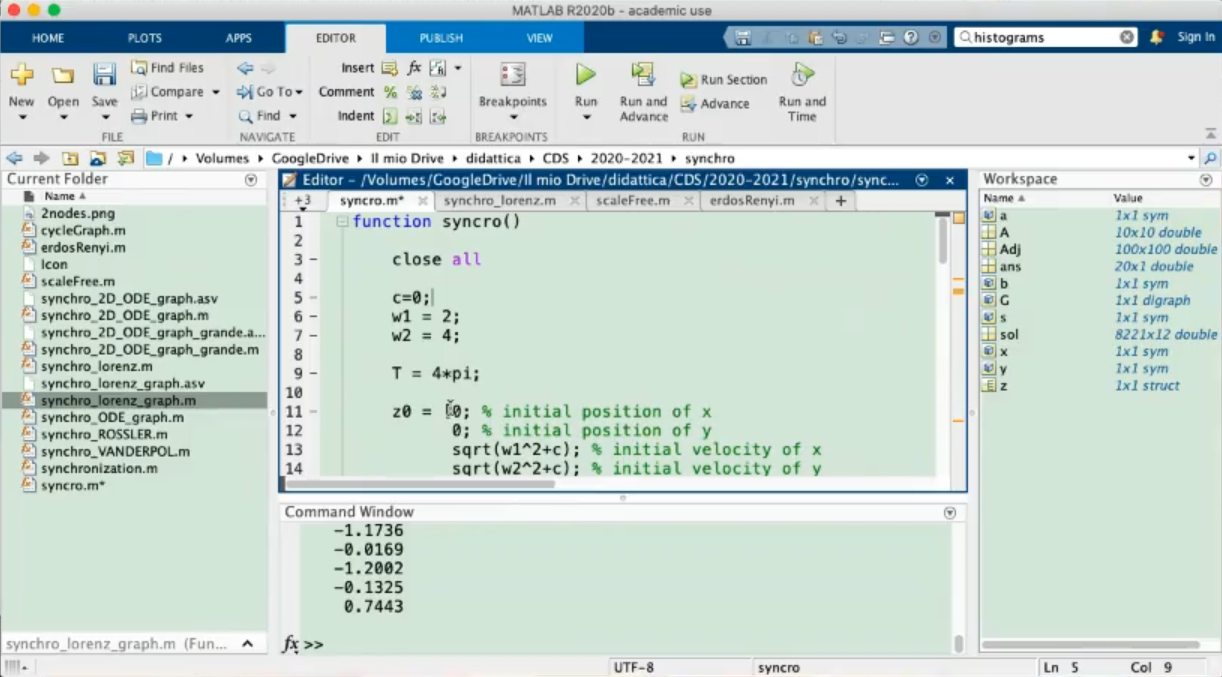
- is the coupling term, previosly called .
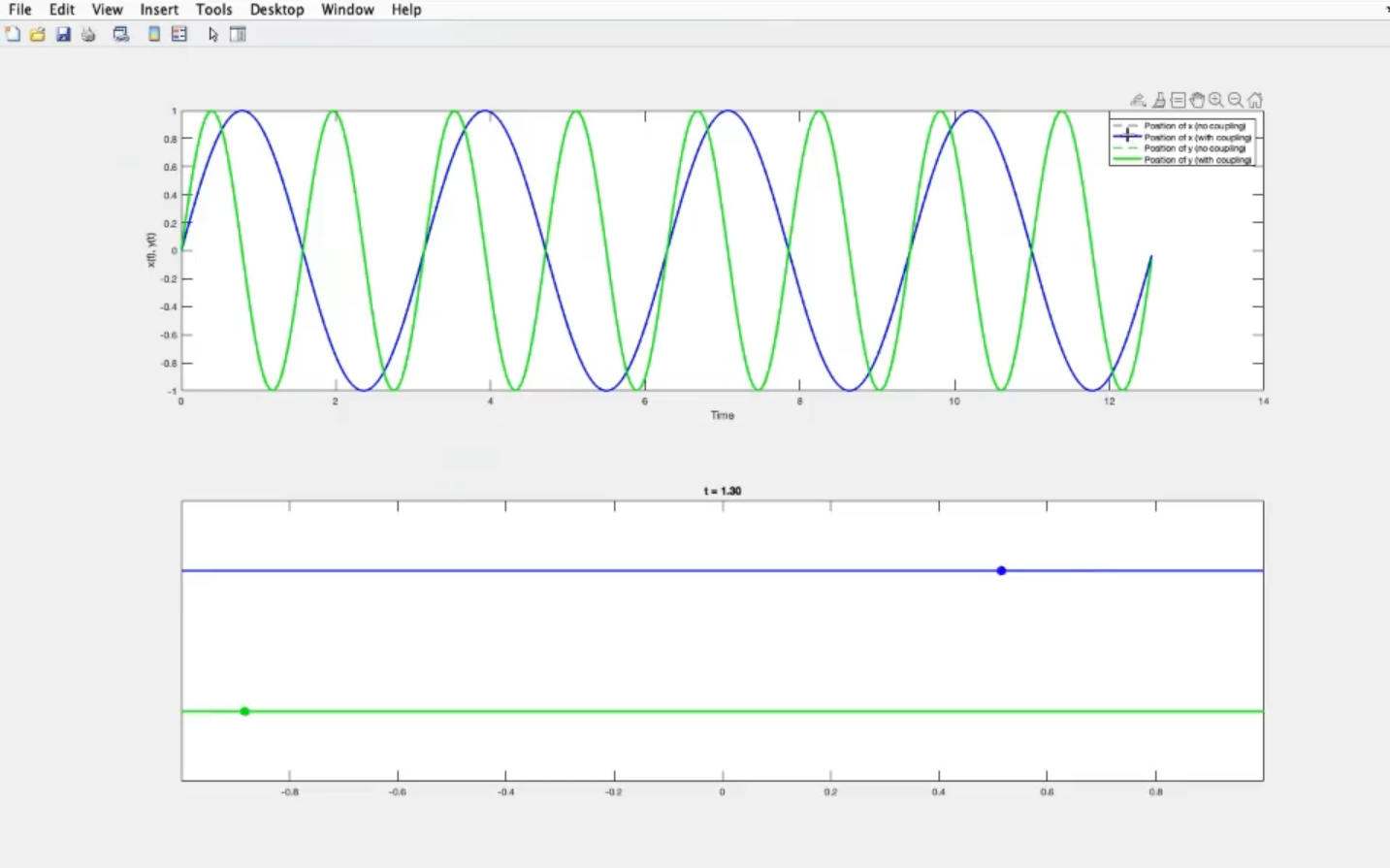
- Positions of the two systems.
- This graphs are without coupling, .
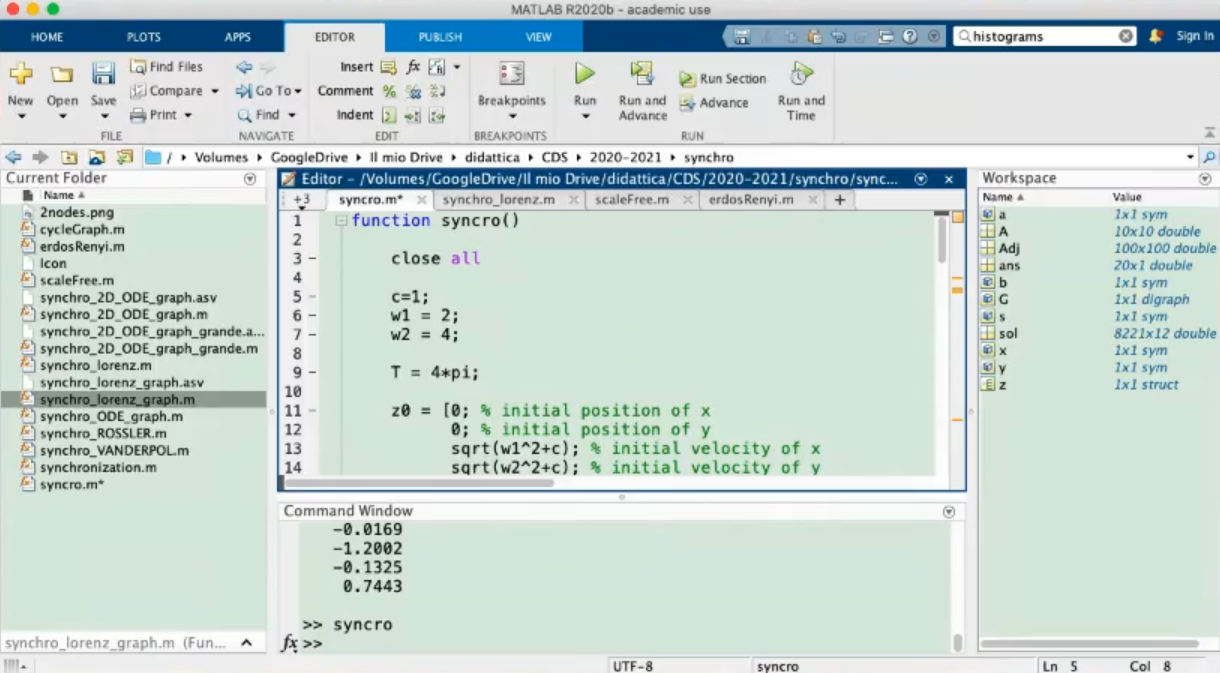
- , now there is coupling.
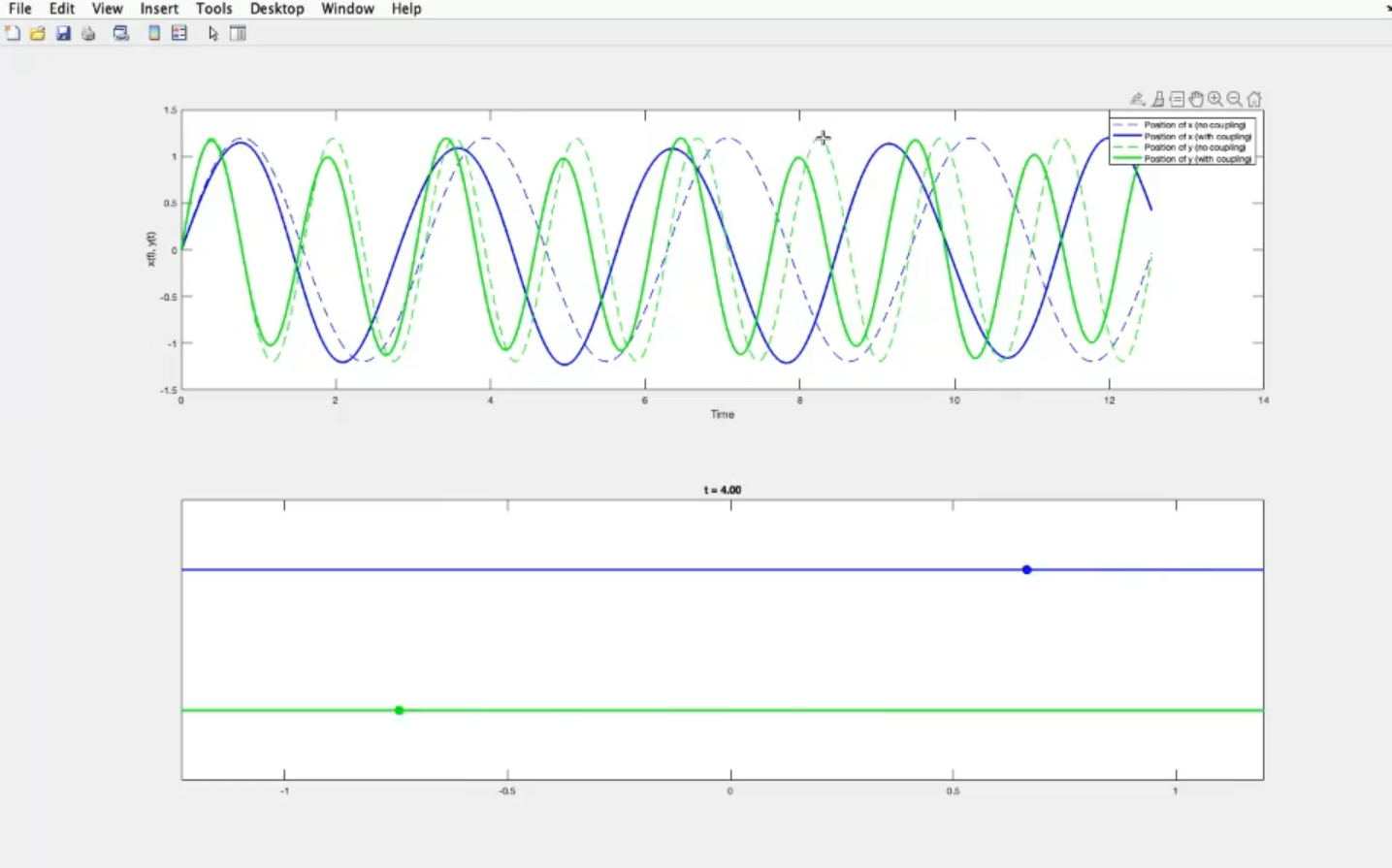
- The continous lines are the real systems (with coupling), the dotted line are are the systems without coupling (seen before).
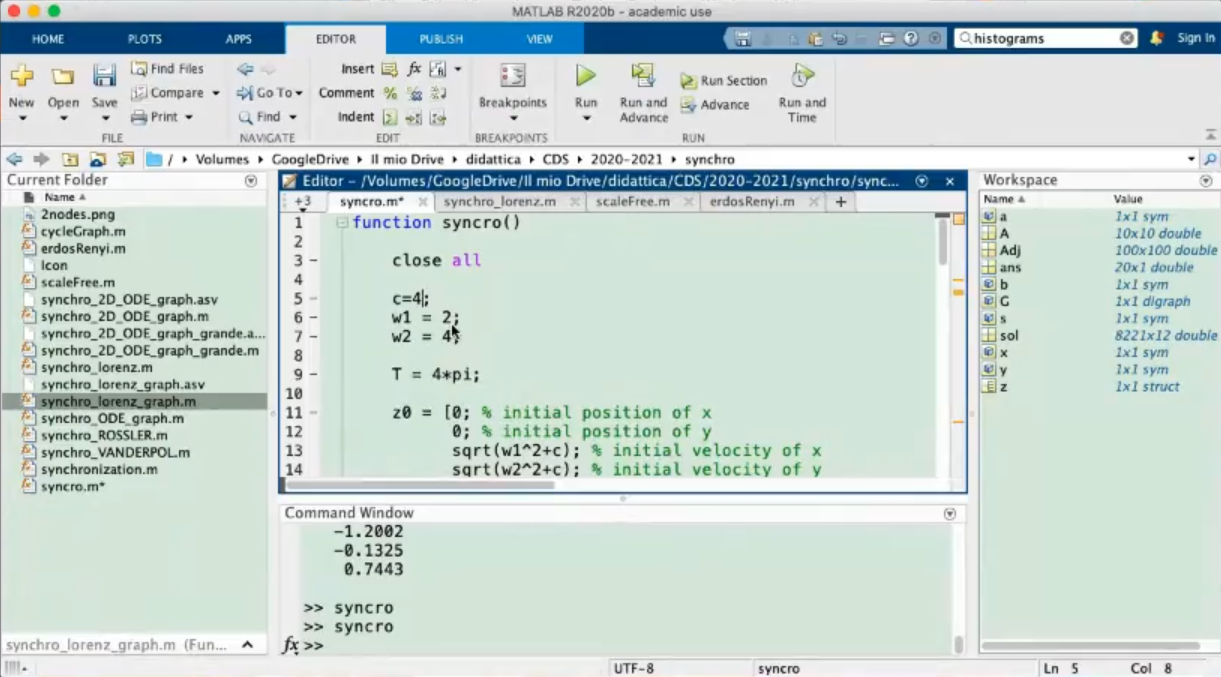
- .
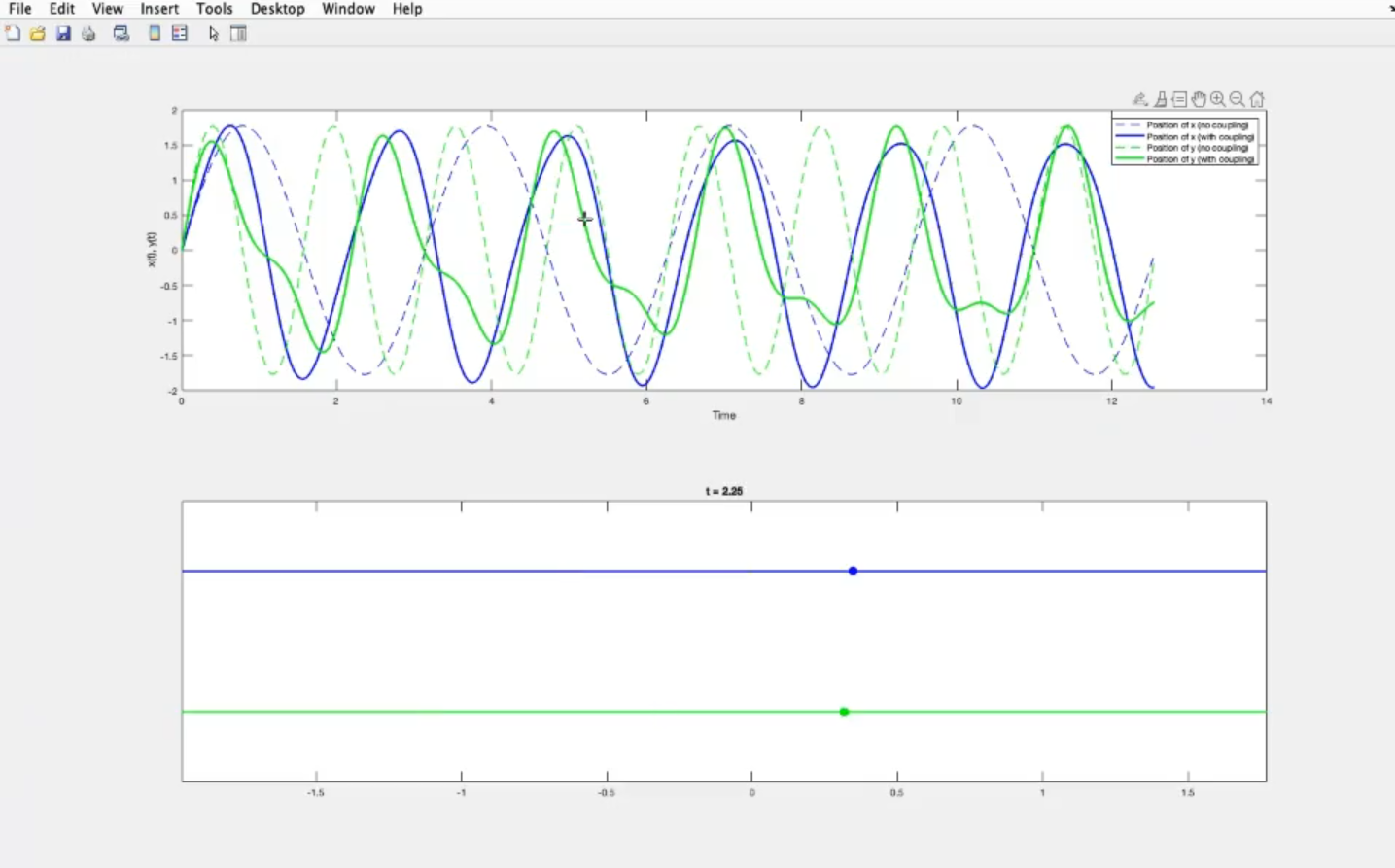
- , we can see that the two lines are much more similar.
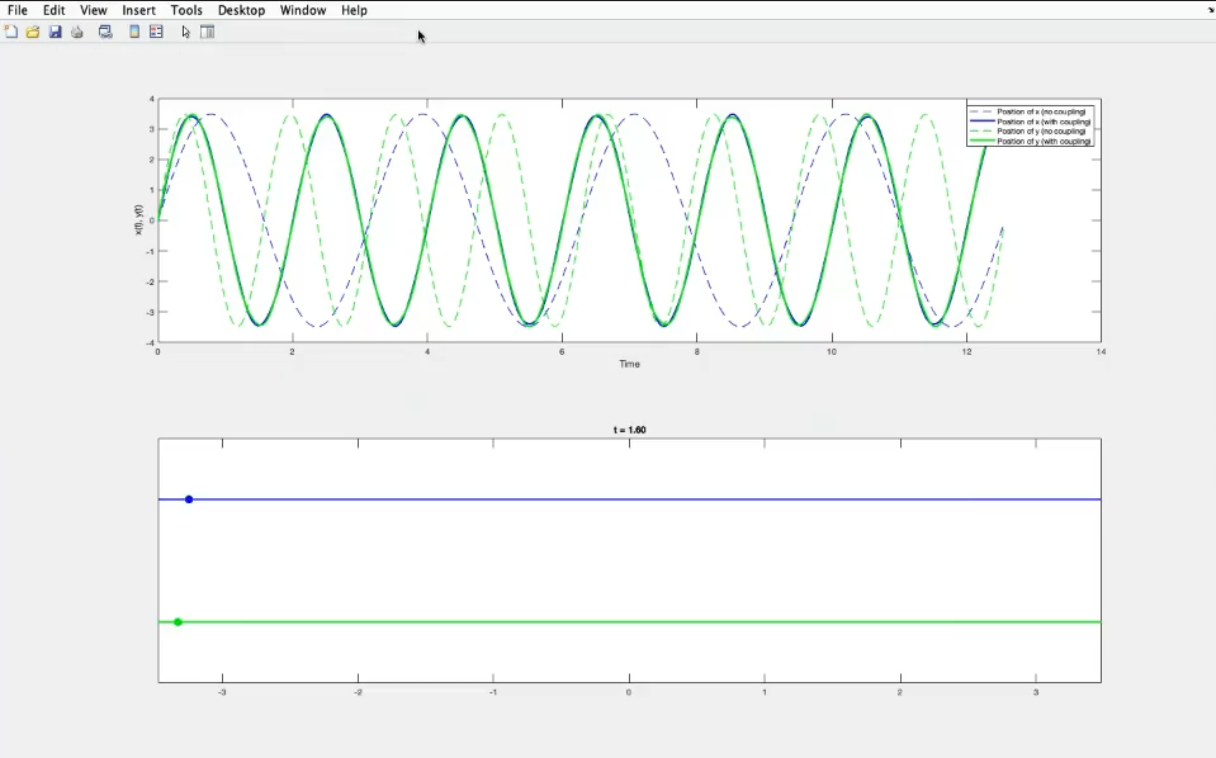
- , almost perfect marching.