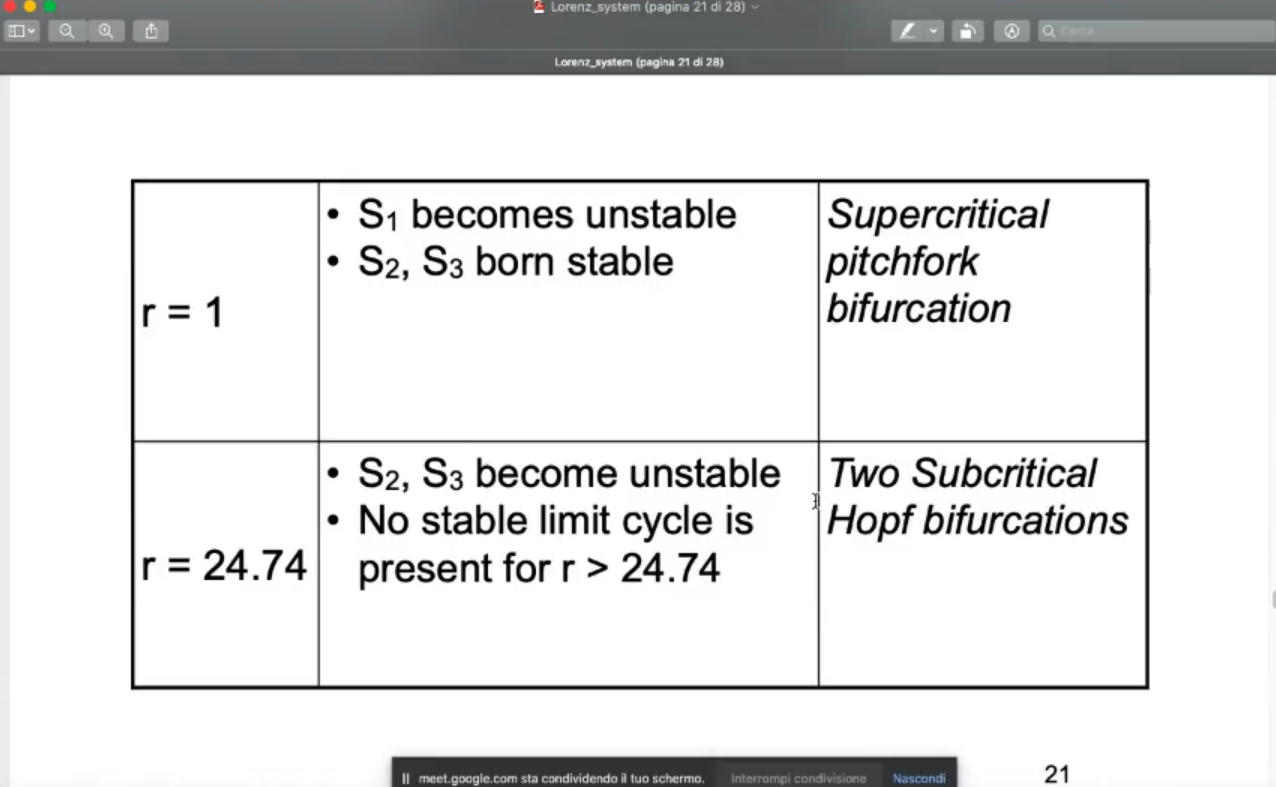
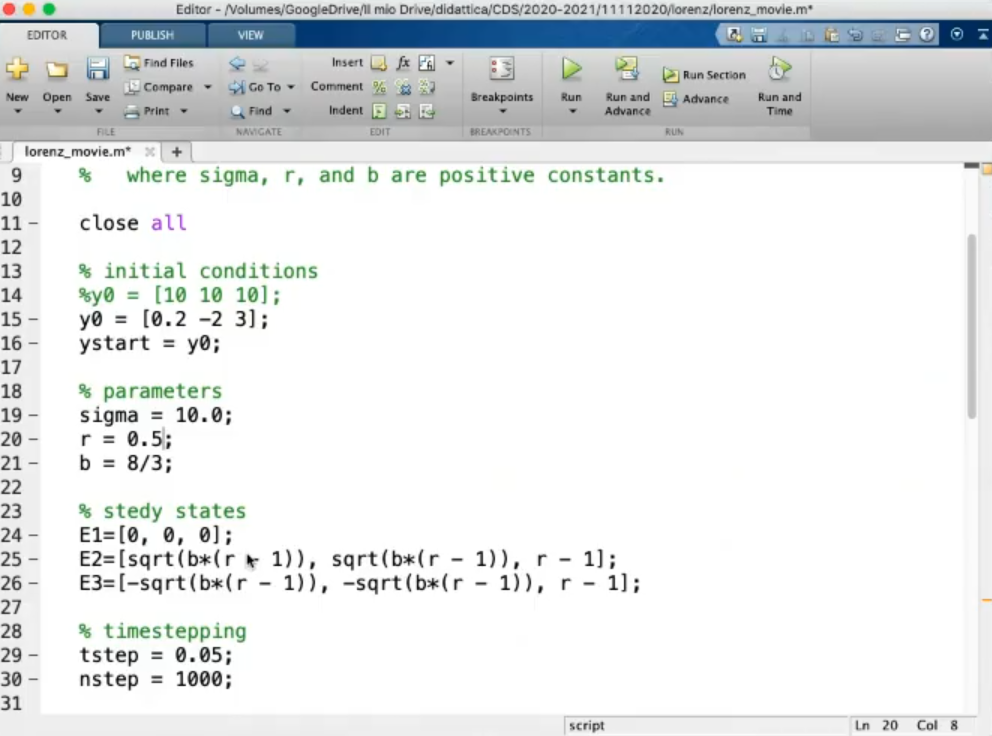
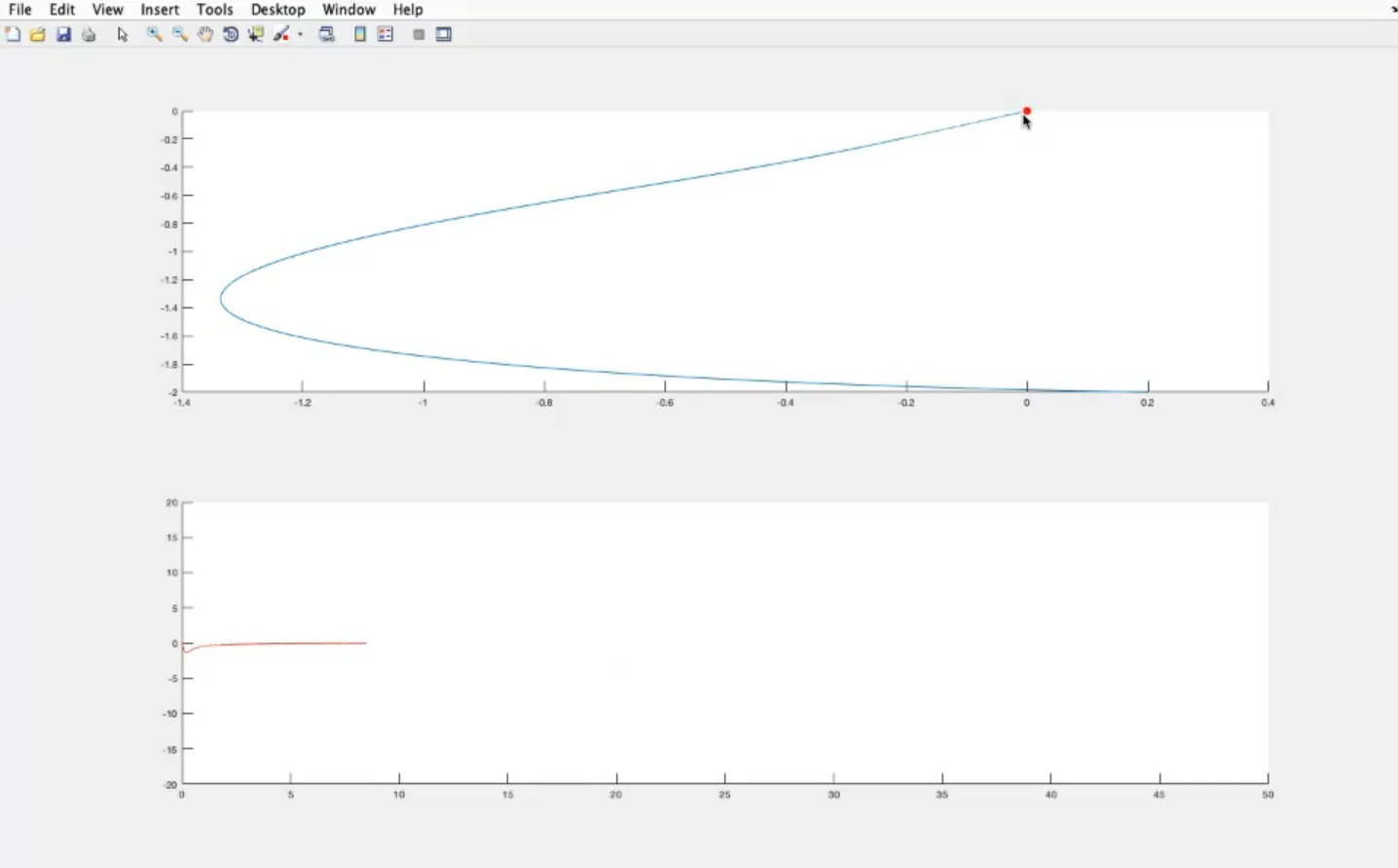
- The red point is the origin, and also an attractor steady state.
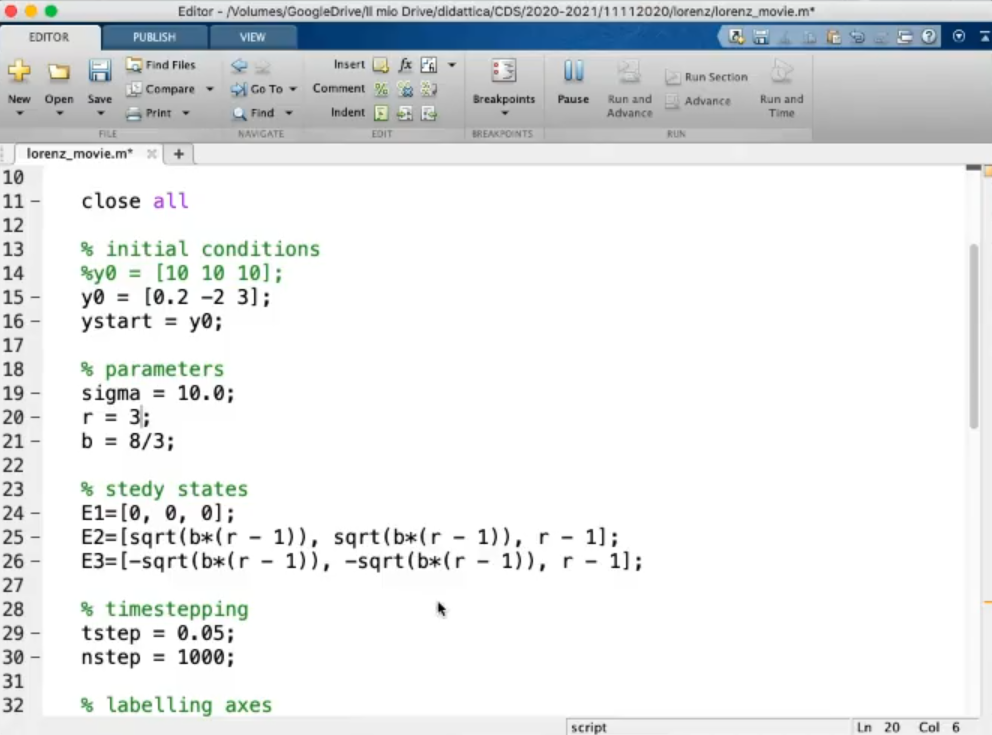
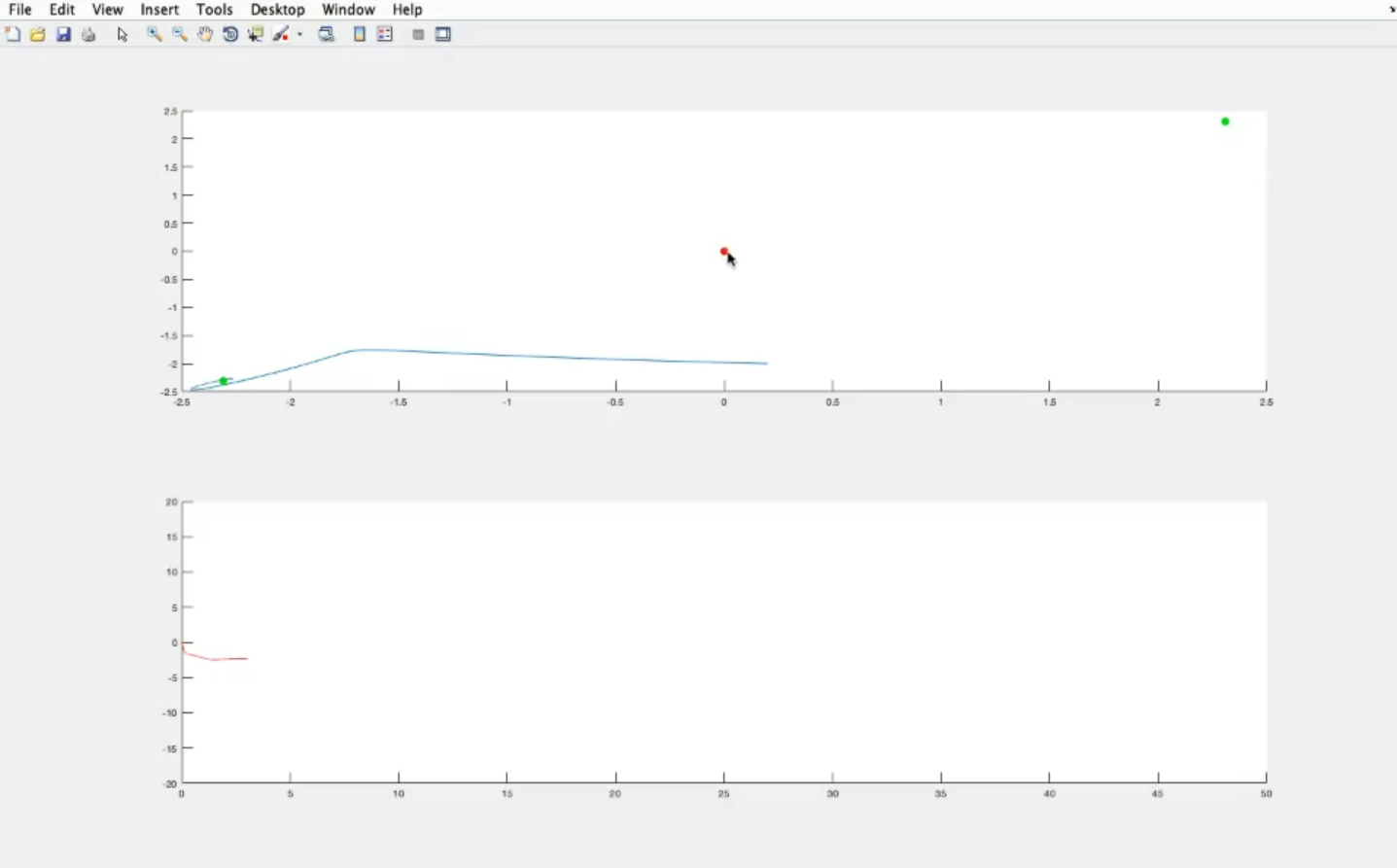
- The origin is now a non-stable steady state.
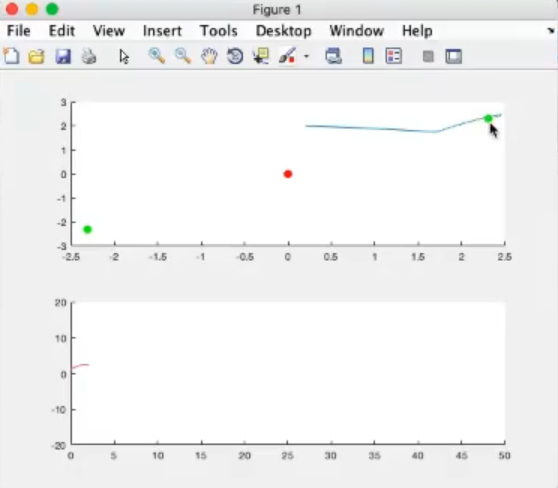
- Two attractive stable steady states appear.
- Depending on the inital conditions, the system converges to one of the two steady states:
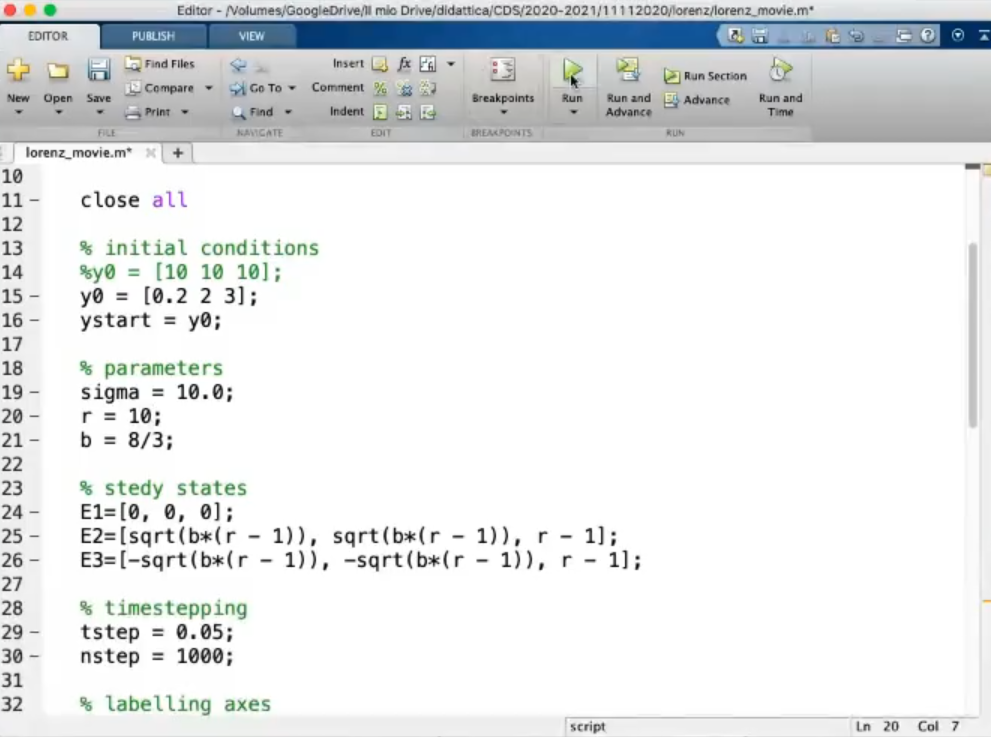
- For r>rH the system is chaotic.
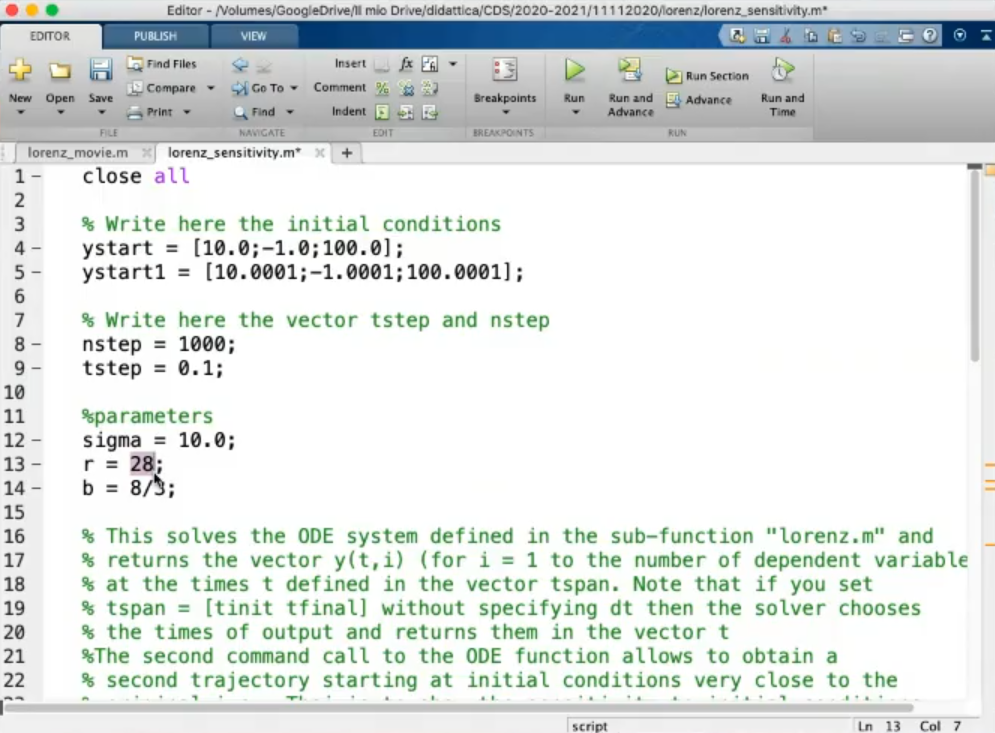
- Here’s the sensitivy to intial conditions, we change the inital condition of about 0.001%, and the results are completly different after some time.
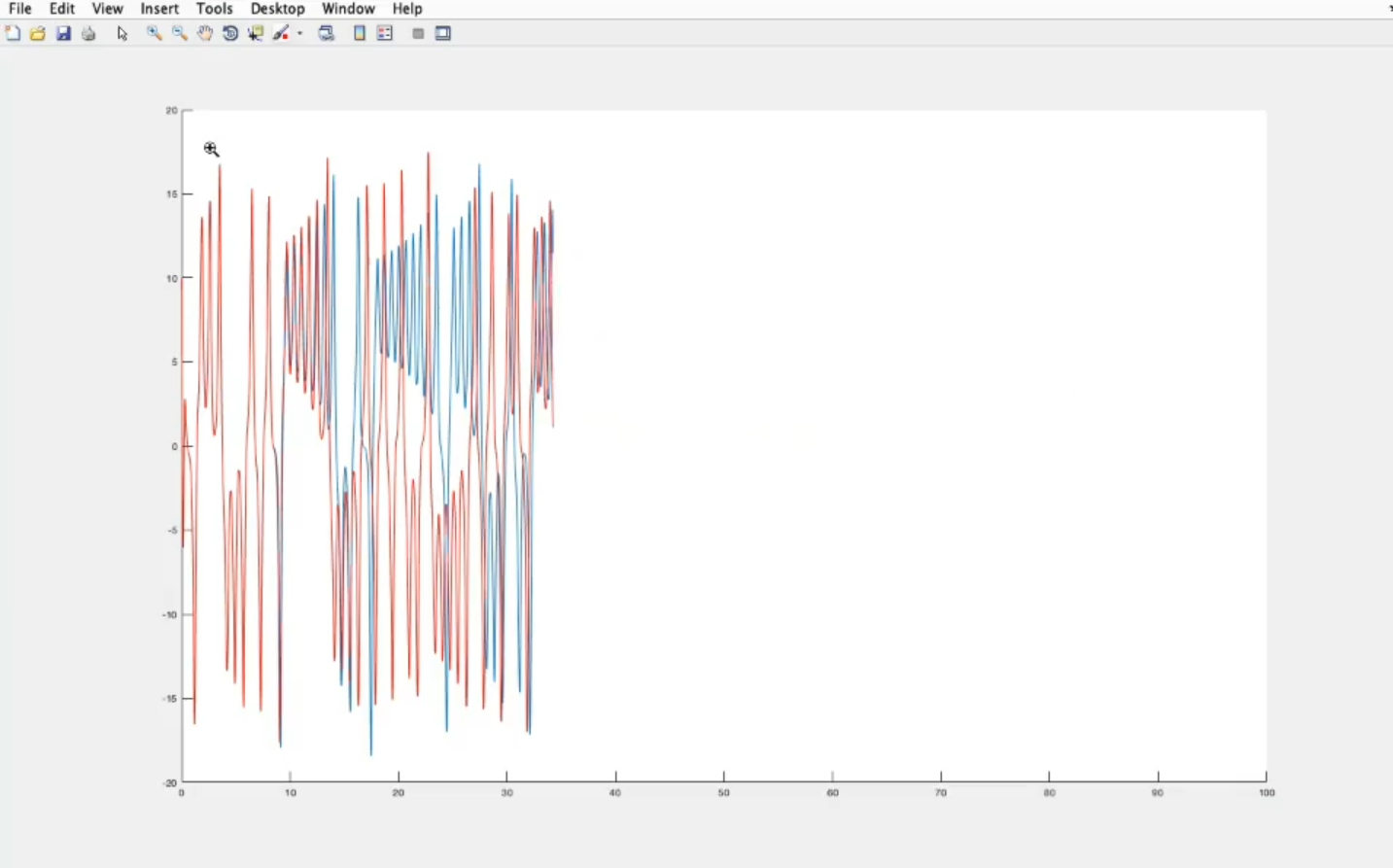
- NOTE: this is true only for r>rH (so we are in the chaotic regime), otherwise if we are in a stable or unstable “region”/“regime” the system will be the same (a stable/ustable system has no sensitivy to intial conditions)
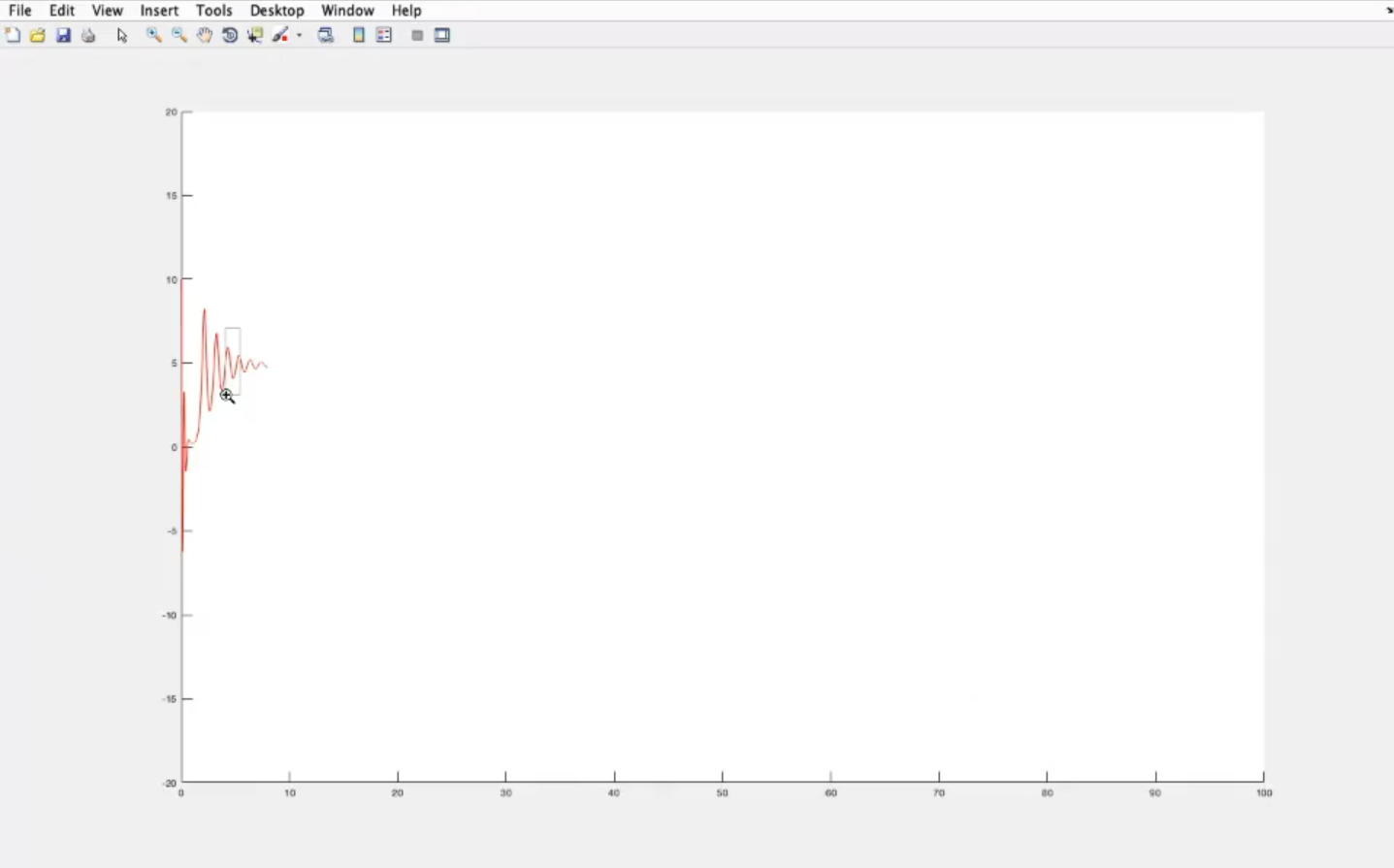
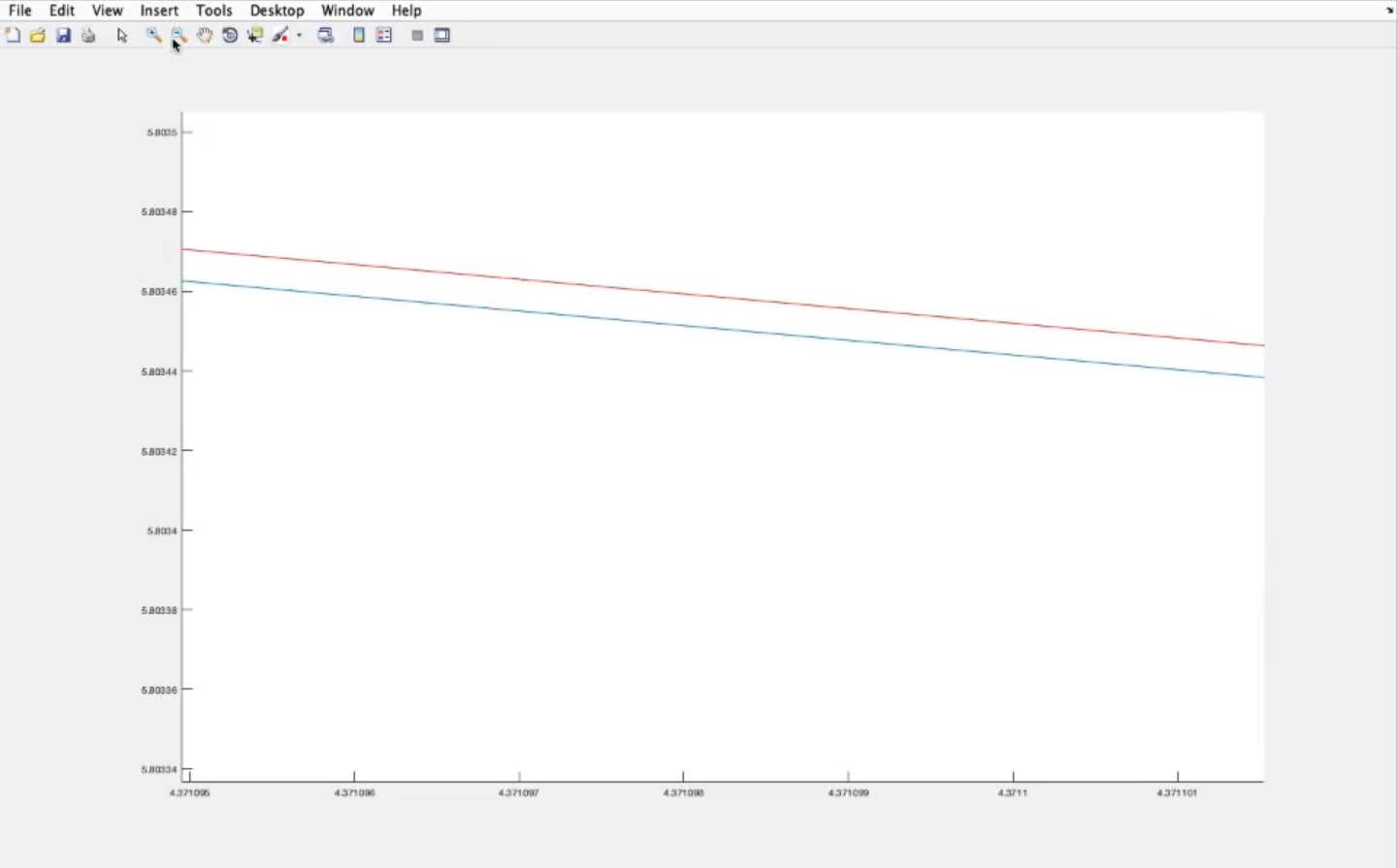
- If we change the r to r=10 this will be the resuts (the two graphs coincide so we can only see one):
If we zoom (a lot):
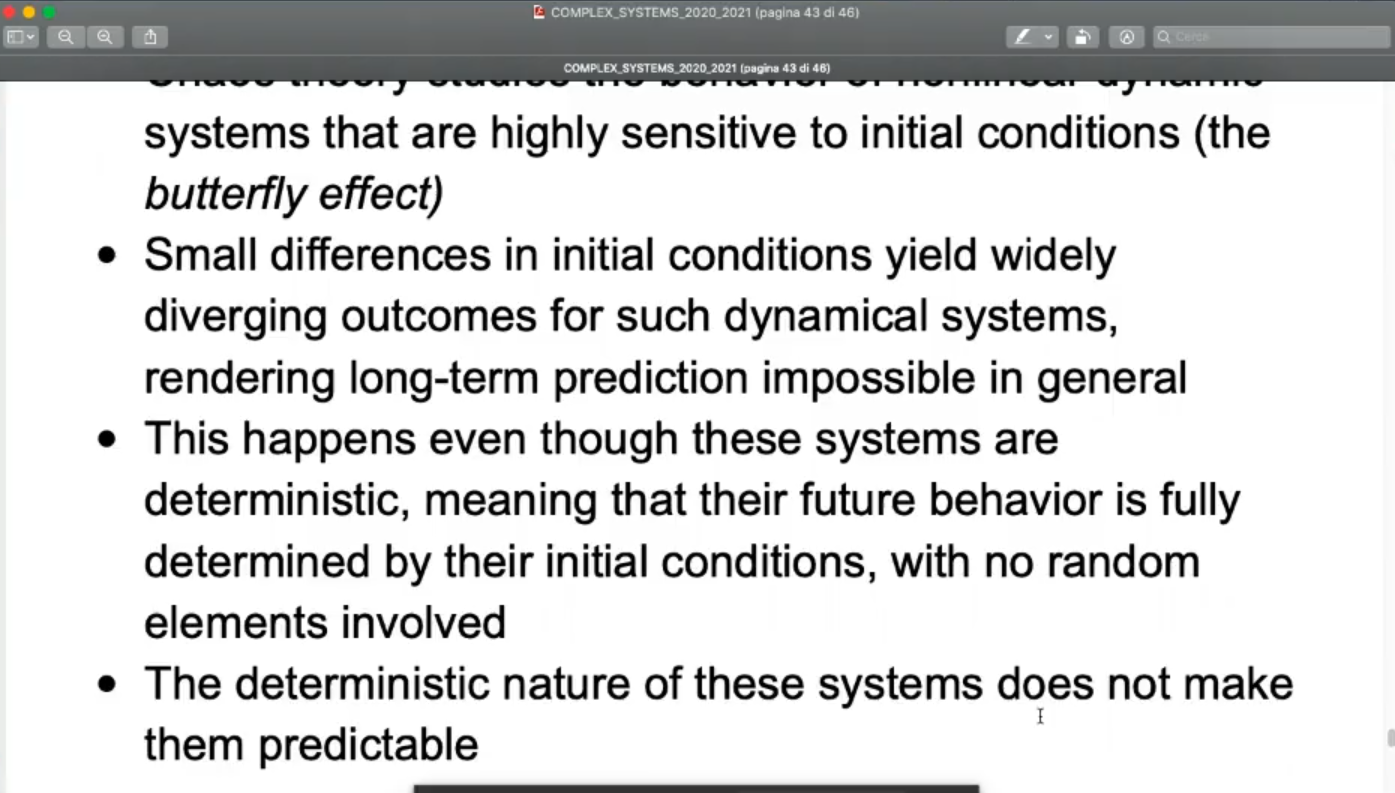
- There is no formal definition of “chaos”, these are its properties
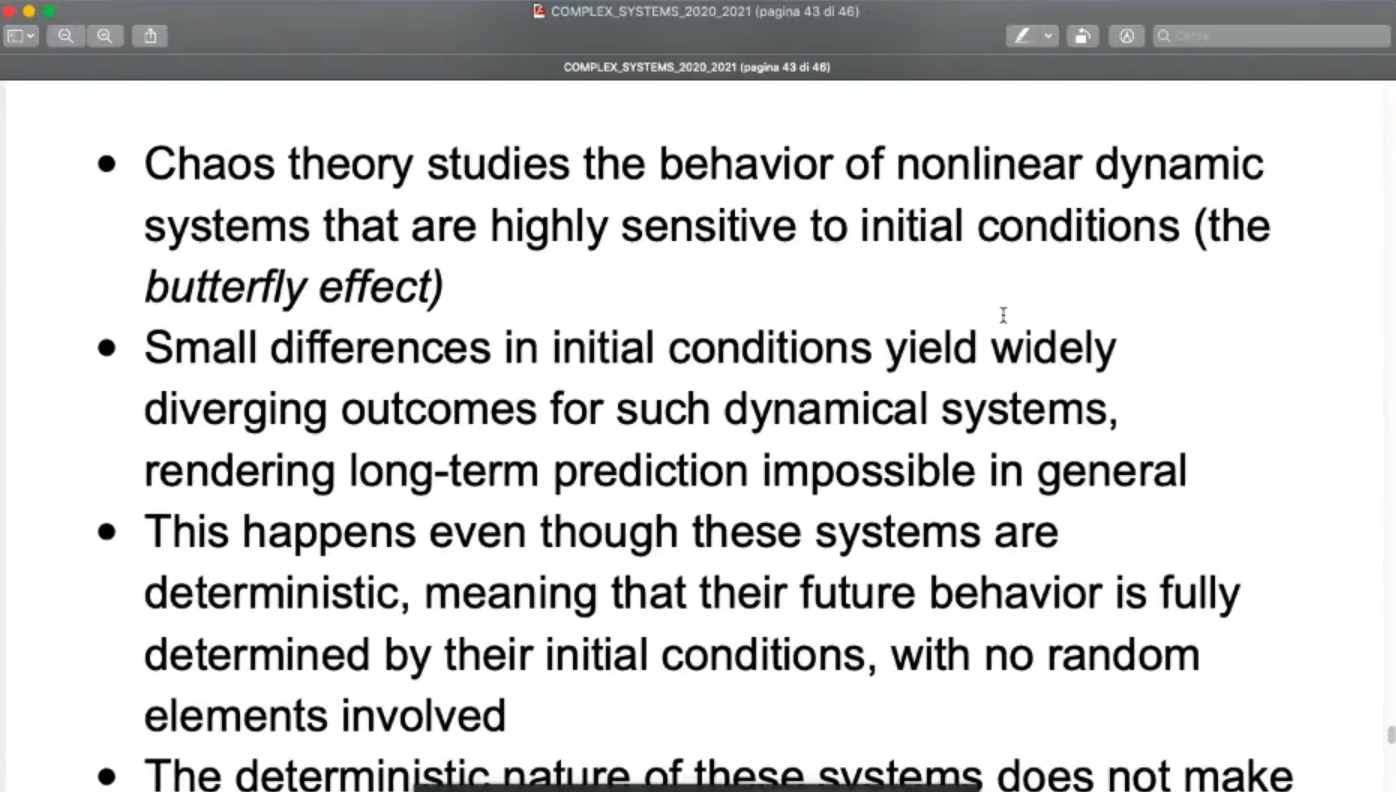
- Deterministic: “*given an initial condition, we have an unique solution”.
- IMPORTANT
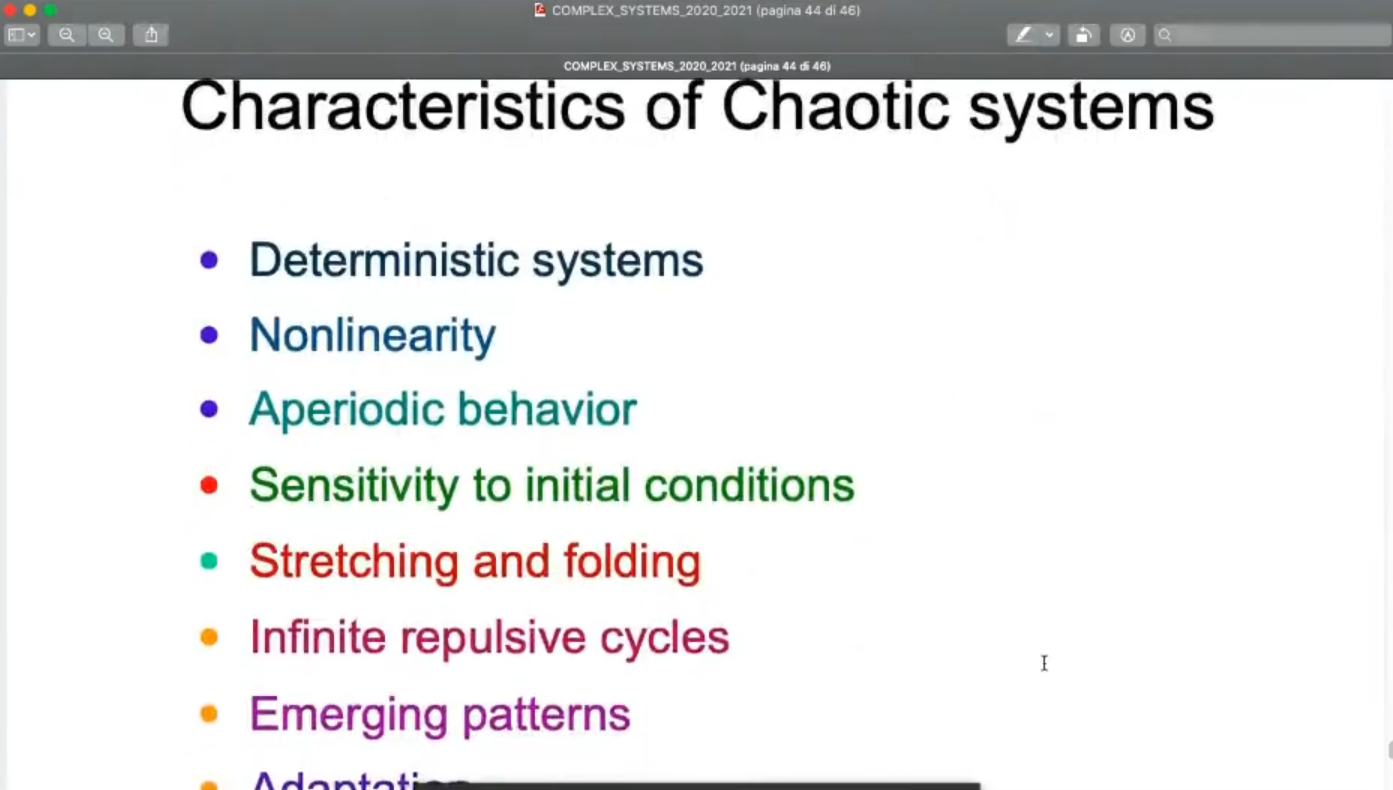
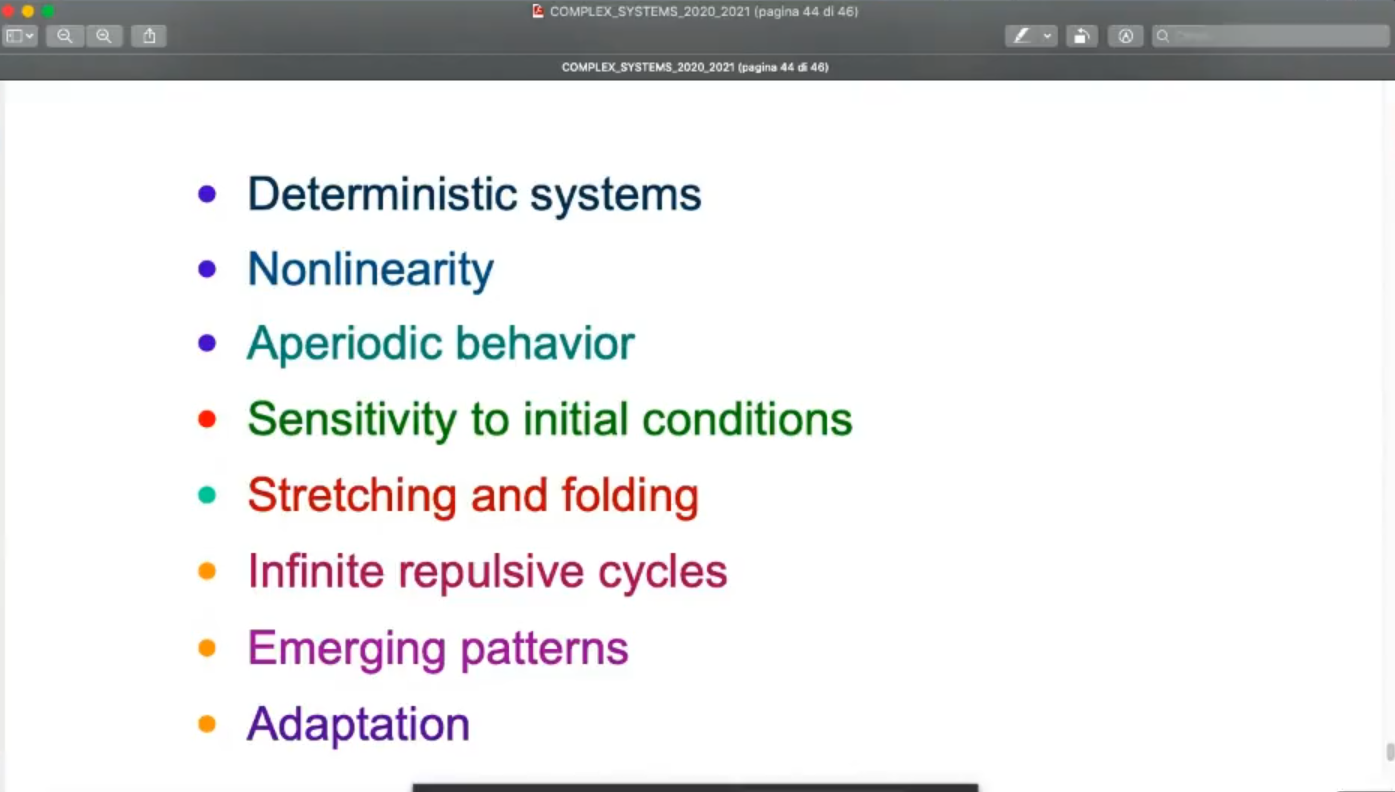
- The rule/equation that govern a chotic systema are deterministic and non-linear.
- A chotic system will be aperiodic, also the trajectory will never pass two times in a single point.
- Sensitivity to initial conditions, we have already seen.
- The combination of the two mechanisms: stretching and folding:
- Strethcing: the trajectory “streaches” form the steady state, there are some diverging mechanisms.
- Folding: prevents the trajectory from escaping the region where the strange attractor lives.
- “Chaos is a combination of two mechanisms: diverge and convergence”.
- Often chaos includes the presence of inifinite repulsive cycles, this is typical of the Rostell attractor (it’s not typical of the Lorenz system), but is a possible path to produce chaos.
- In general there are two properties to chaotic systems:
- Emergin patterns: like for strange attractos, those are emering patterns, a geometry we didn’t expect, we did not impose it in the system, it is self-organized.
- Adaptation: chaotic systems have infinite different kinds of behaviors inside them, so we can say that the system has a “richness” of dynamics inside, you can visit all parts of the phase space (more precisly of the region defined by the strange attractors), so the dynamic is very free to evolve, ergo the system is very adaptive, you cannot disturb very much the system (it will go back to its chaotic trajectory), it is sentive to even a small change, but the system cannot be easily destroyed, so it is higly adaptive.