- This is a somewhat of an “organization” (not compleately chaotic).
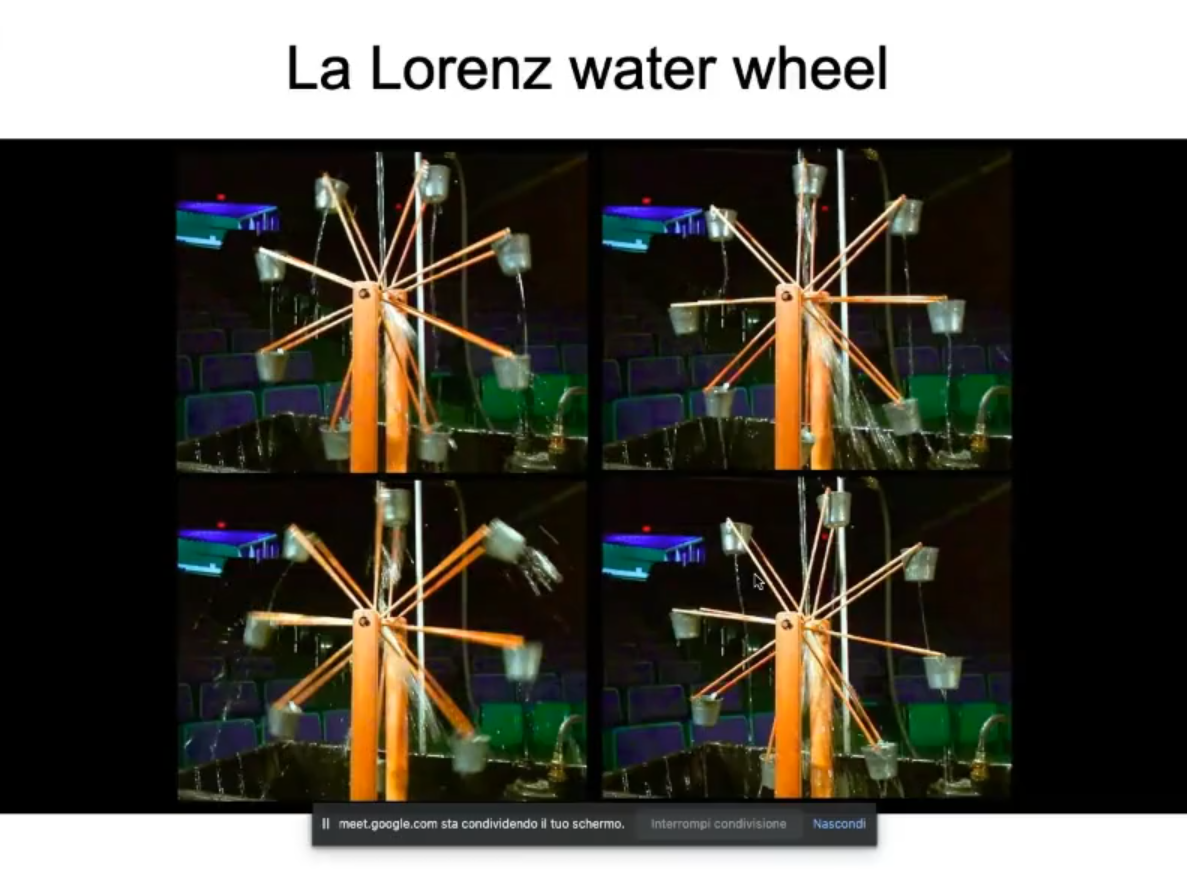
- The four weels will evolve differenty (sensitivy to inital conditions)
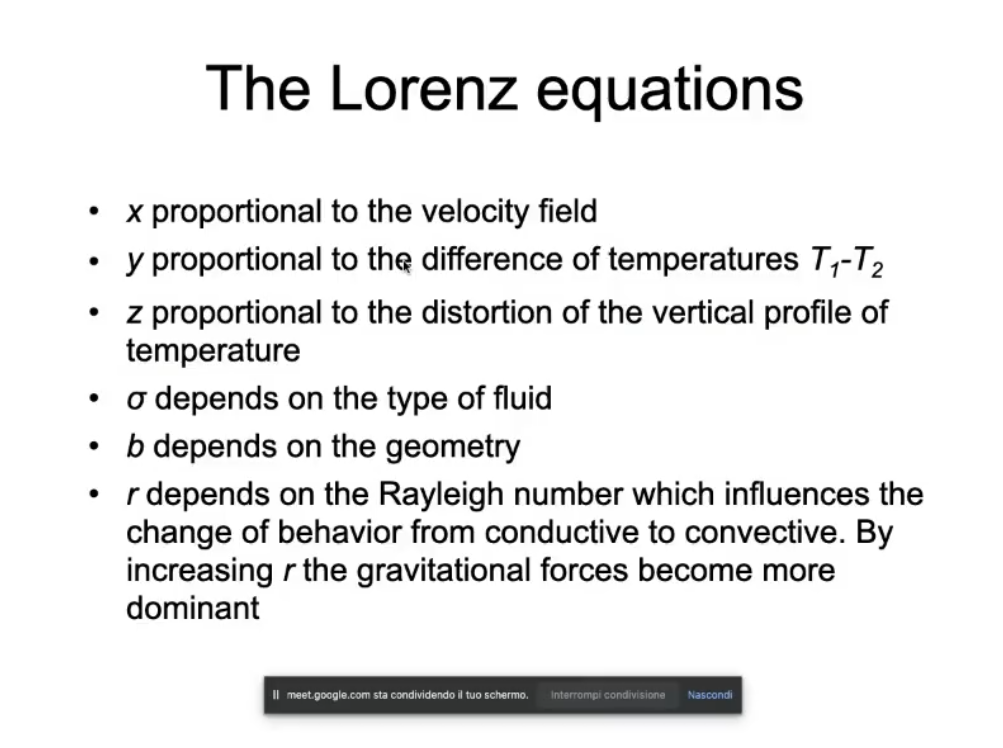
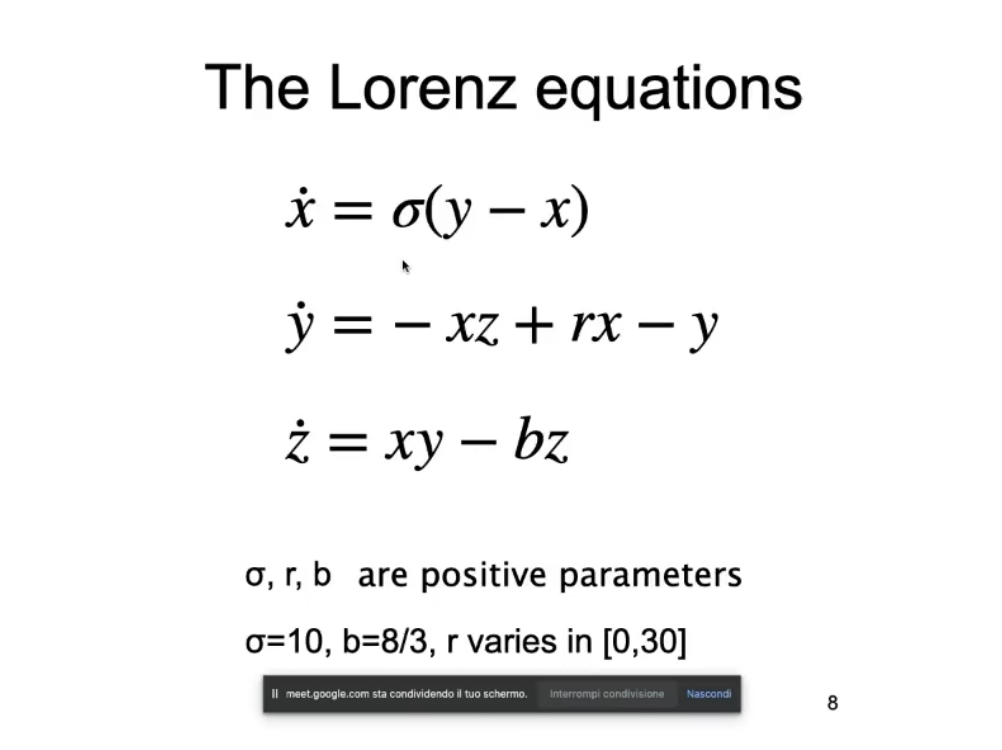
- Autonomous (no external forces influence the system)
- Almost linear (we only have , and as non-linear terms)
- We fix and and study the system for .
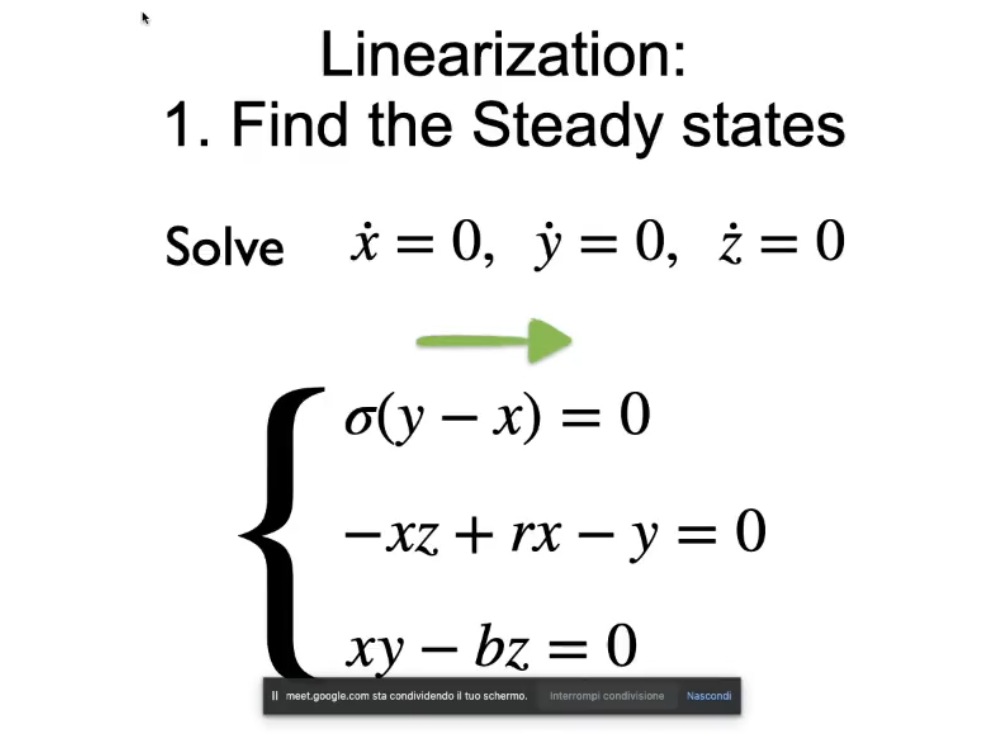
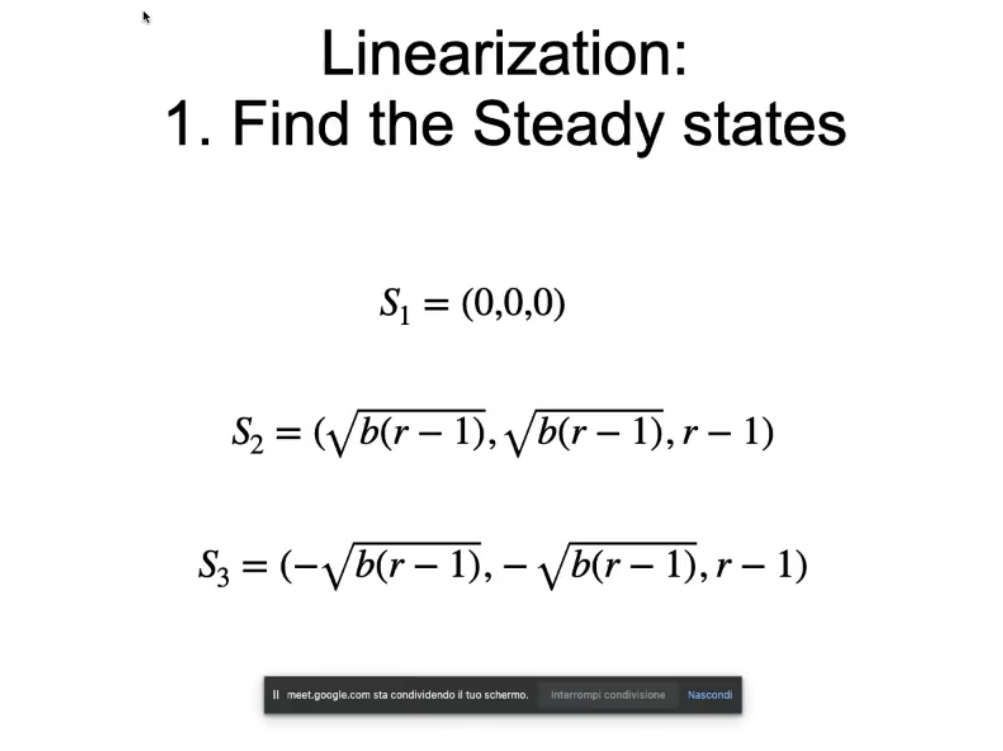
- We find steady states.
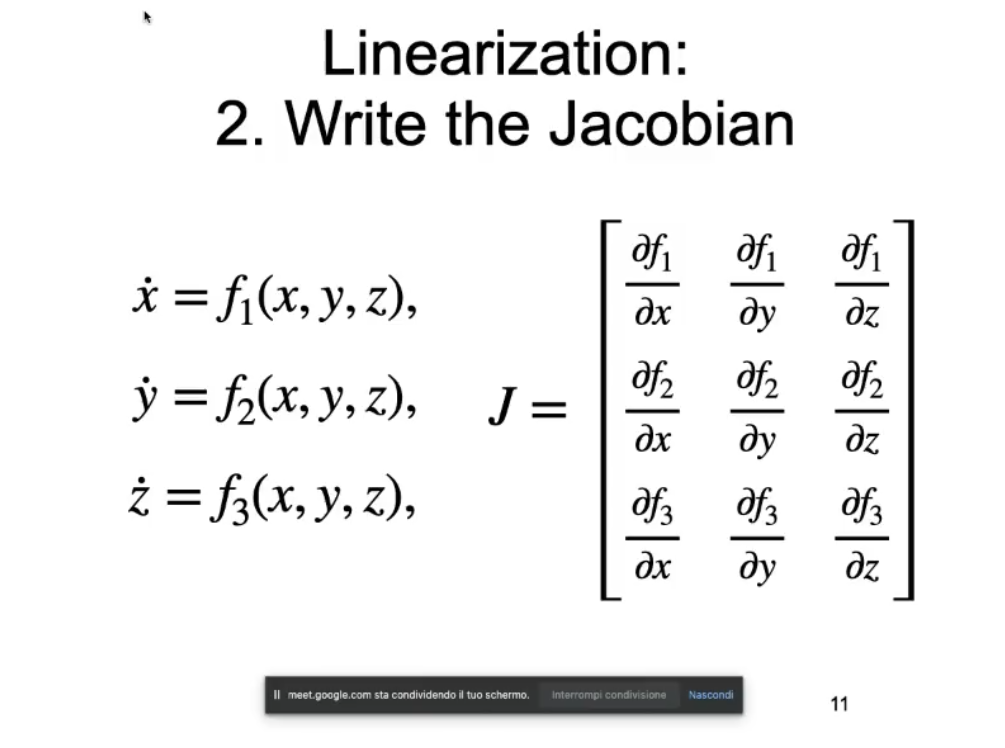
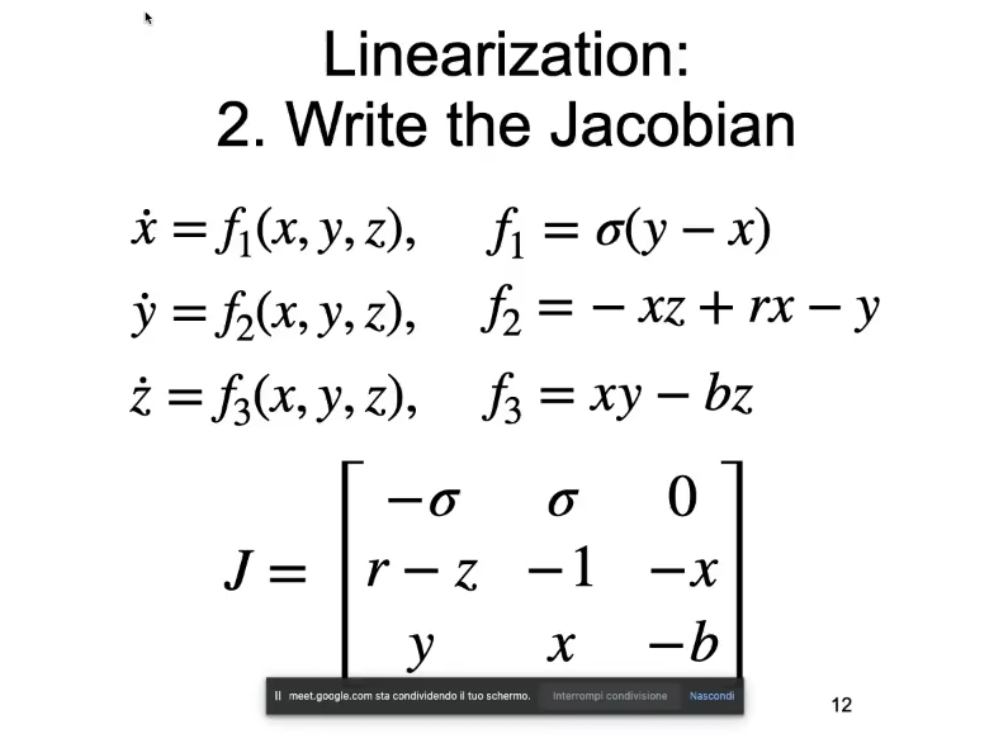
- Remeber that “linearization is a local process”, so we’ll need to repeat the following process for each steady state.
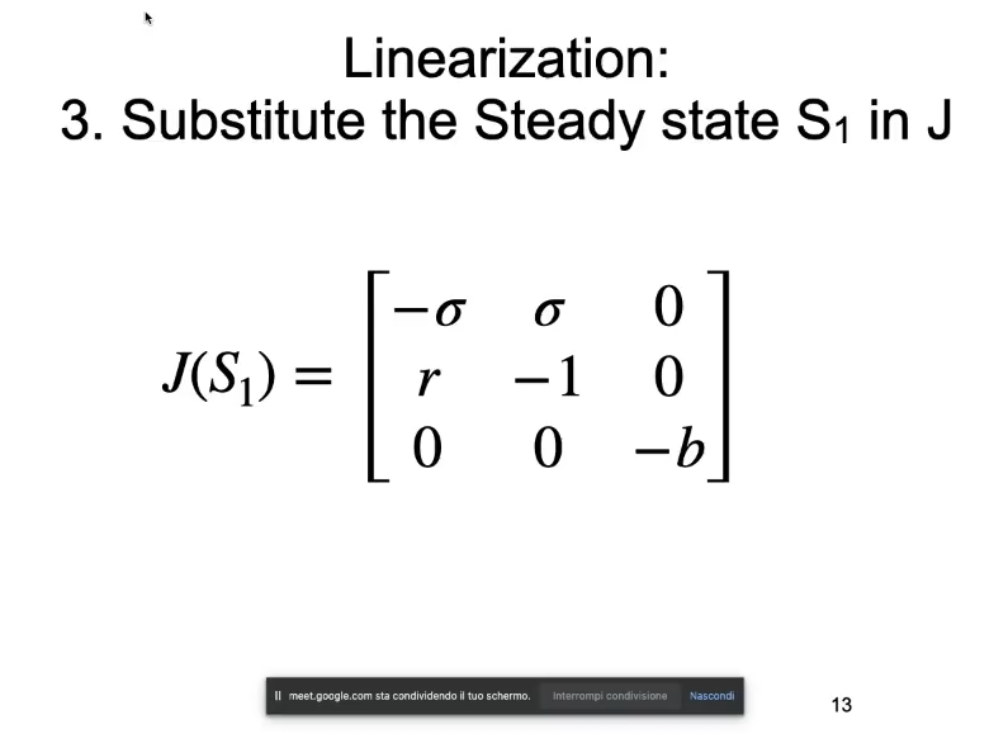
- Remeber that:
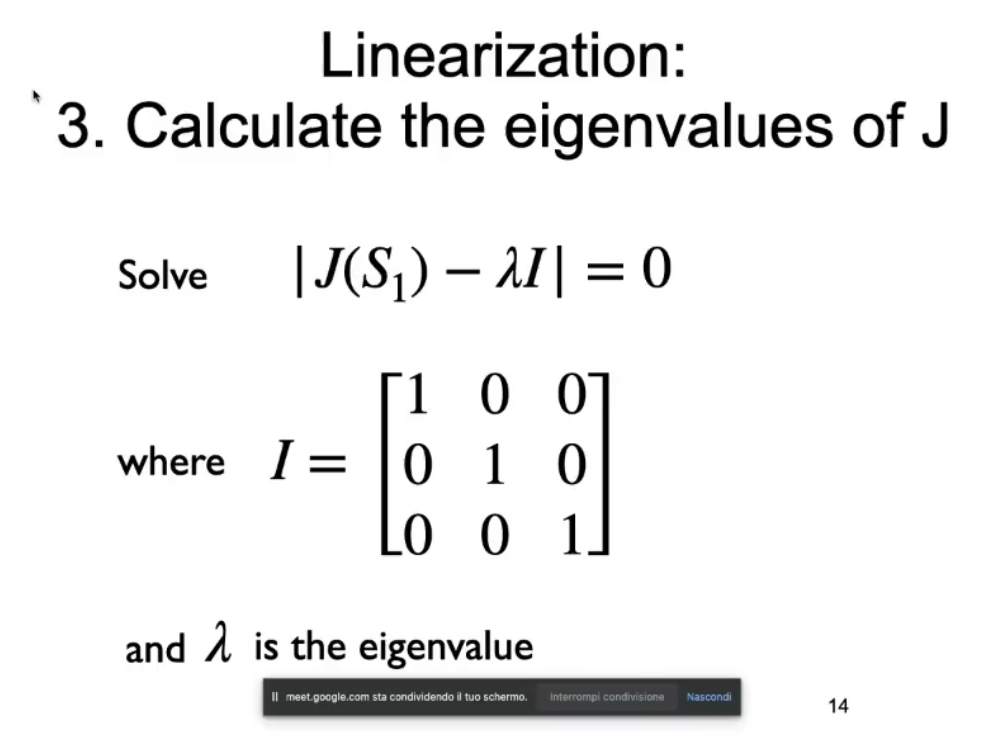
- bifurcation diagram.not-sure-about-this
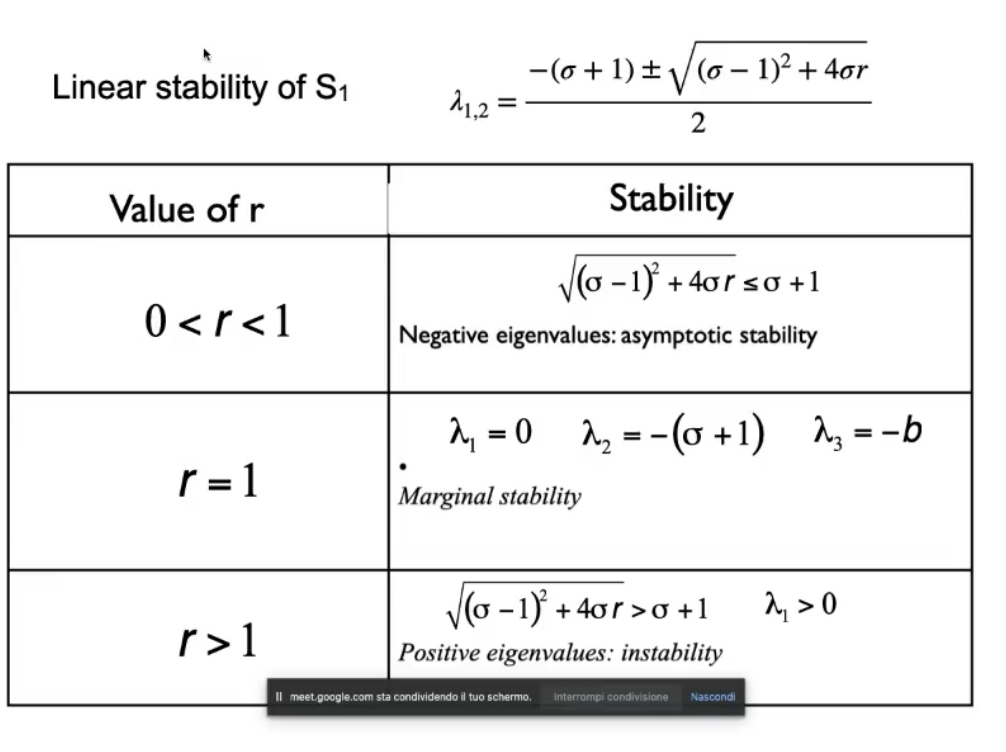
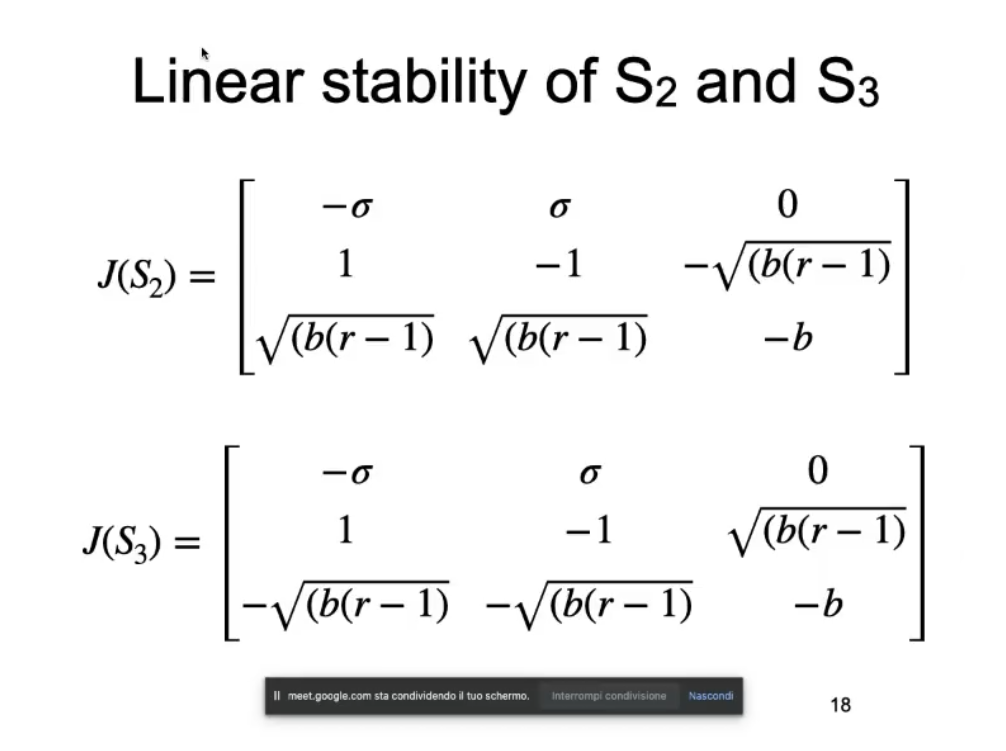
- Remeber that:
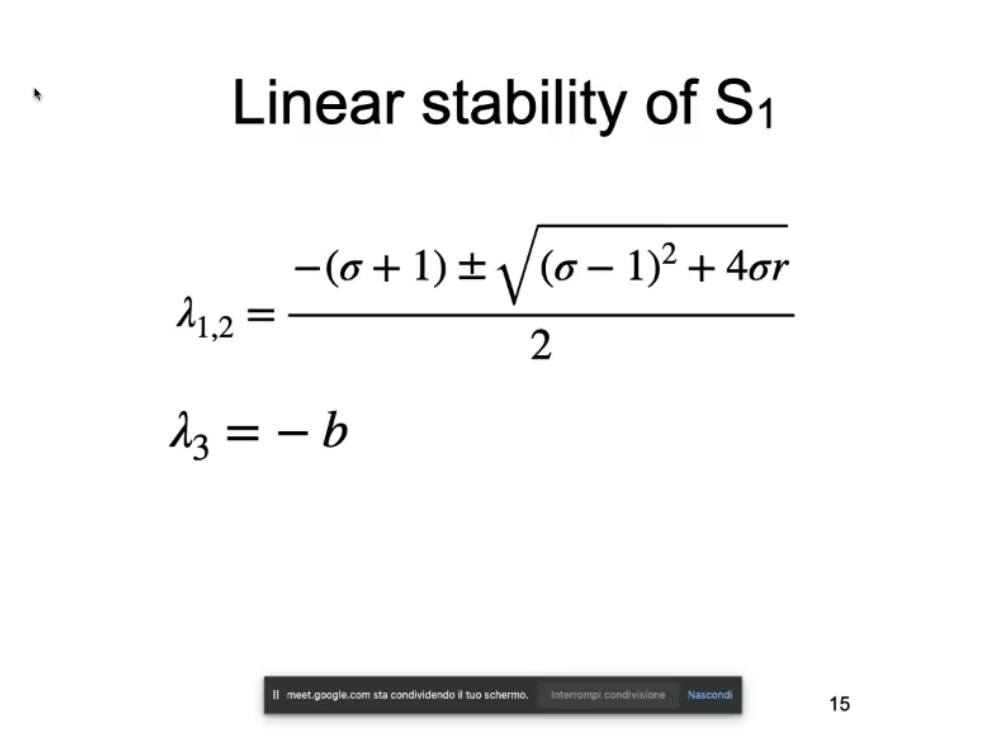
- Remeber that:
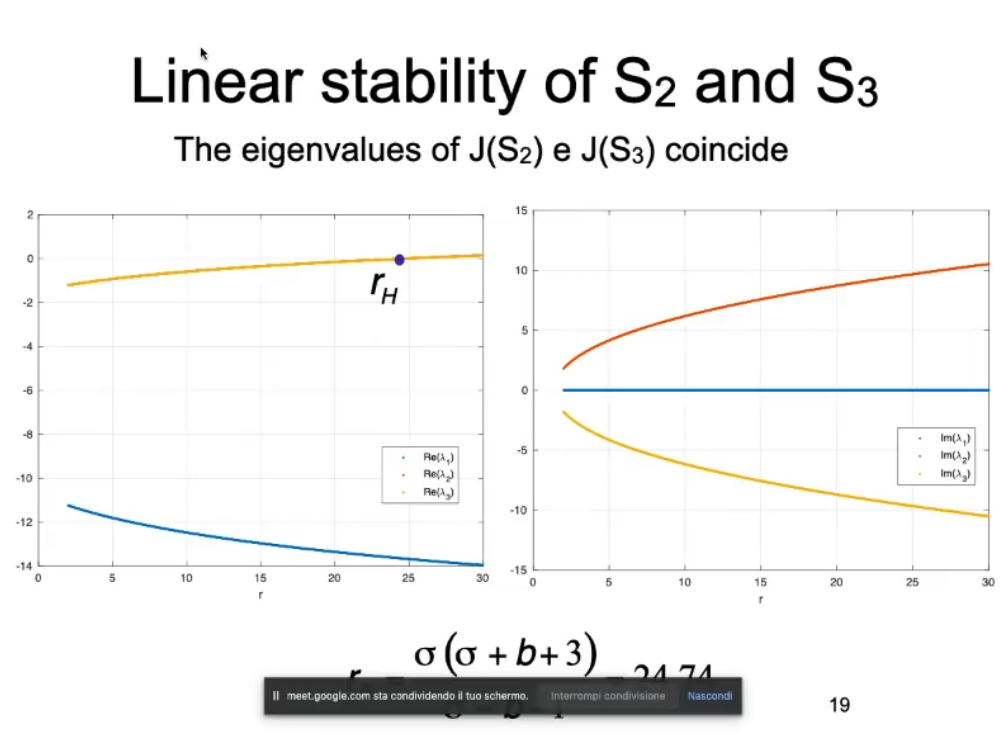
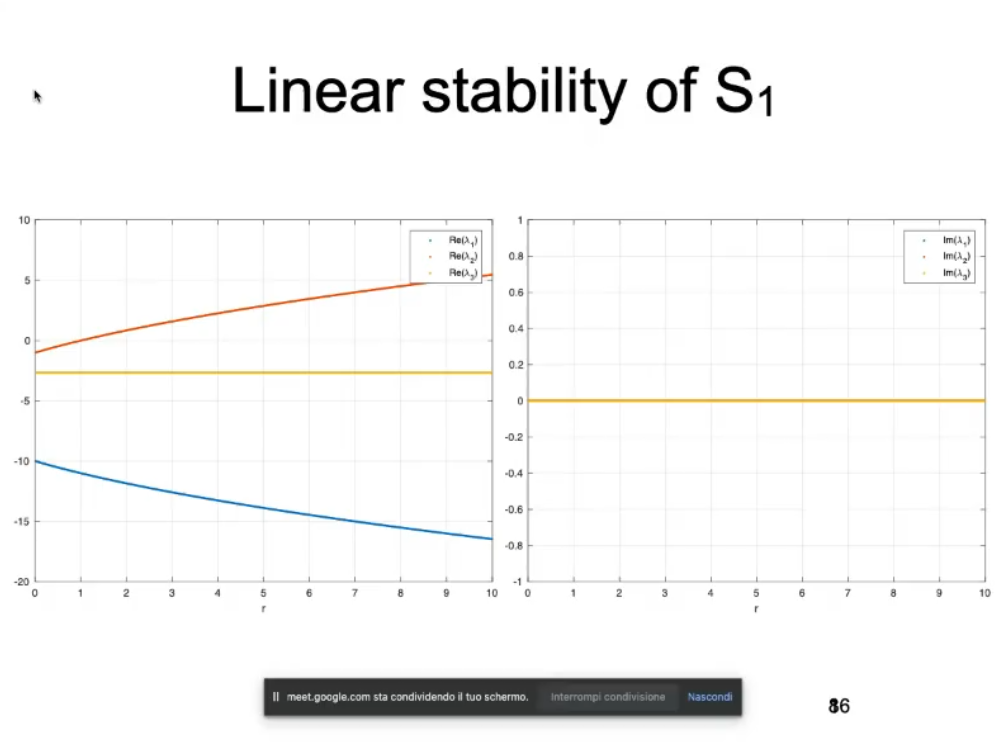
- The have non-zero imaginary part.
- For the real parts of the eigenvalues are negative.
- .
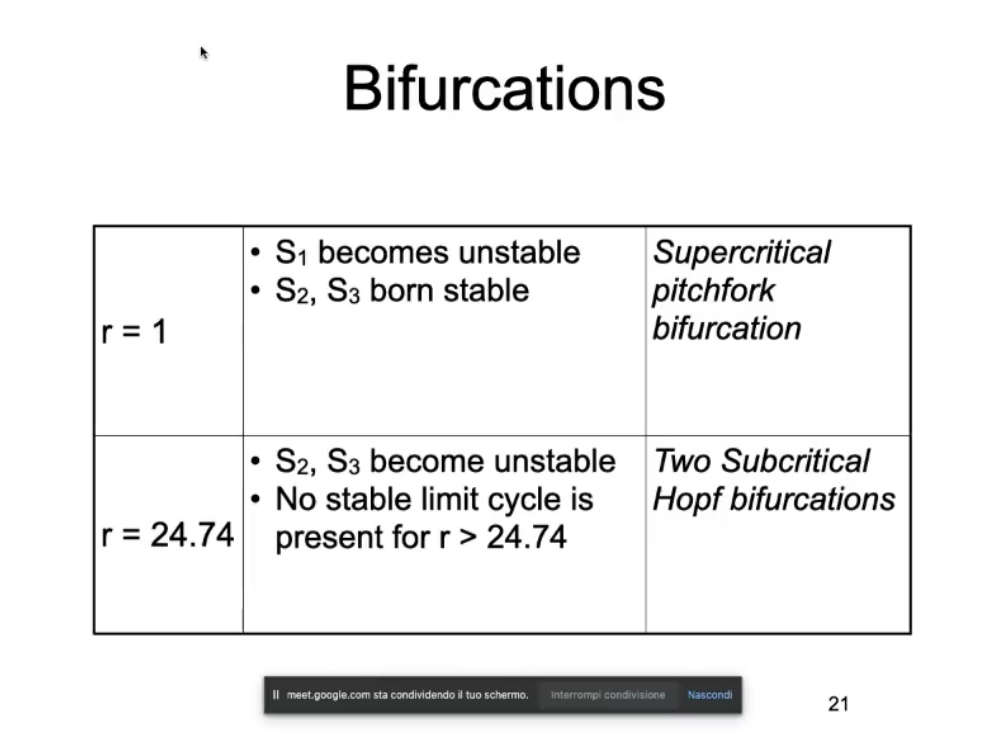
- For (called “critical value”) then the system is stable.
- For the system is unstable.
- For the real part of the 3rd eigenvalue .
- found using MATLAB
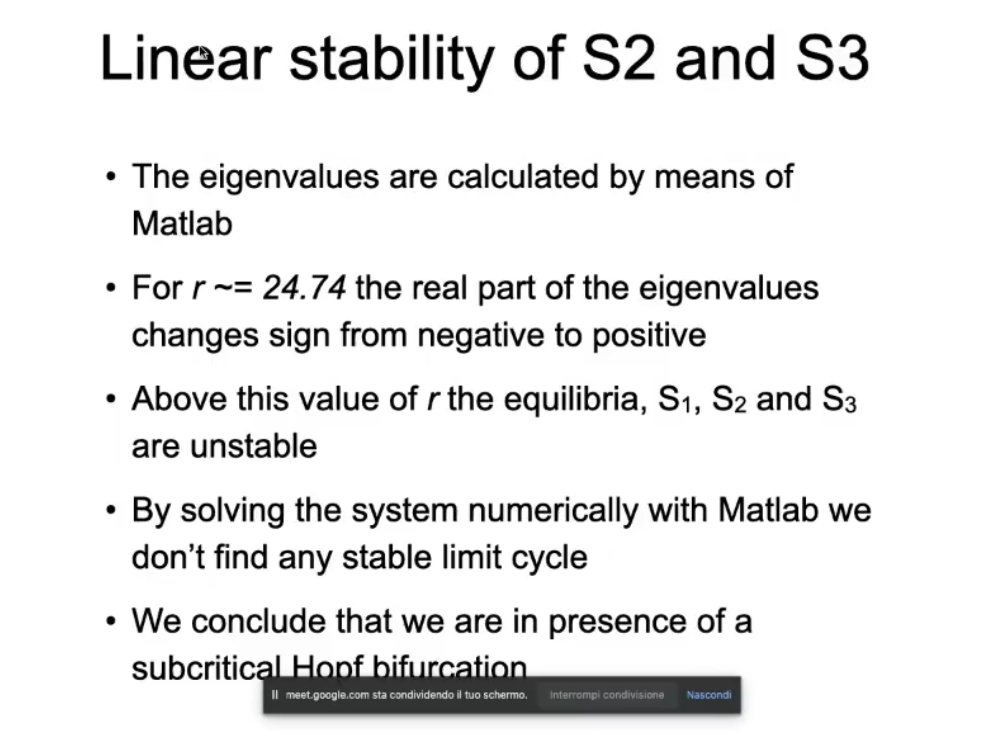
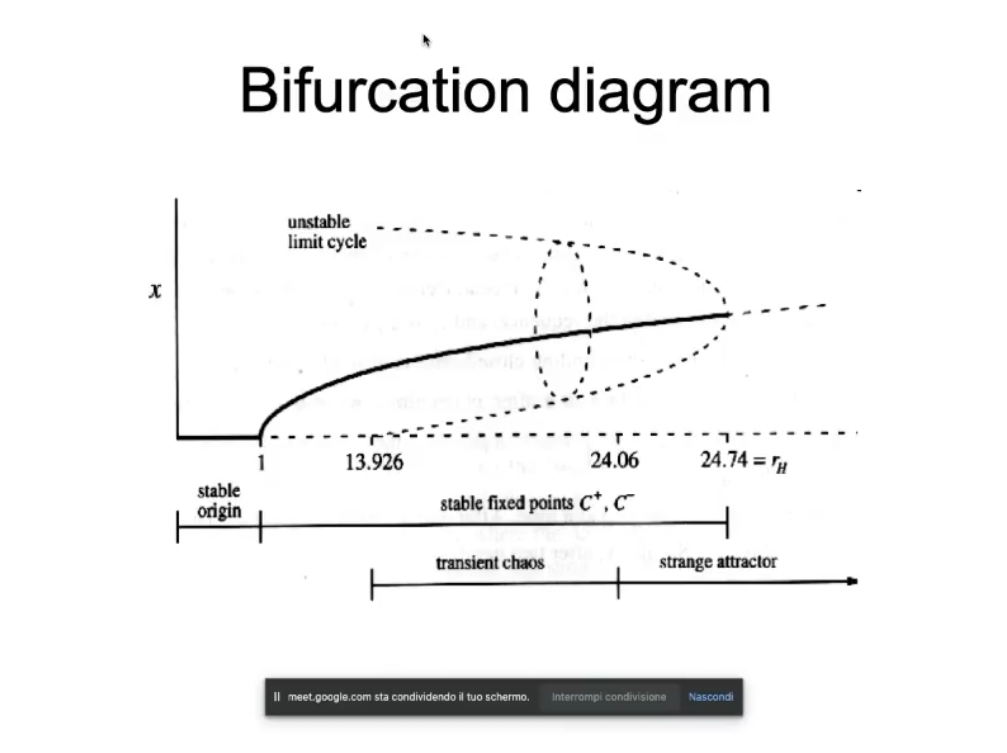
- We don’t see in this picture but there is another unstable limit cycle mirrored with respect to the abscissa.
- NOTE: above we have no stability exist/no attractors.
Unstable for the linearization ⇒ unstable for the real system.
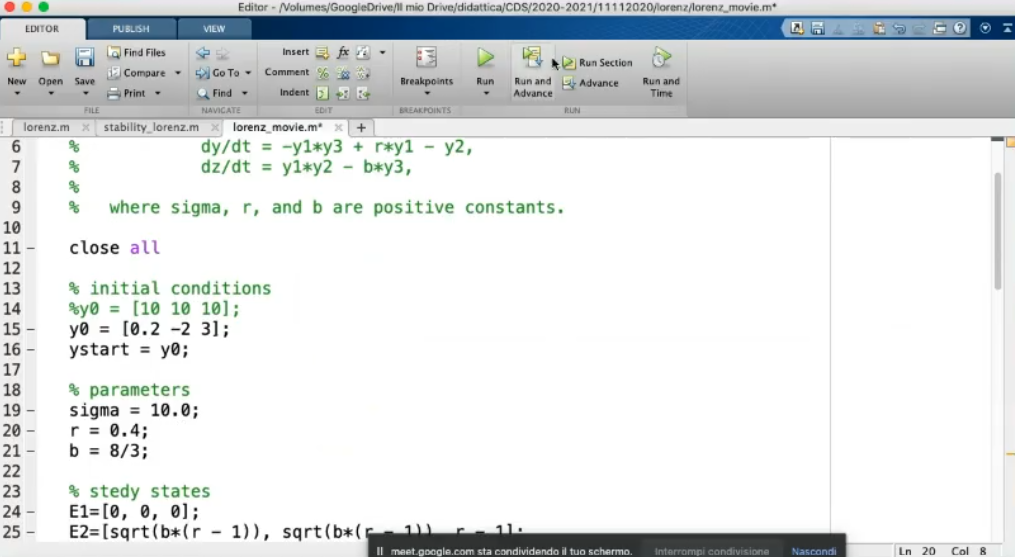
- .
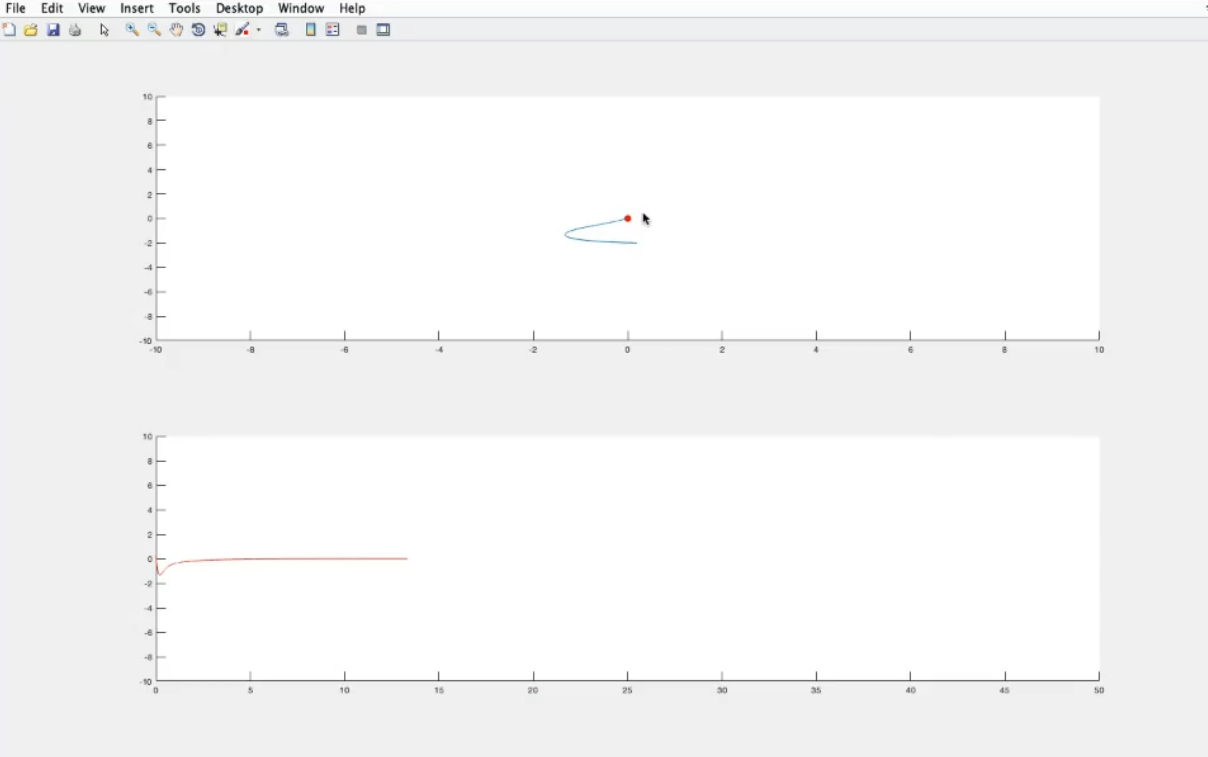
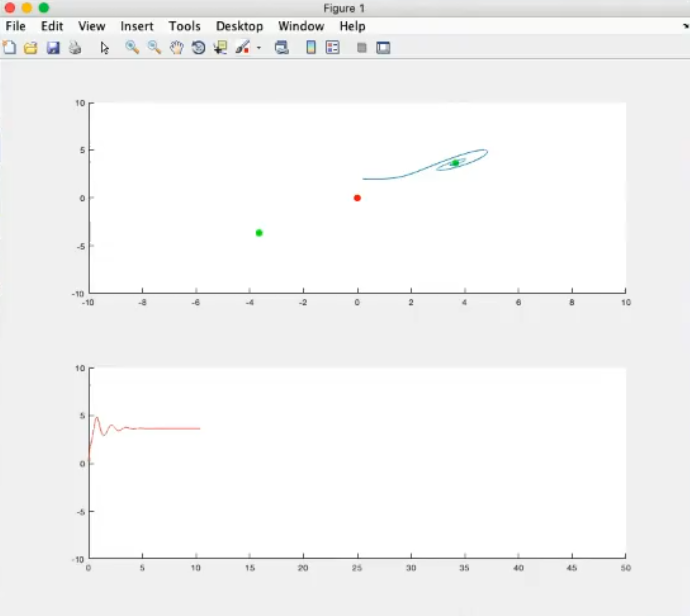
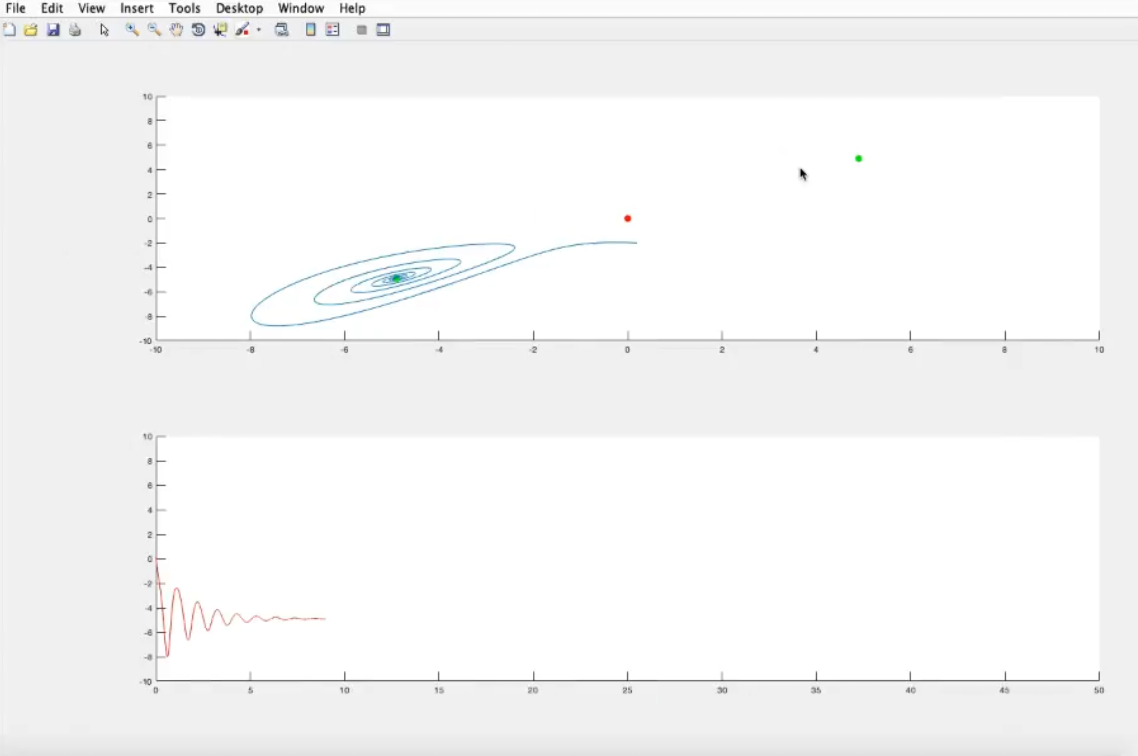
- Output of the previous, code:
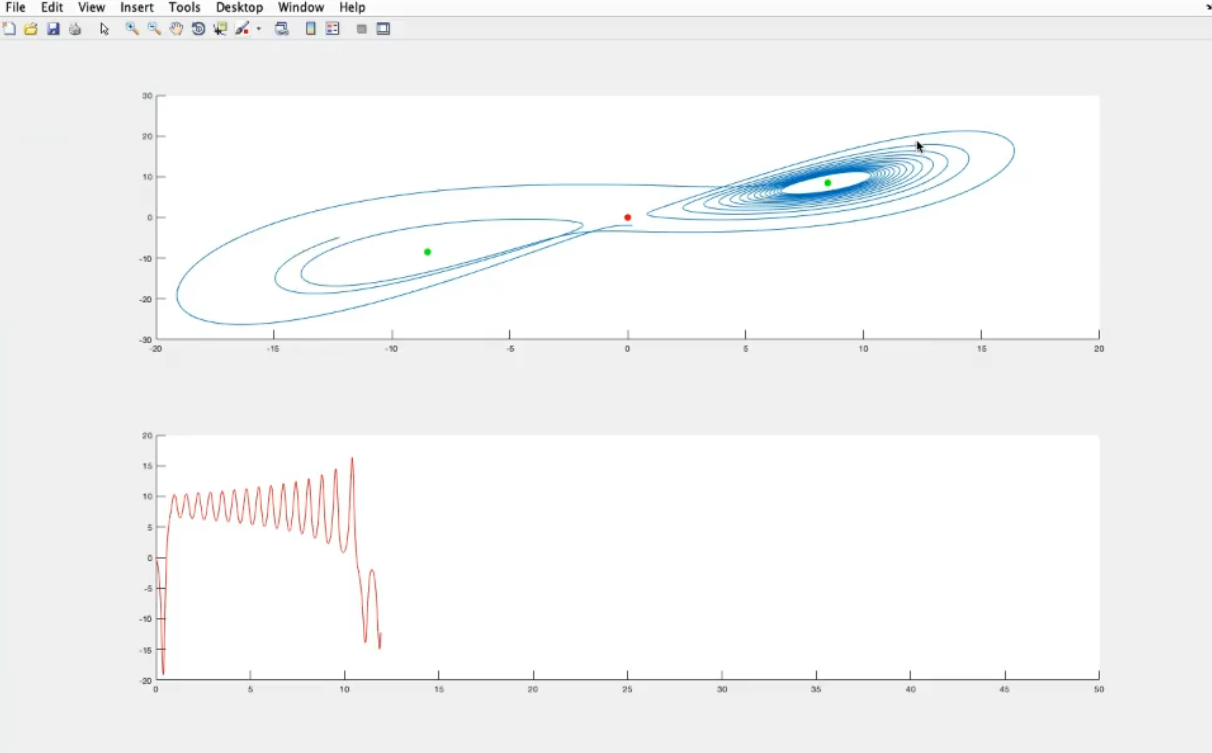
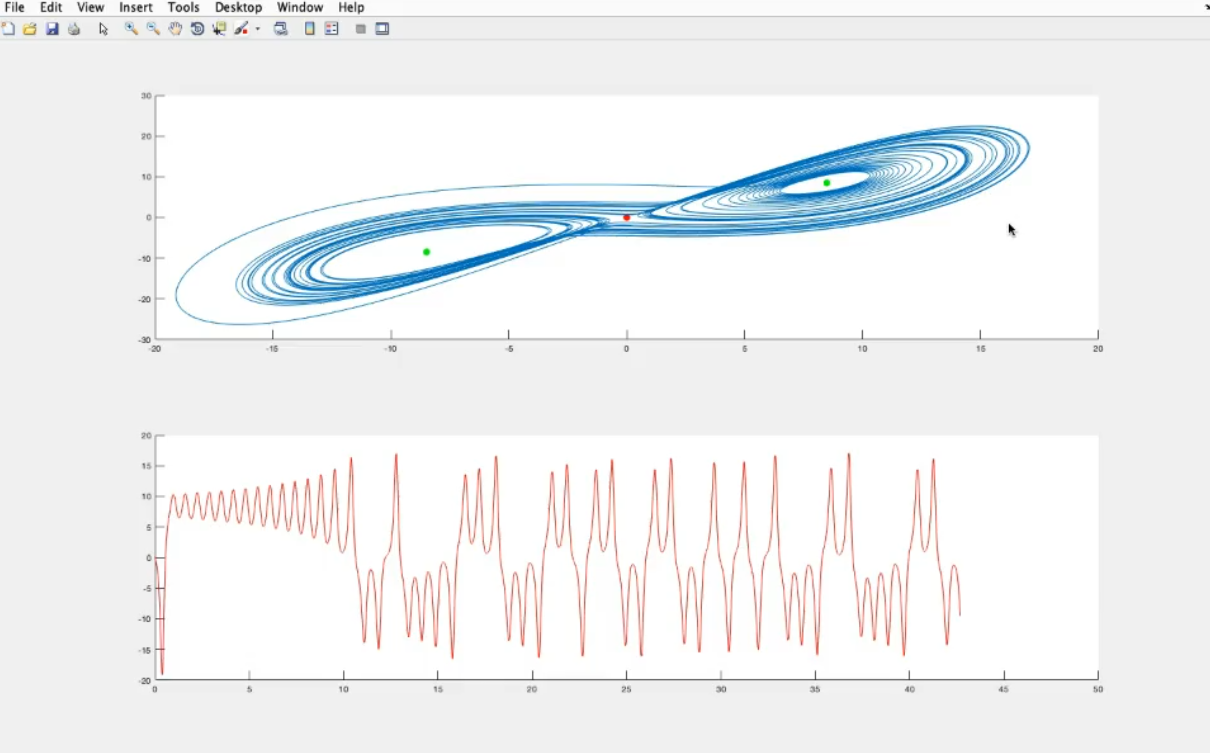
- In the first subplot we represent the phase space.
- In the second subplote we represent the dynamics.
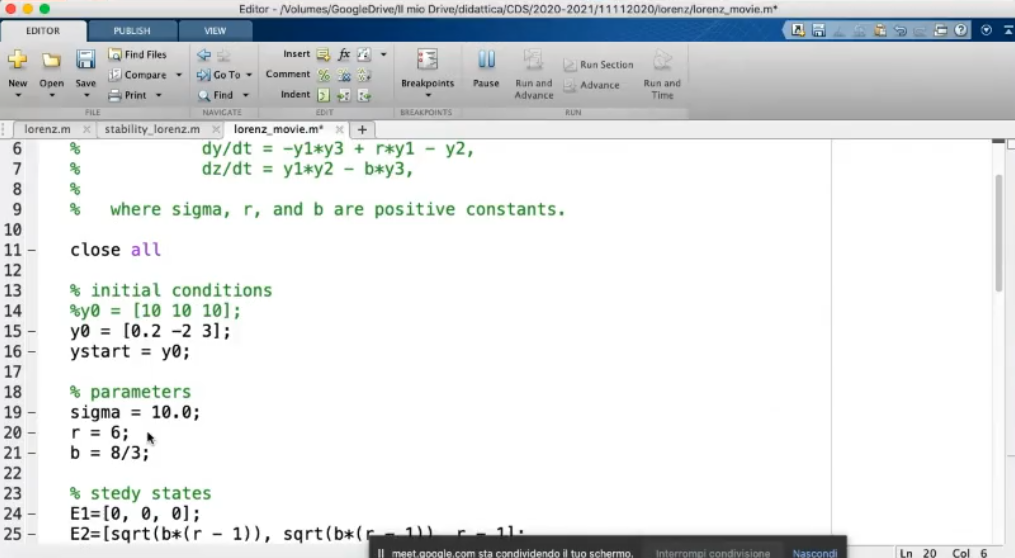
- (specifically )
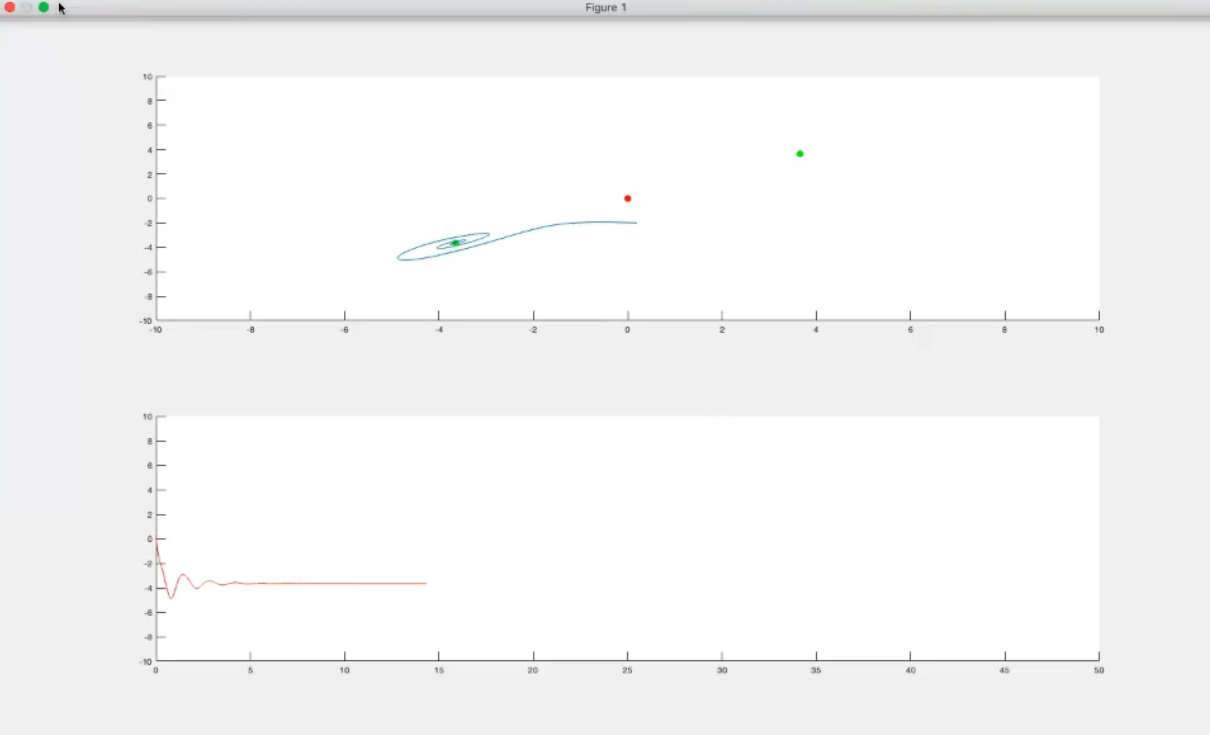
- Output of the previous, code.
- The origin is now an unstable steady state
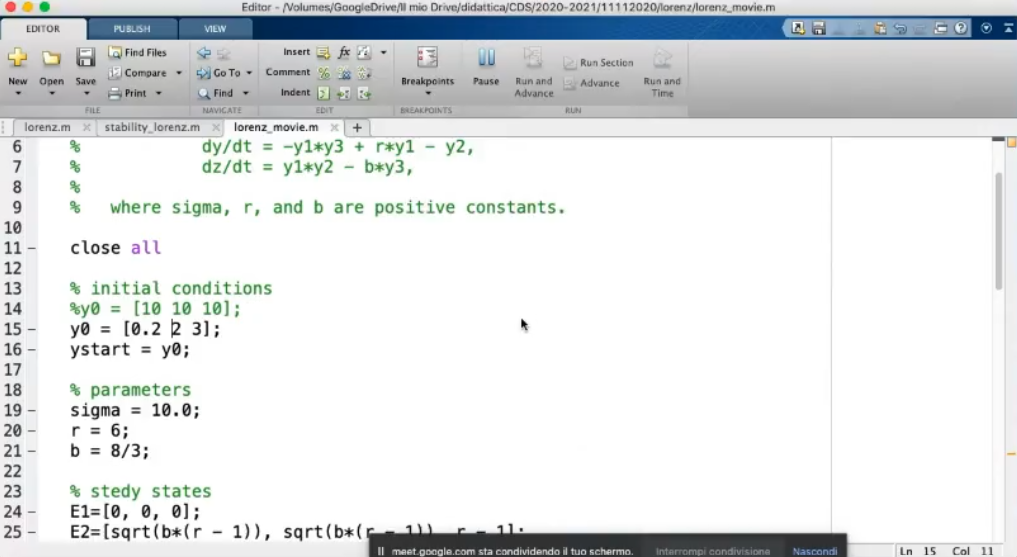
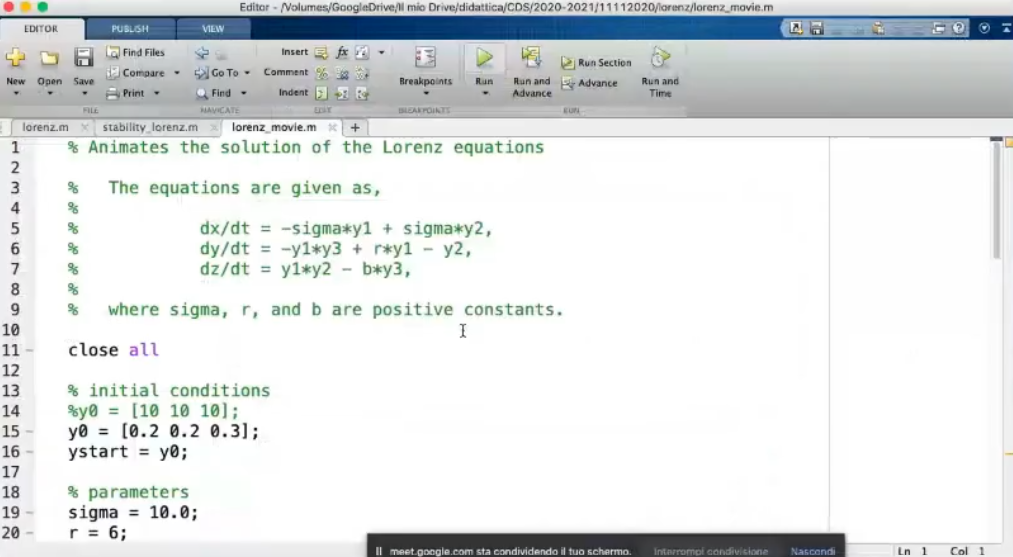
- We change the initial conditions,
- We now converge to the second stable steady state.
- We change the initial conditions, (closer to the origin)
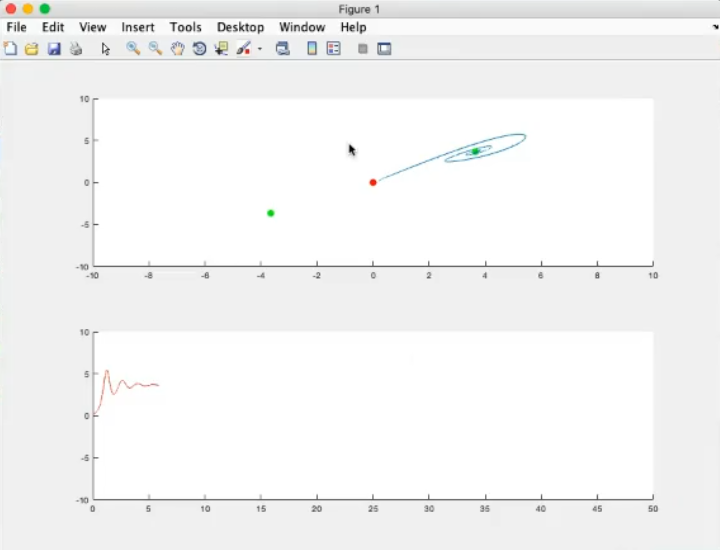
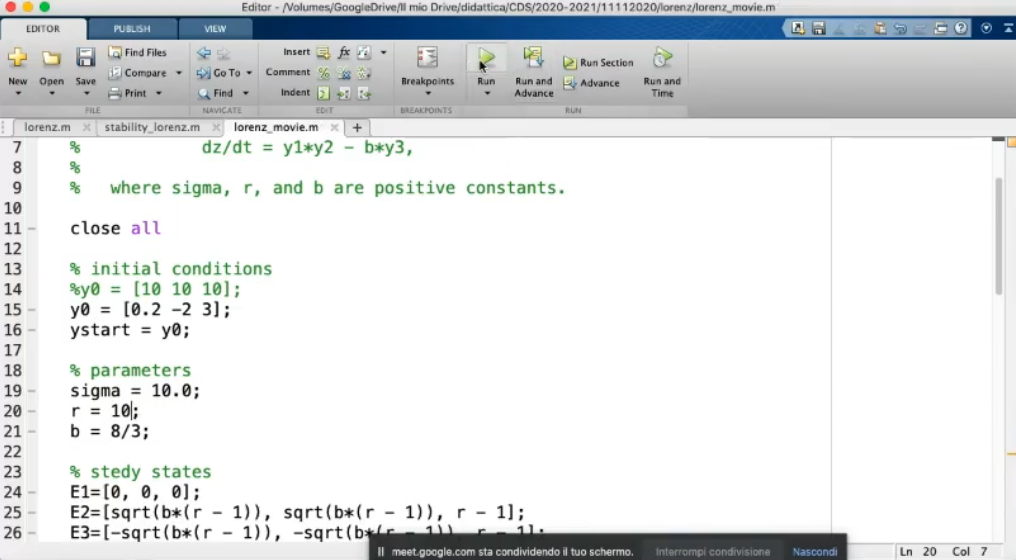
- .
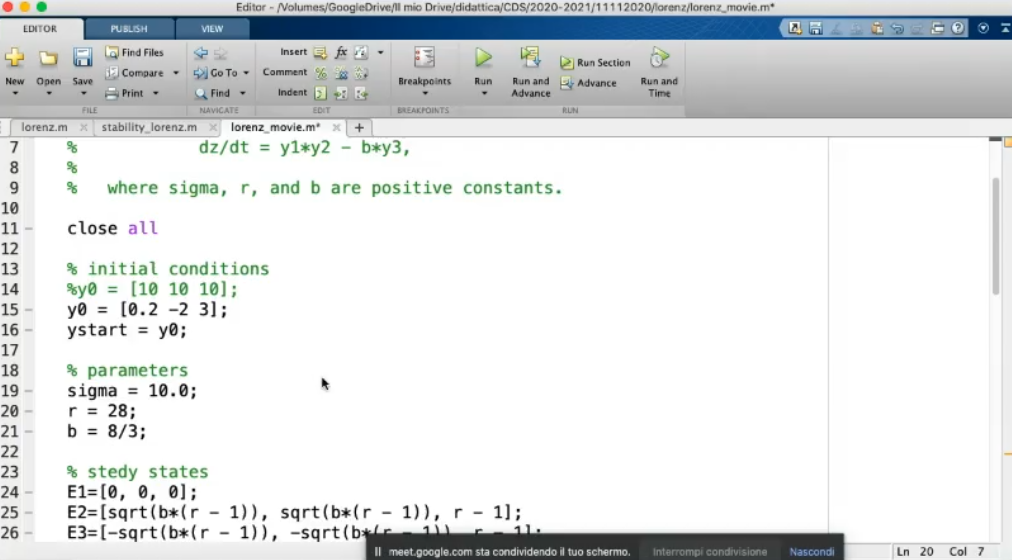
- ()
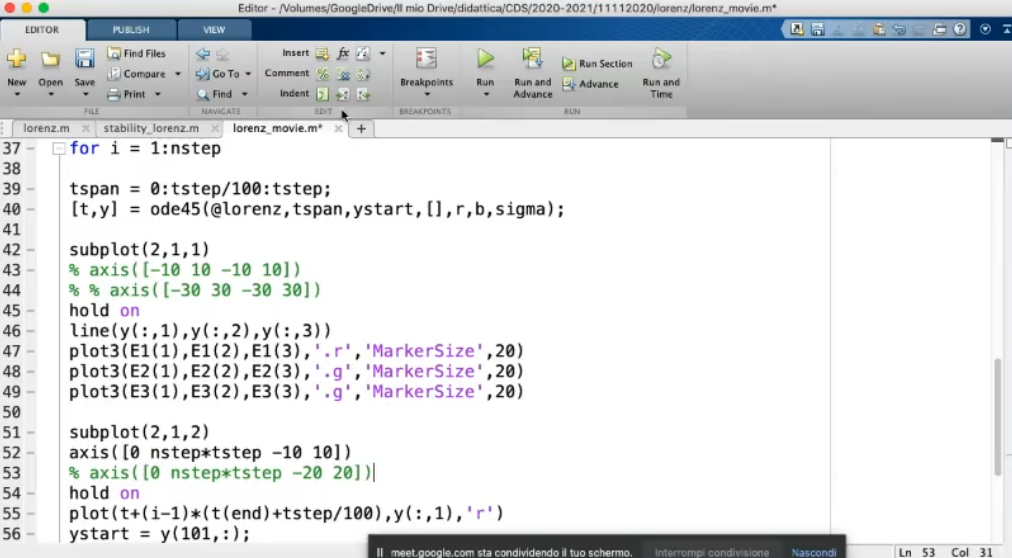
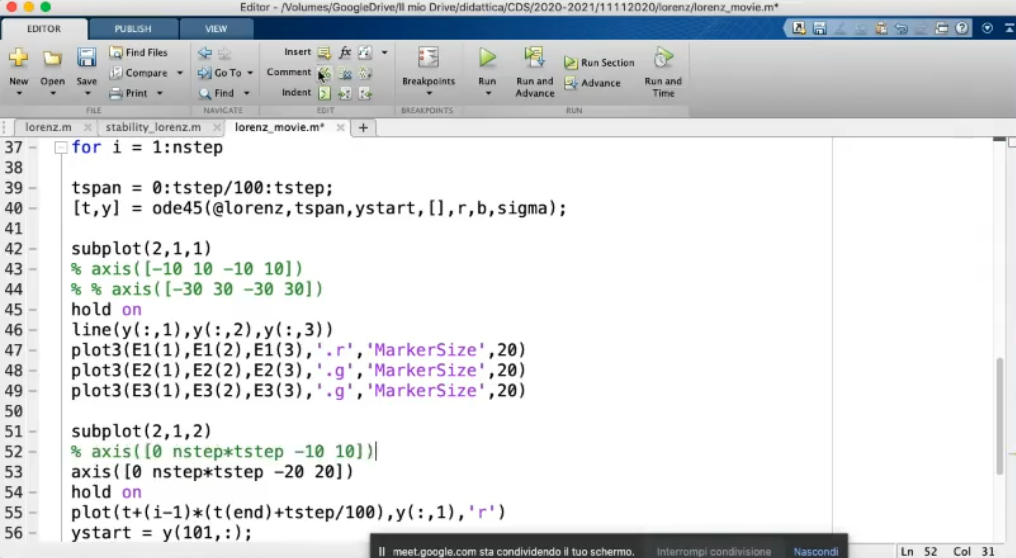
- Also we change the scale of to the abscissa and ordinate.
- (comment
axis([0 nstep*tstep -10 10])) - (uncomment
axis([0 nstep*tstep -20 20])) - (comment
axis([-10 10 -10 10]))
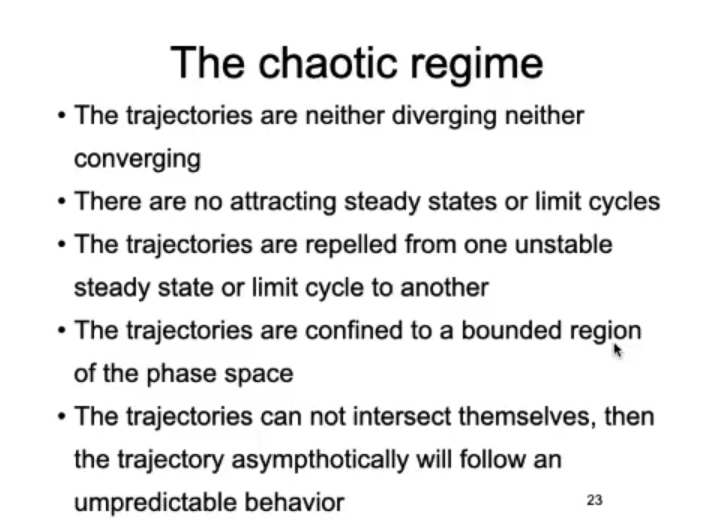
This is the evolution of the chaotic system: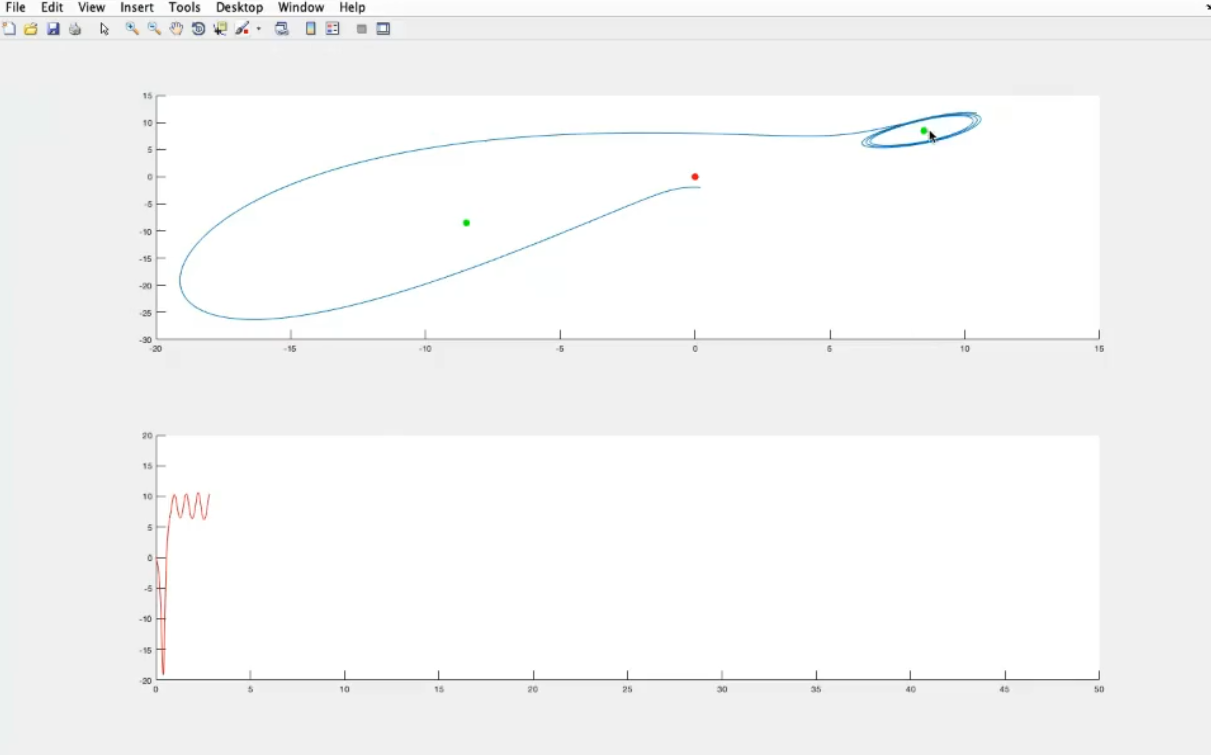
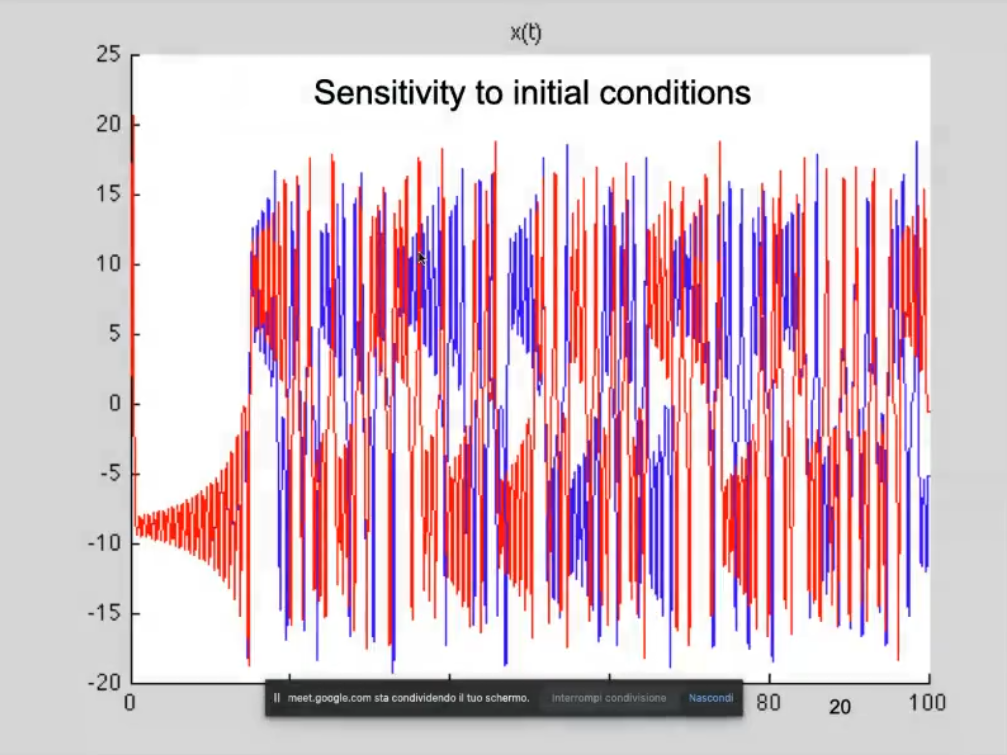
- Sensitivity to inital conditions, we report only one varible (), and 2 sliglty different initial conditions, as you can see thy become compleately different after some time, even if they started really close to one onother.
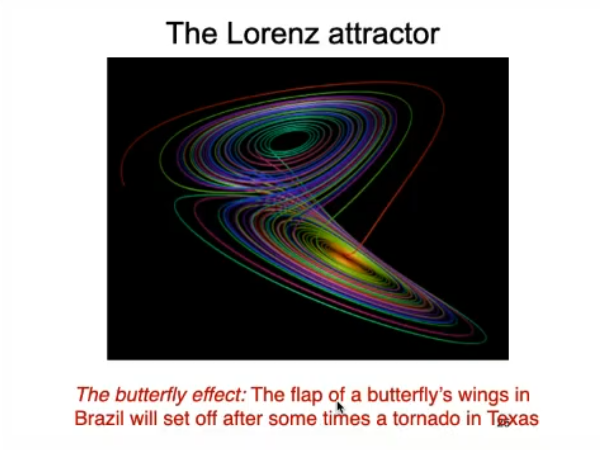
- A very very tiny change of the inital conditions, will produce an enormous change in the system after some time.
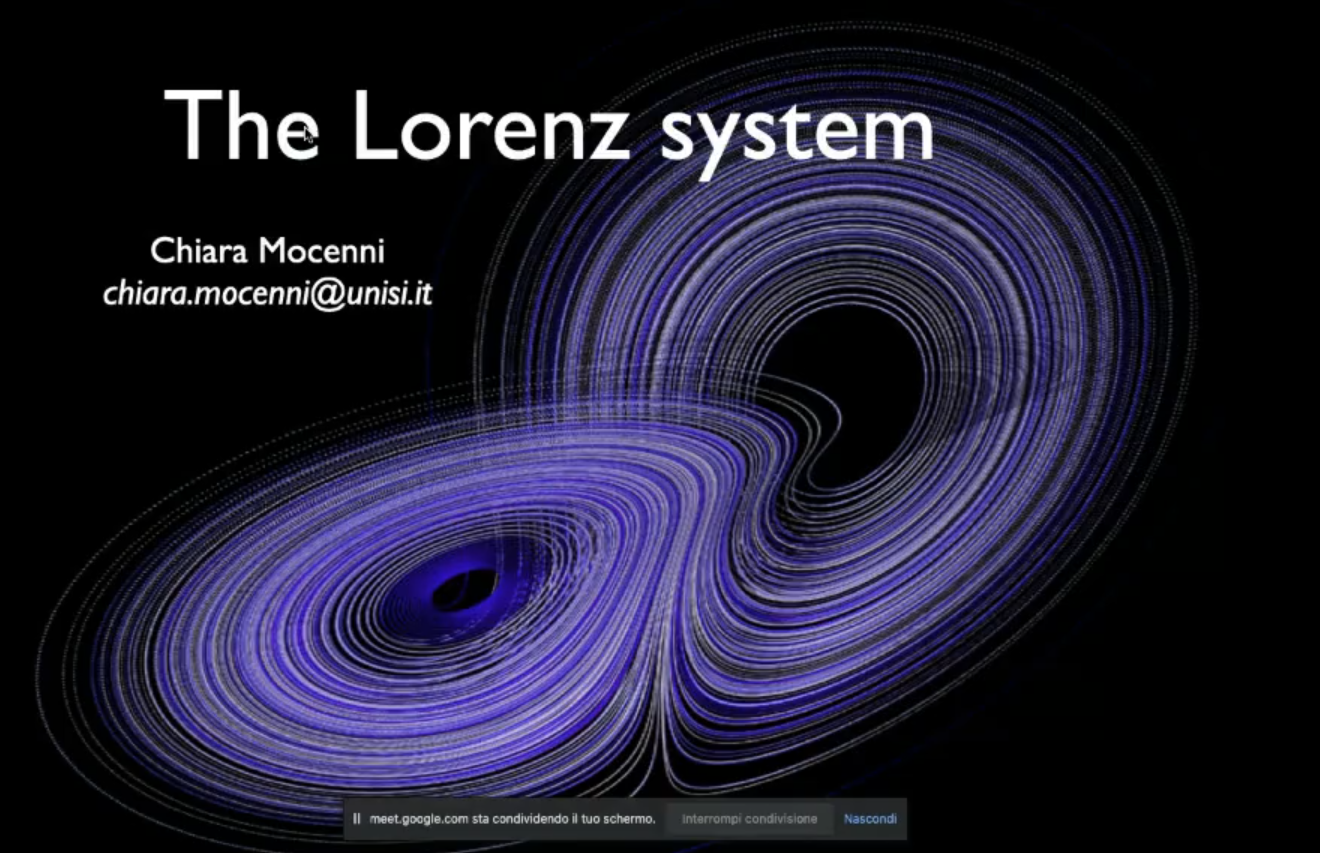
- It is called an attractor, since the system will not diverge, it will remain confined in a closed region.
- It is also called “strange attractor”, because ins not a typical one, the typical one are:
- stable steady states (atttractors)
- limit cycles (and multiple-period limit cycles)
Rememebr that this is a 3D object: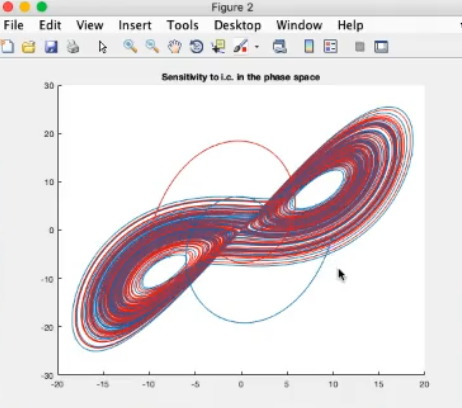
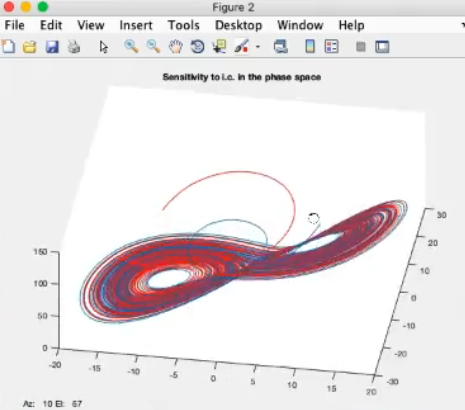
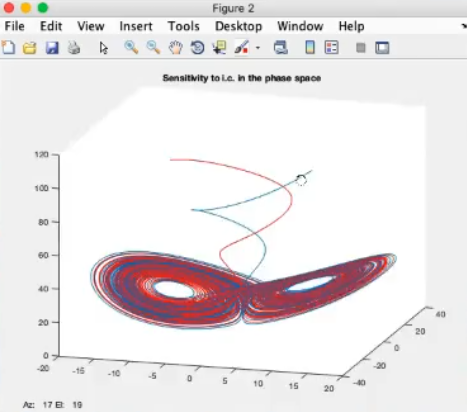
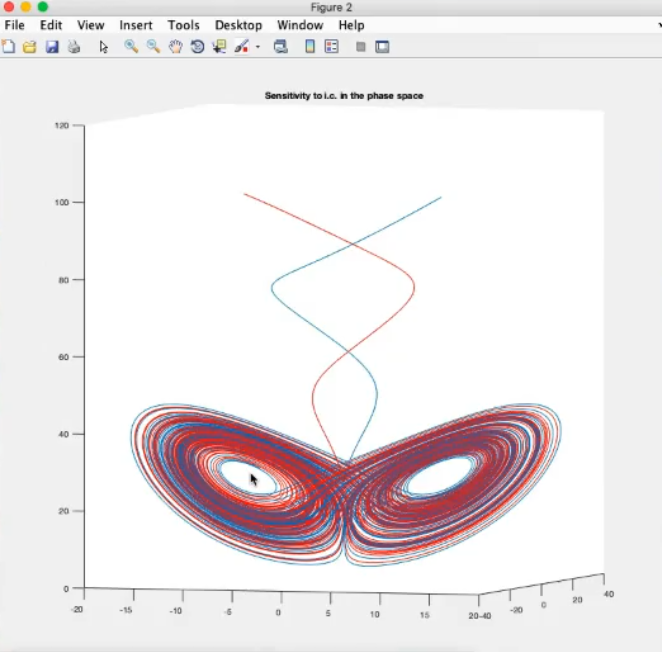
- The two circles are unstable steady states.
- In the middle of the two unstable steady states we have the origin .