Remember:
Cantor Set:
Also called the “powder of cantor”.
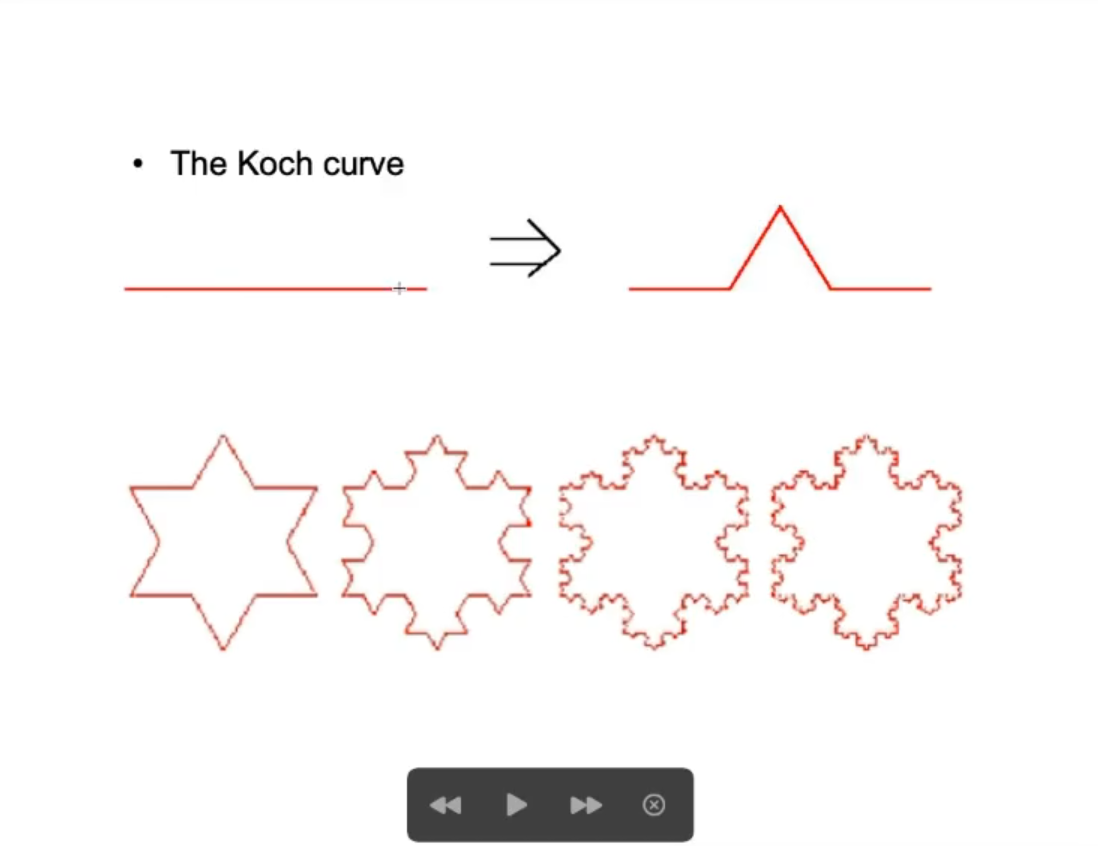
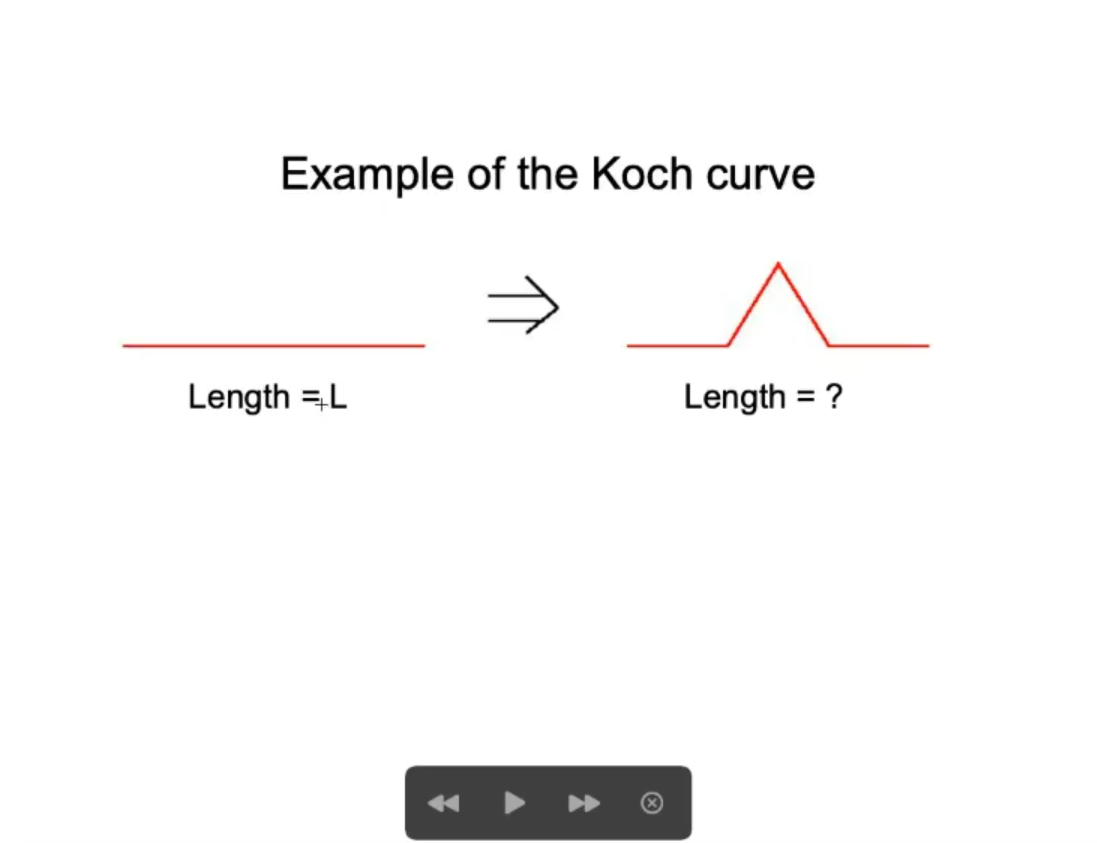
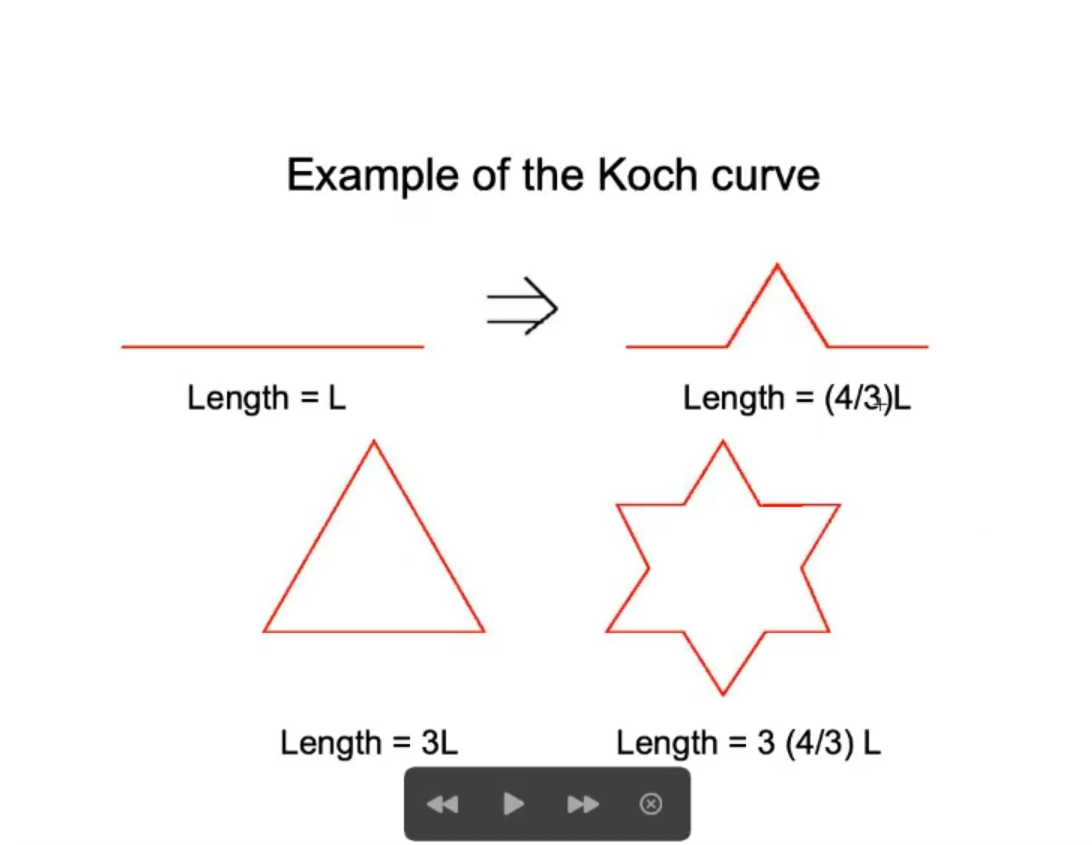
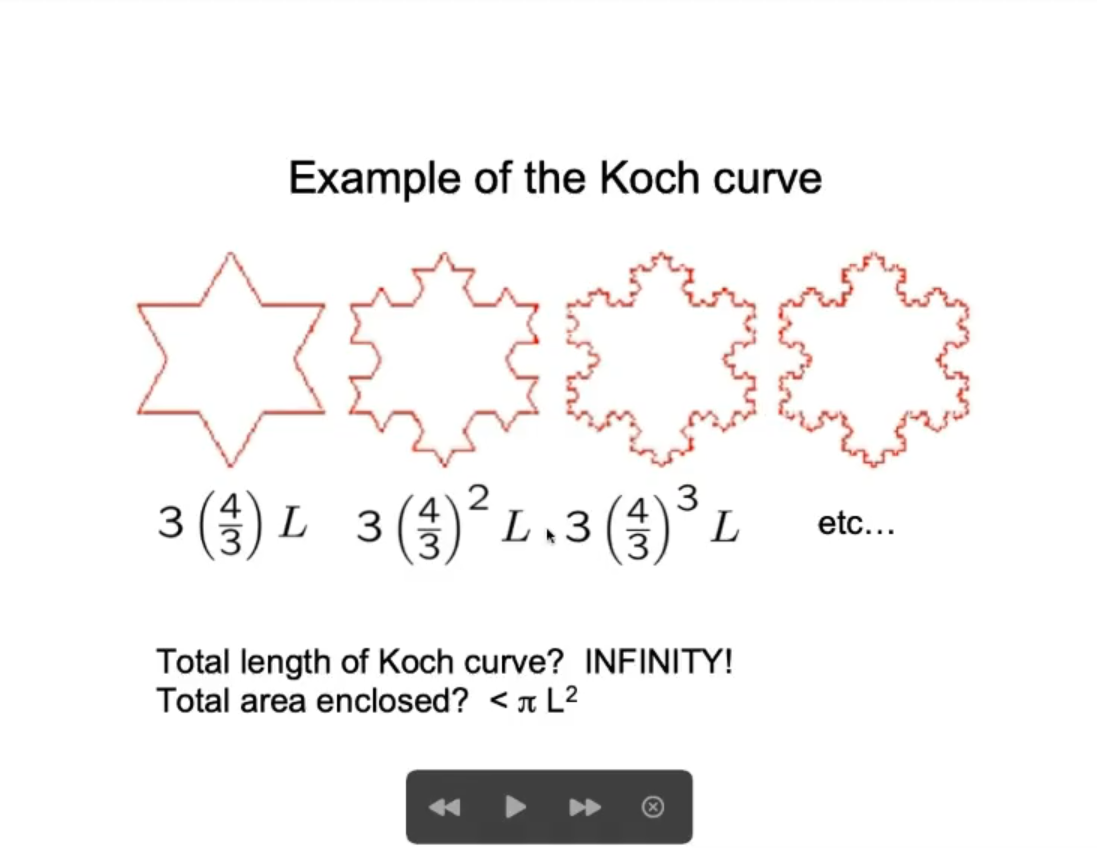
Koch Curve:
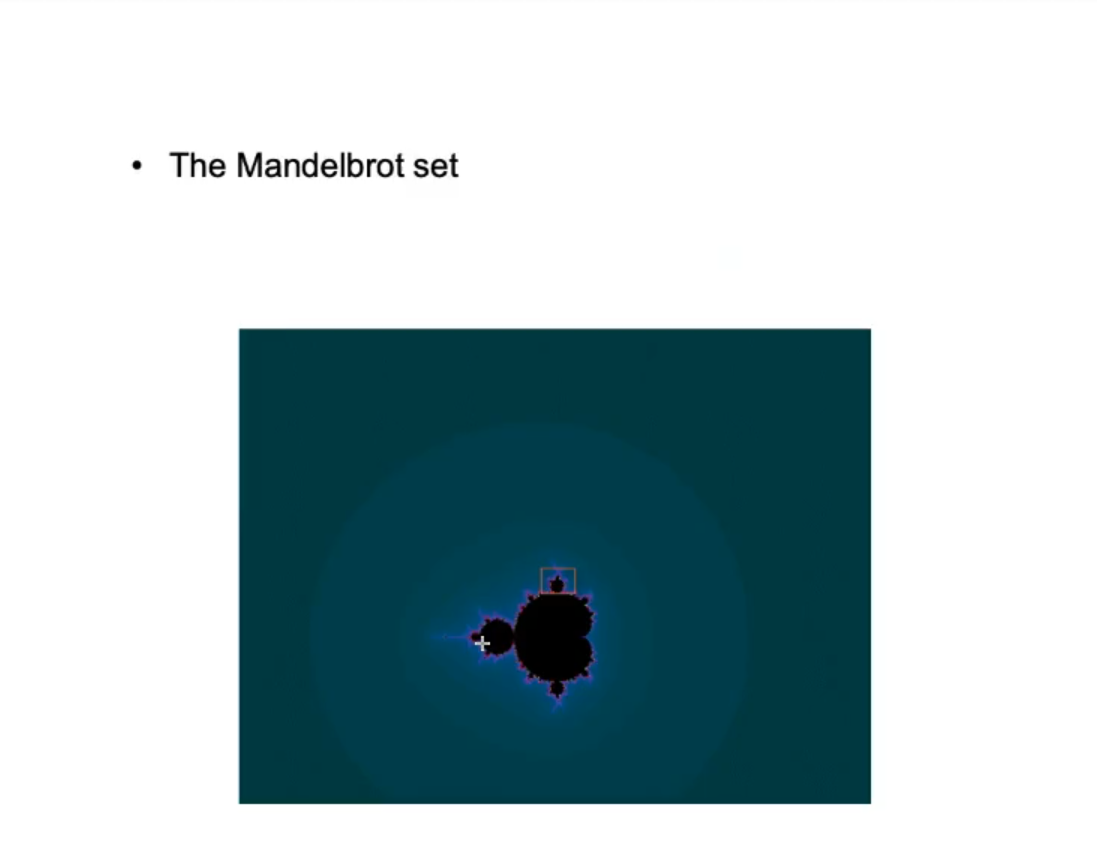
Mandelbrot Set:
If we continue to scale as you can see we find the “original” form at all scales. A fractal has this characteristic: “It repeats itself at all scales”
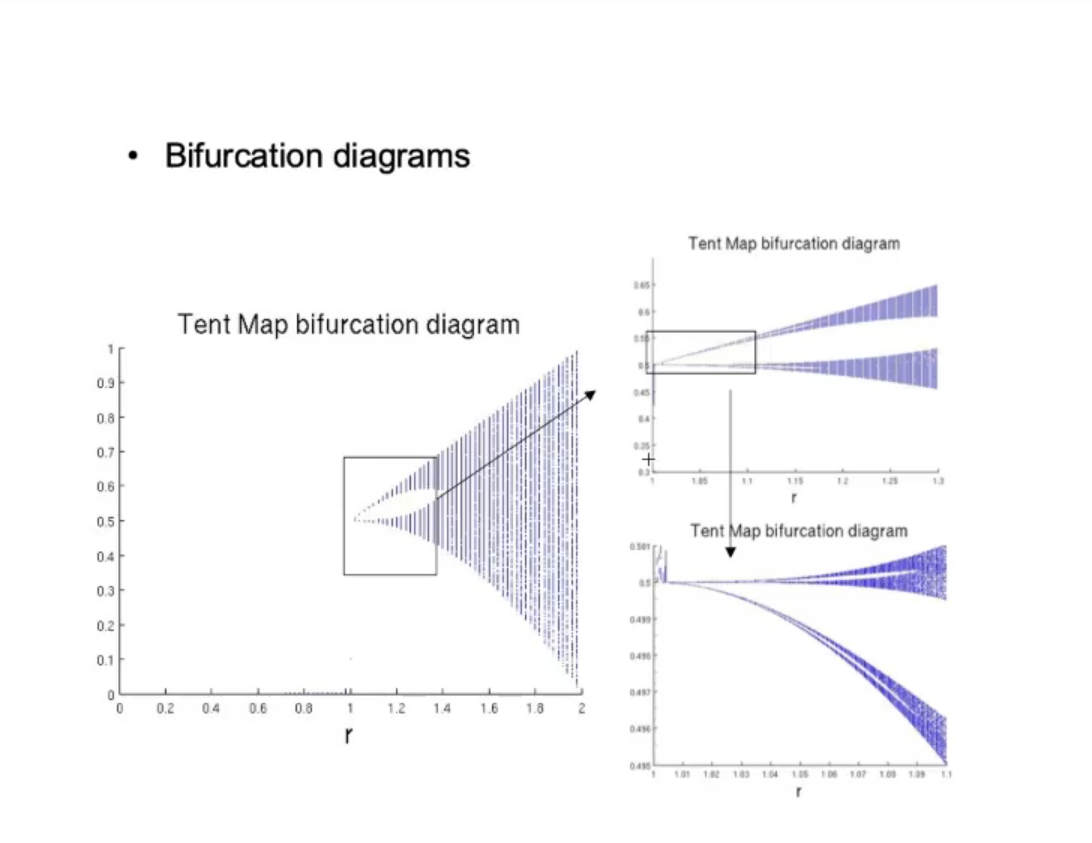
- The bifurcatin diagram of the logistic map we have seen before.
- This diagram is a fractal.
- We we enter the chaotic regime, we actually have passed an infinite number of flip bifurcation (doubling the period each time).
Fractal Dimensions:
Topological Dimension:
- The intersection you find (open or closed curve) are at leased 1 or 2:
- The least amount of point you can intersect is .
- For a closed line the minimum amount of intersection will be ⇒ topological dimension .
- So as we have seen previously a set of point has topologial dimension ⇒ An open/closed curve has topologial dimension
~Ex.: (in 3D):
- We are in 3D so now the circle becomes a sphere.
- The intersection between the sphere and the plane is a closed curve.
- So as we have seen previously an open/closed curve has topologial dimension ⇒ a plane has topological dimension
Self-Similar Dimension:
- : scale.
- : copies of the first image.
- similarity dimension: .
- If the self-similarity/similarity dimension is equal to the topological dimension ⇒ Then the object is not a fractal, and this is the case.
- This object has also topological dimension .
Fractal dimension for the Cantor set and the Koch curve:
- The topological dimension of both should be .not-sure-about-this
- For the cantor set we have , while for the Koch curve .
- Take for example the Koch curve, it is so rough that it is more than a mono-dimensional curve. (a monodimensional curve has less “surface”)not-sure-about-this
- While the cantor set is less (a monodimensional curve has more “surface”)not-sure-about-this
- Fractals dimensions are not integers.
- The definition of dimension only works for self-similar fractals.
However not all fractals are self-similar, for those other definitions of dimensions also exists.- Some fractals have still today unknown dimension.
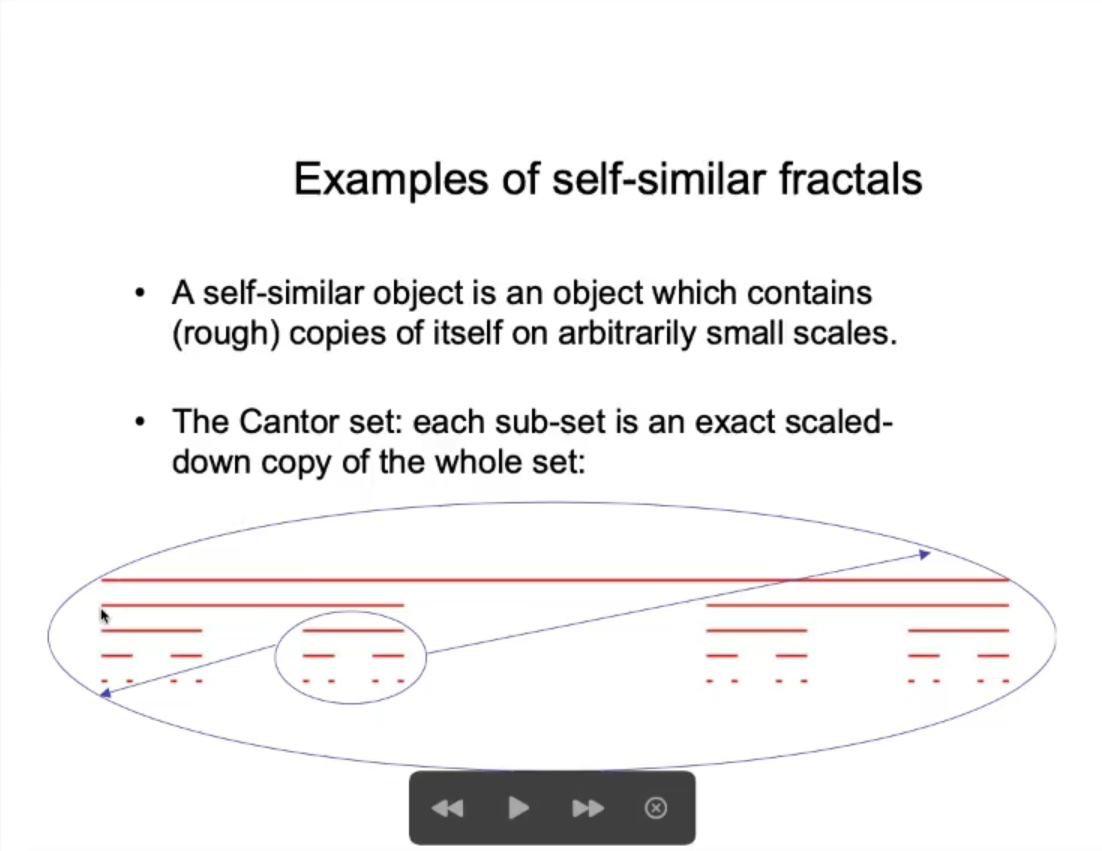
- Also called the “powder of cantor”.
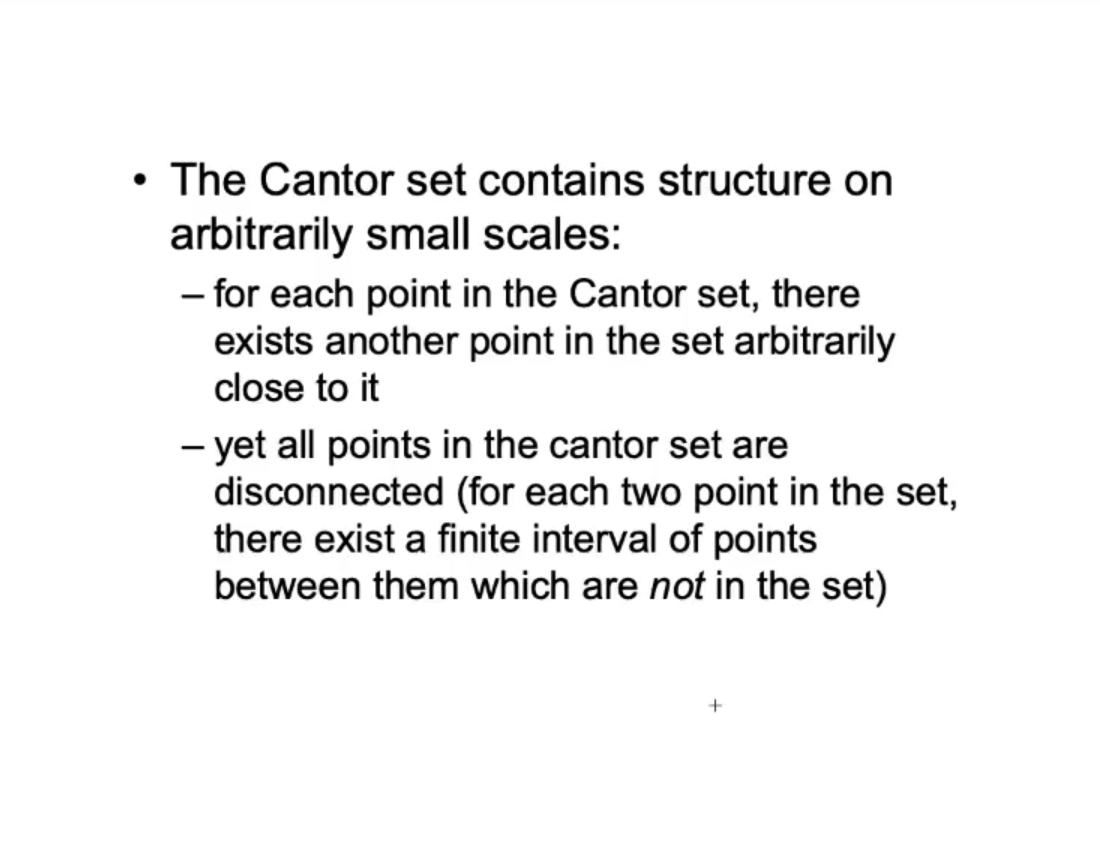
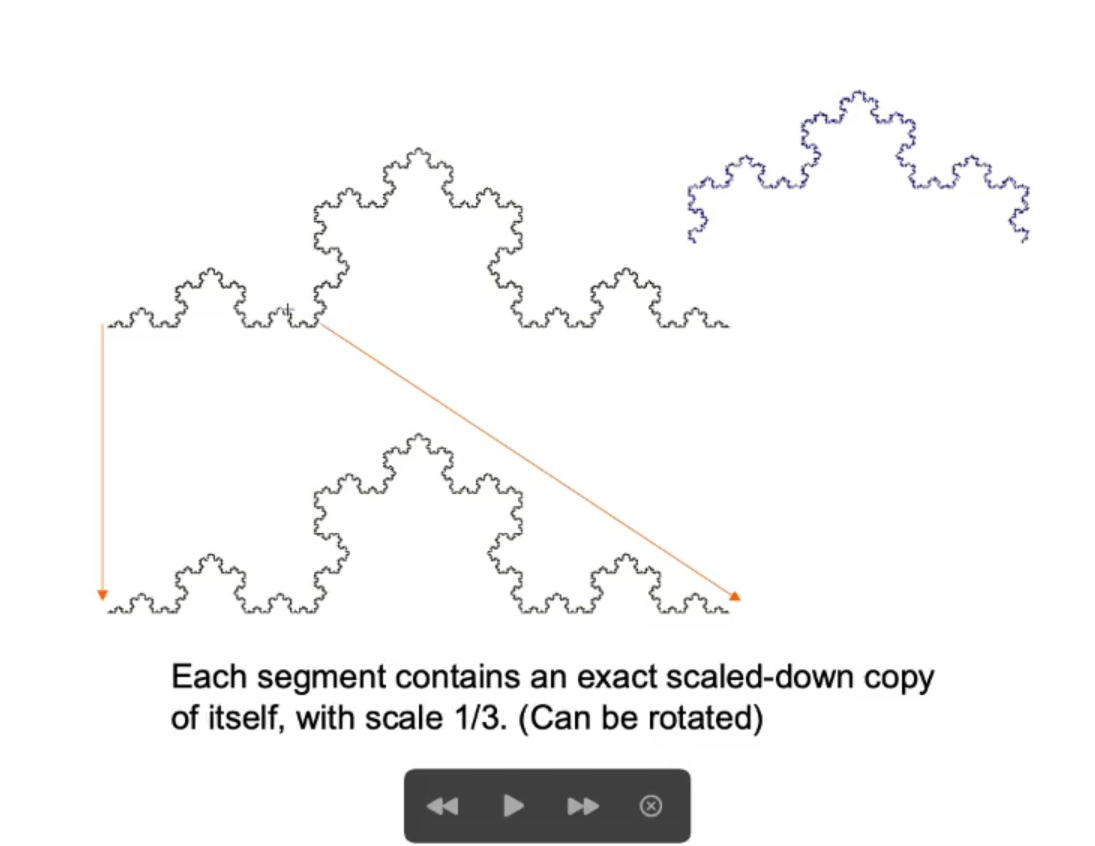
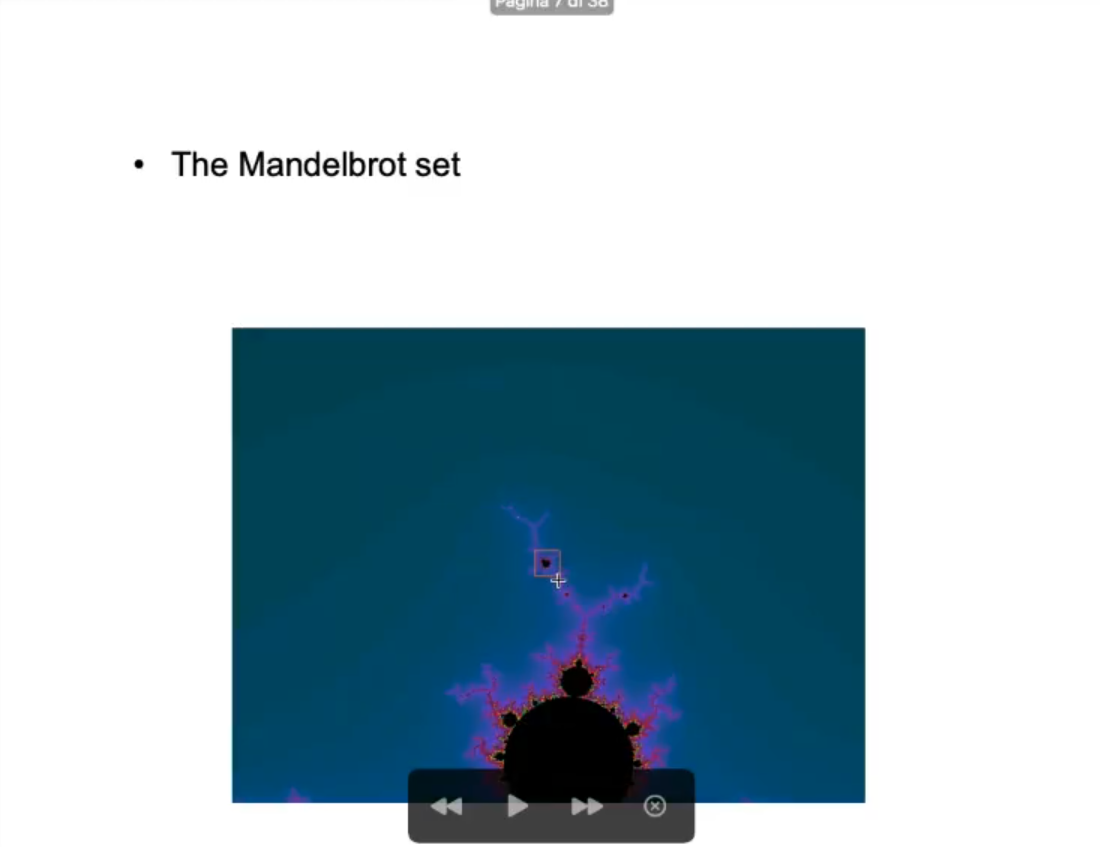
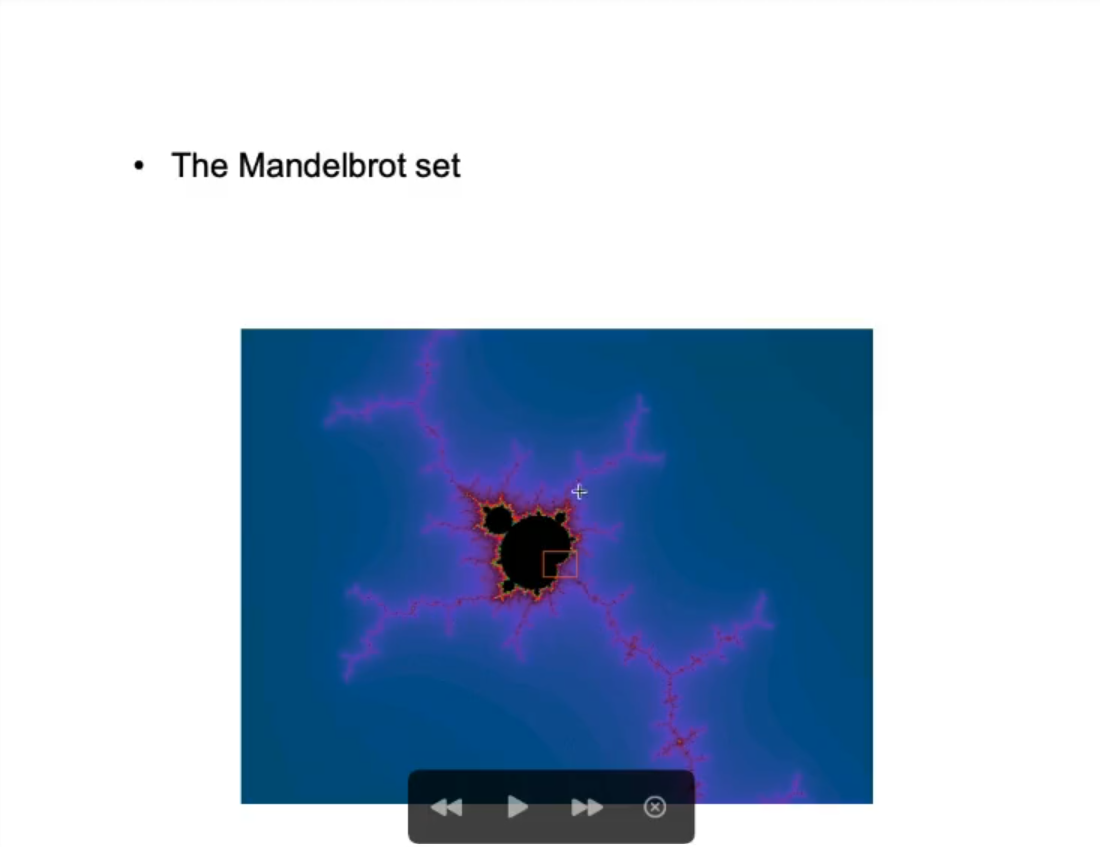
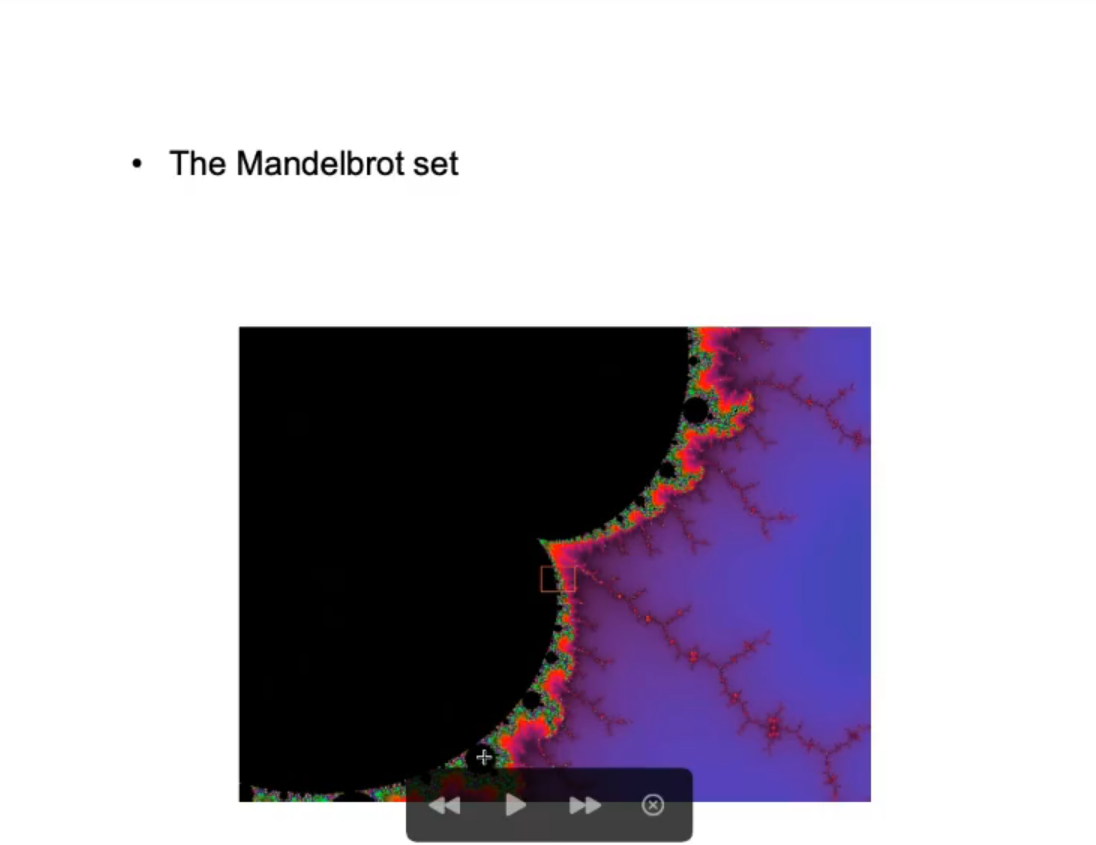
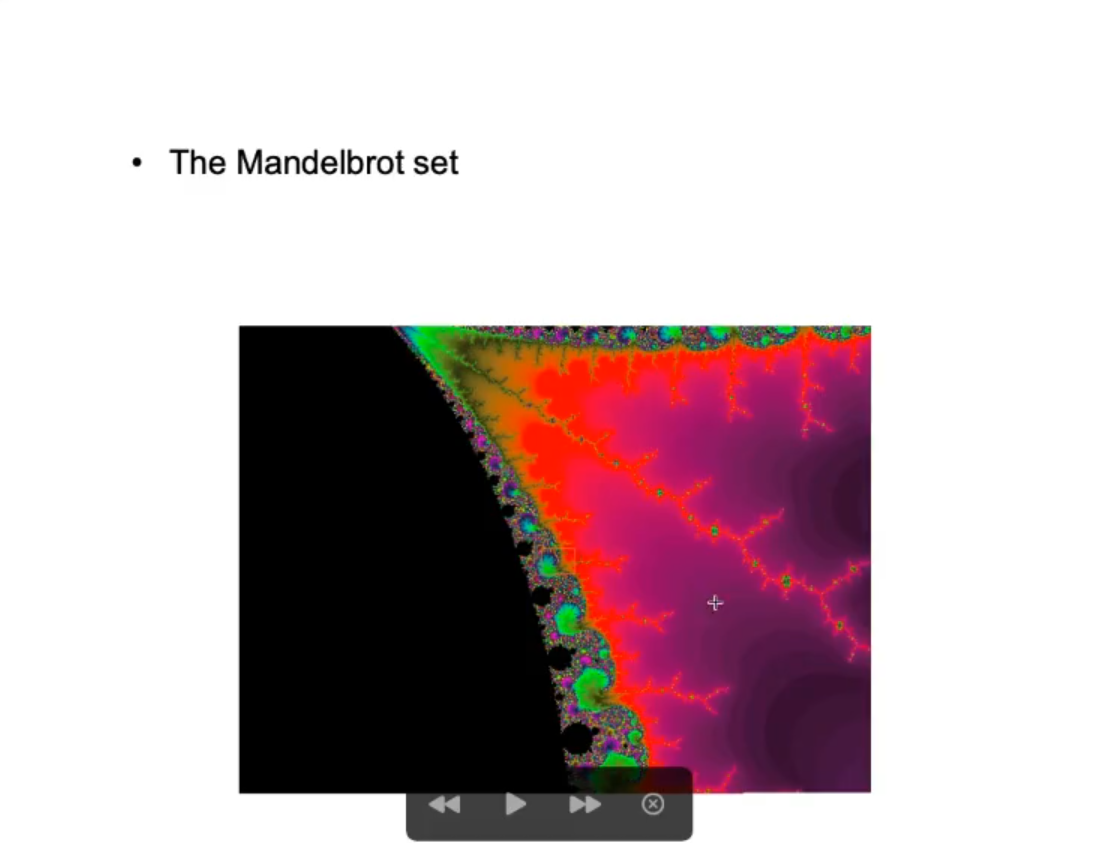
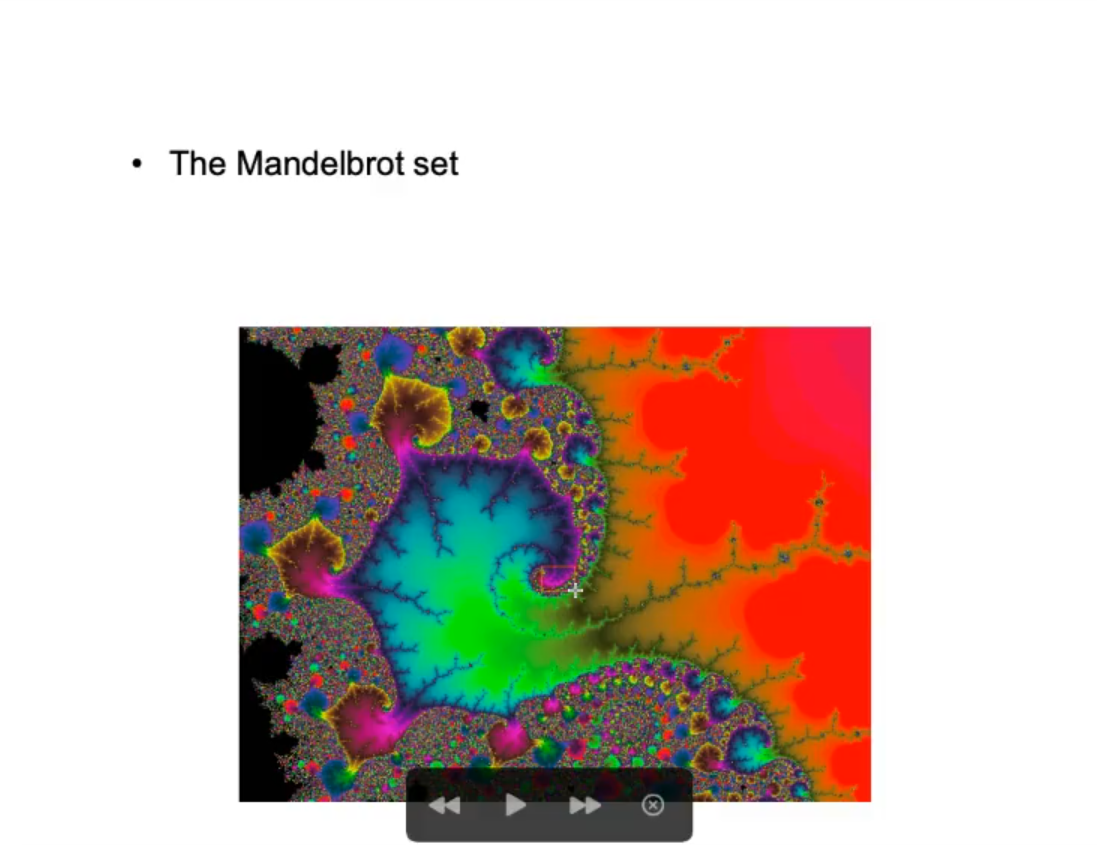
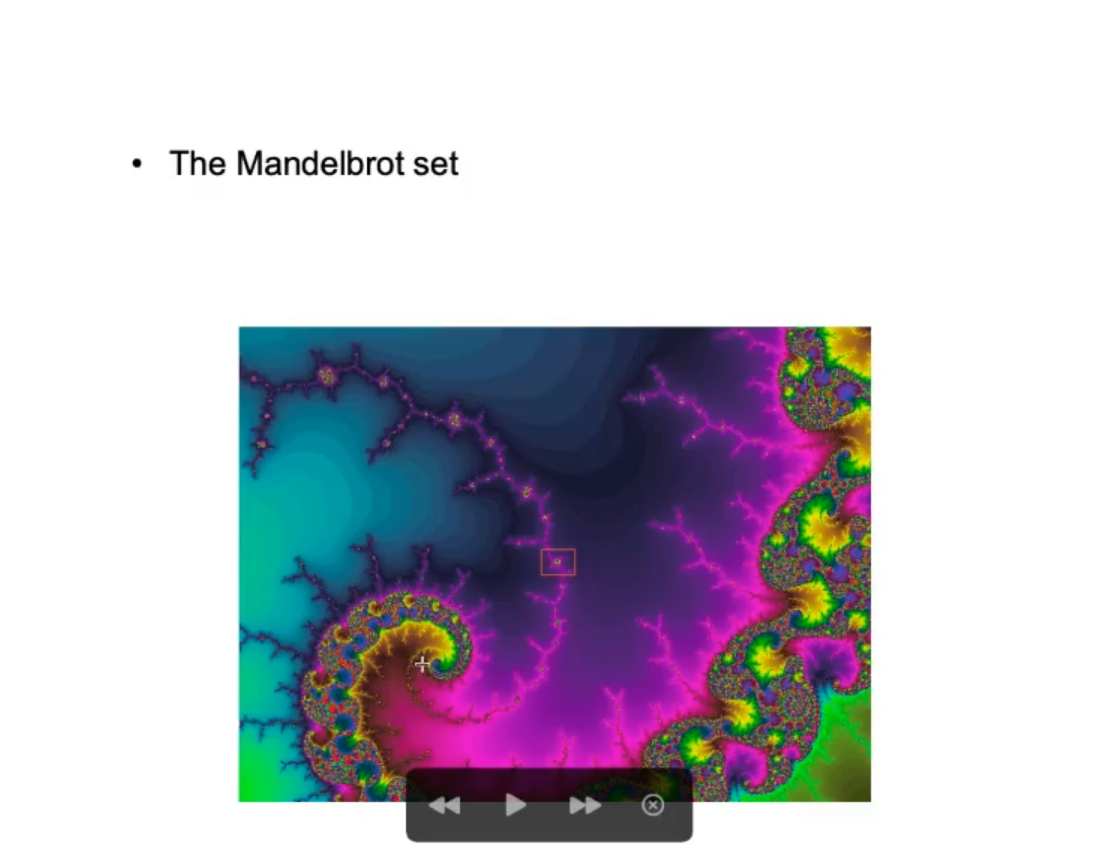
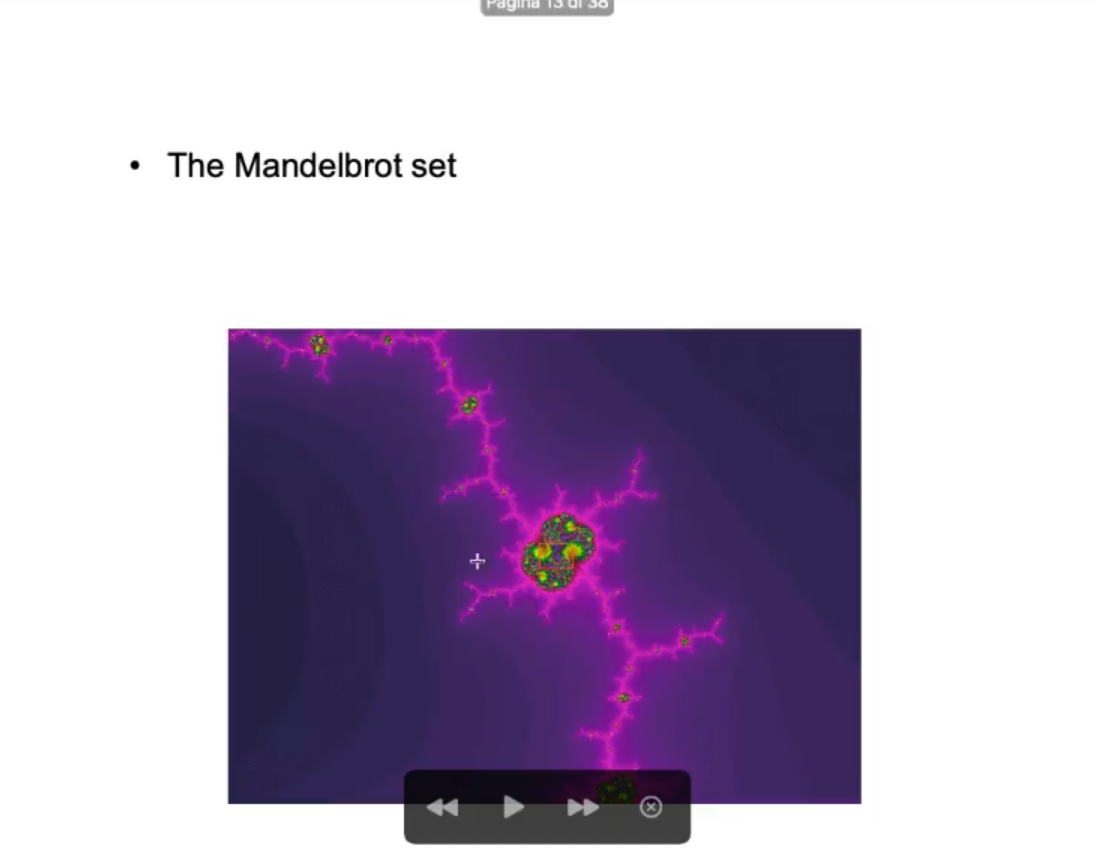
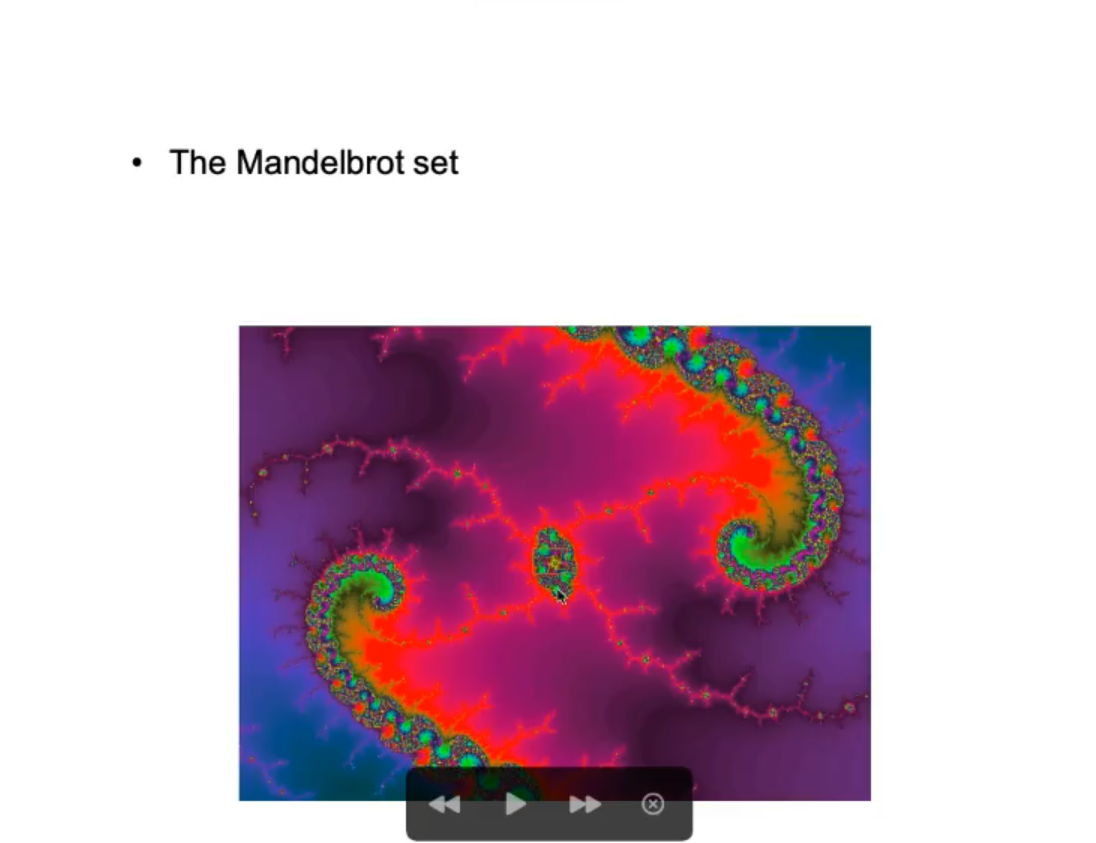
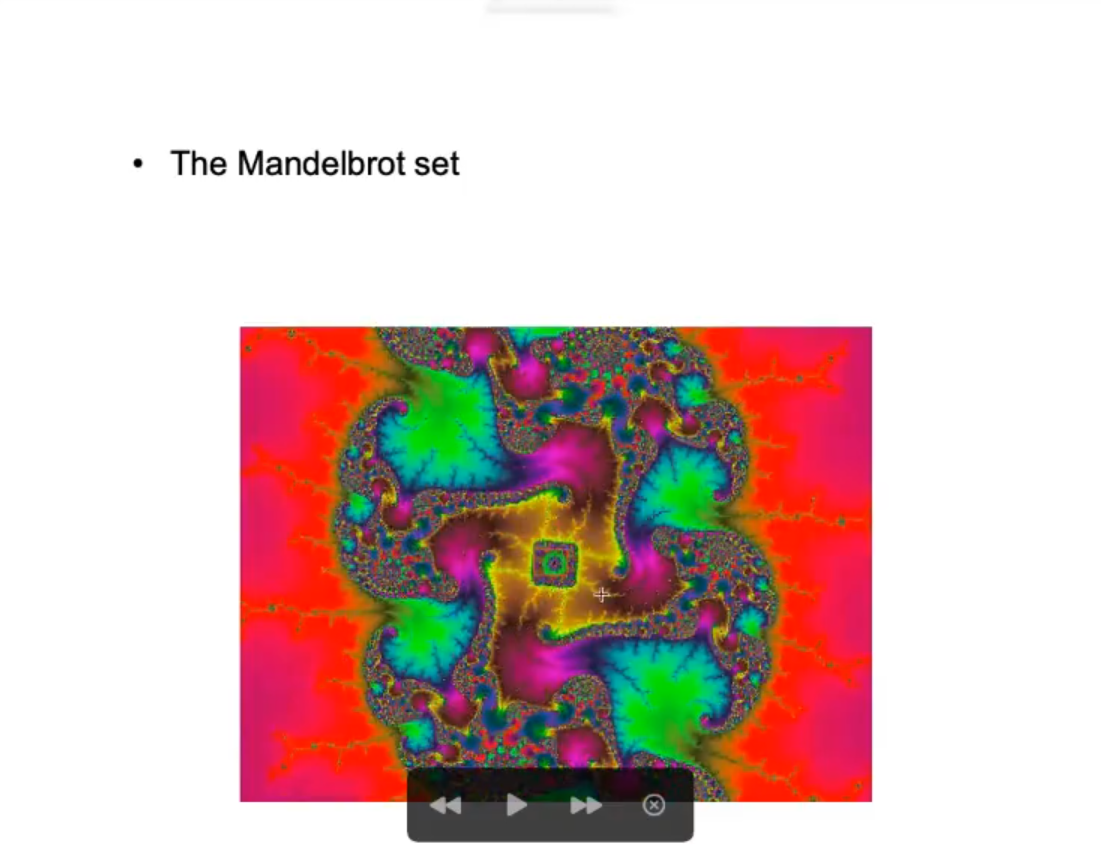
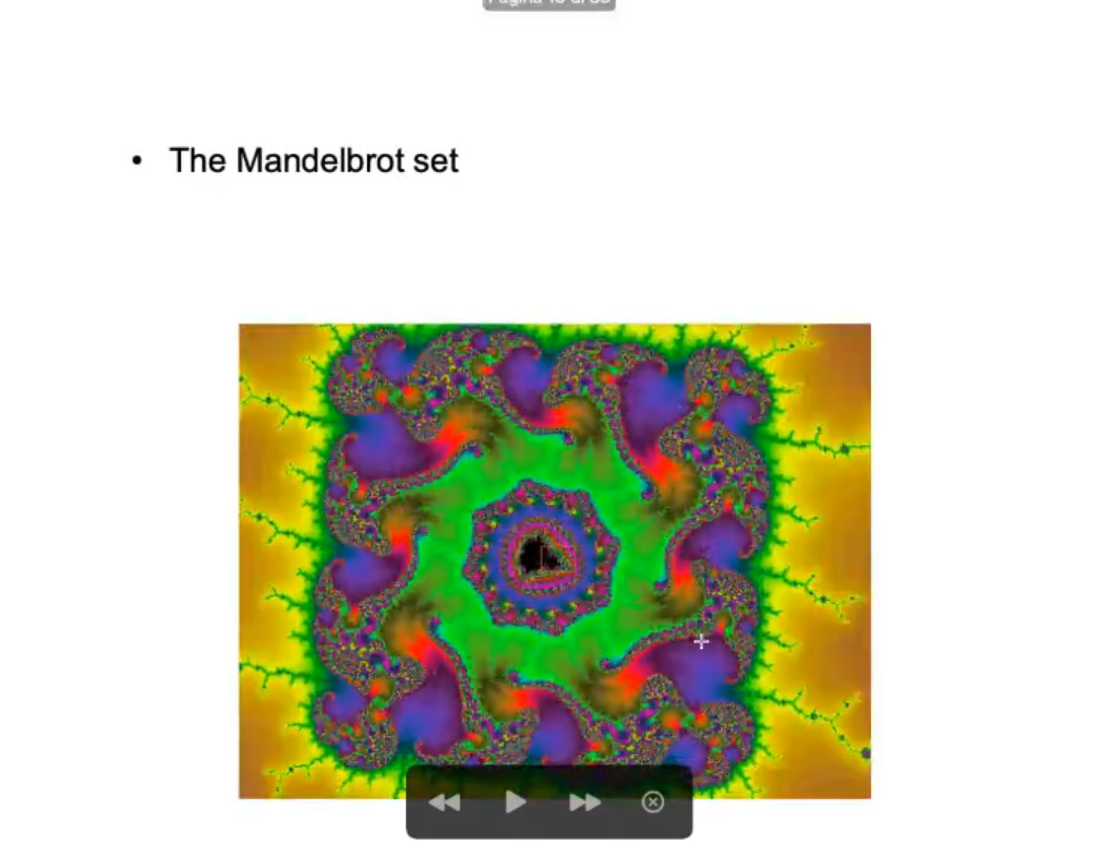
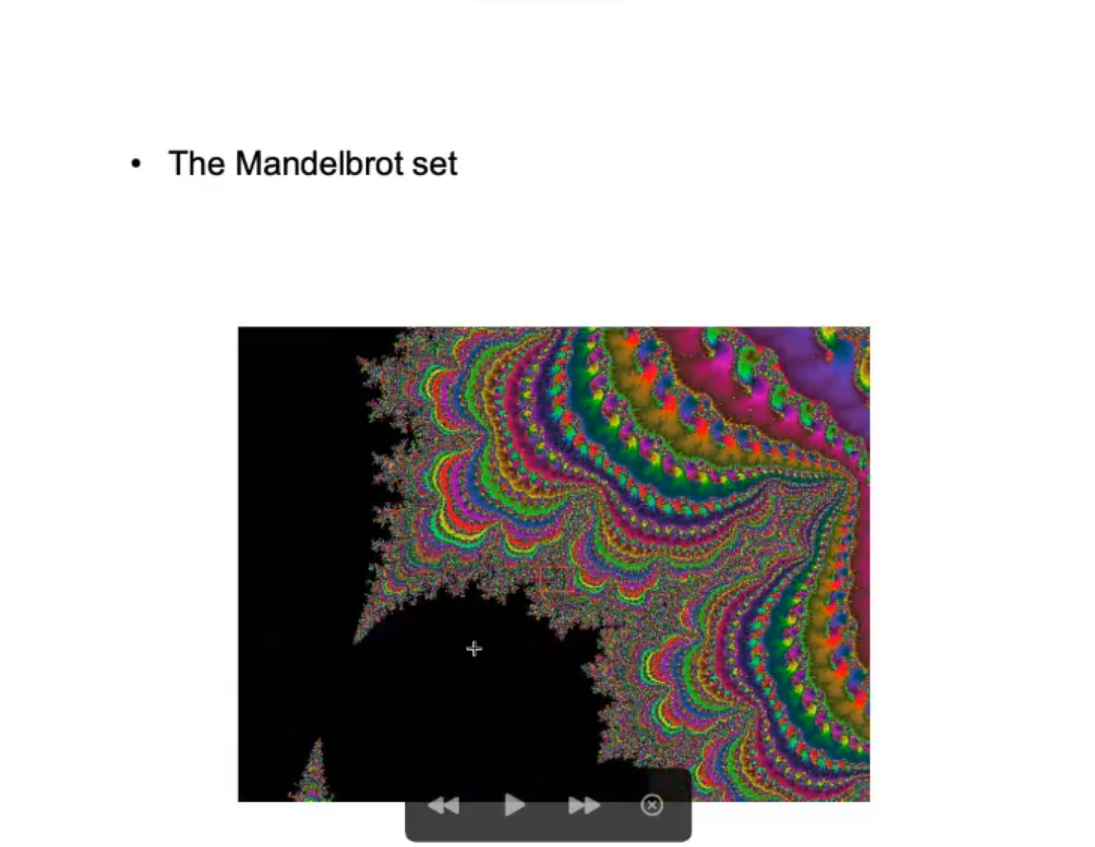
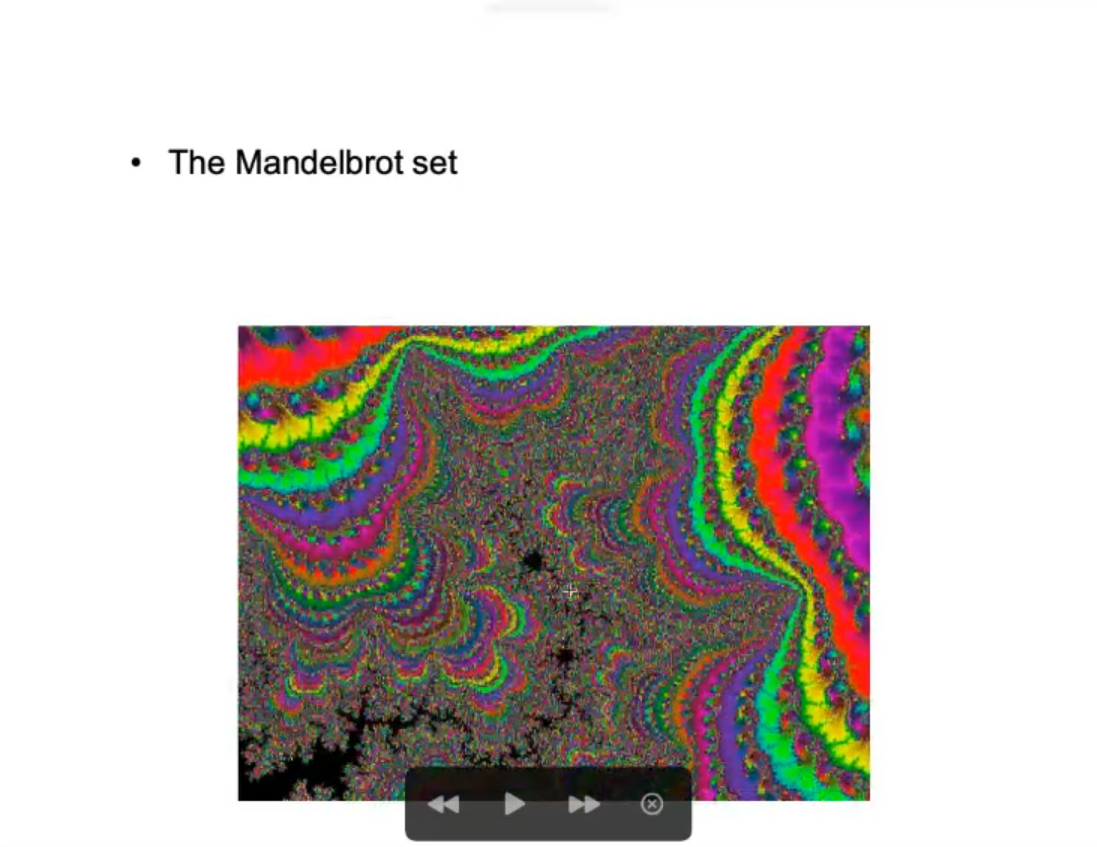
- If we continue to scale as you can see we find the “original” form at all scales.
- A fractal has this characteristic: “It repeats itself at all scales”
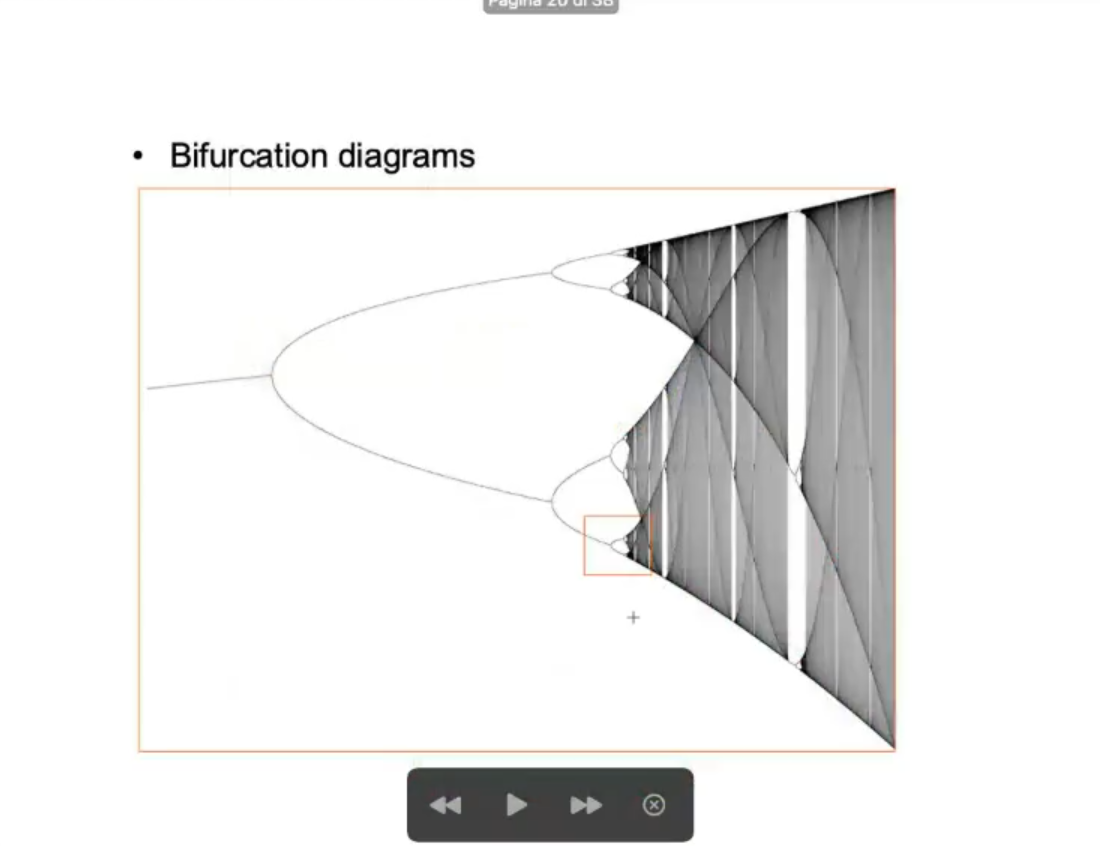
- The bifurcatin diagram of the logistic map we have seen before.
- This diagram is a fractal.
- We we enter the chaotic regime, we actually have passed an infinite number of flip bifurcation (doubling the period each time).
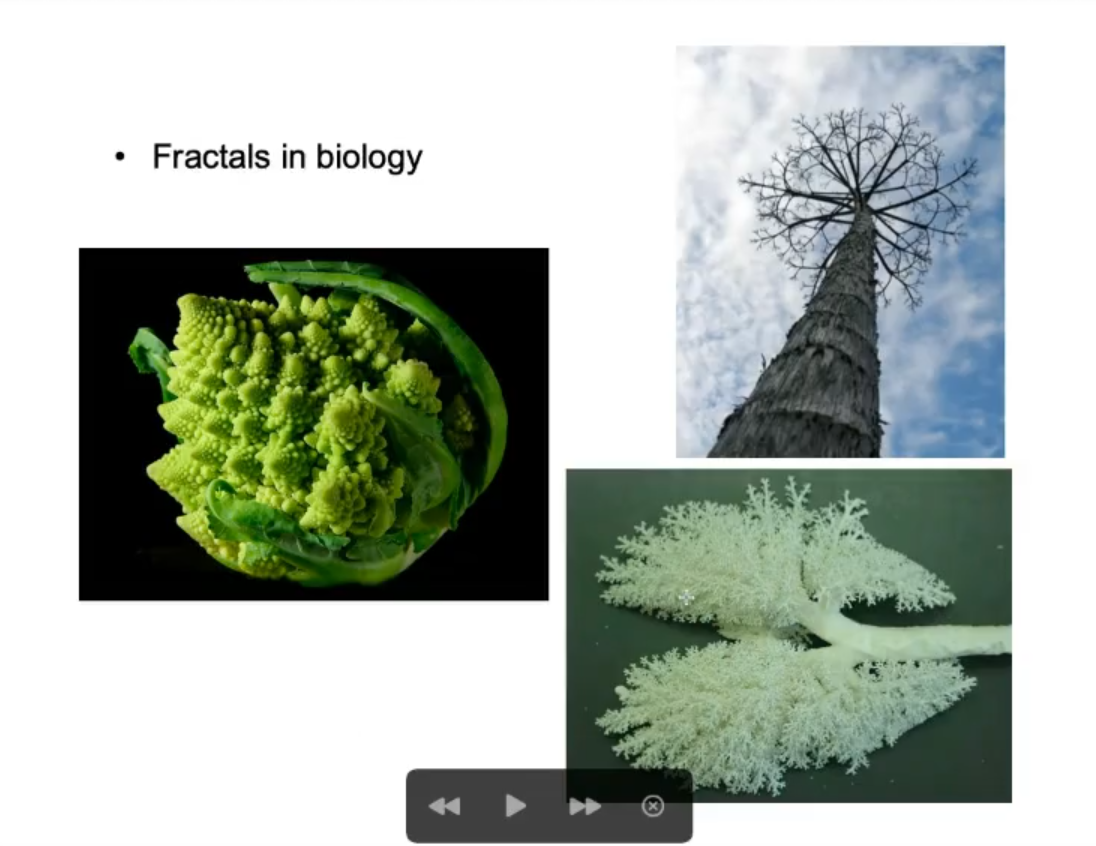
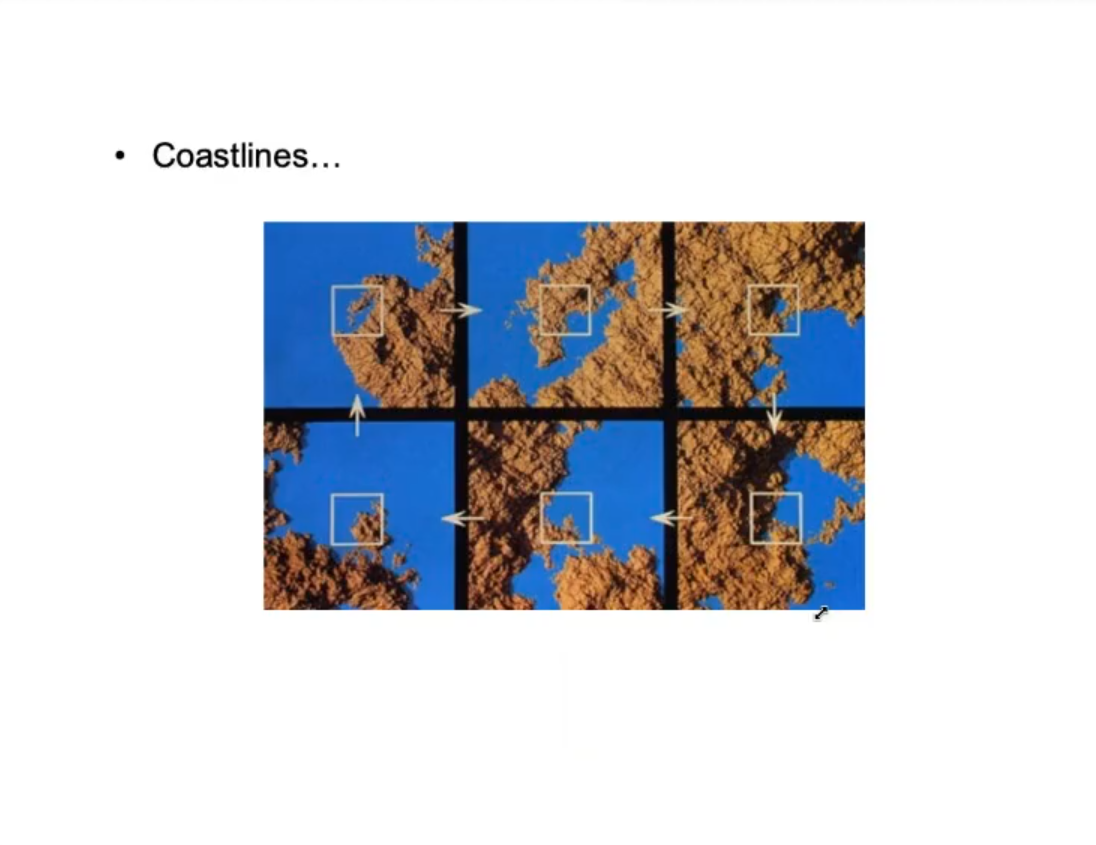
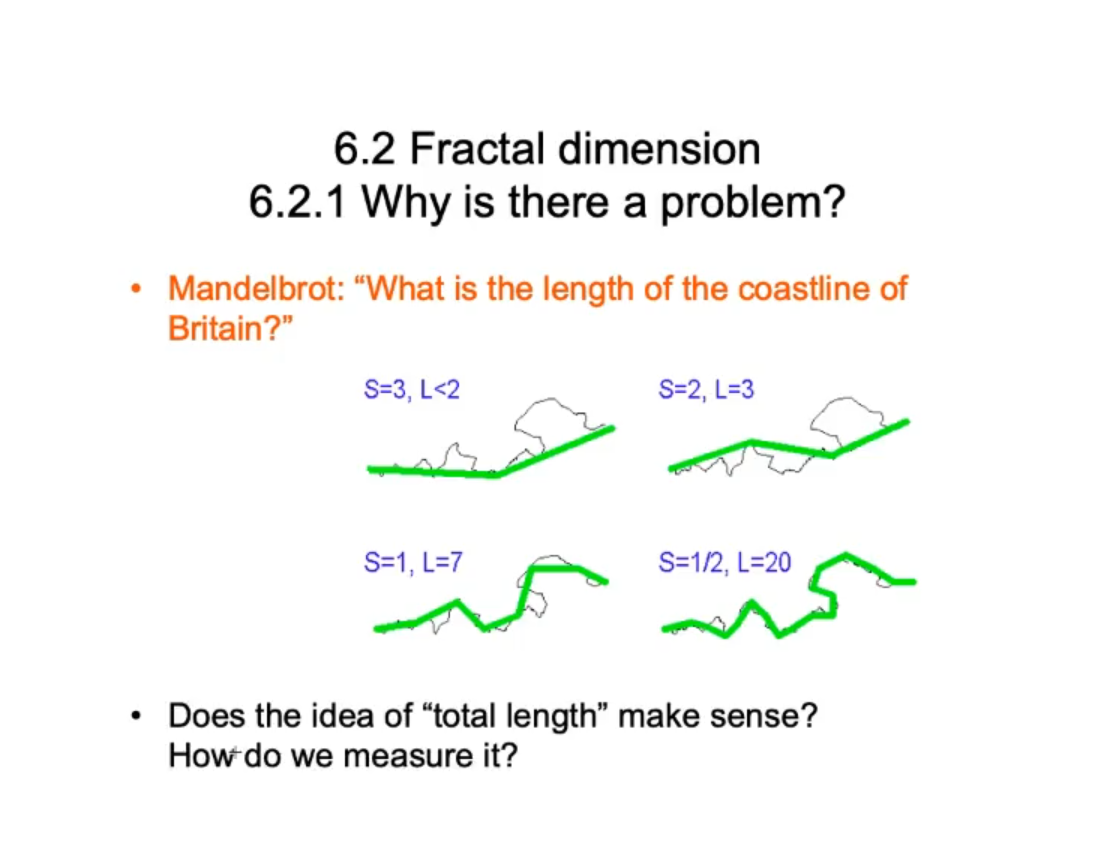
- The first inspiration that Mandelbrot had for fractals.
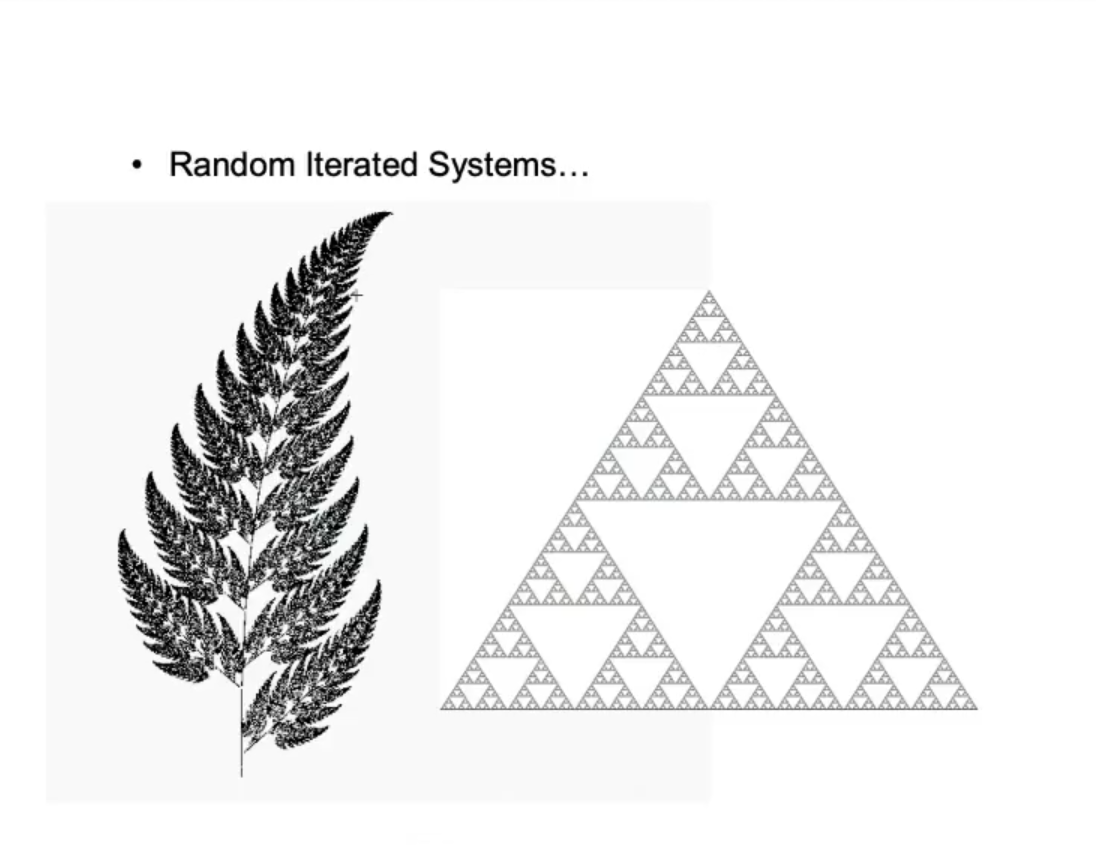
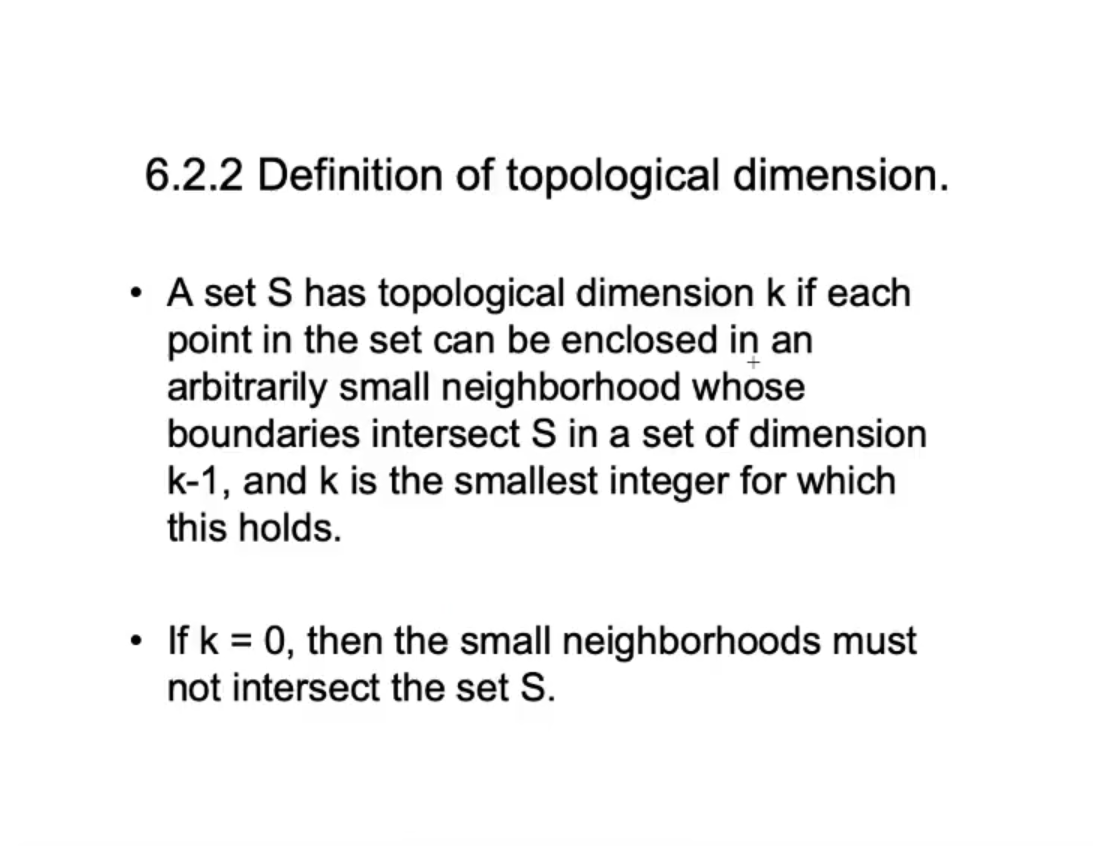
- See the examples below.
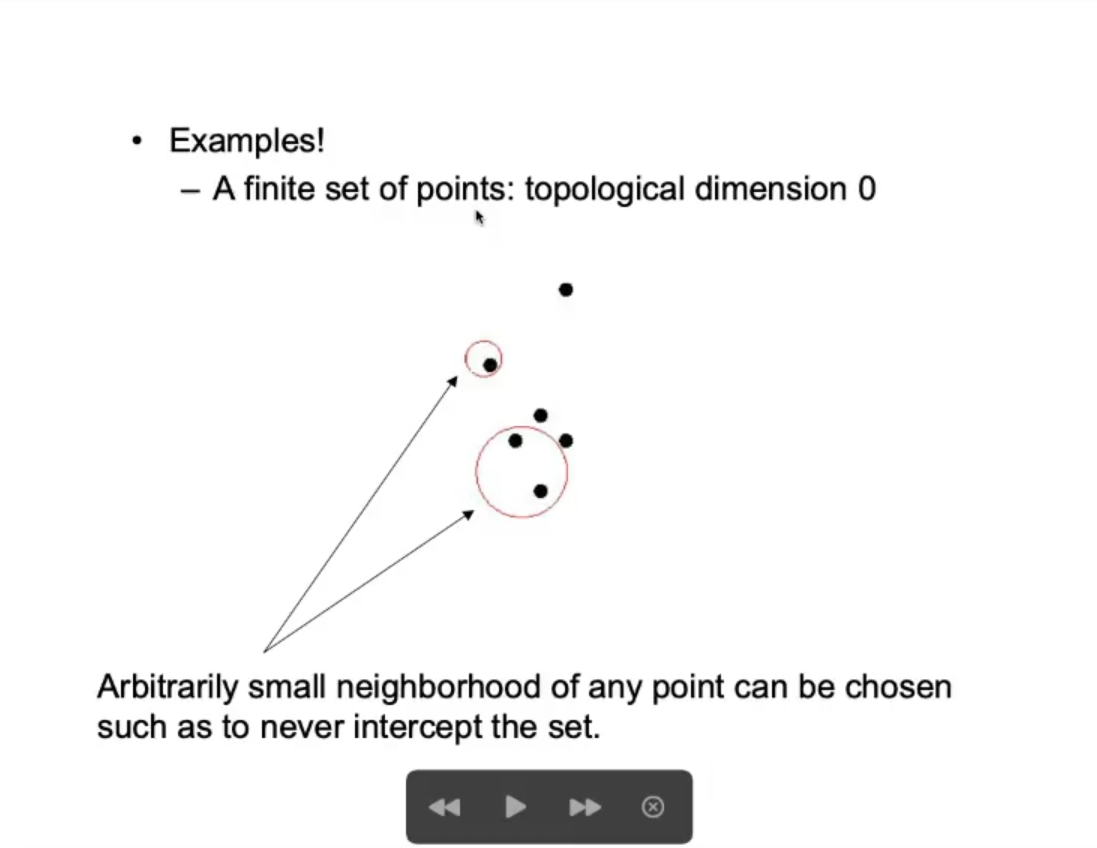
- You can take the circles such that there are intersections.
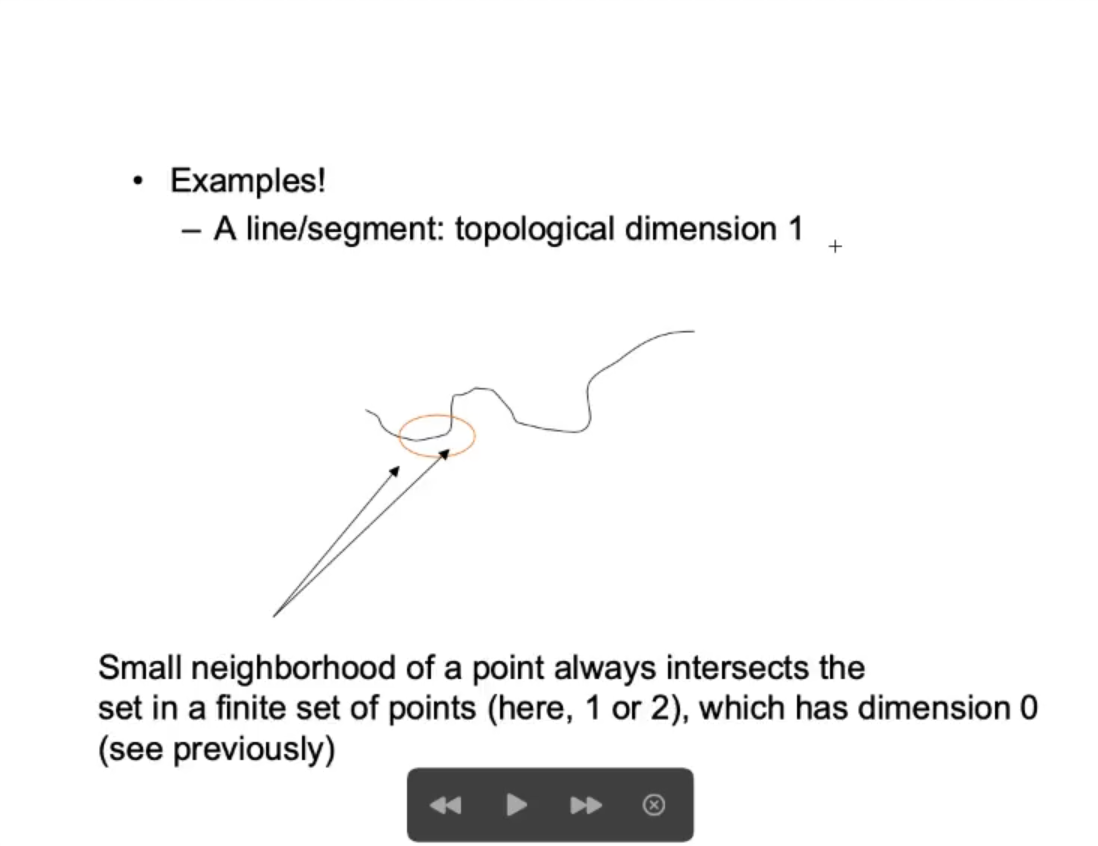
- The intersection you find (open or closed curve) are at leased 1 or 2:
- The least amount of point you can intersect is .
- For a closed line the minimum amount of intersection will be ⇒ topological dimension .
- So as we have seen previously a set of point has topologial dimension ⇒ An open/closed curve has topologial dimension
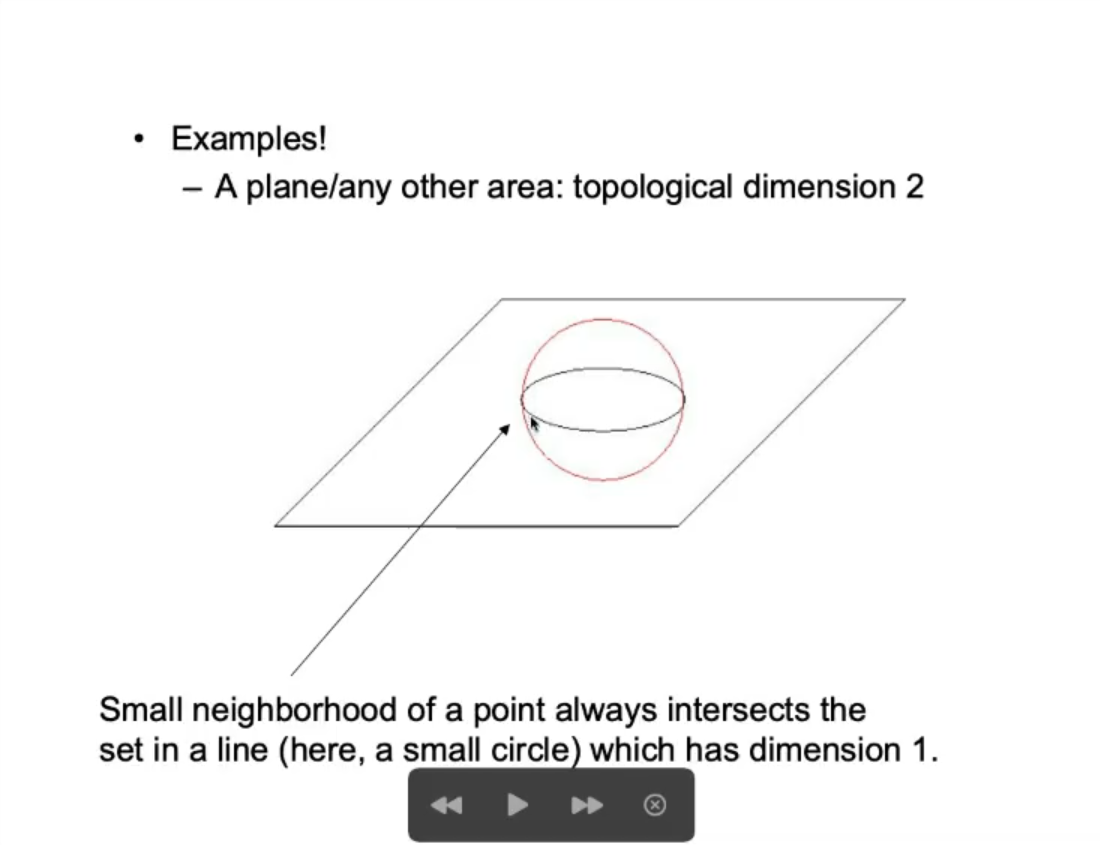
- We are in 3D so now the circle becomes a sphere.
- The intersection between the sphere and the plane is a closed curve.
- So as we have seen previously an open/closed curve has topologial dimension ⇒ a plane has topological dimension
- We cannot use topological dimension for these sets.
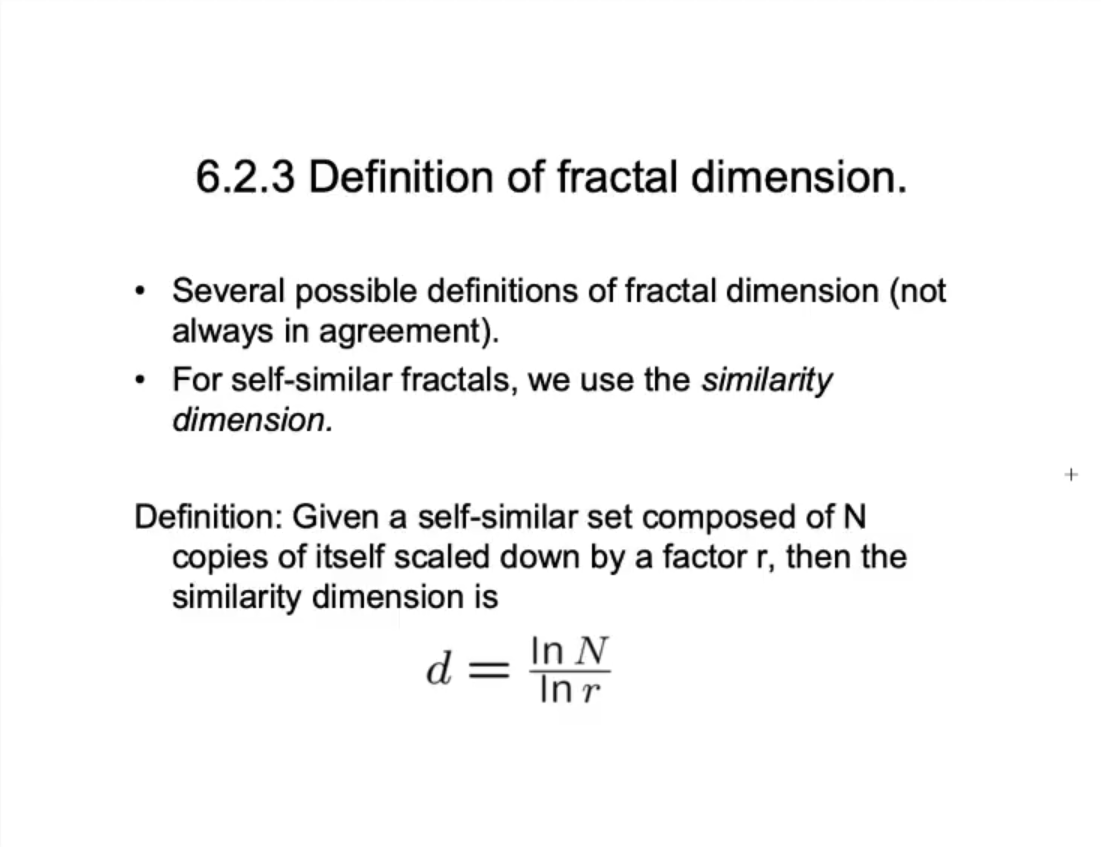
- See the examples below.
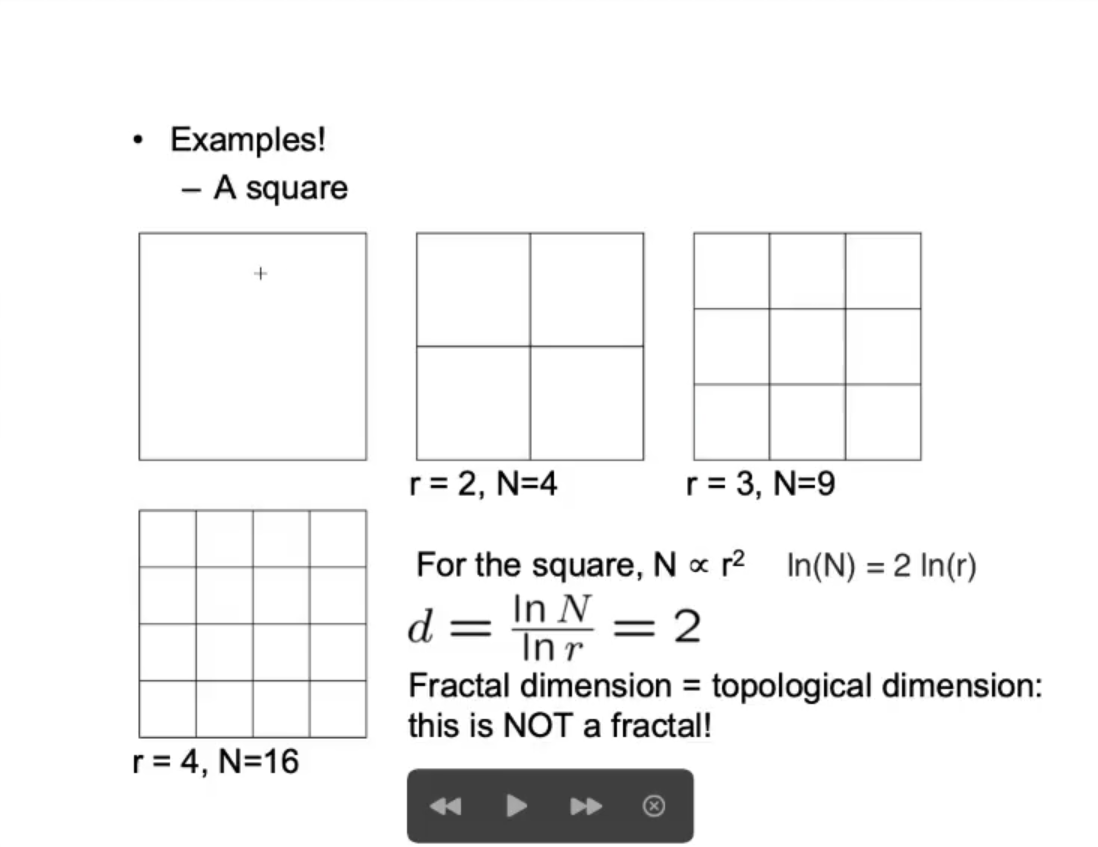
- : scale.
- : copies of the first image.
- similarity dimension: .
- If the self-similarity/similarity dimension is equal to the topological dimension ⇒ Then the object is not a fractal, and this is the case.
- This object has also topological dimension .
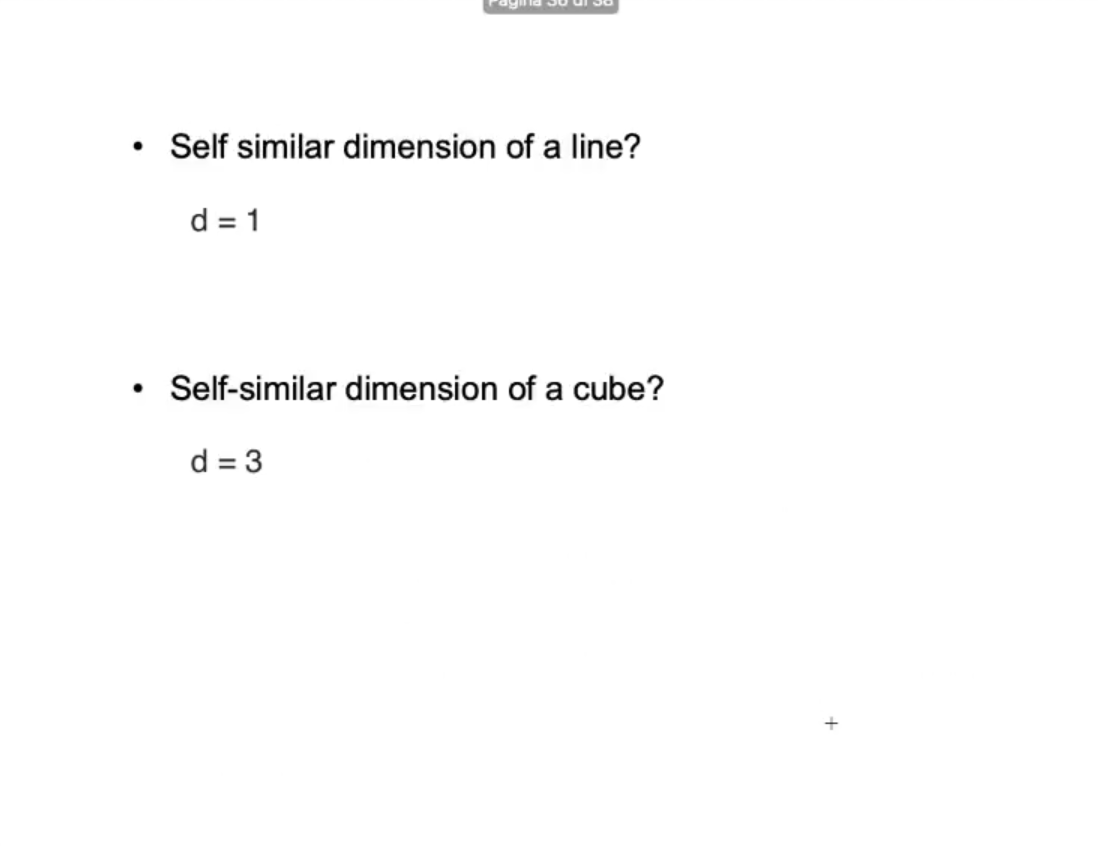
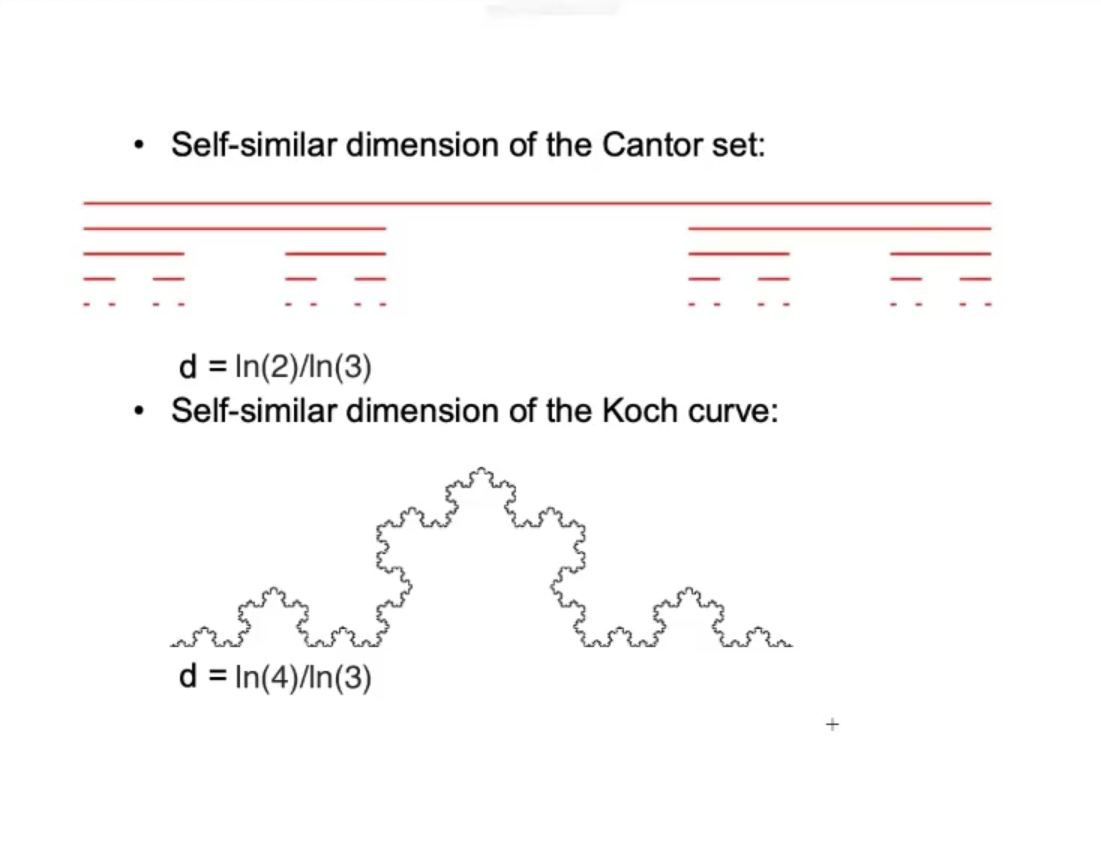
- The topological dimension of both should be .not-sure-about-this
- For the cantor set we have , while for the Koch curve .
- Take for example the Koch curve, it is so rough that it is more than a mono-dimensional curve. (a monodimensional curve has less “surface”)not-sure-about-this
- While the cantor set is less (a monodimensional curve has more “surface”)not-sure-about-this