Fast Recap:
Recap:
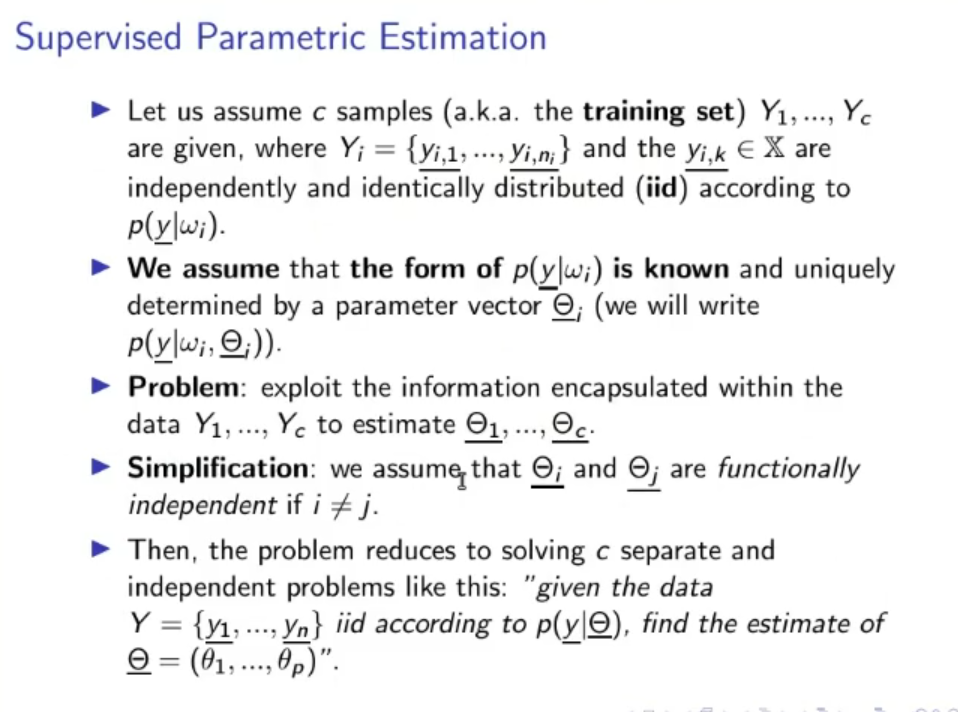
Likelihood : Given a set of data that is given by the distribution , given that they are all given by the same distribution we will say that they are identically distributed, suppose also that they independent* between each other. ⇒ are iid (independent and identically distributed).
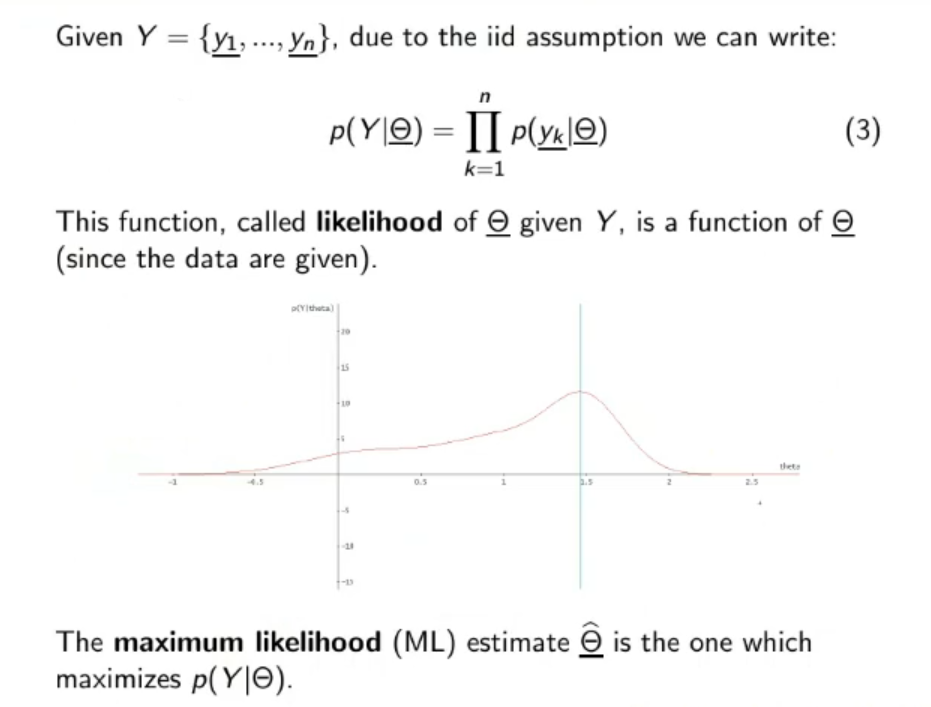
Due to the independent assumption we can say that:
this is called the likelihood of given , this is a function of :
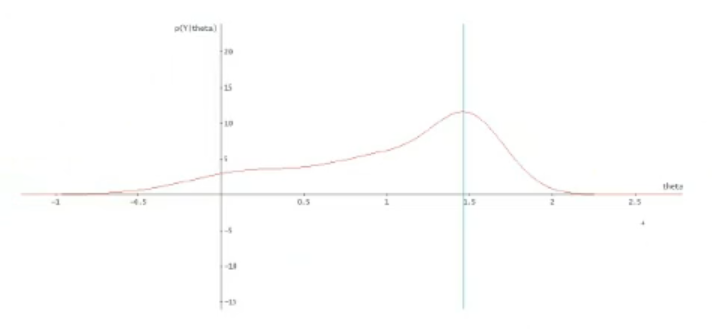
We call the Maximum Likelihood (ML) Estimate the one which maximizes .
Log-Likelihood :
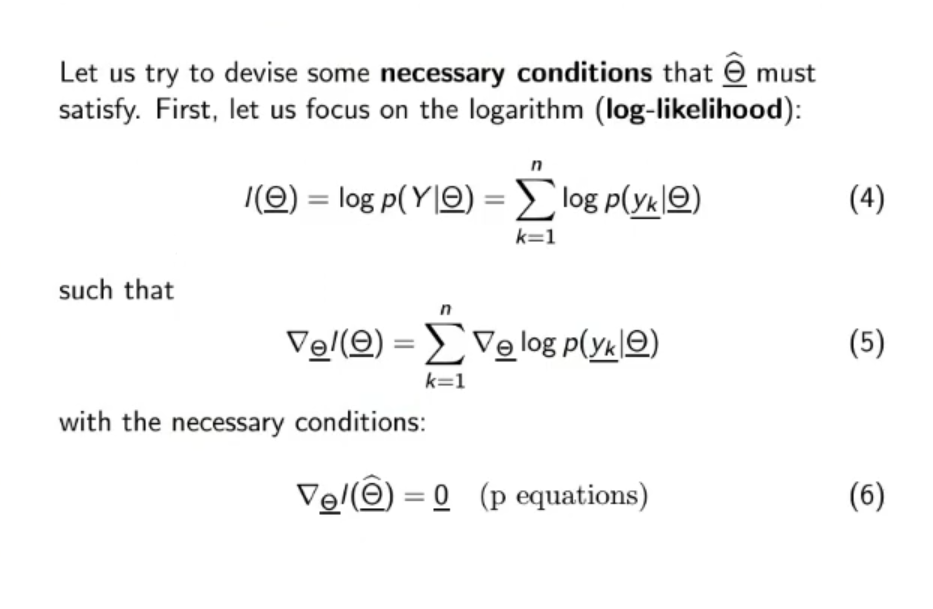 Where:
- is the gradient of the log-likelihood function with respect to
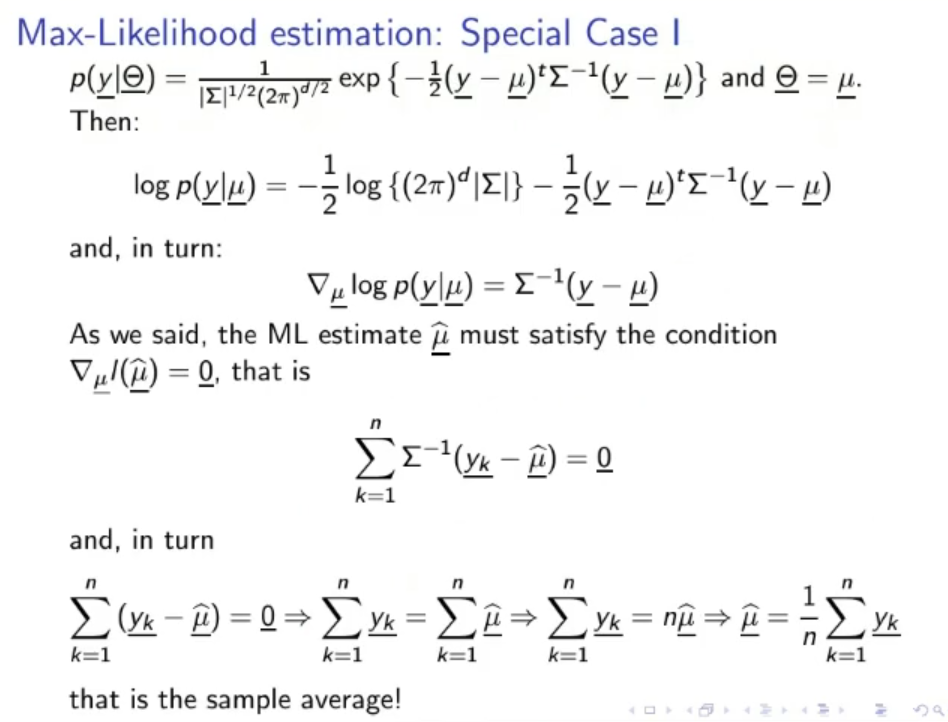
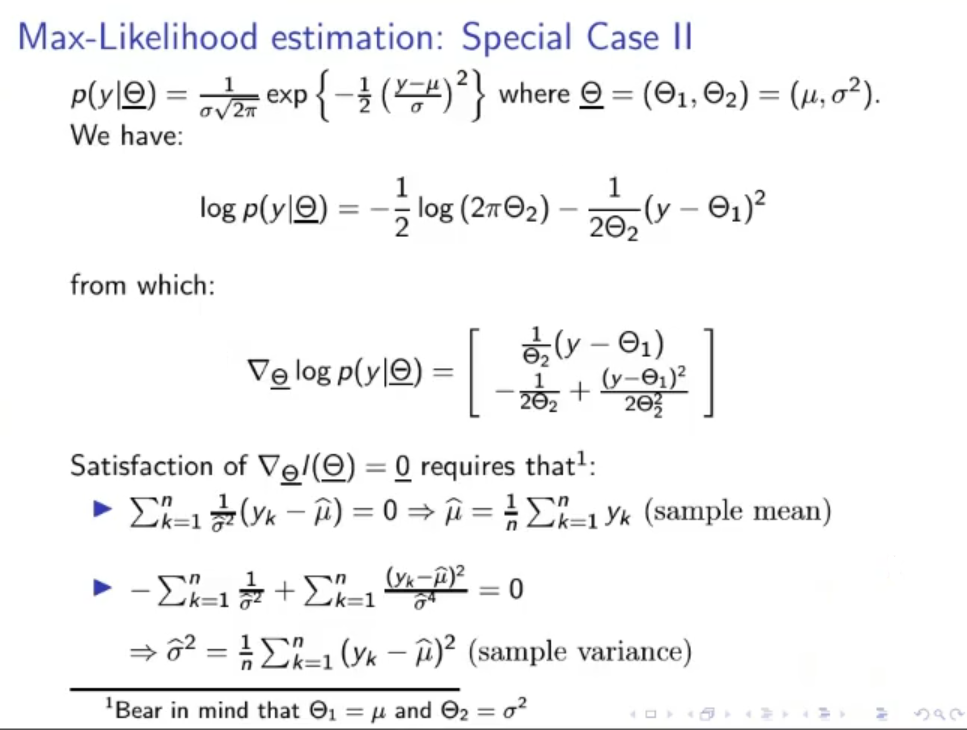
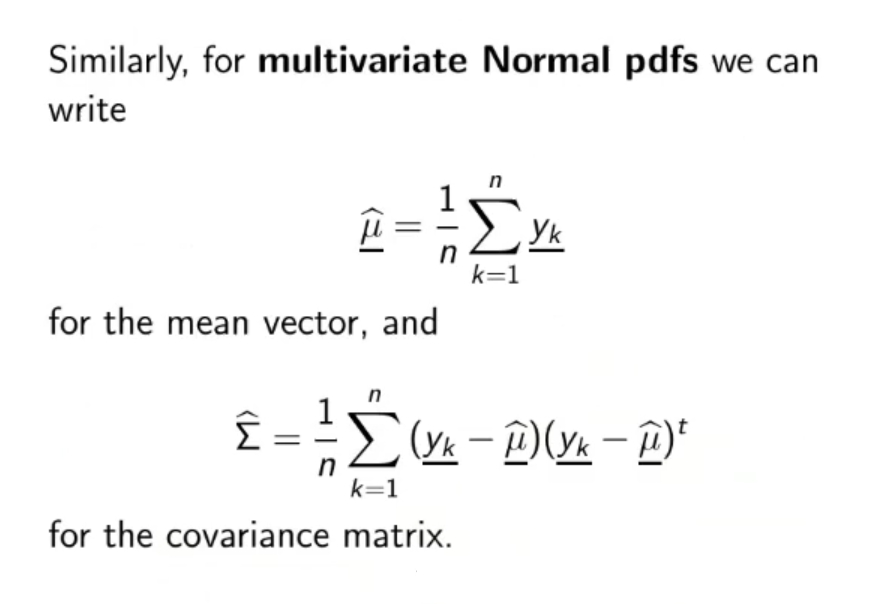
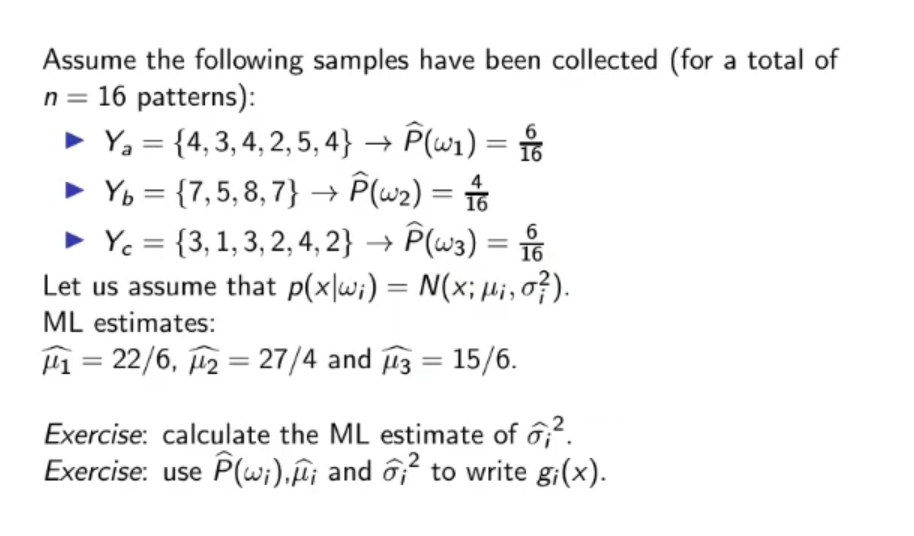
~Example : If we know that is a Gaussian Distribution the maximum likelihood of the mean and variance are respectively the sample-mean and biased sample variance.
Sample Mean : Biased Sample Variance :
(Bonus) Unbiased Sample Variance* :
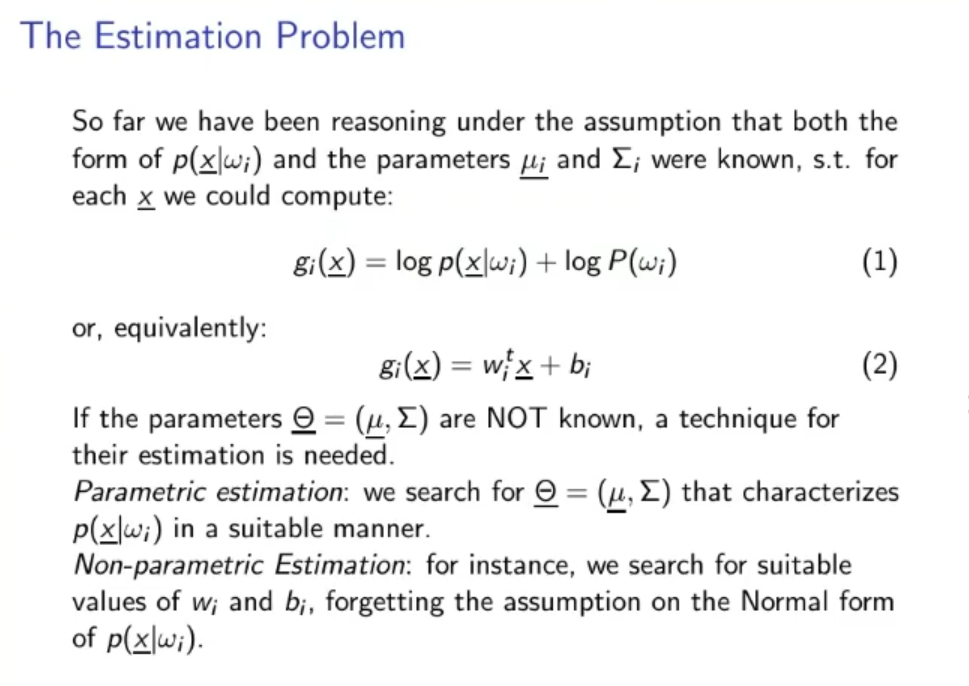
Naming :
- : mean and vector mean
- : variance and covariance matrix
- : parameter vector, for example:
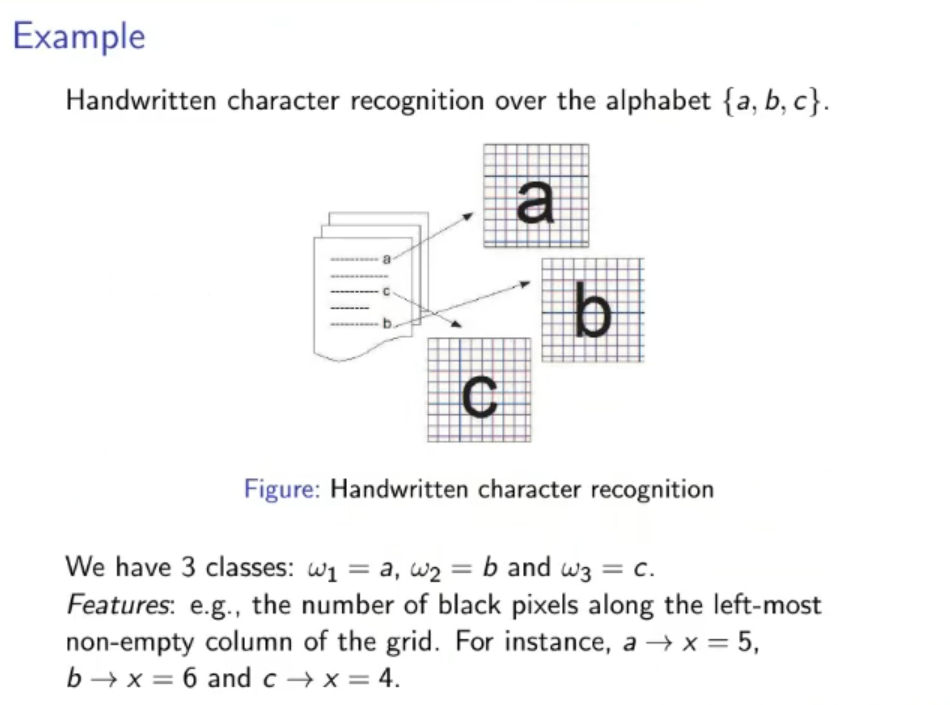
- : classes, for example the gender (male/female) we want to identificate.
- : weight
- : bias
- : data, could mean data in input or training data.
- : number of samples used as the training set
- : probability that given the data belongs to/is identified as the class .
- : discriminant function of class , usually it is defined as: (in the linear case)
- : decision rule, a simple decision rule could be:
NOTE: weights are named with , while classes with , it may cause confusion
Original Files:
Where:
- is the gradient of the log-likelihood function with respect to