Fast Recap:
- Likelihood
- Likelihood of Conditional Probabilities “Likelihood of “
- ML (Maximum Likelihood) Estimate
- Log-Likelihood
- Gaussian ML Estimate
- Validation of Classifiers
- Normal Method: 60/20/20
- “Leave One Out” Method
- “Many-Fold Crossvalidation” Method
- Supervised Learning
- Non-Parametric Estimate
- Relative Frequency Estimate
- Easily Estimate a PDF
Recap:
First 2 Principal Components: Given a set of data we can create a Multivariate Gaussian Distribution from it, the first-X principal component are the first-X eigenvalues of the covariance matrix of the distribution.
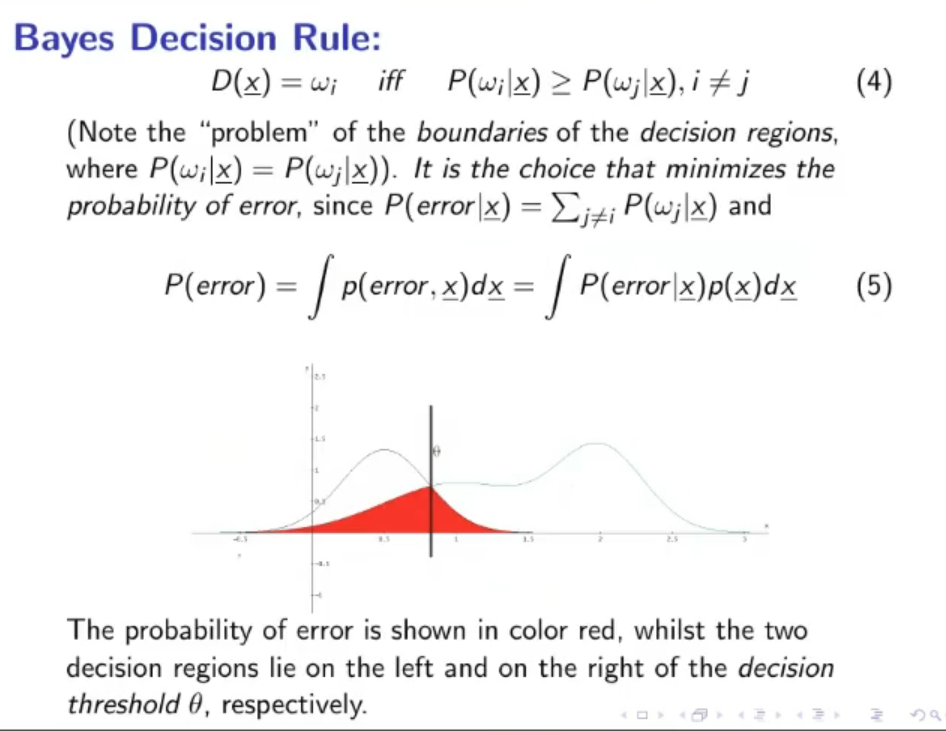
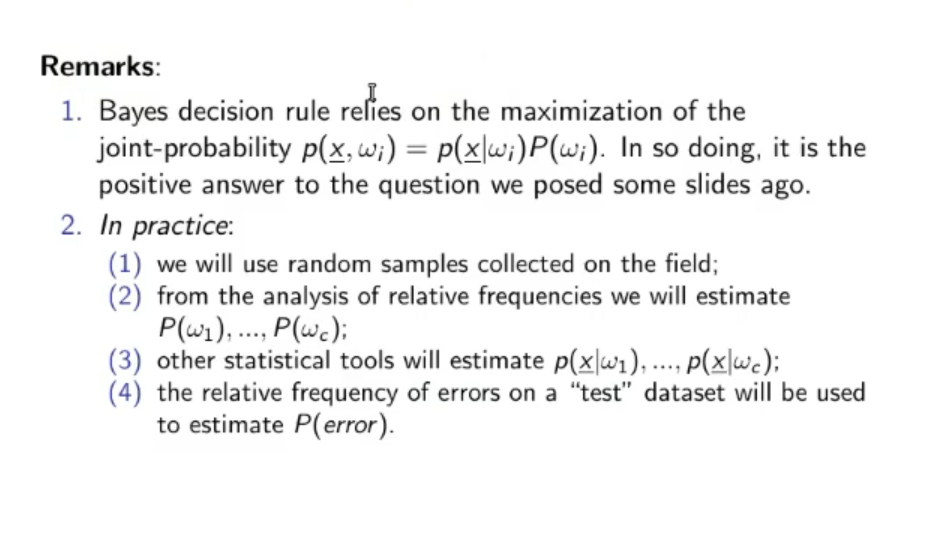
Bayes Decision Rule: Bayes decision rules relies on the maximum of the joint-probability .
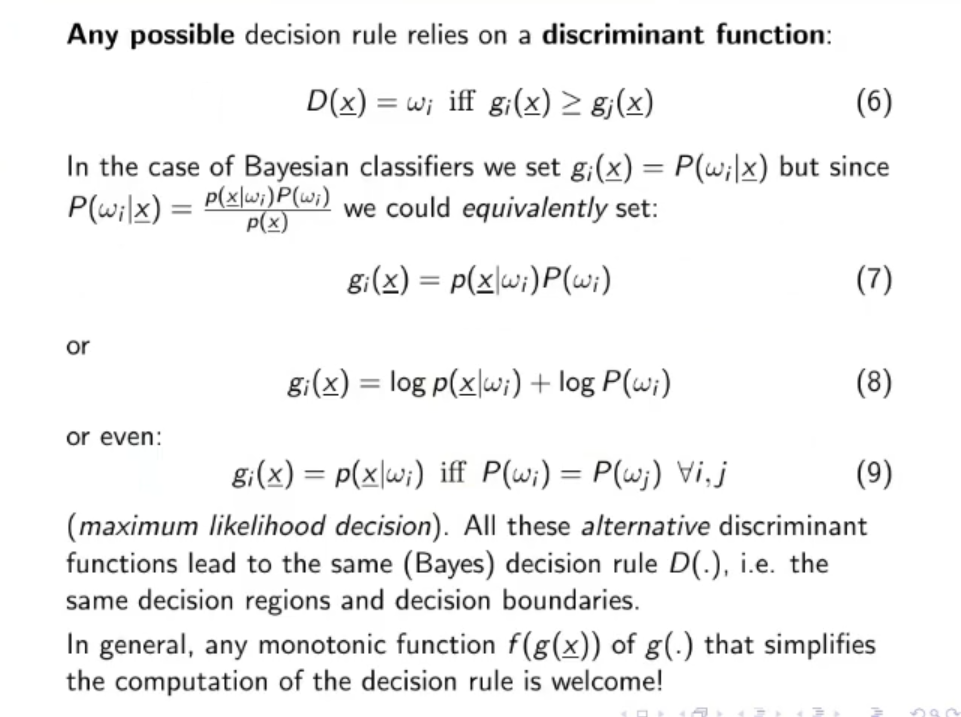
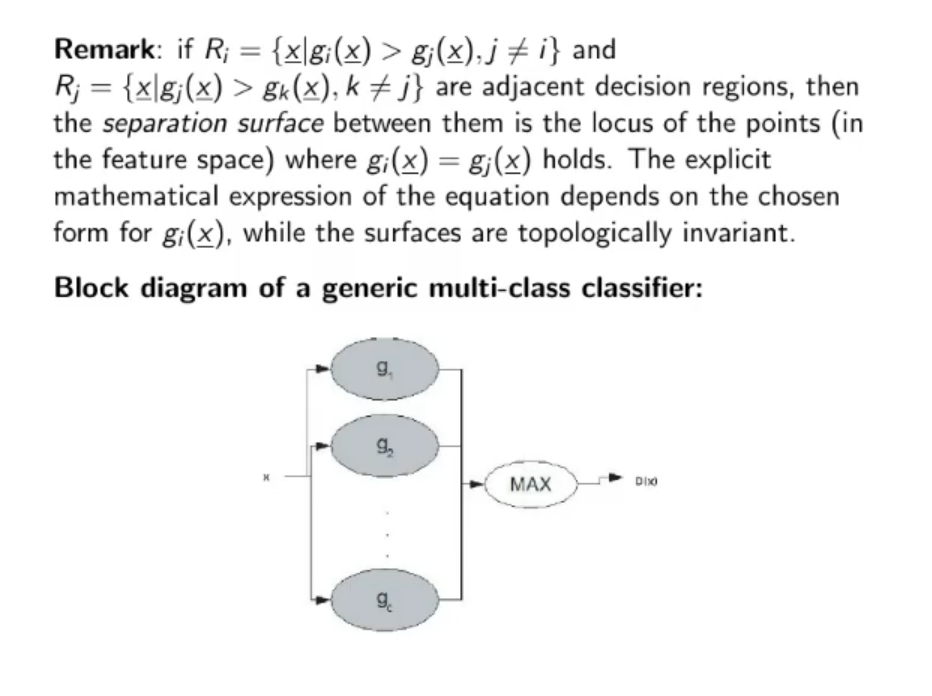
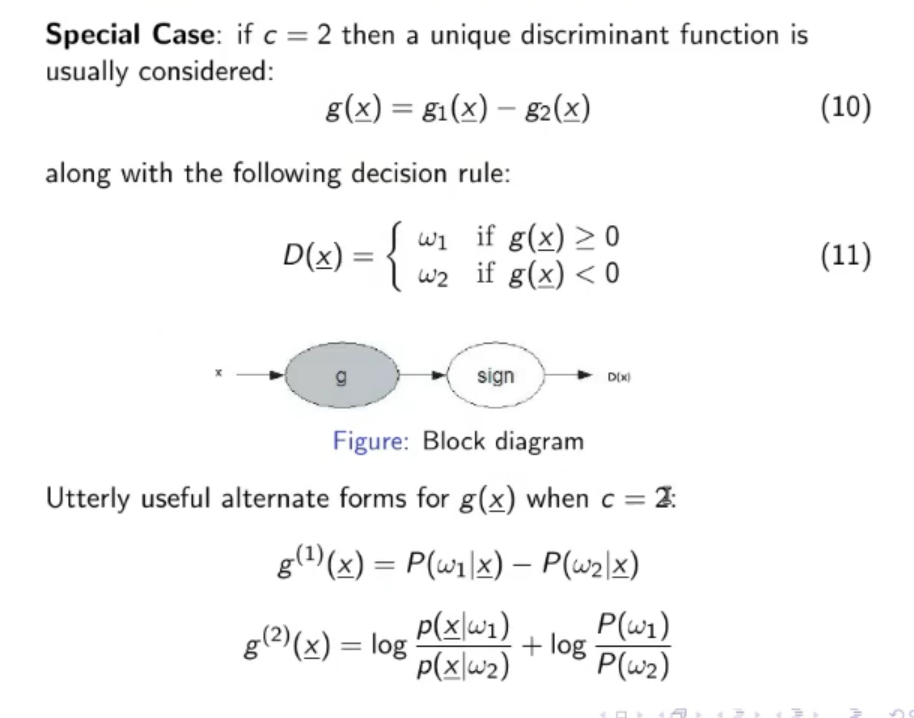
Bayes Decision Rule with Discriminant Functions
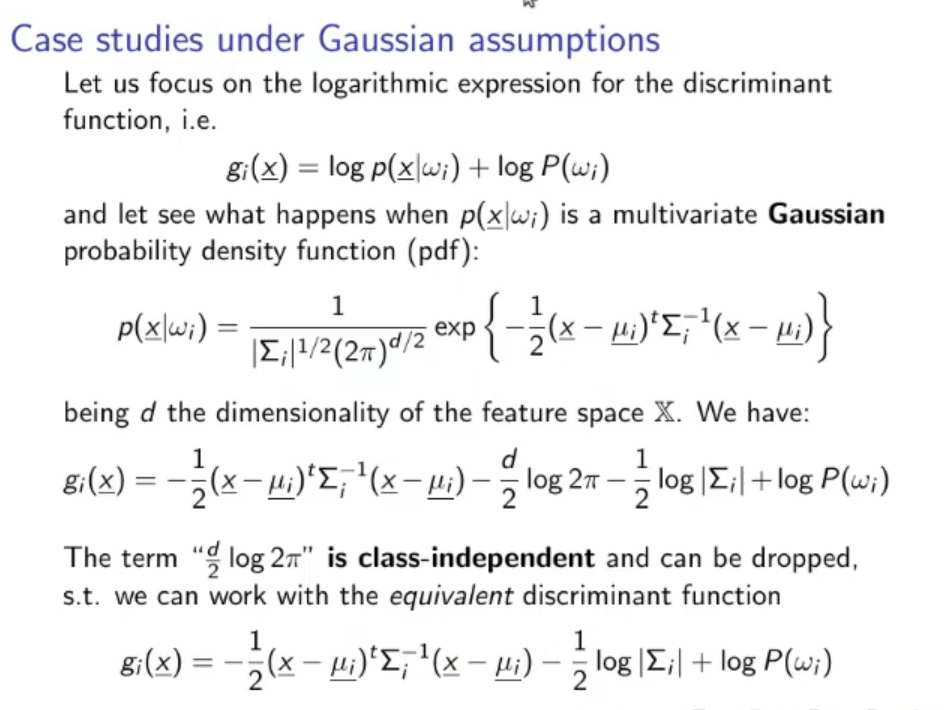
We define the Maximum Likelihood Decision as:
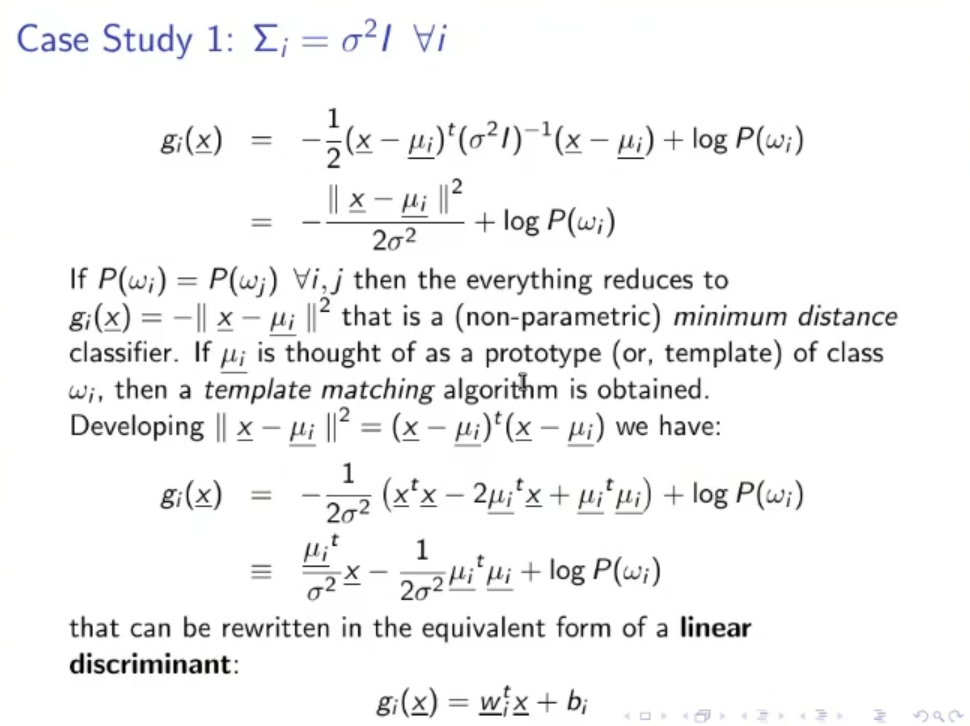
In case of Gaussian assumptions, the MLD will become:
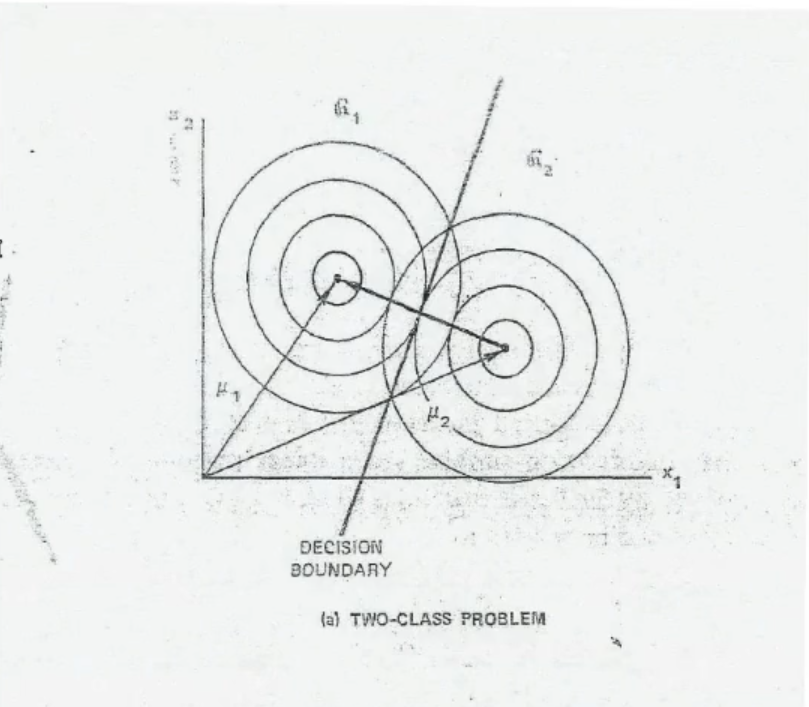
~Ex.: Diagonal Covariance Matrix :
In this particular we have that the MLD (Maximum Likelihood Decision) is linear with respect to .
Naming :
- : classes, for example the gender (male/female) we want to identificate.
- : weights
- : bias
- : data, could mean data in input or training data.
- : decision rule.
- : probability that given the data the corresponding class will be .
- : discriminant function of class , the Bayes decision rule can be rewritten as:
Original Files:


==First 2 Principal Components== : the first 2 eigen-vectors of the covariance matrix of the Gaussian distribution of the data.