- Source: Youtube
David Beazley (PyCon2015) | Index
- Part I : Basic Knowledge
- Part II : Packages
- [[#part-iii—-main--|Part III : _ _main _ _]]
- Part IV : sys.path
- Part V : Namespace Packages
- Part VI : The Module
- Part VII : The Module Reloaded
- Part VIII : Import Hooks
- Part IX : Path Hooks
- Part X : Final Comments
Part I : Basic Knowledge
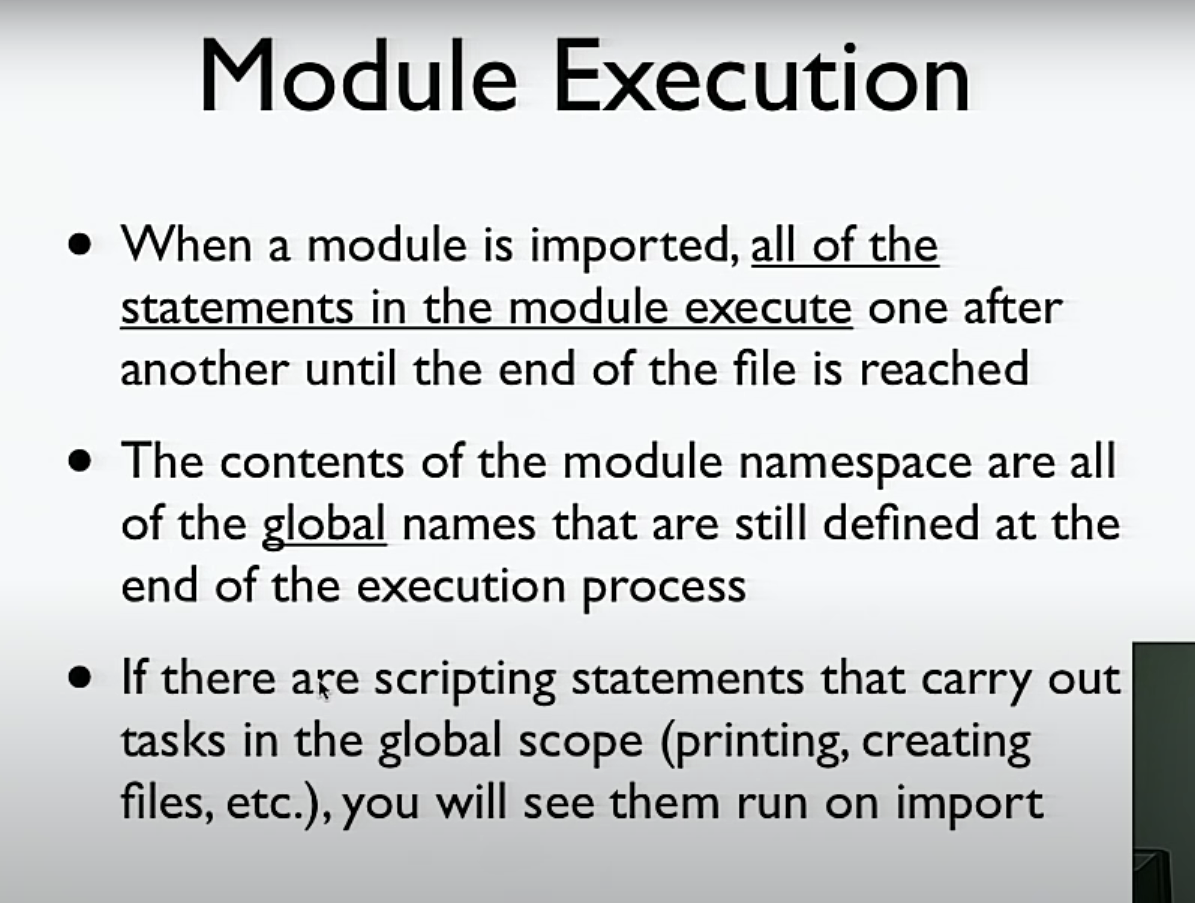
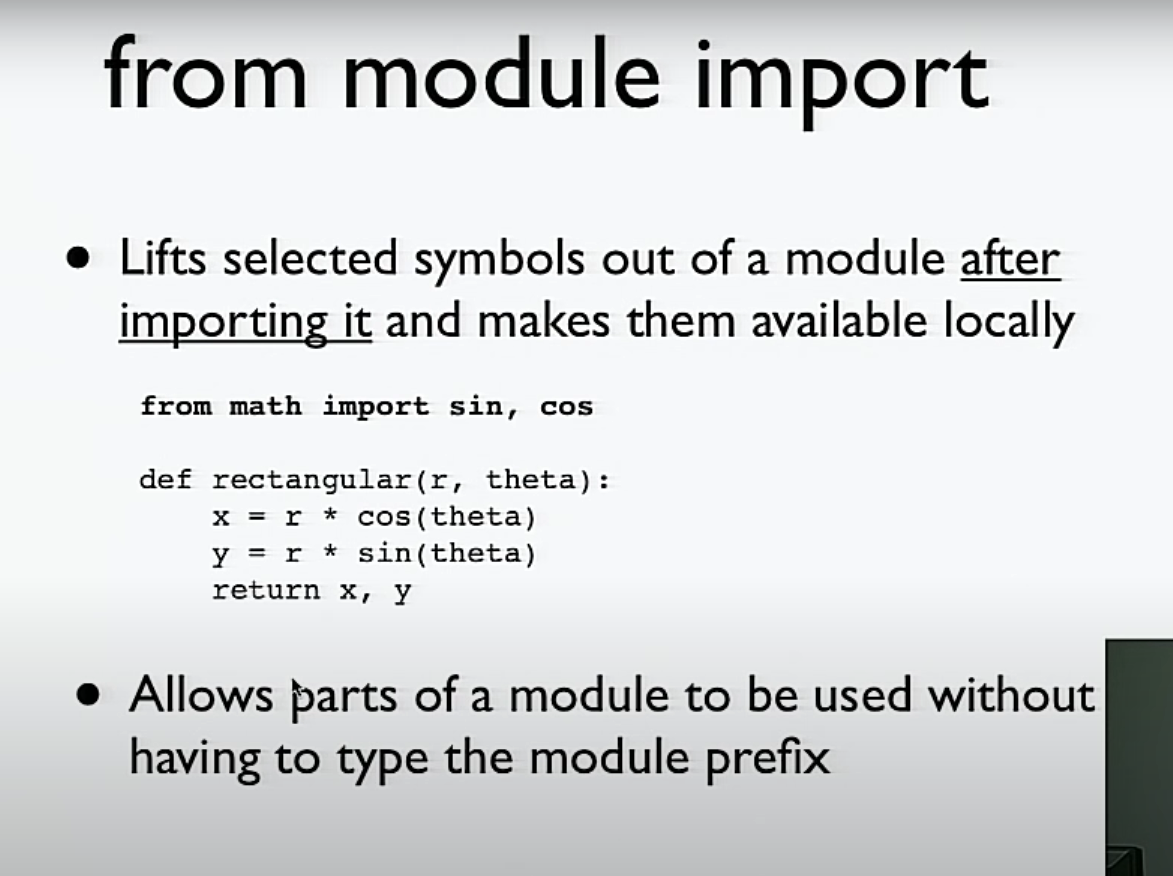
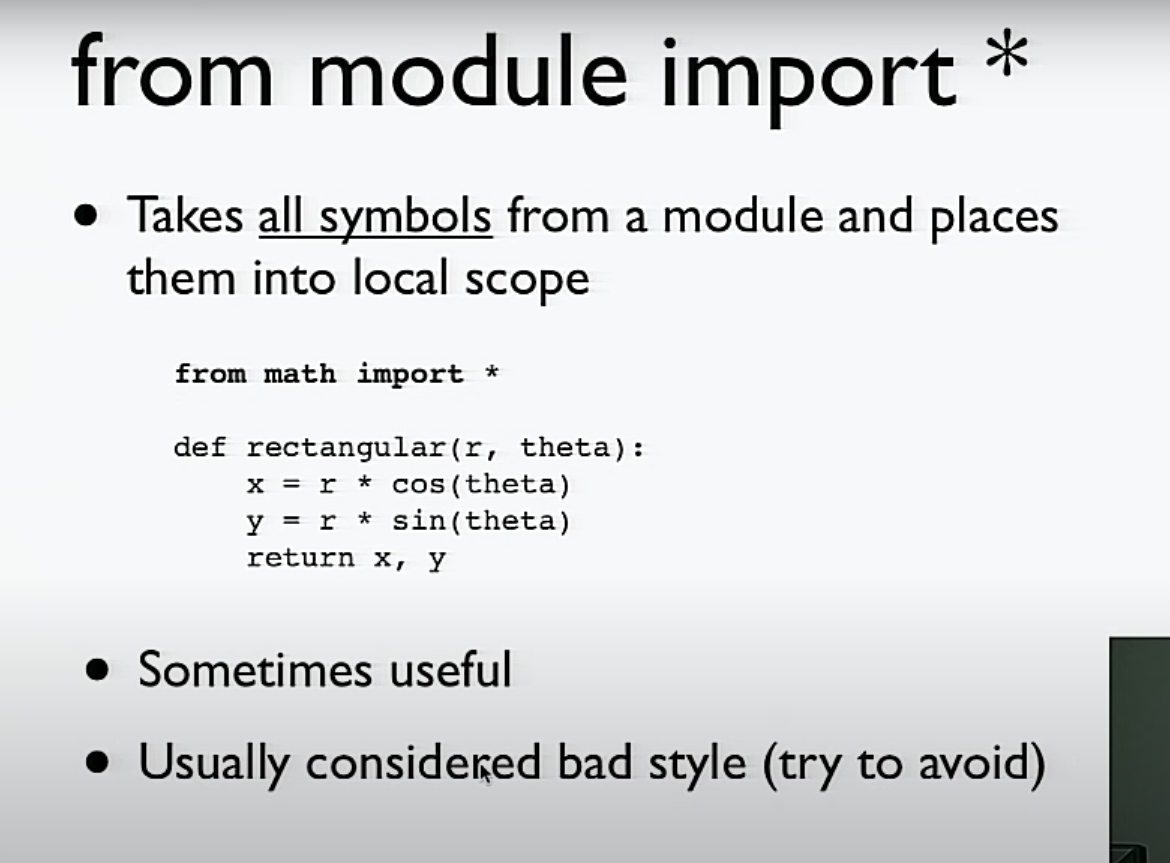
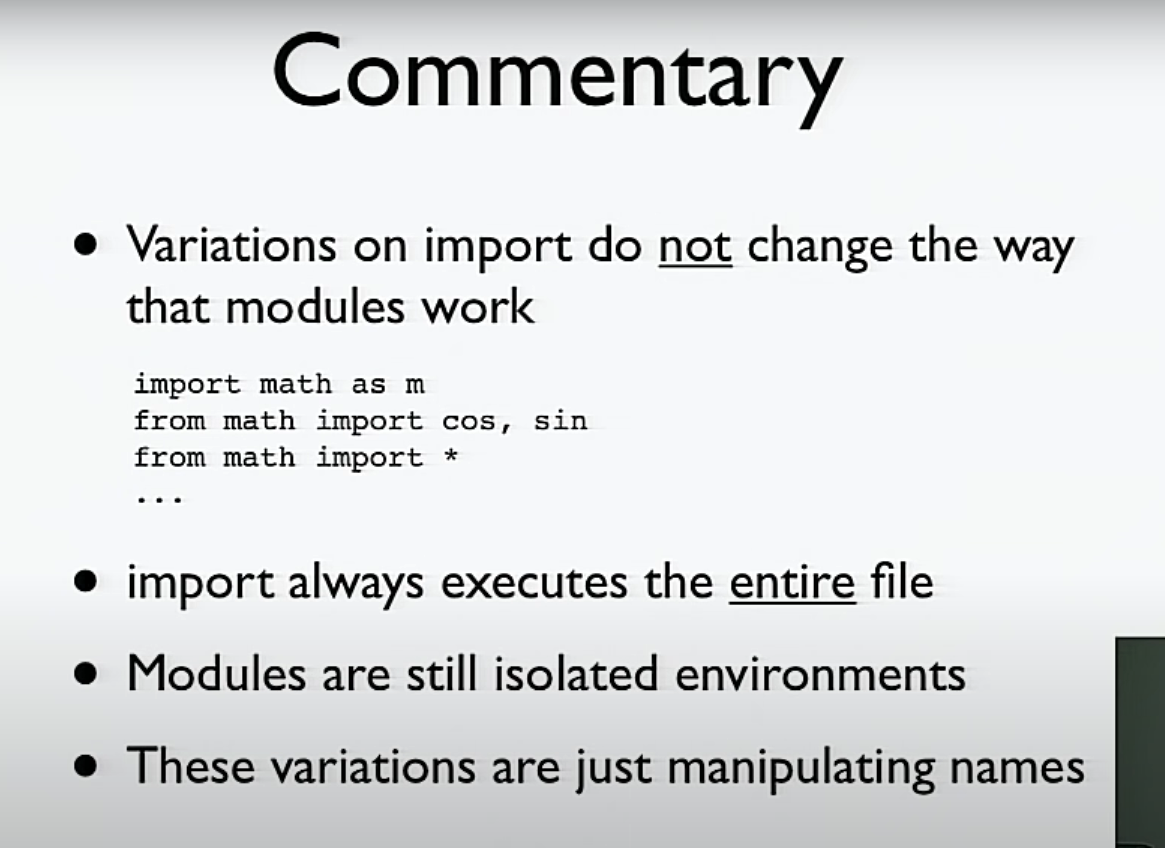
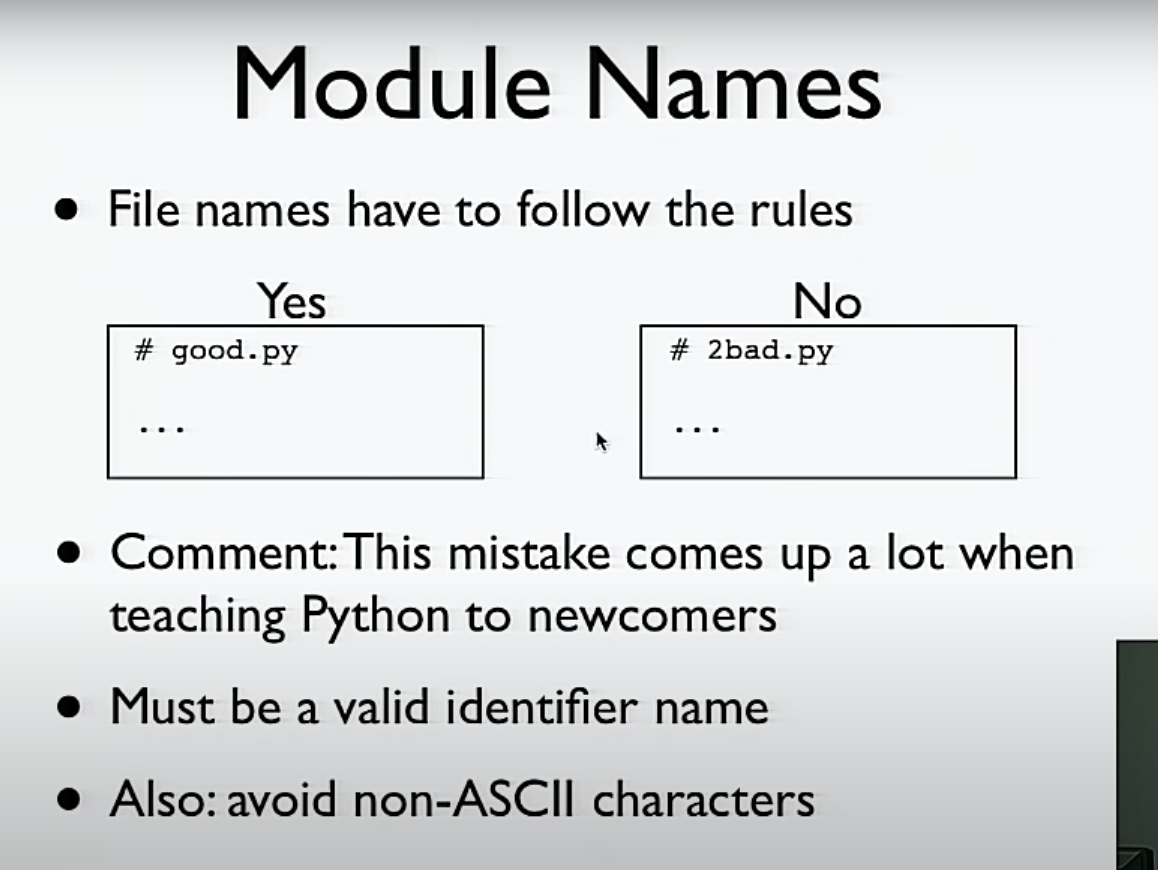
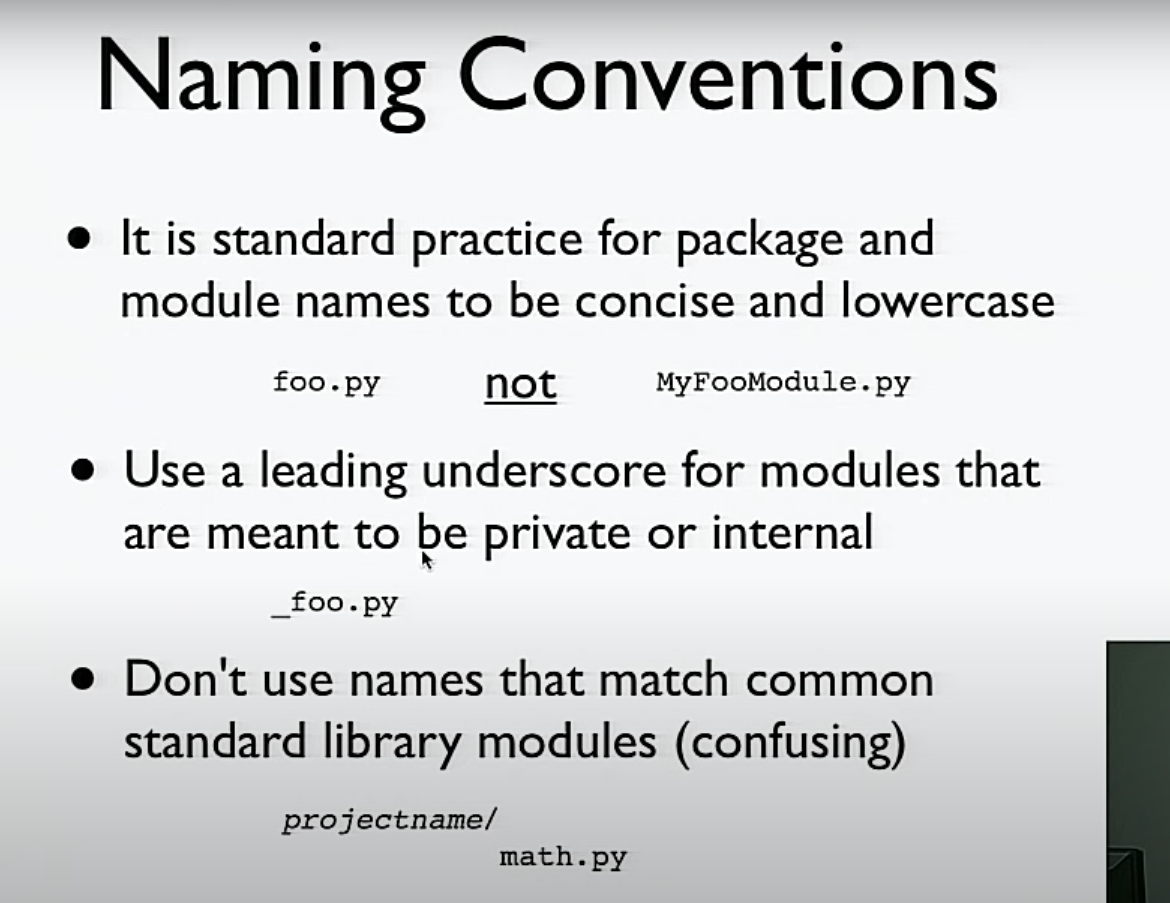
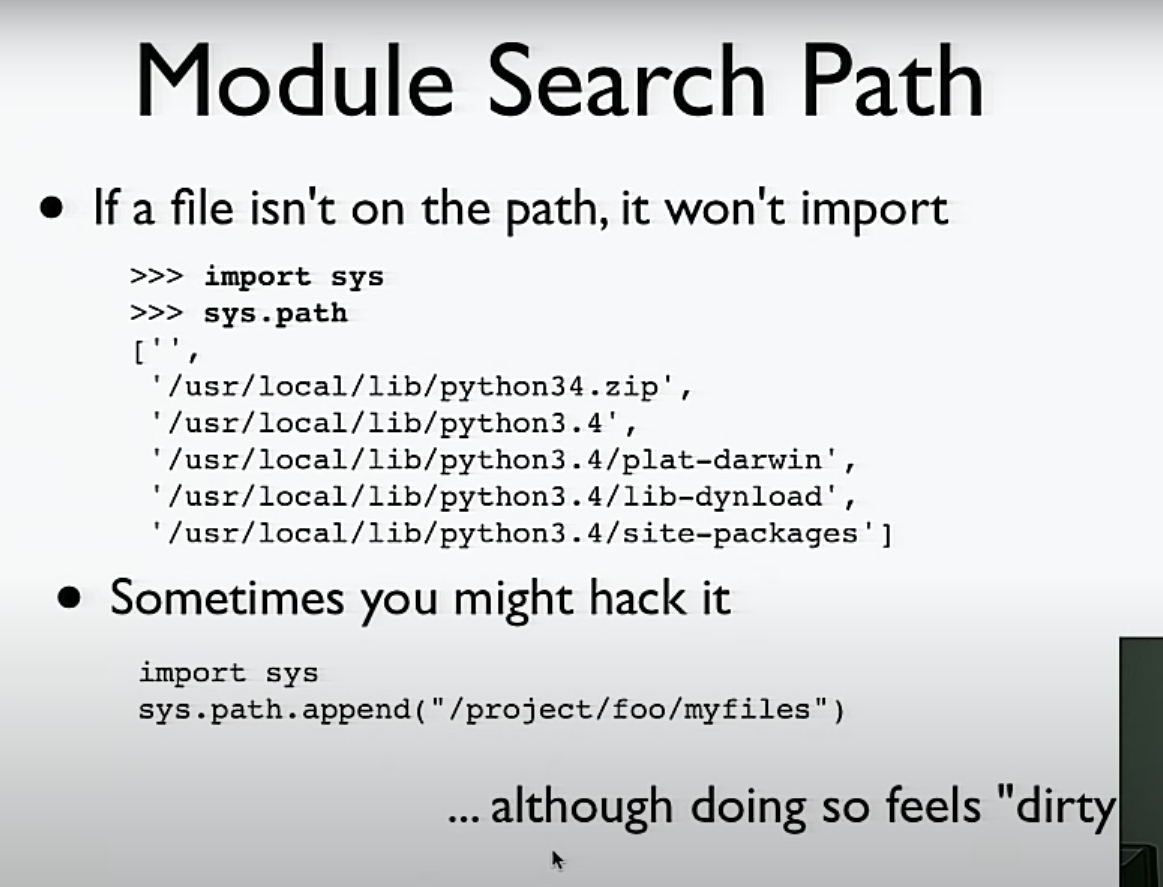
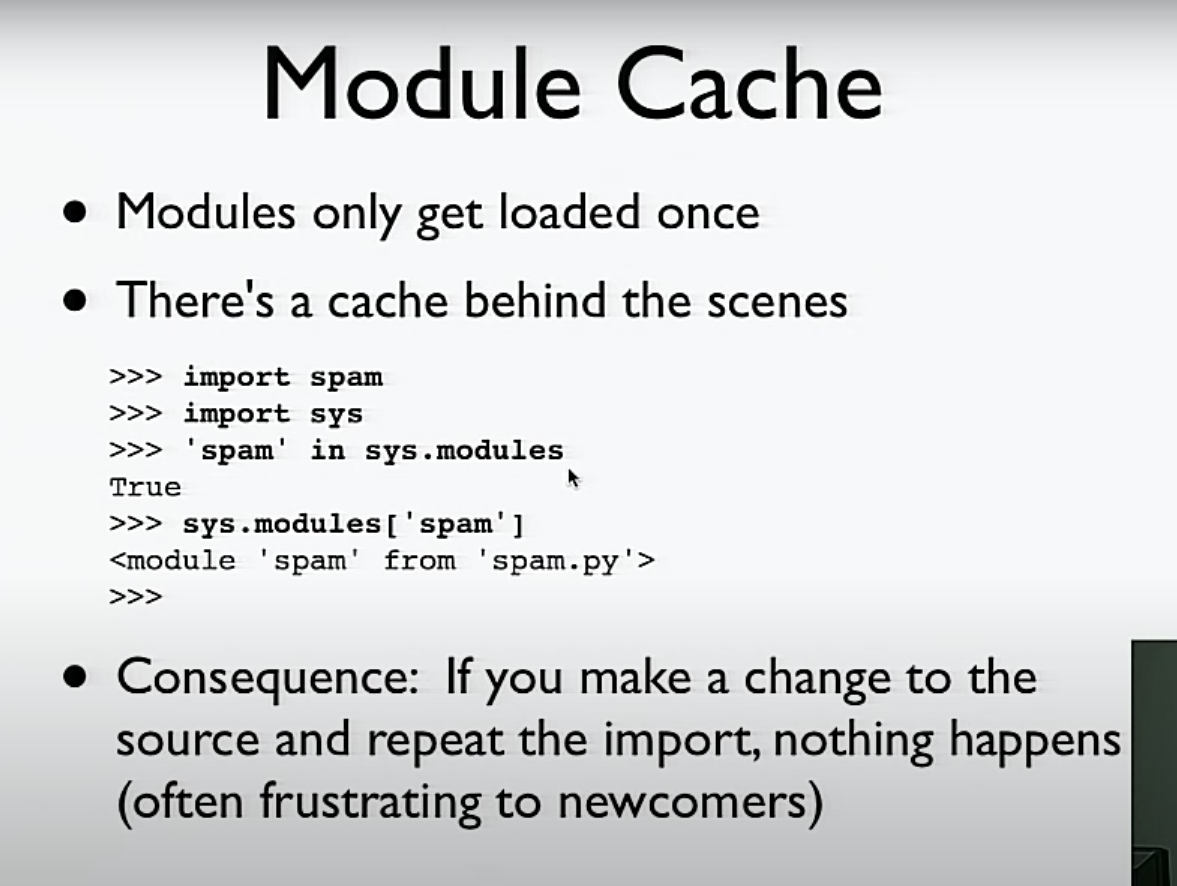
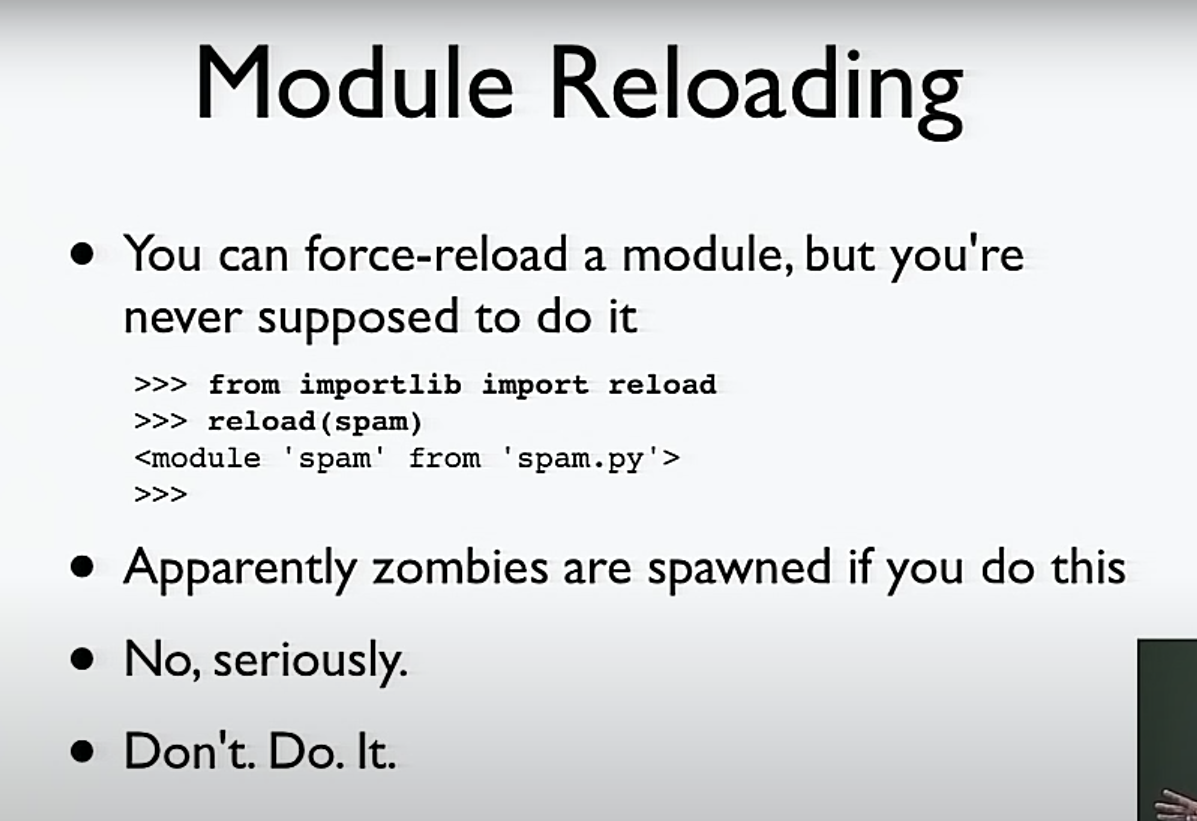
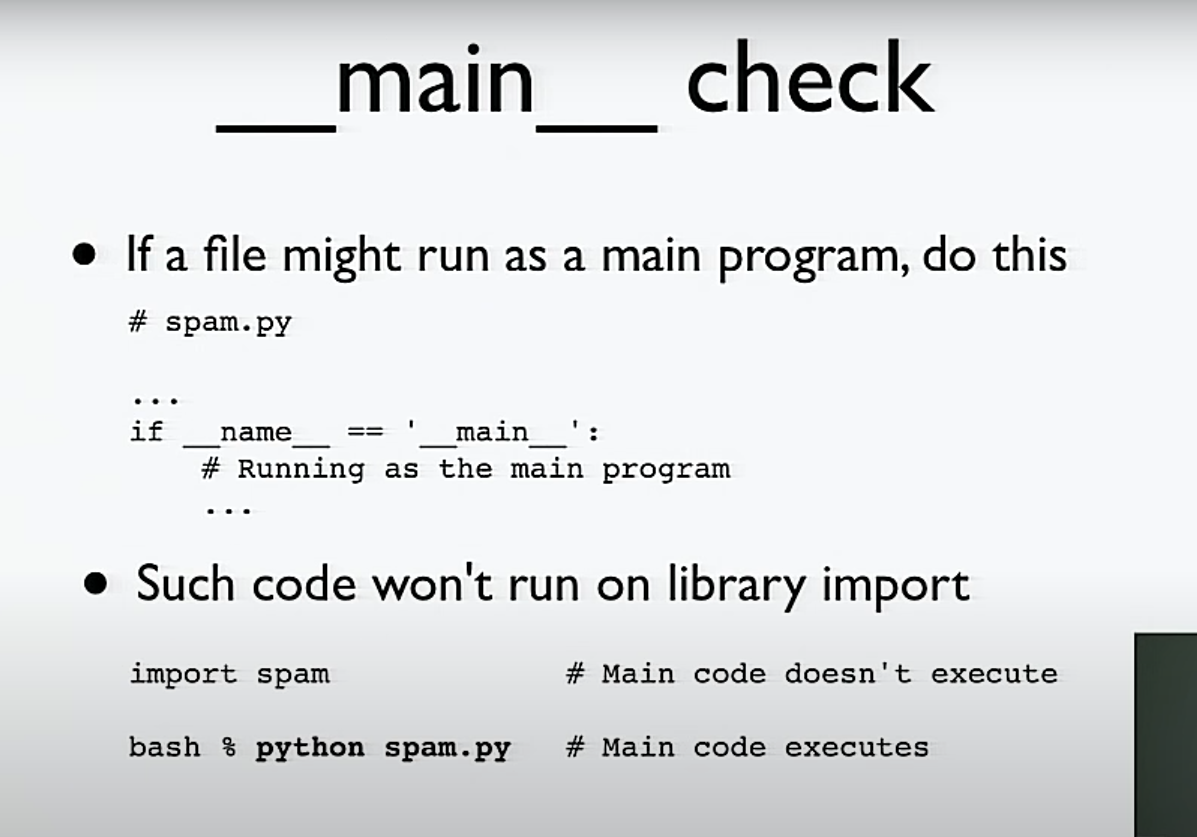
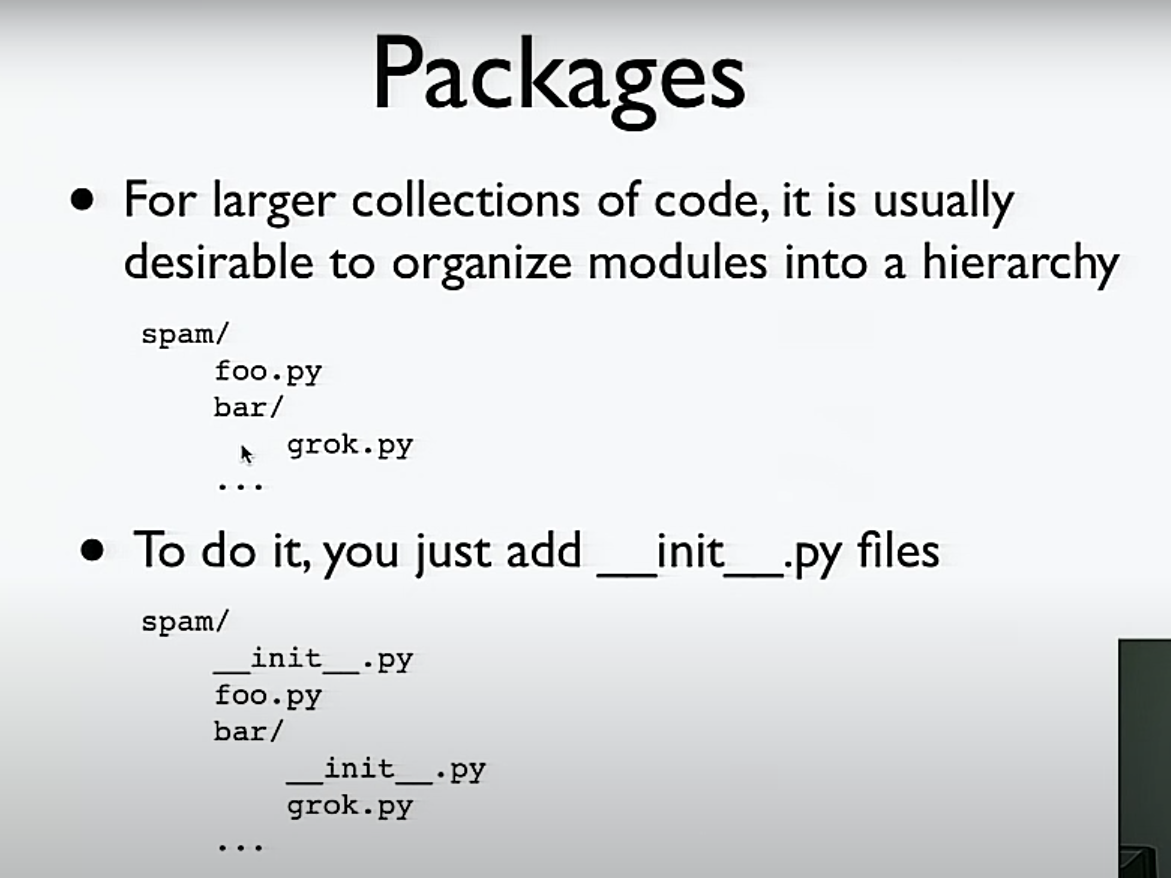
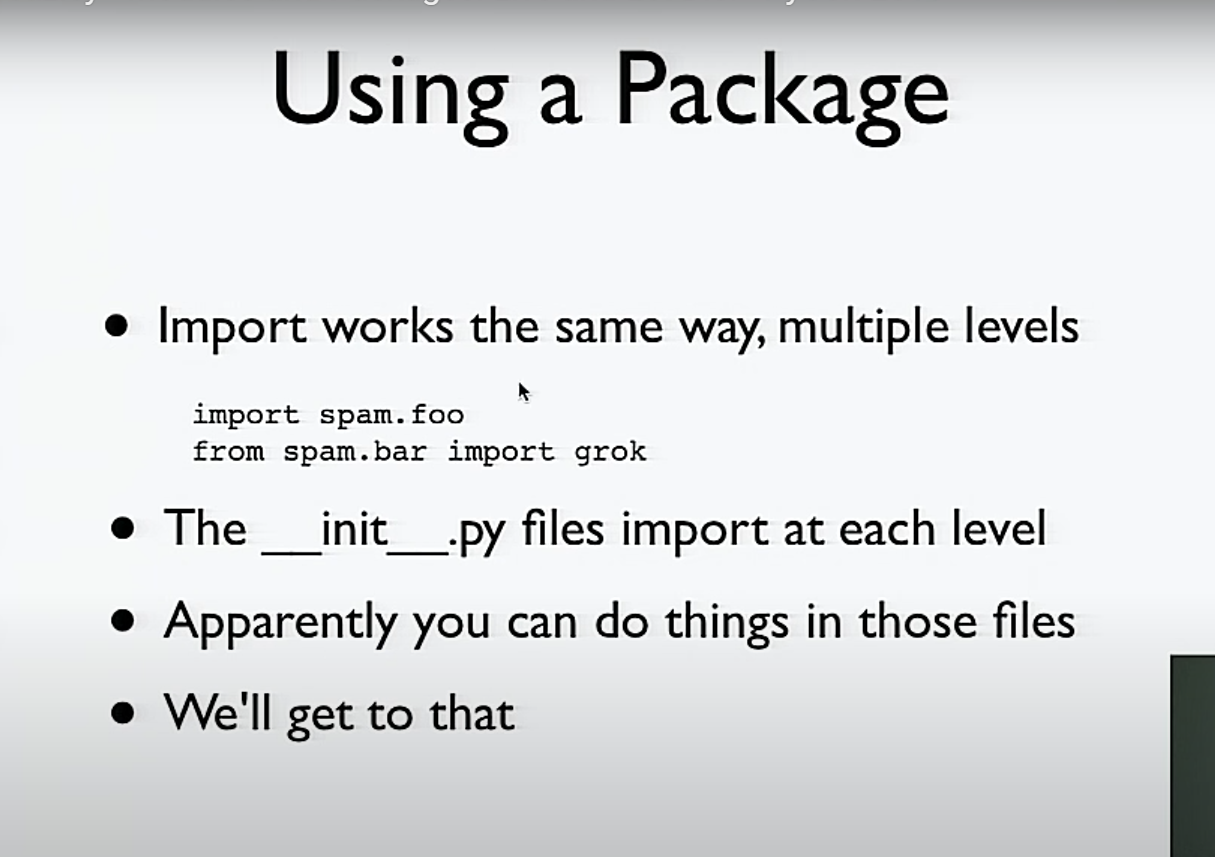
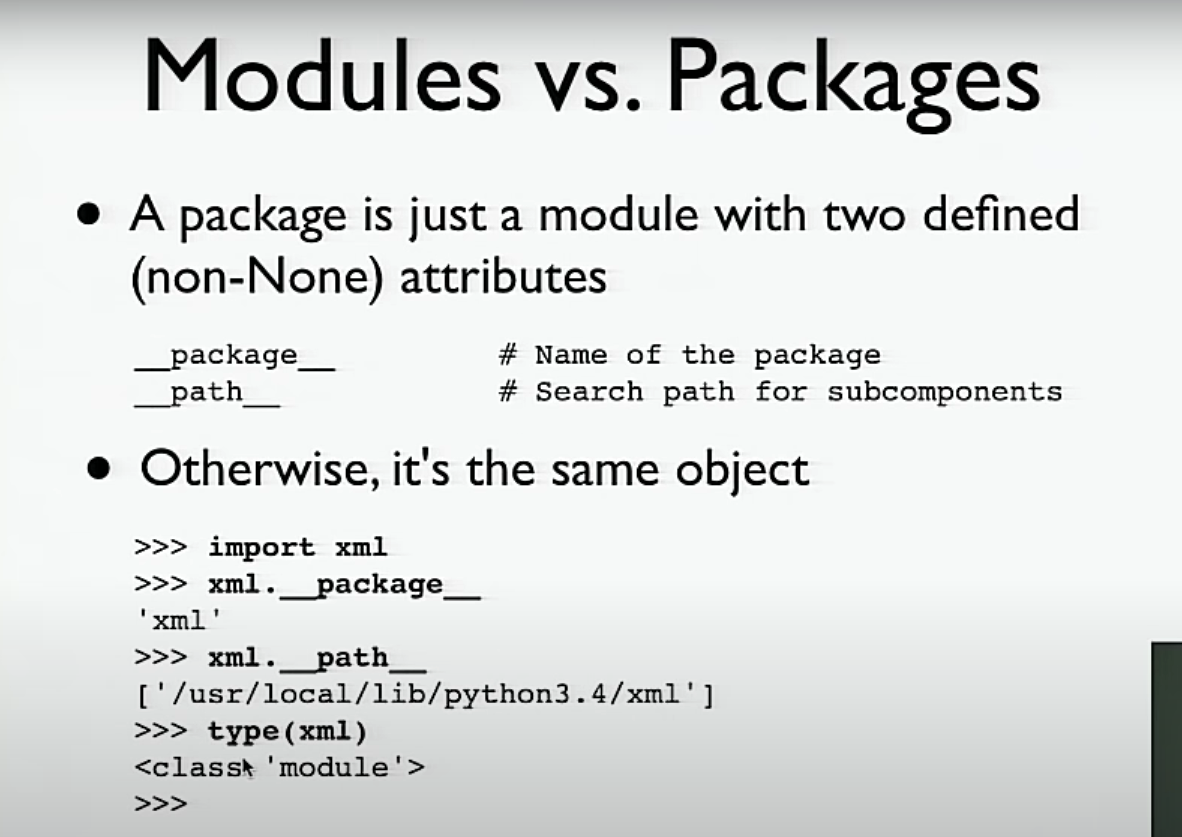
Part II : Packages
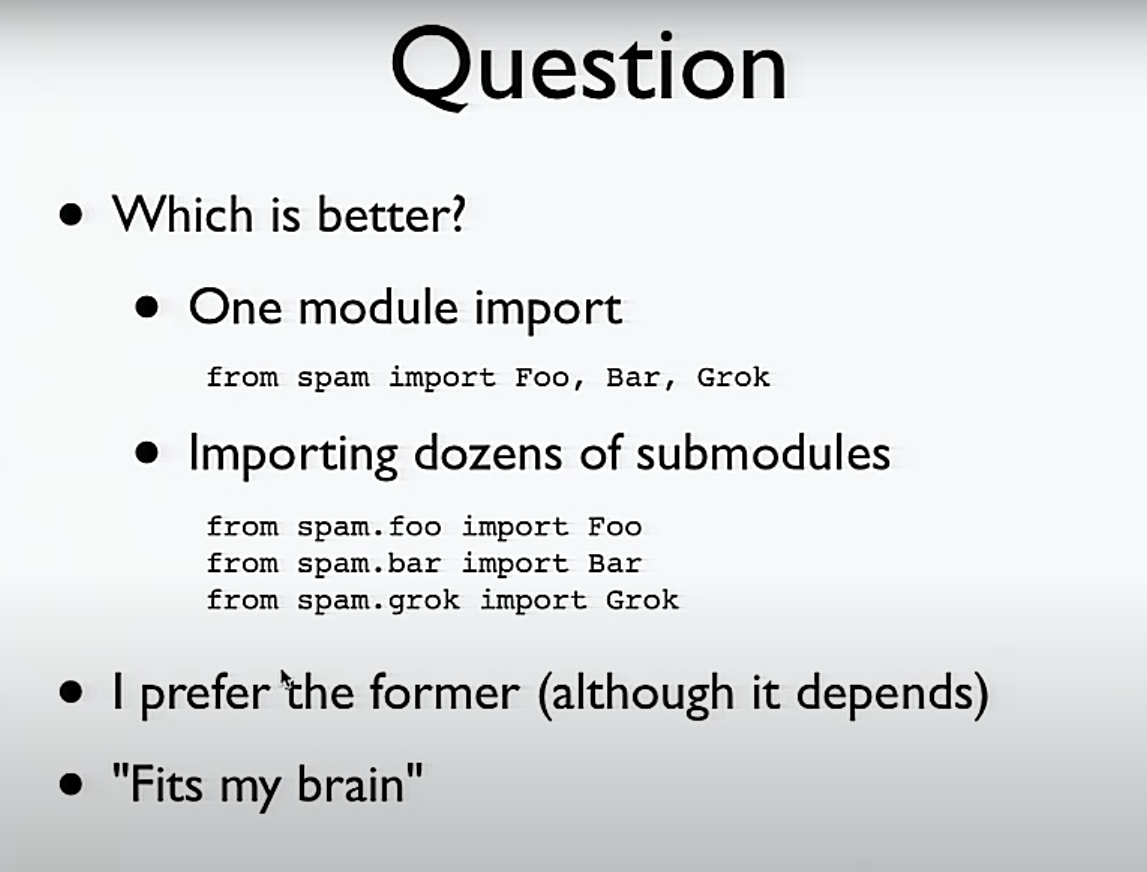
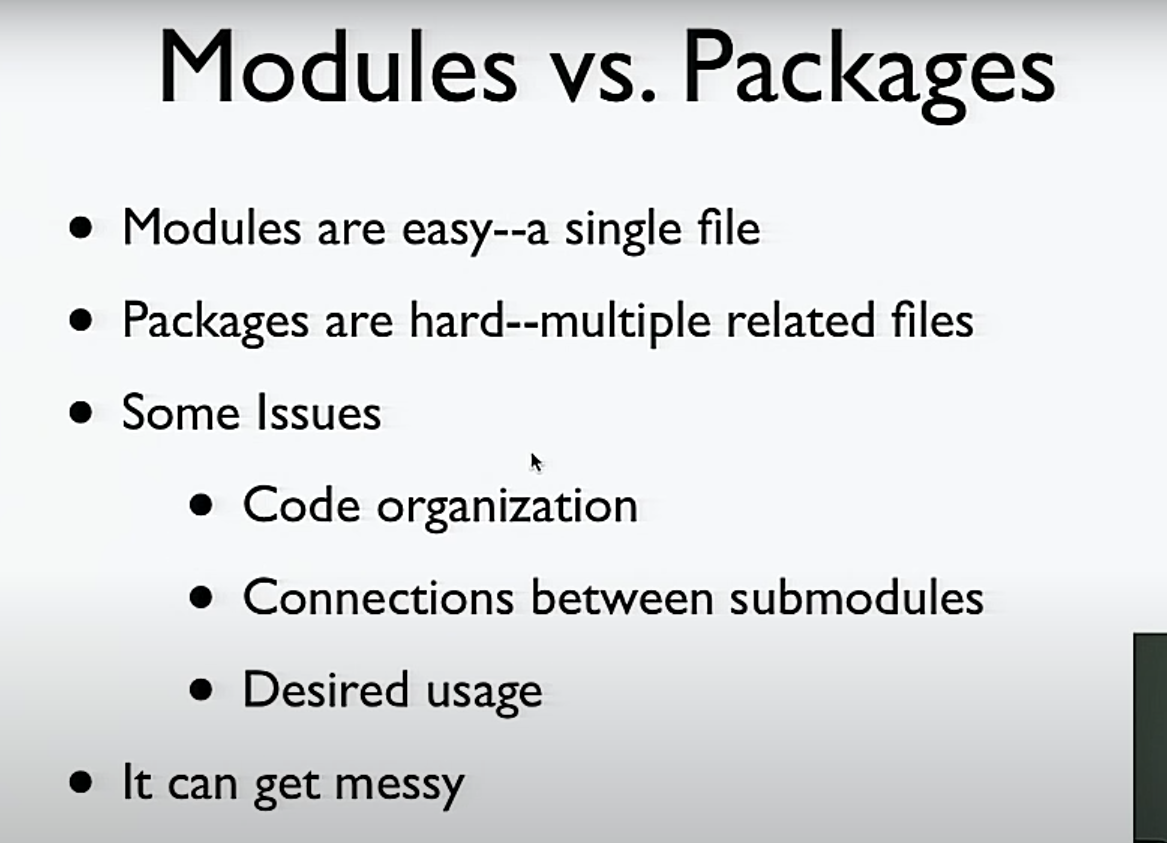
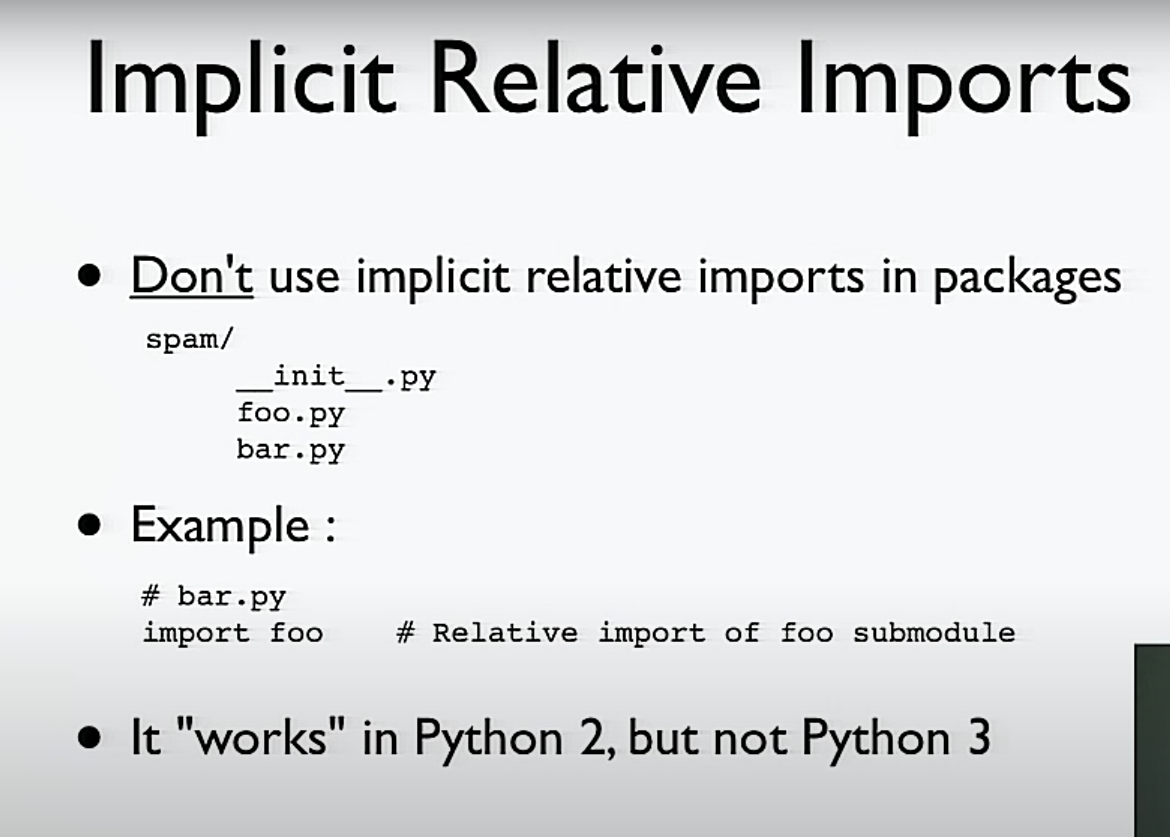
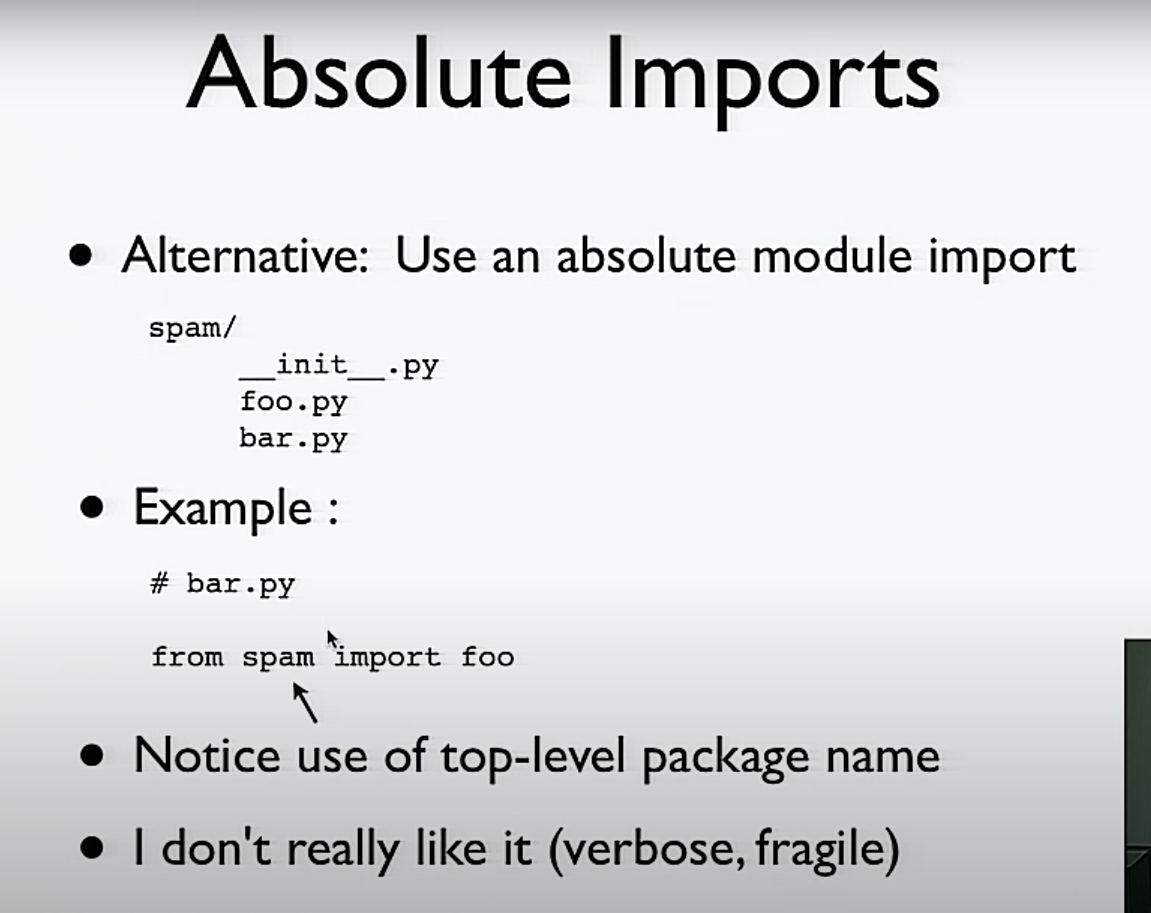
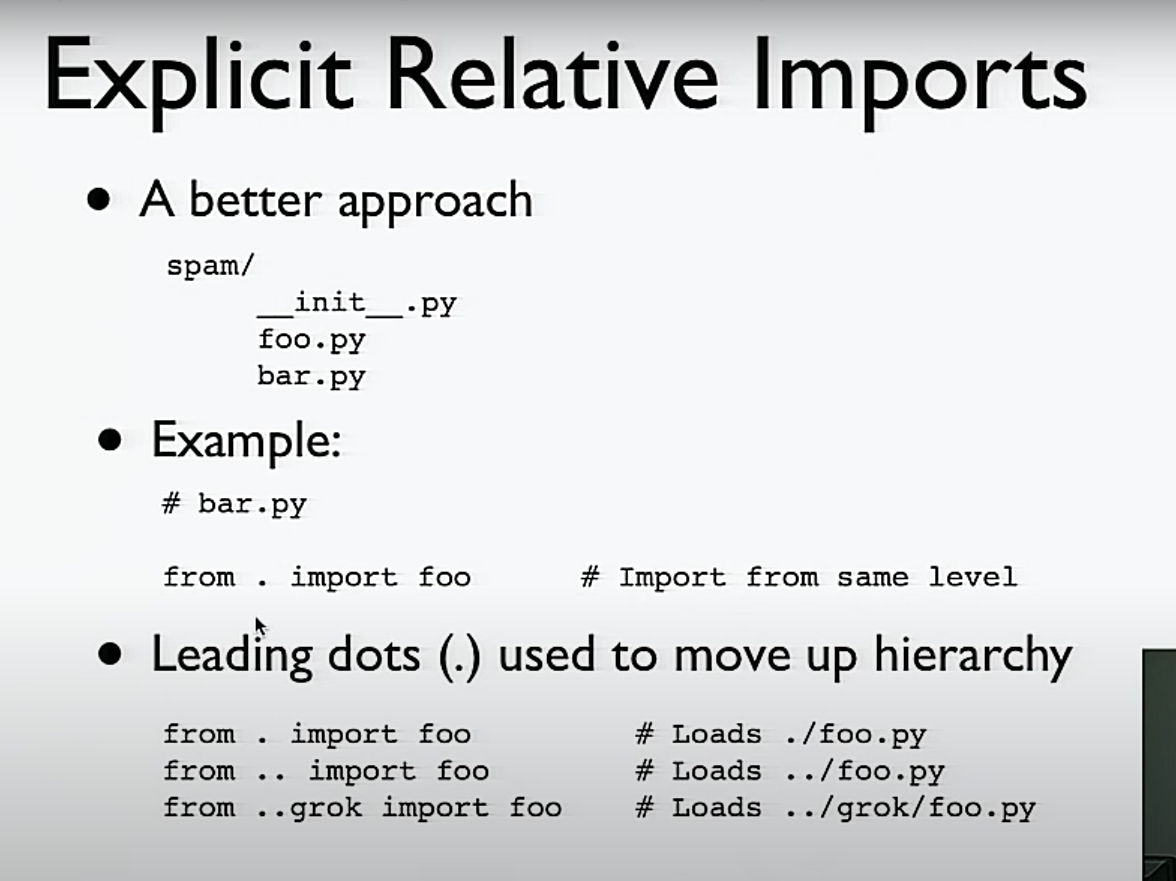
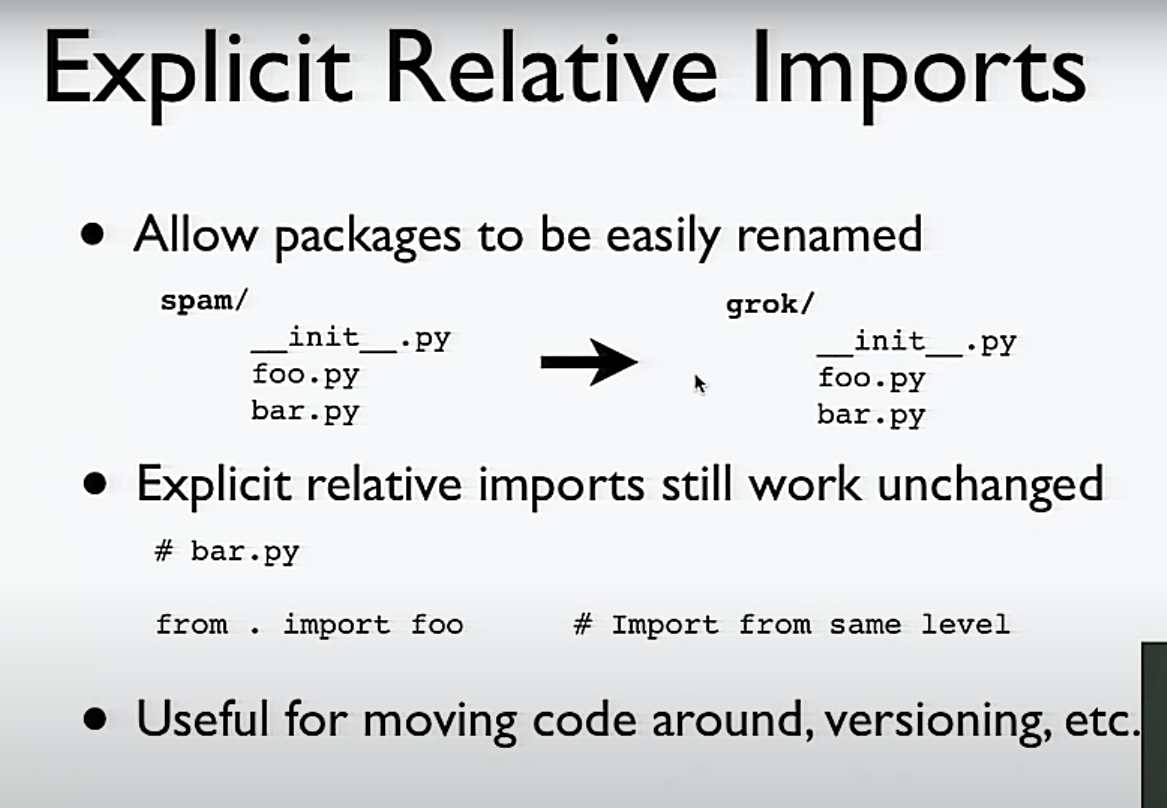
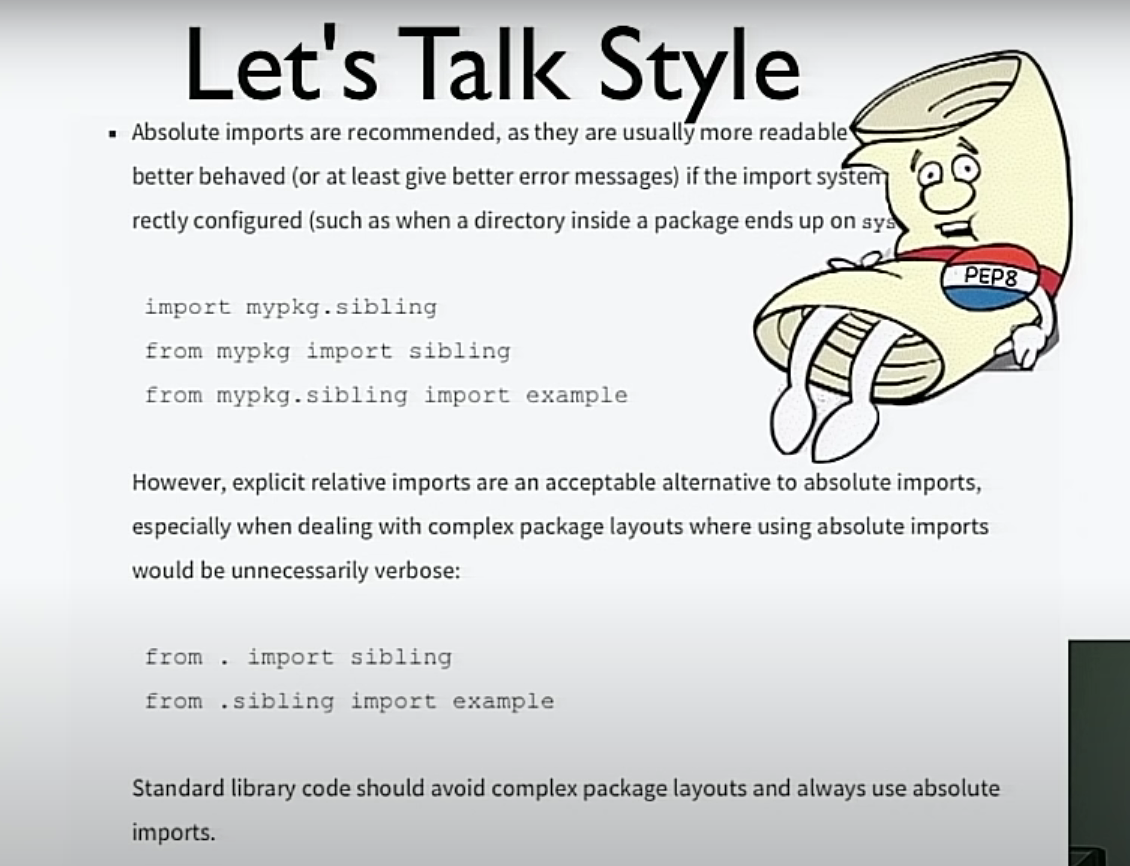
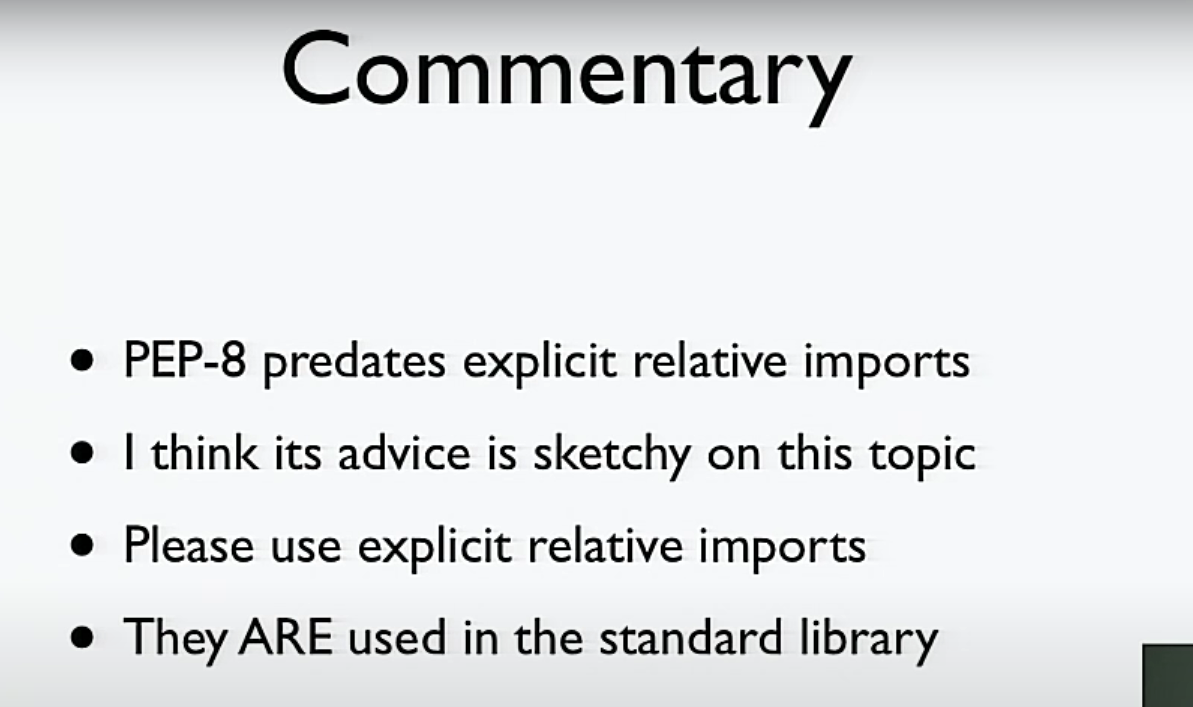
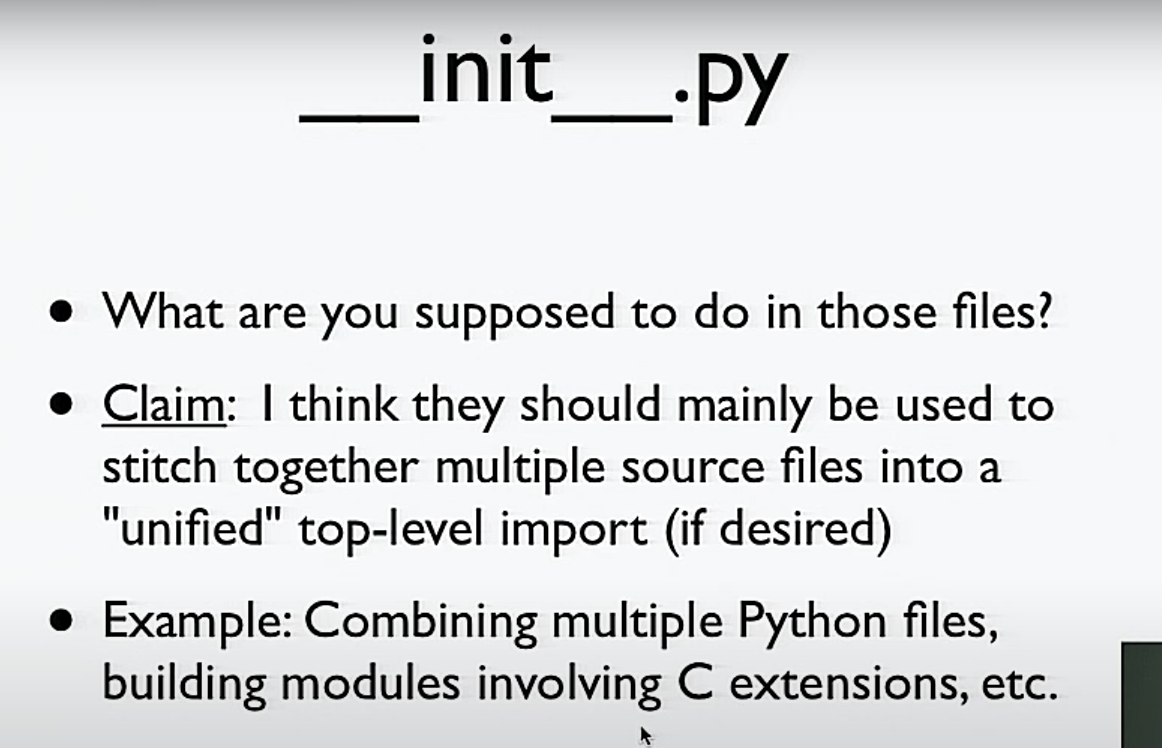
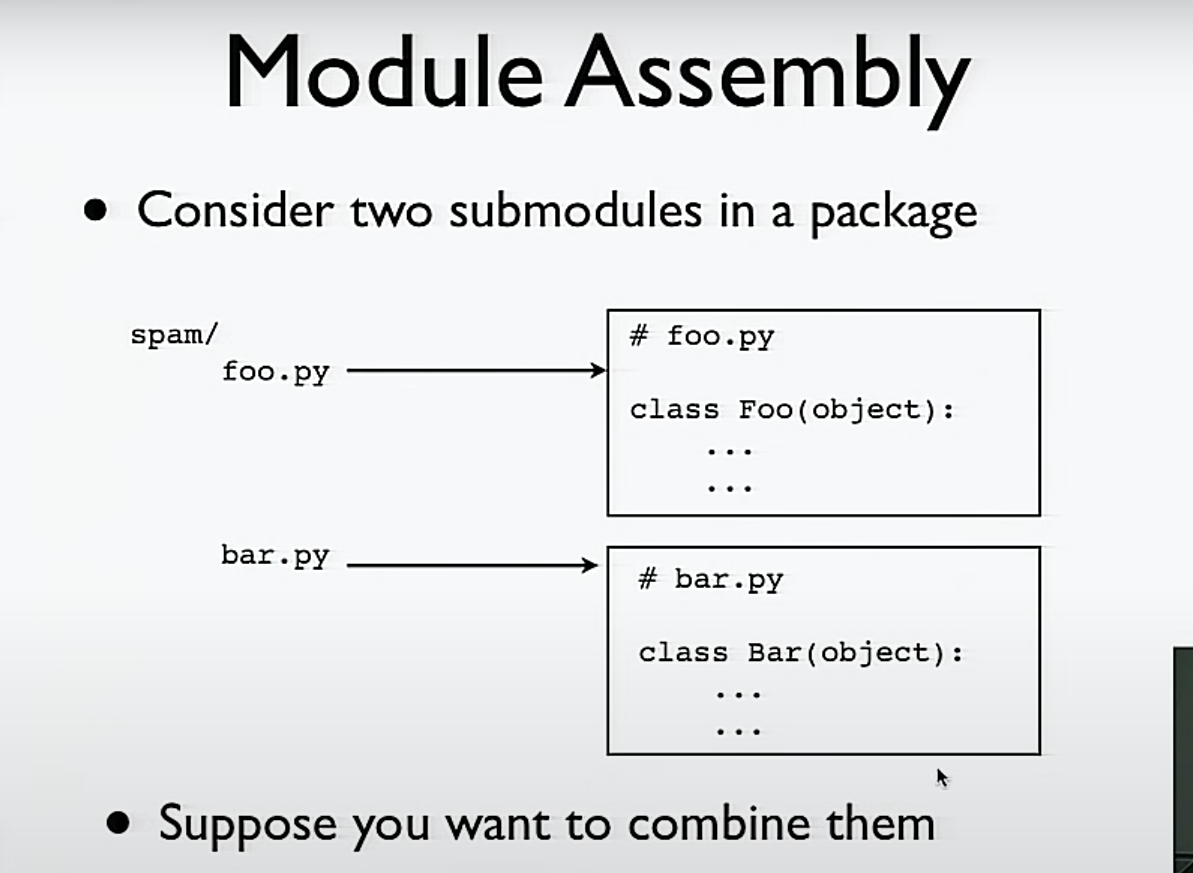
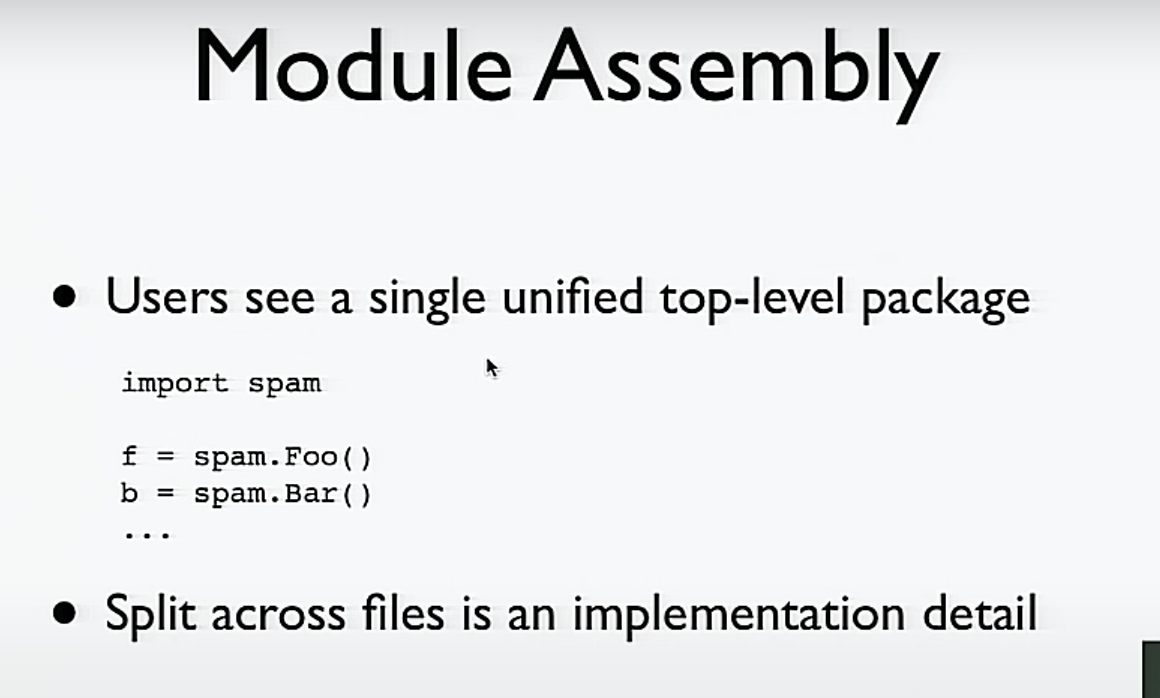
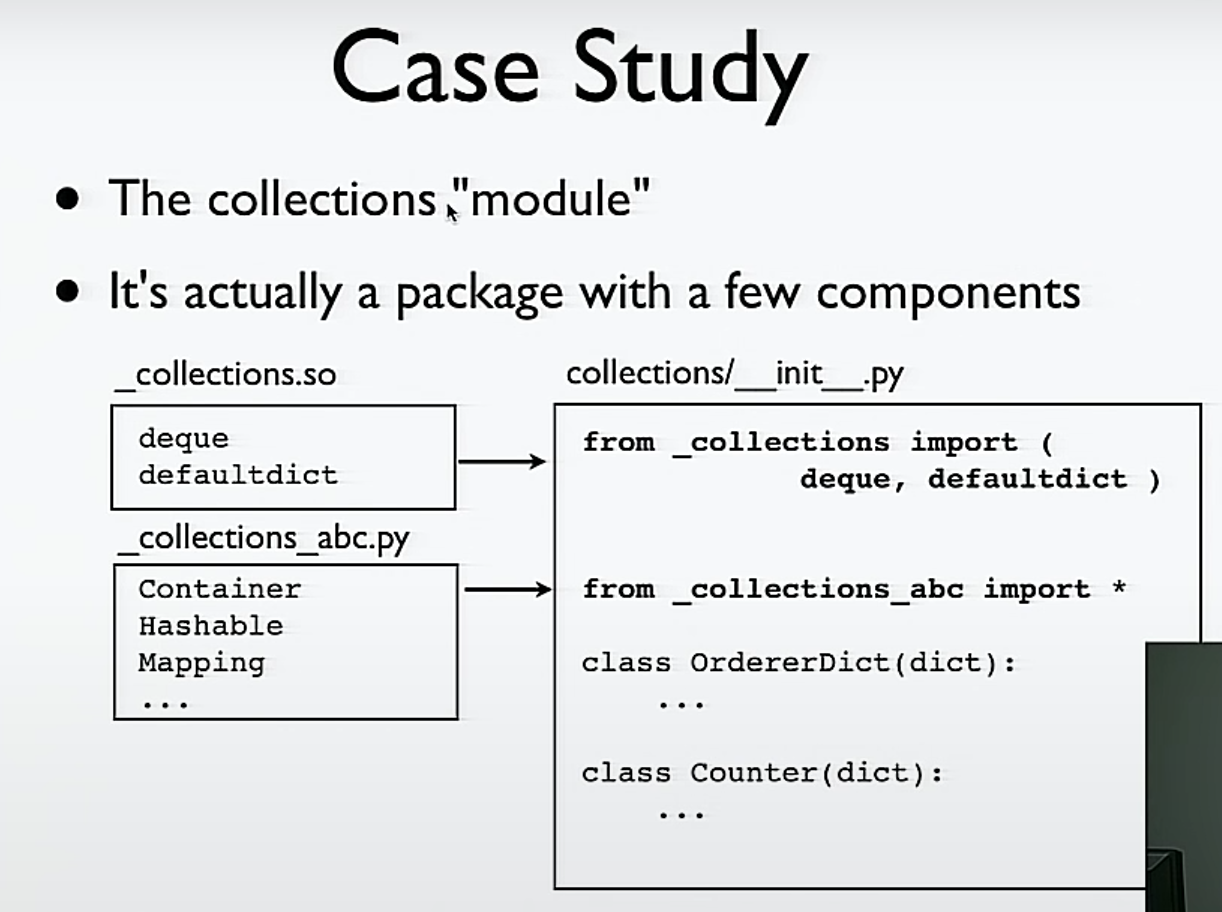
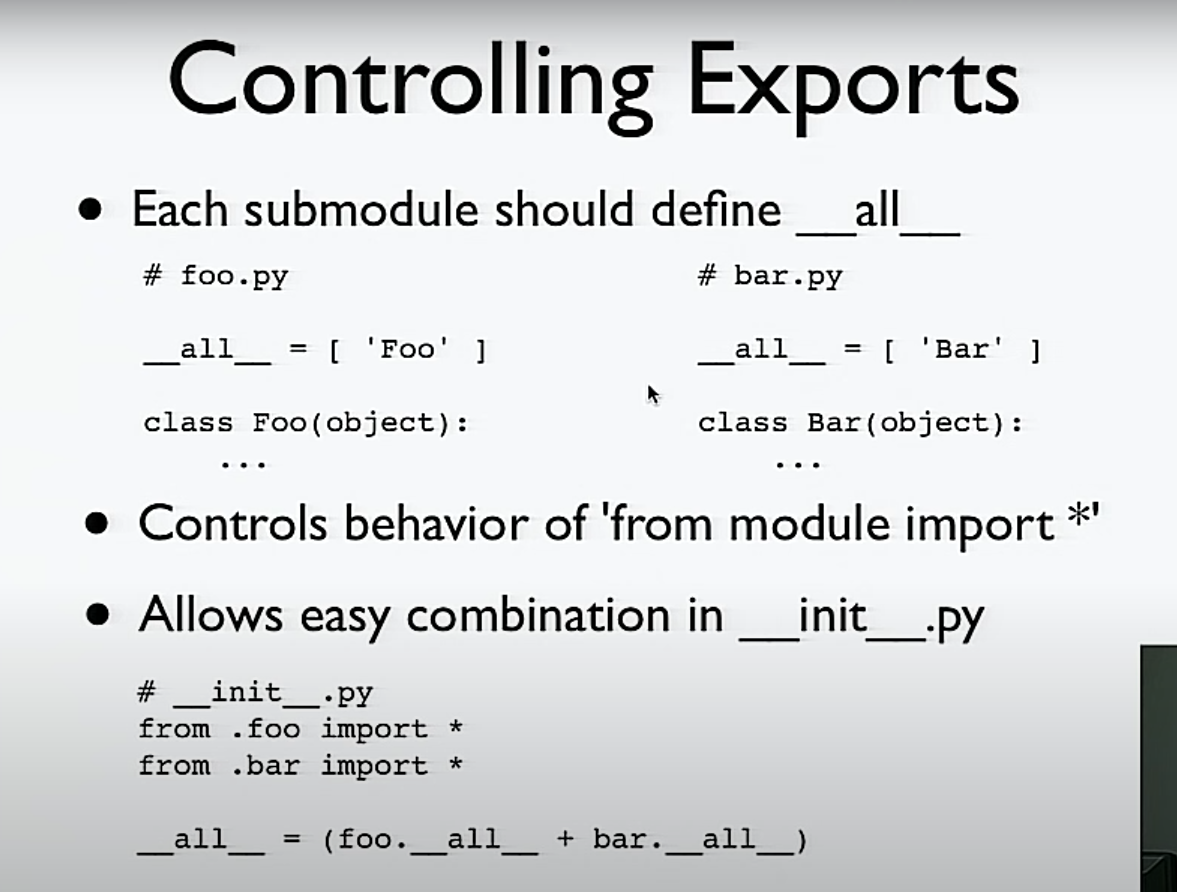
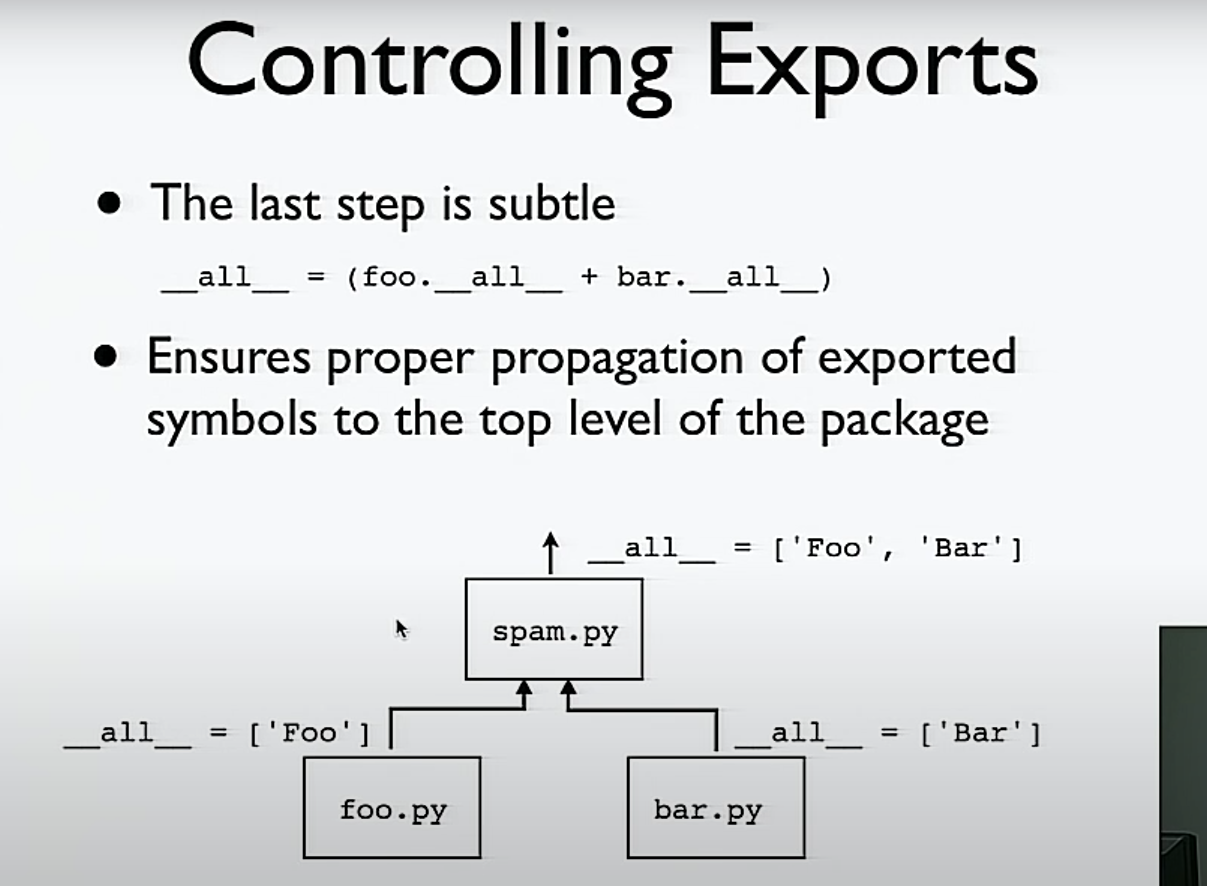
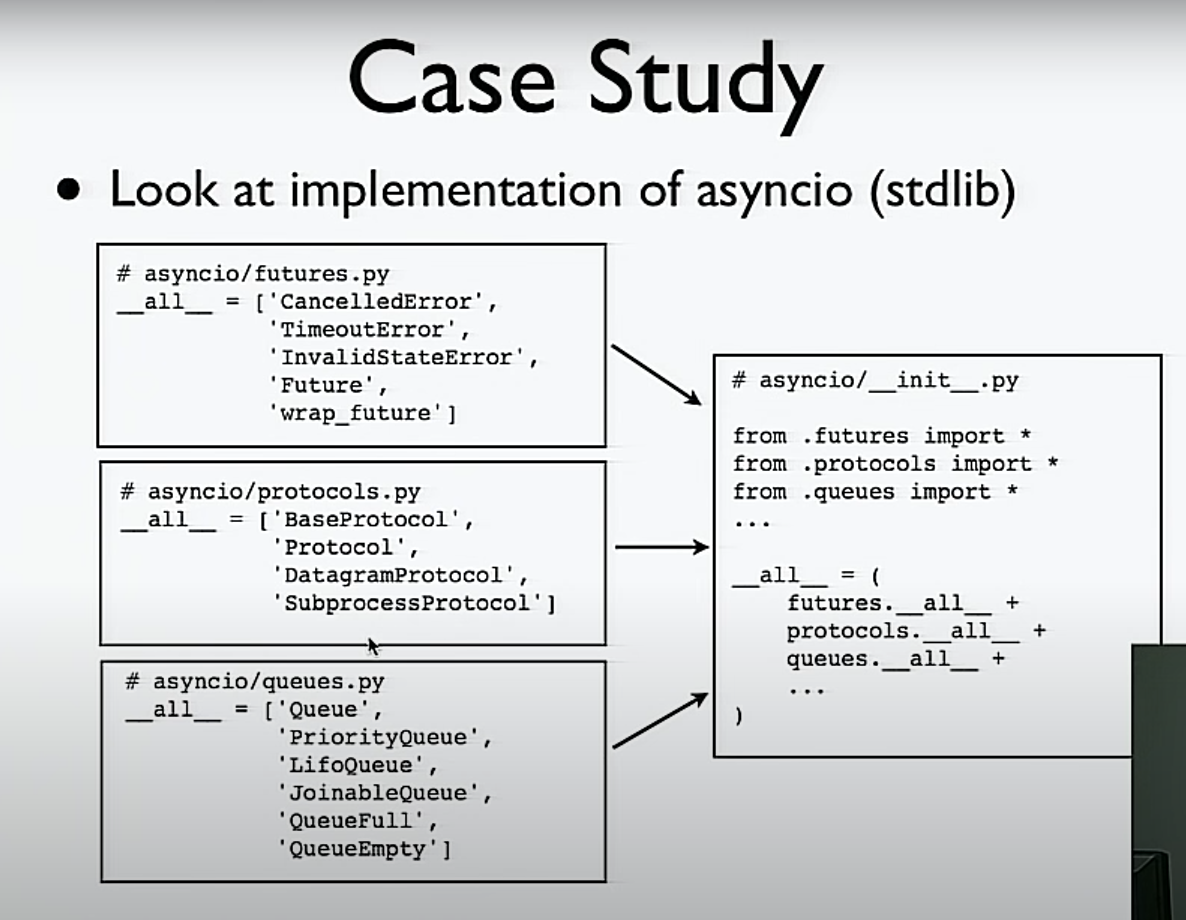
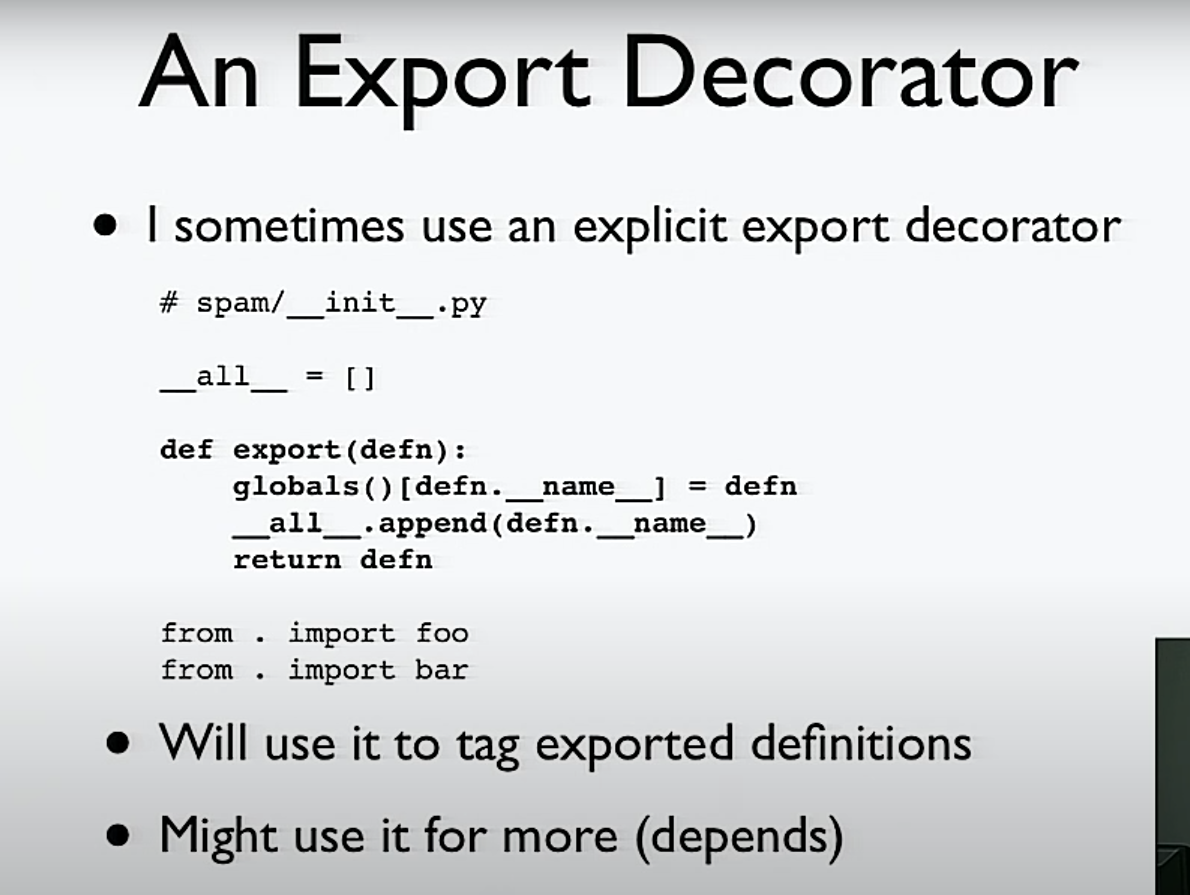
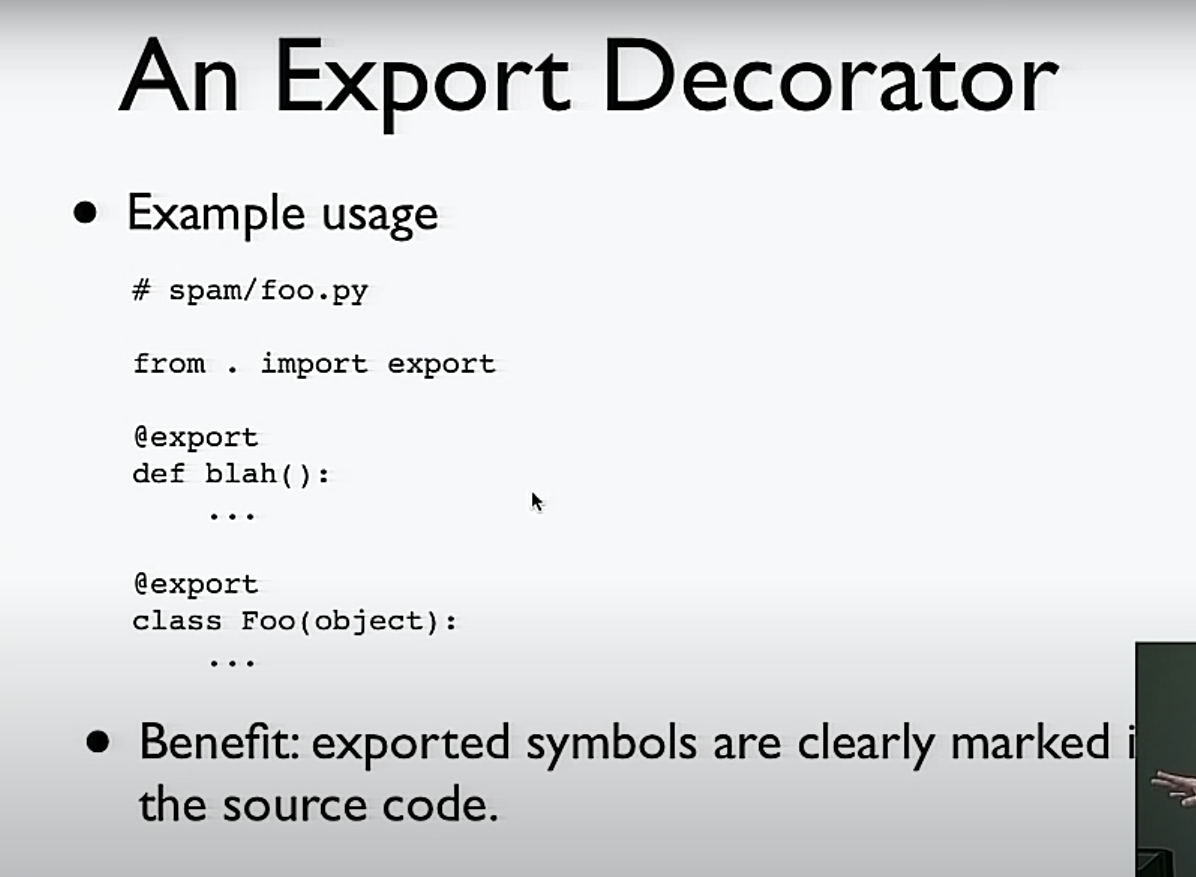
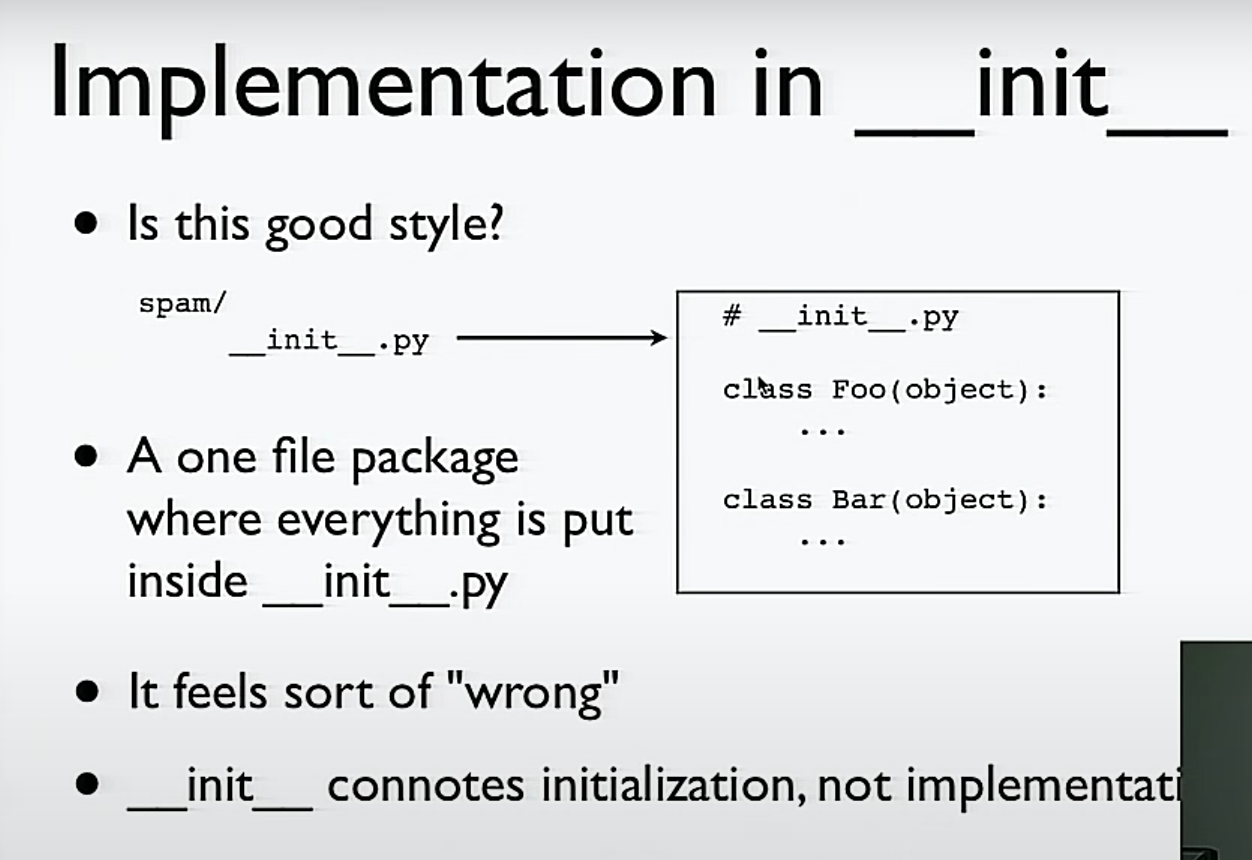
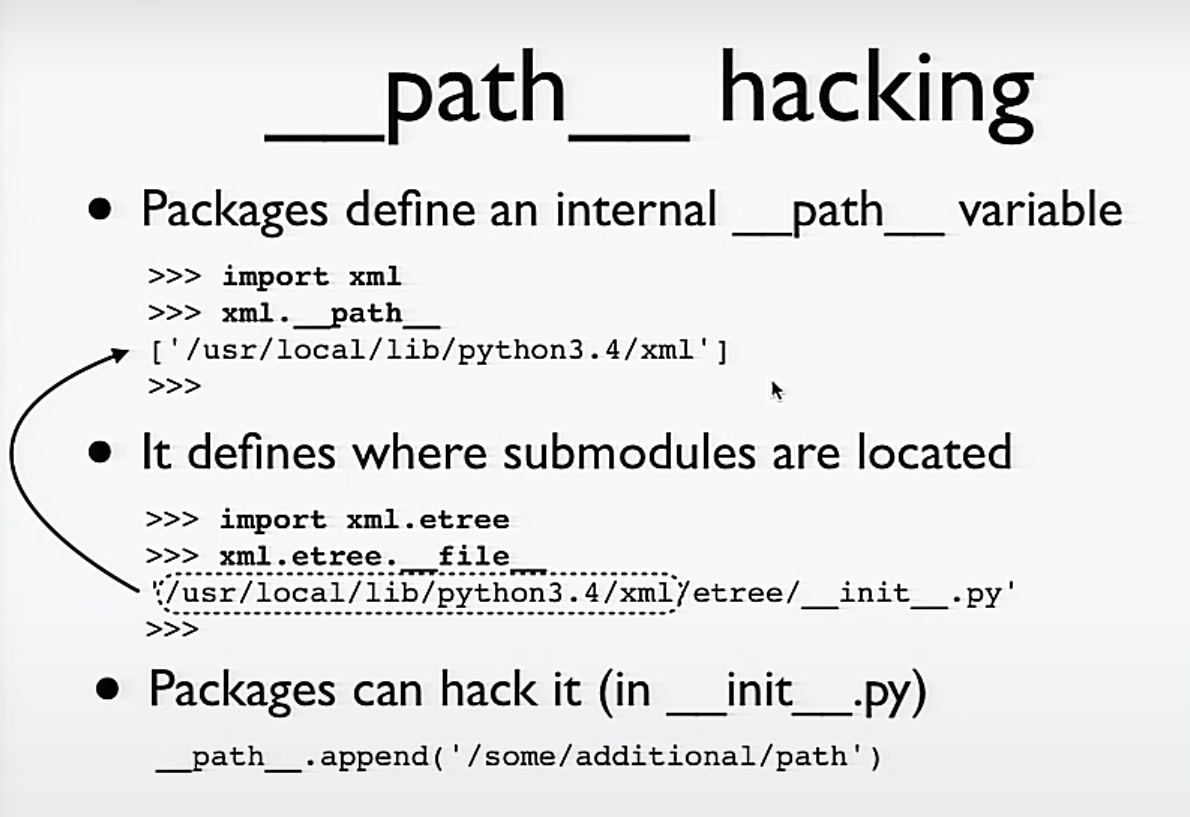
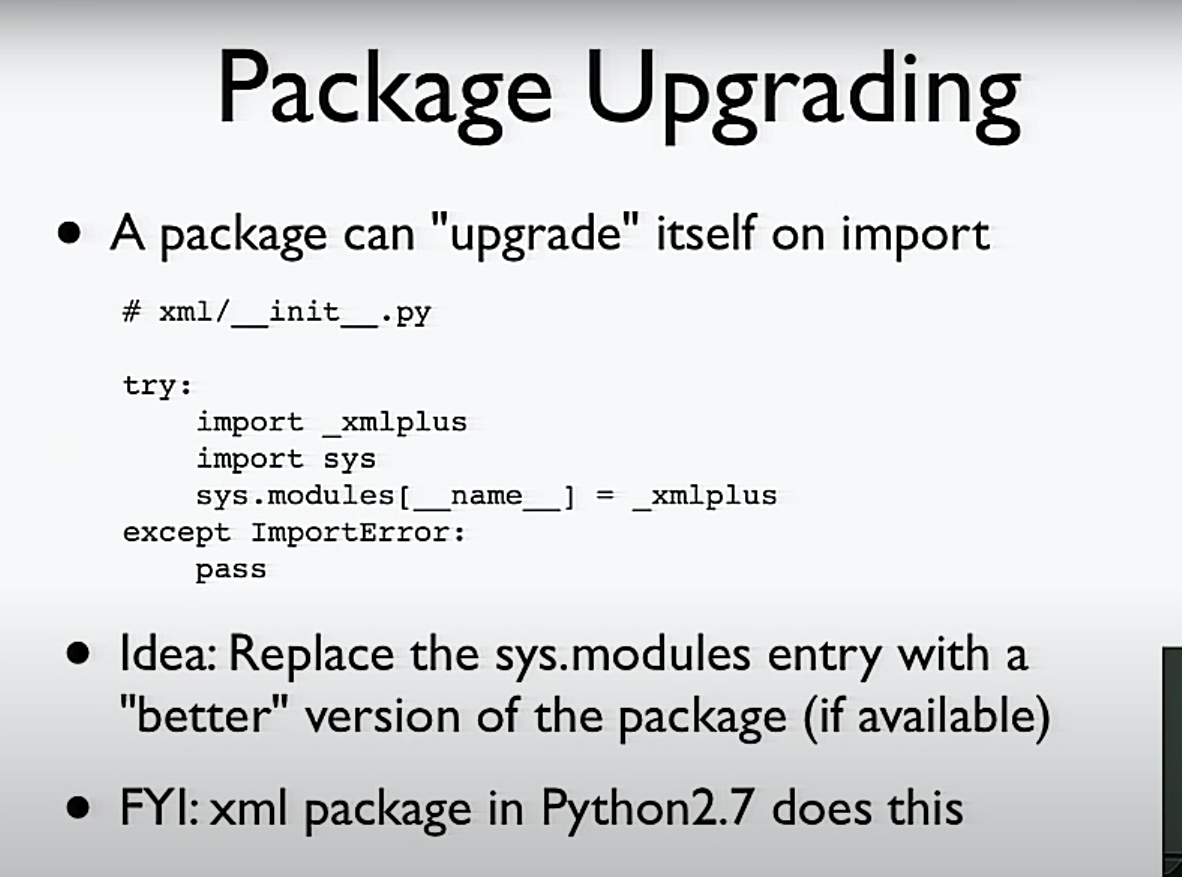
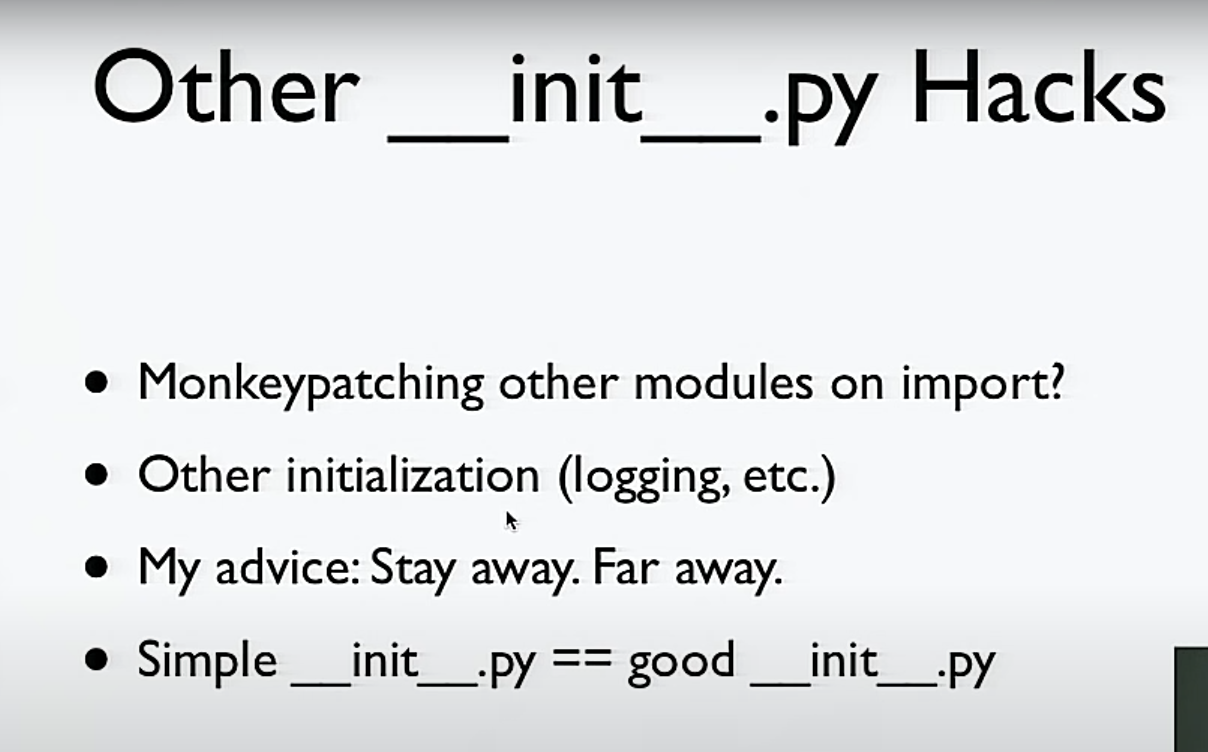
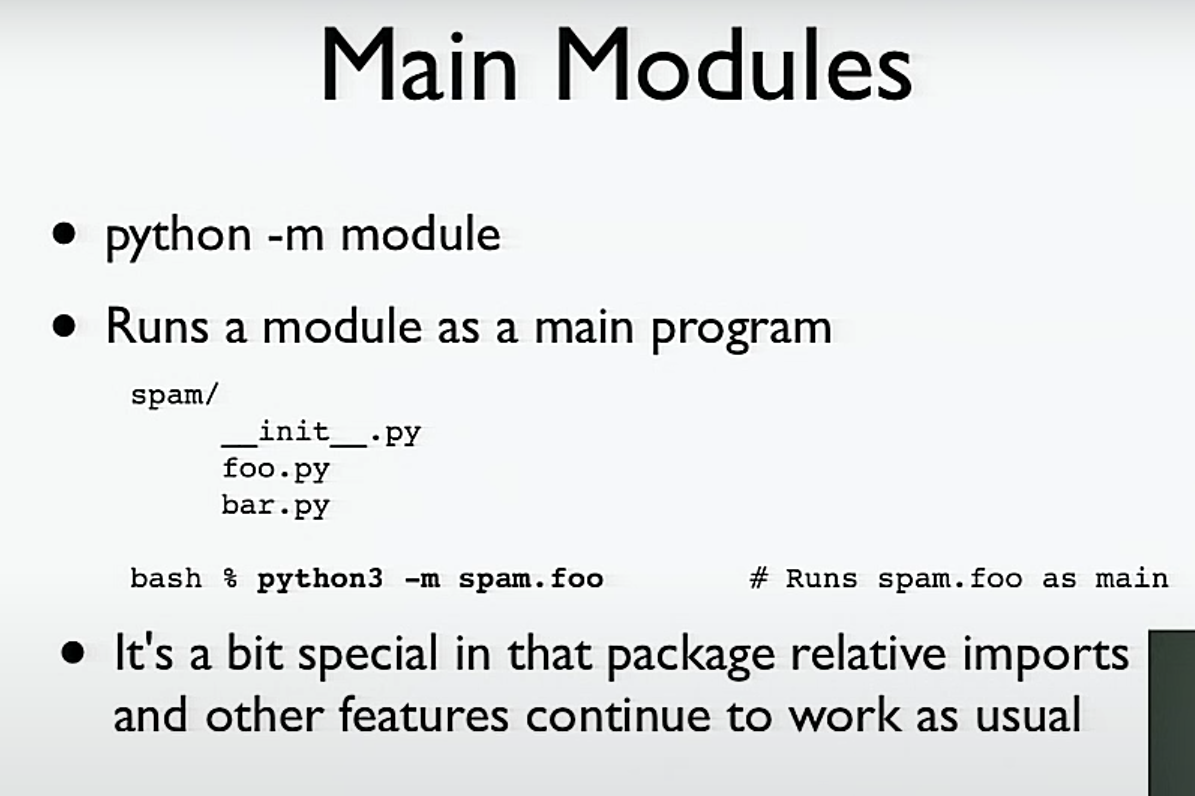
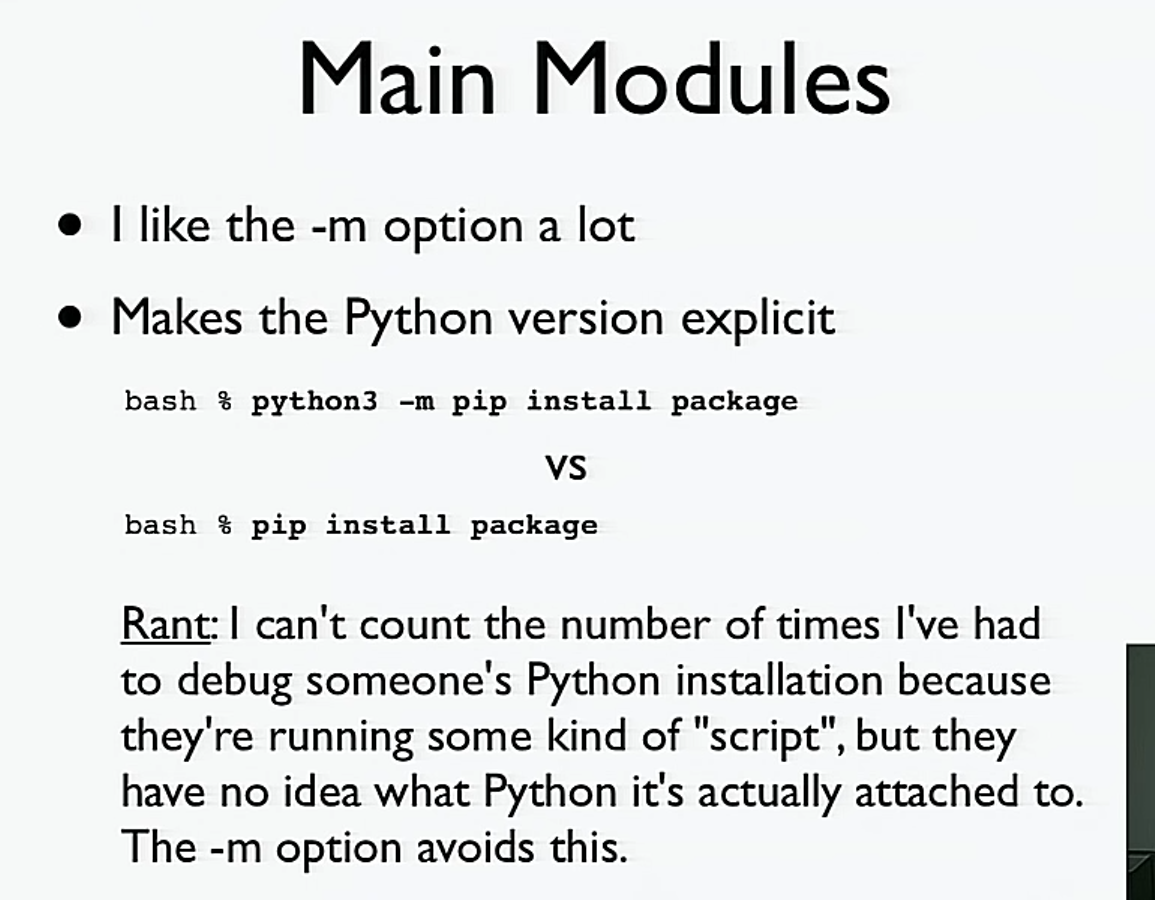
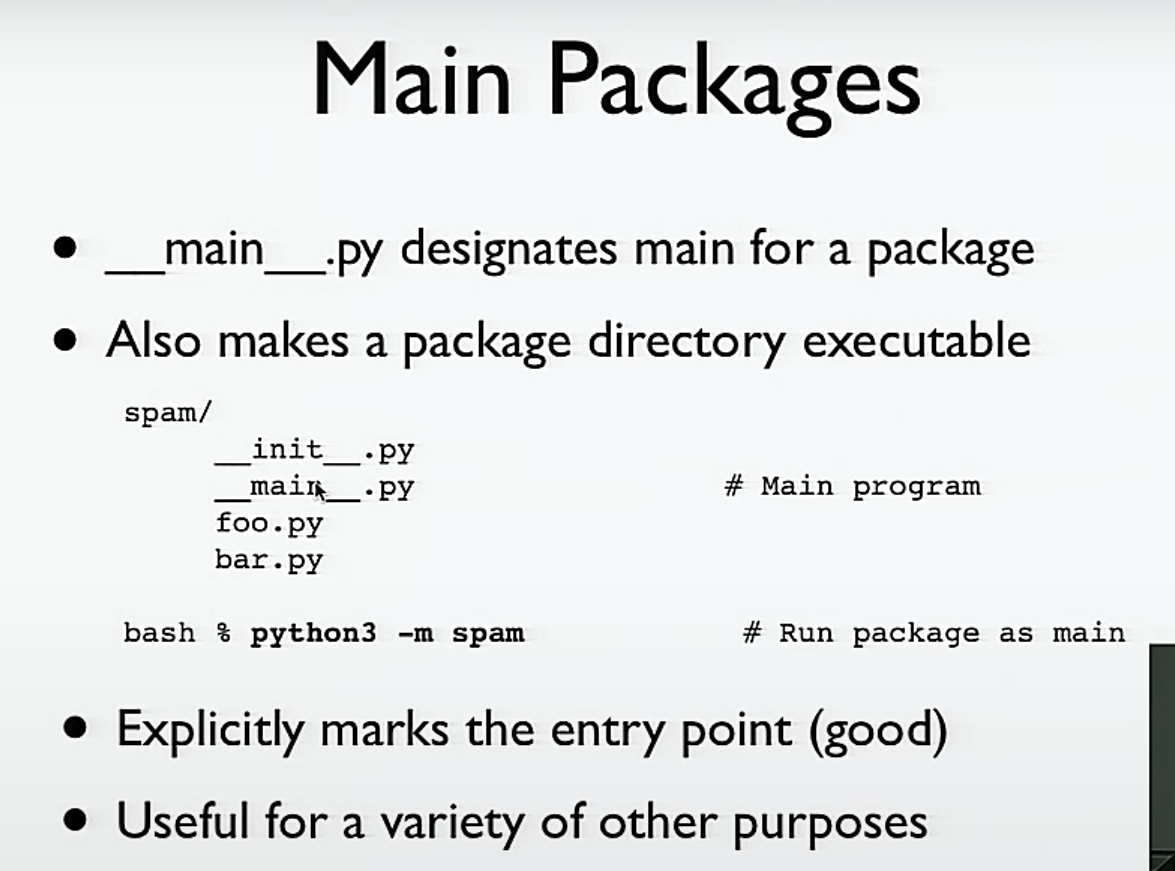
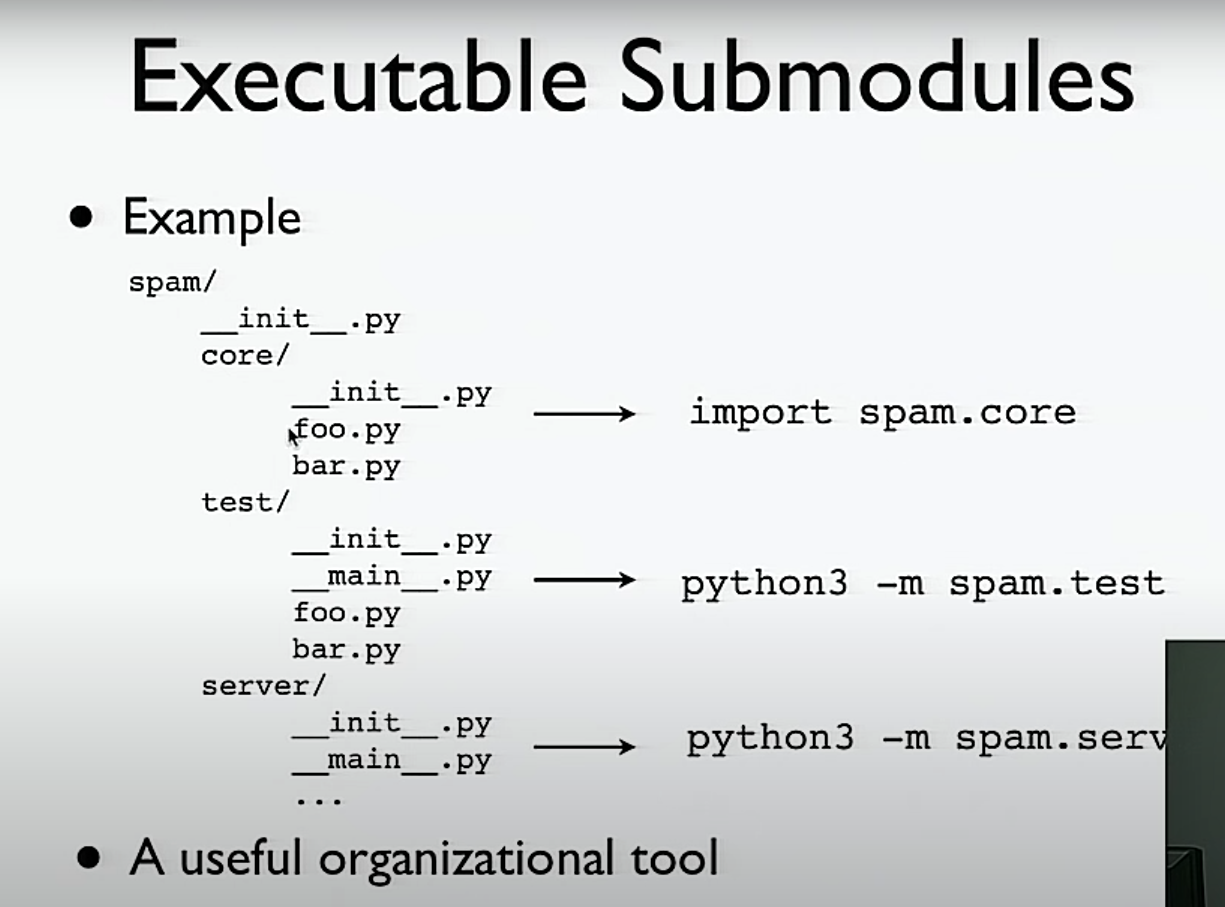
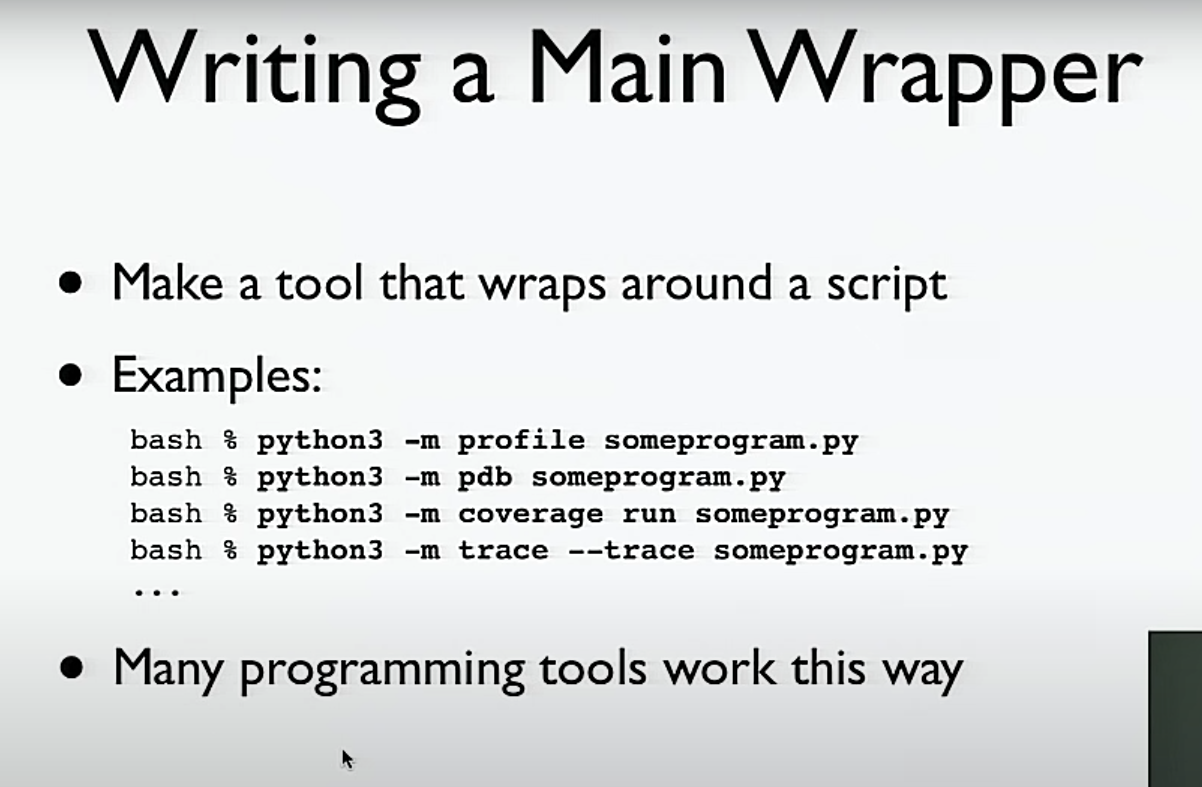
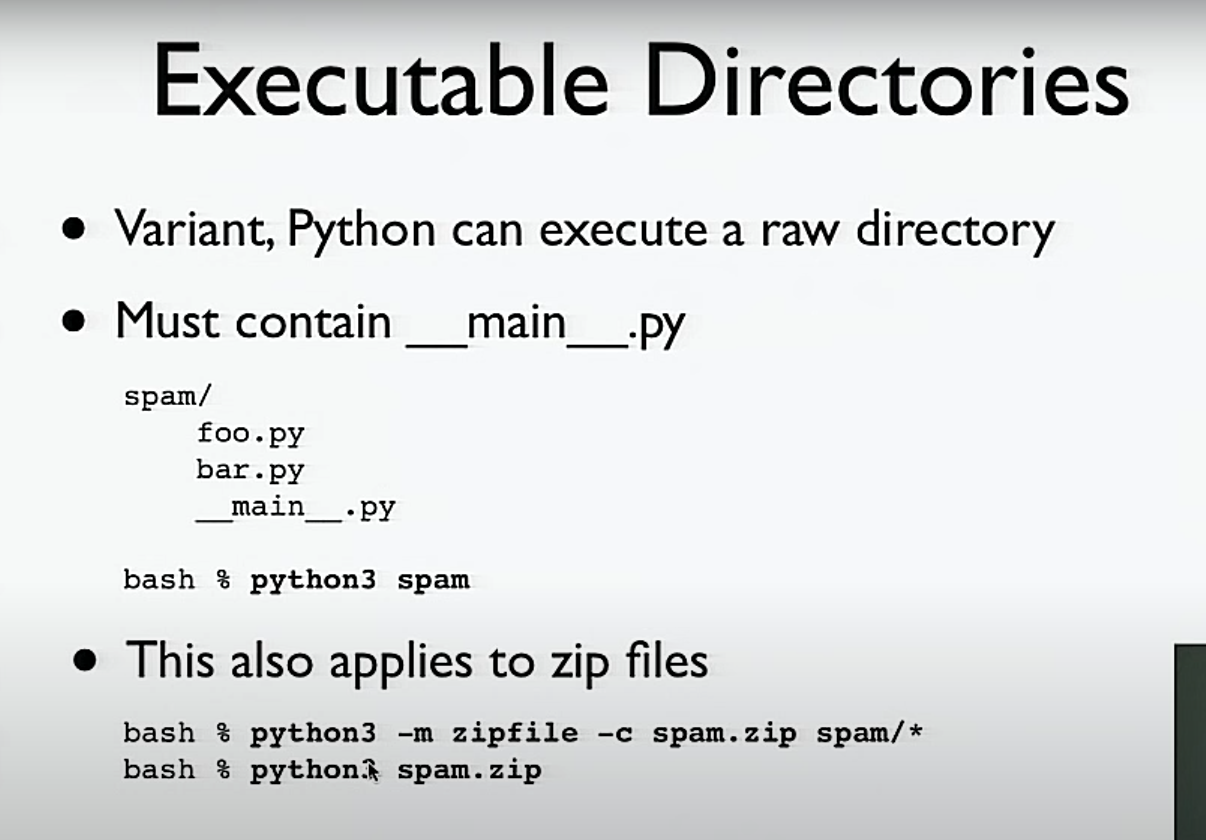
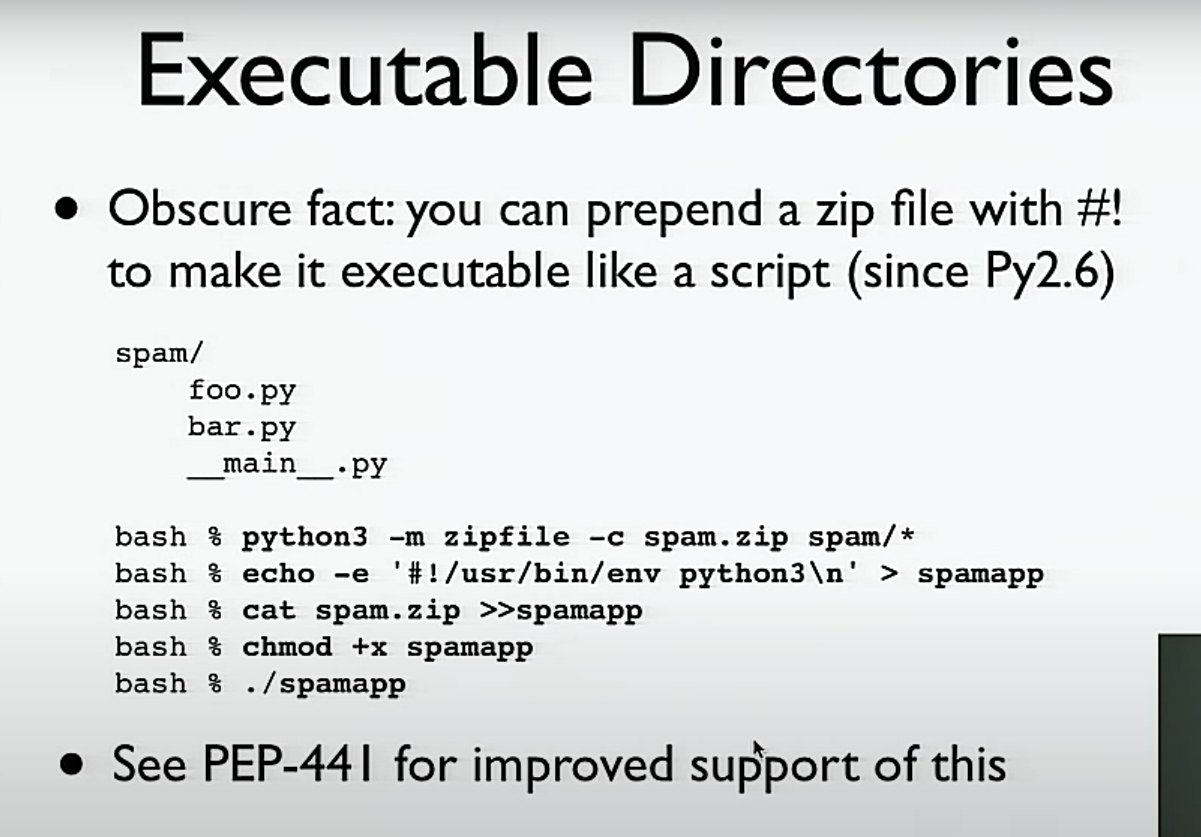
Part III : __main__
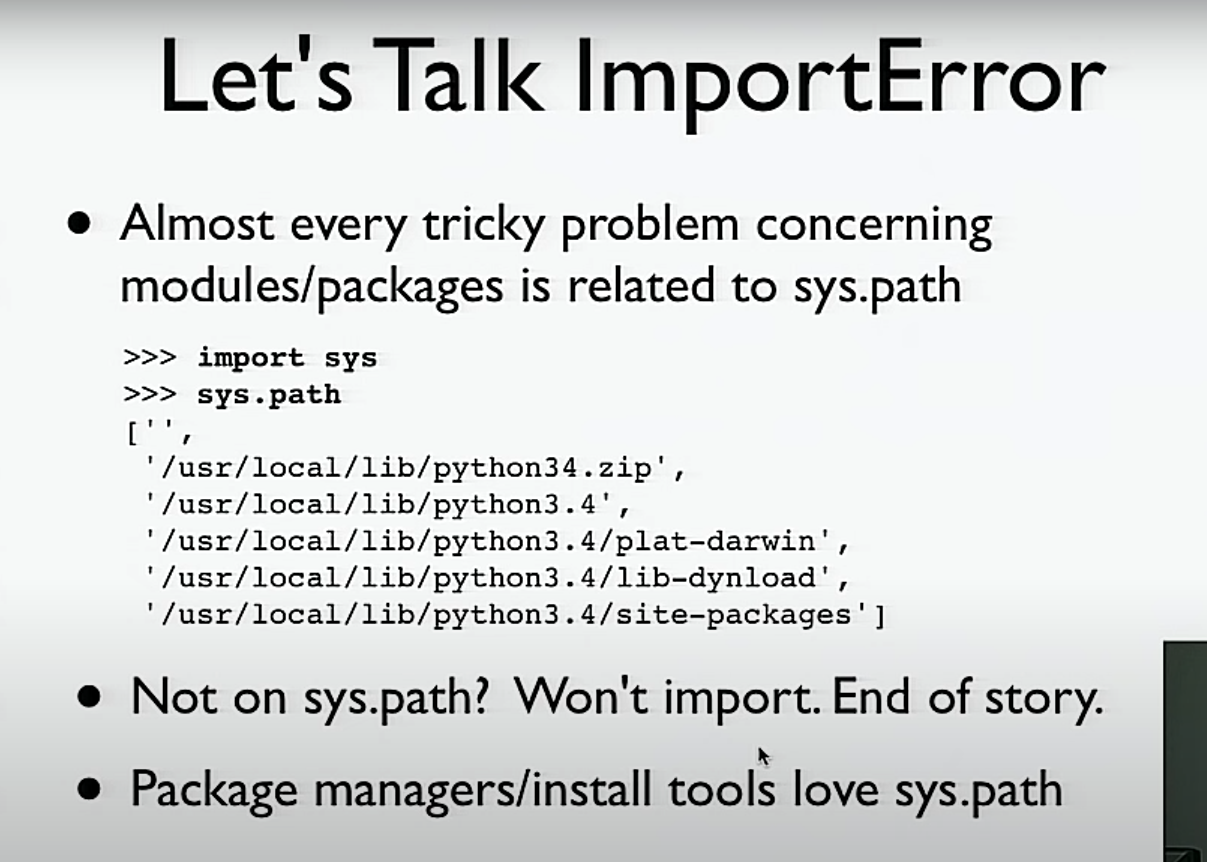
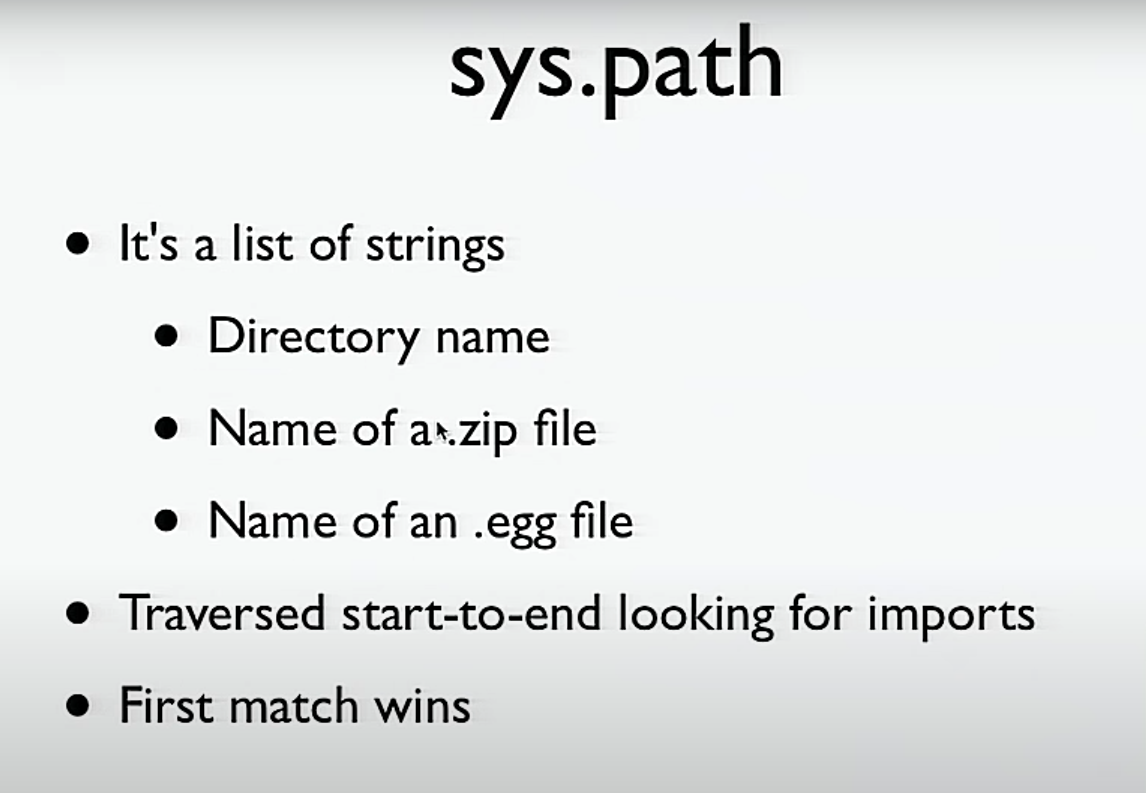
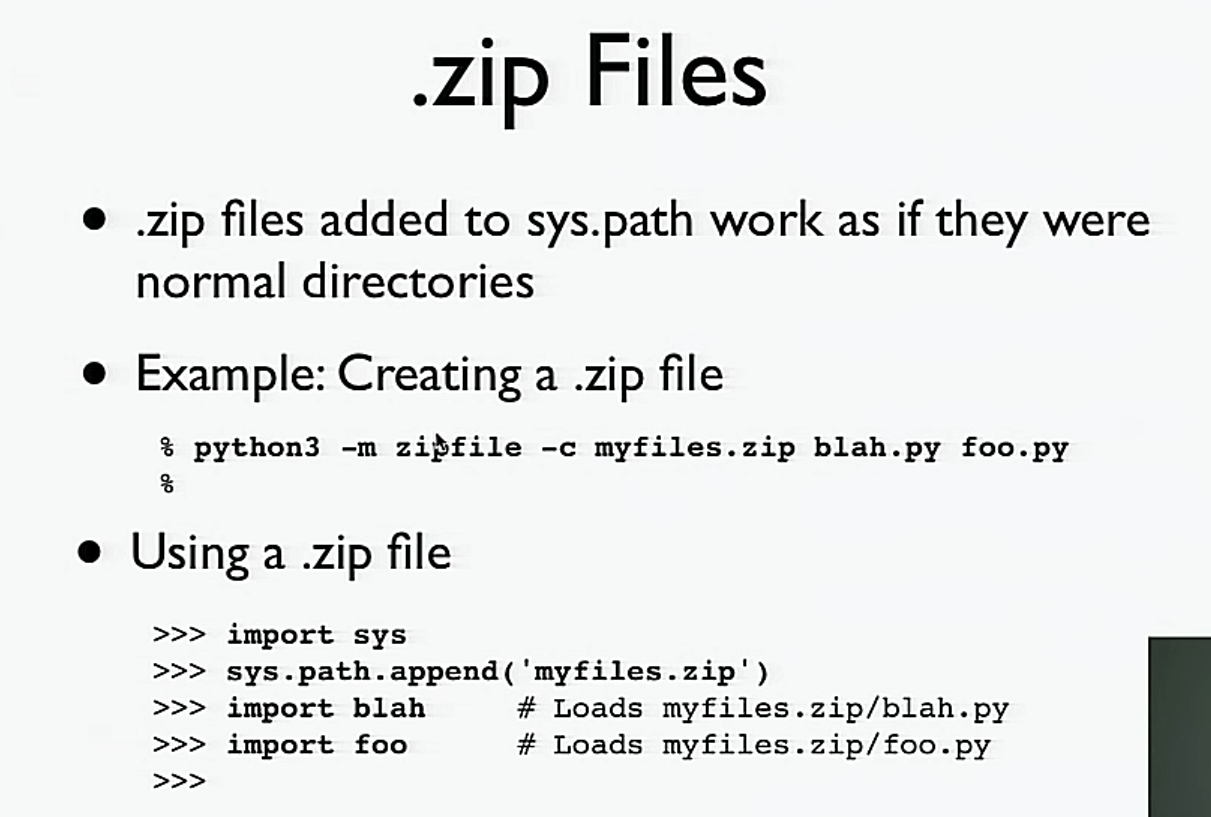
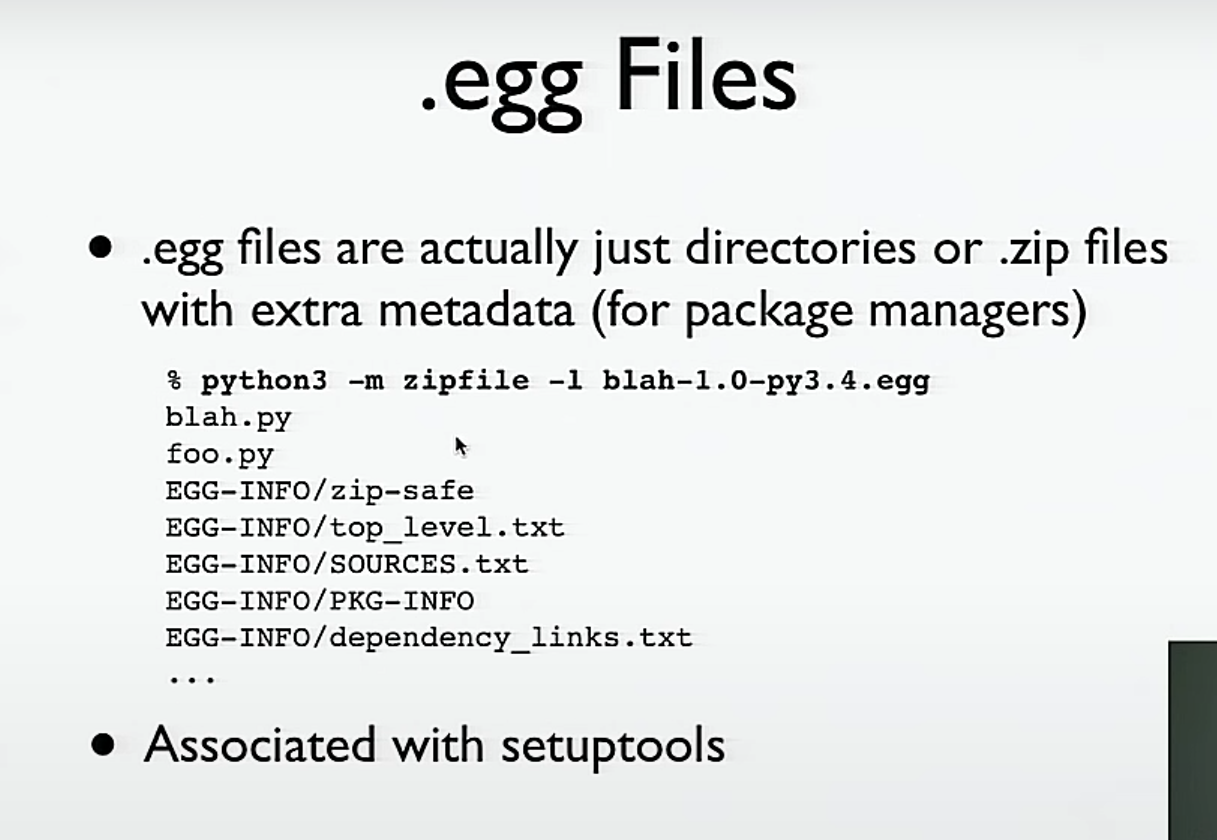
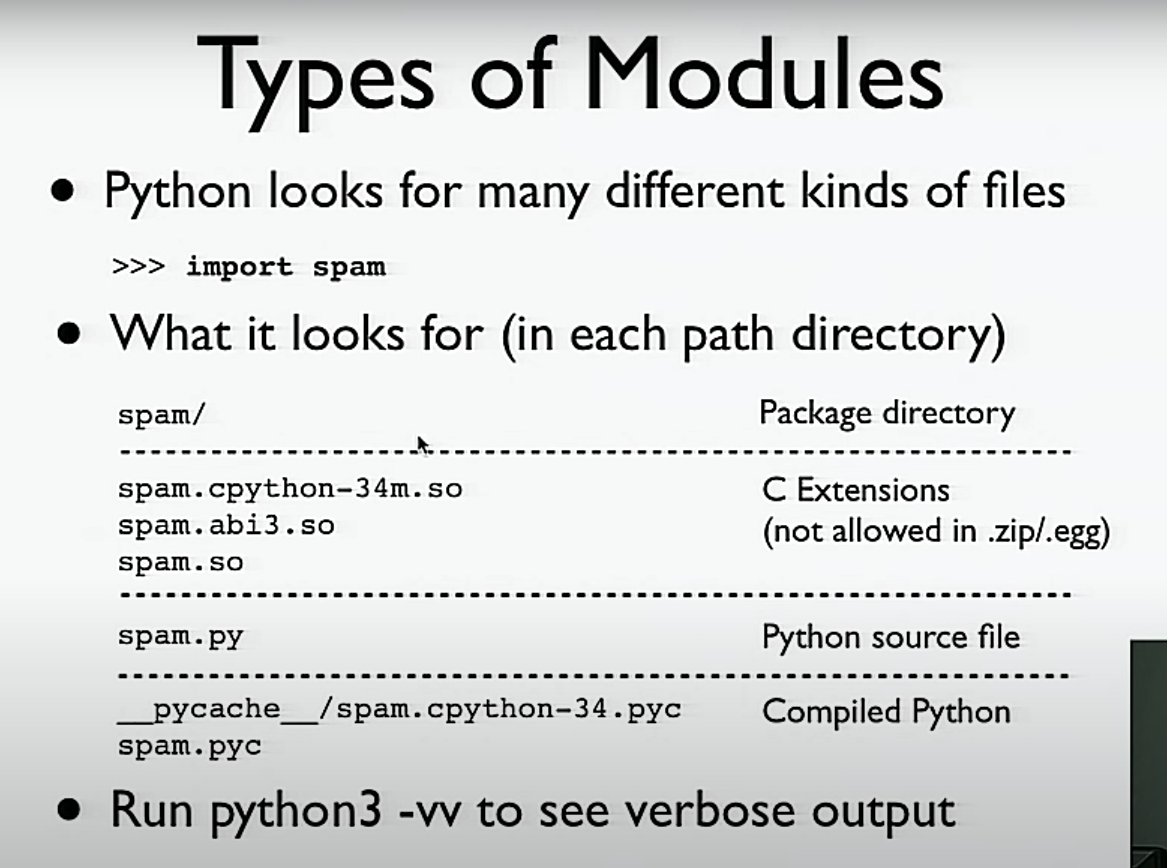
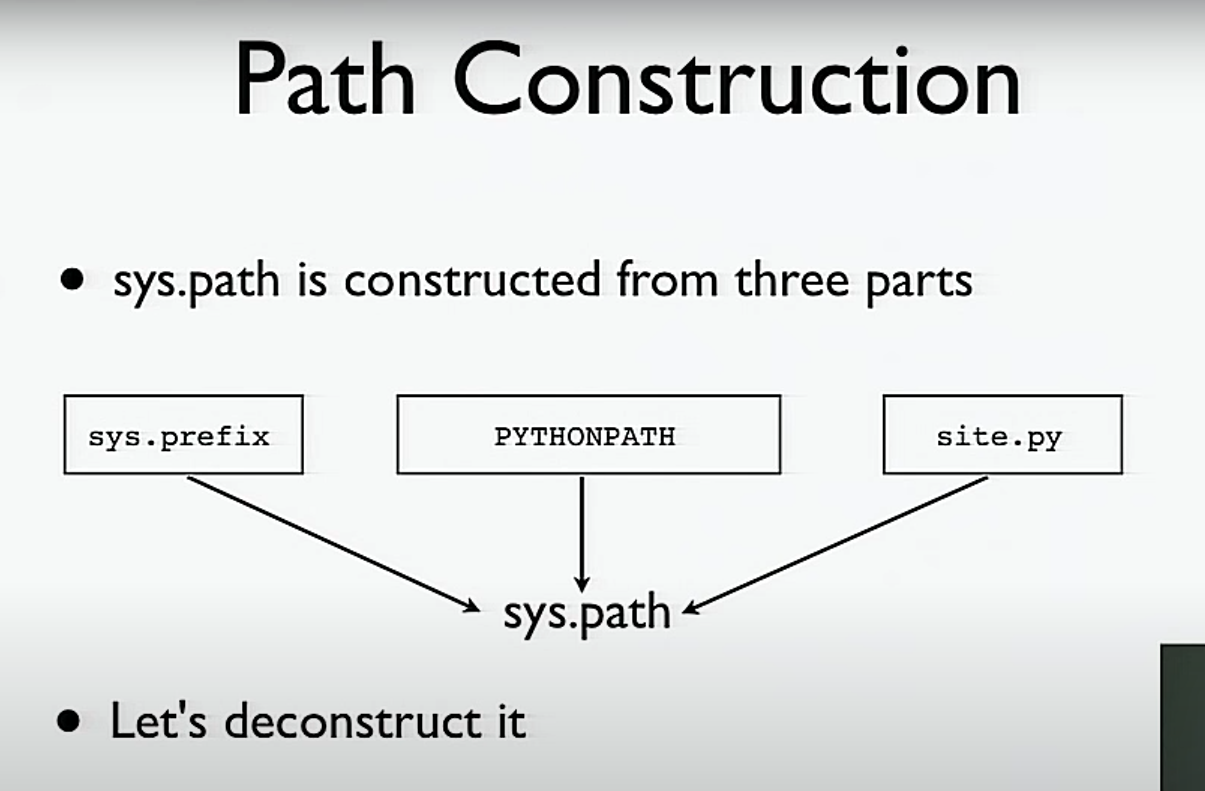
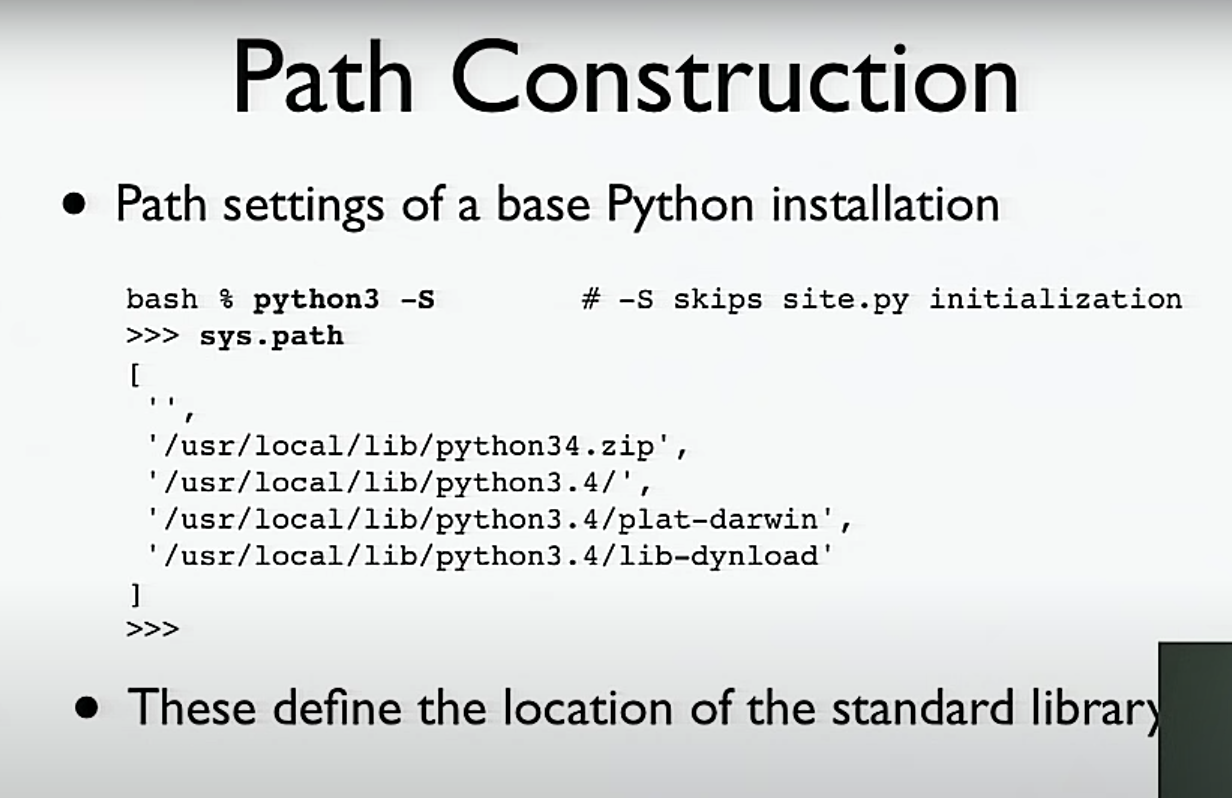
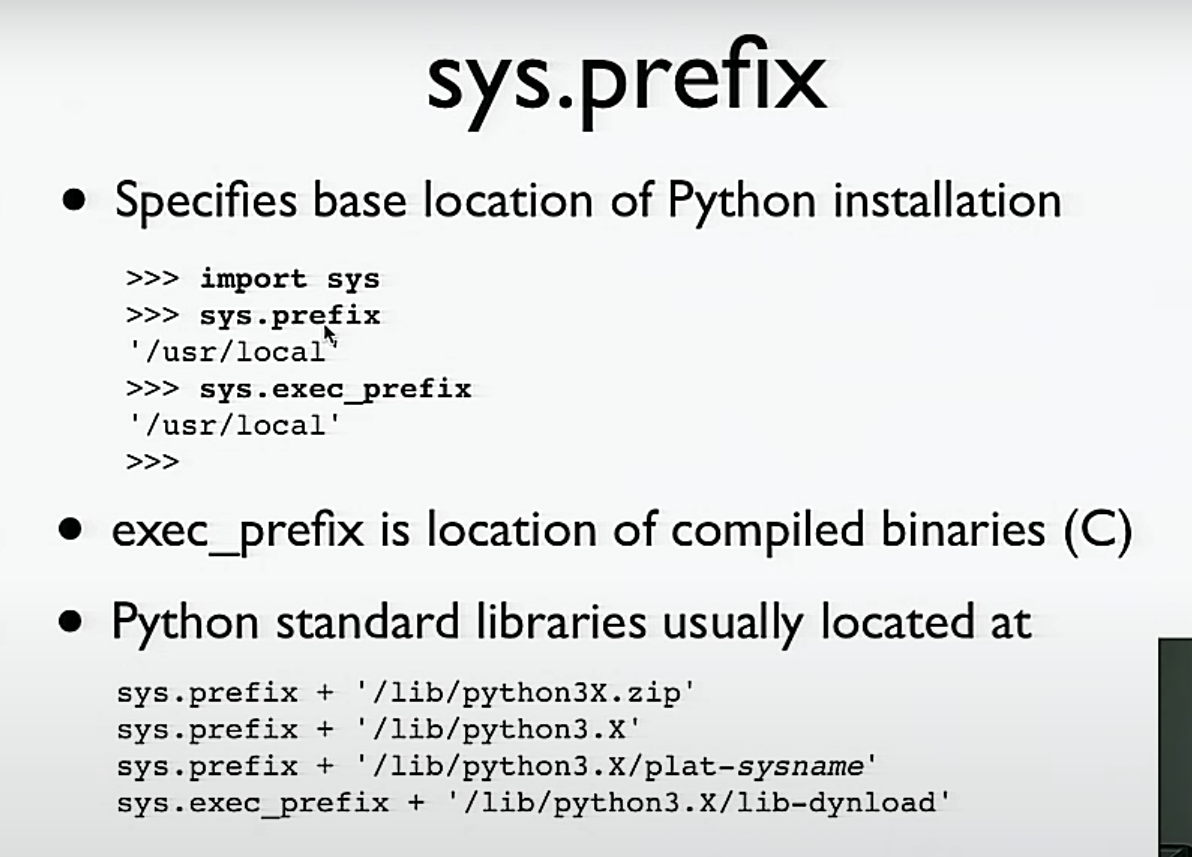
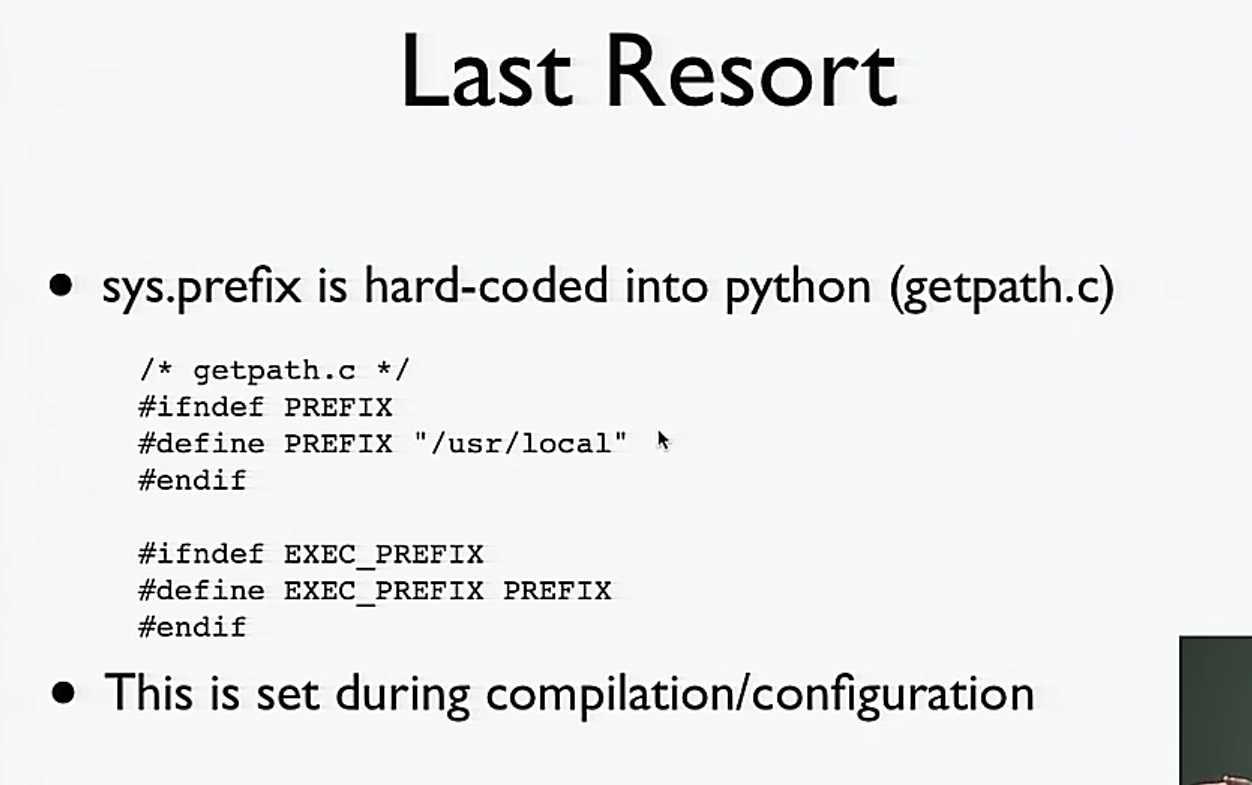
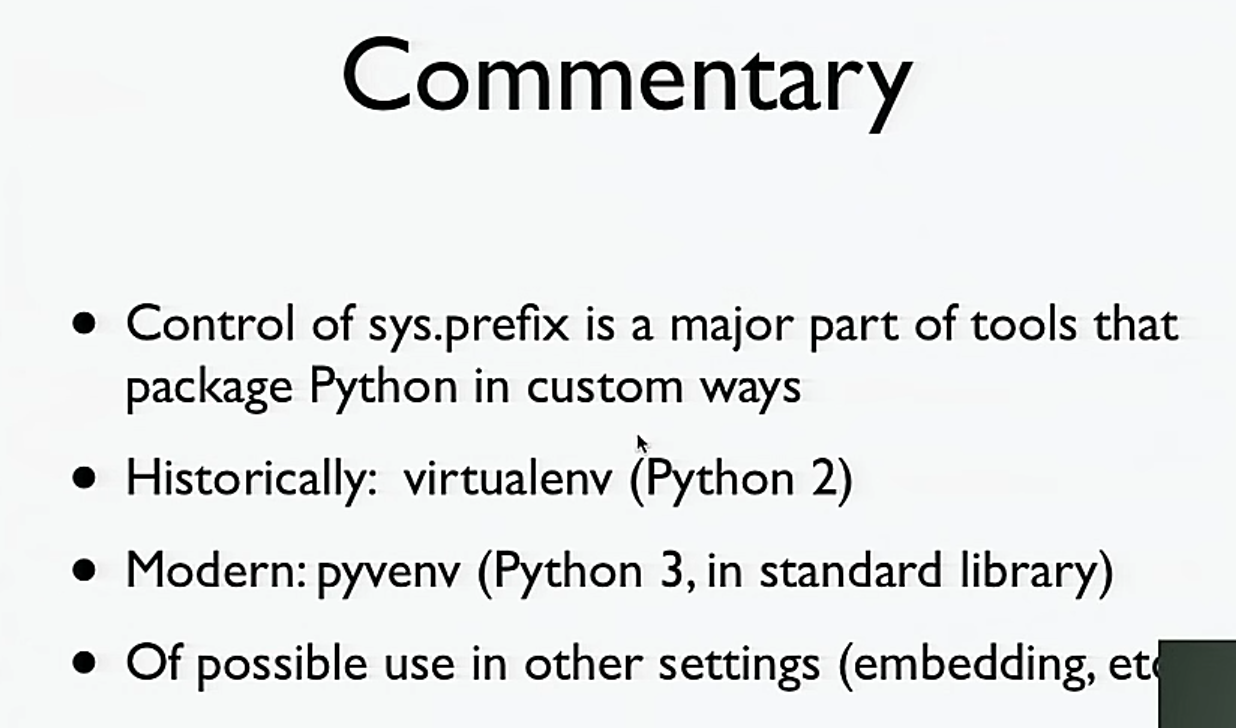
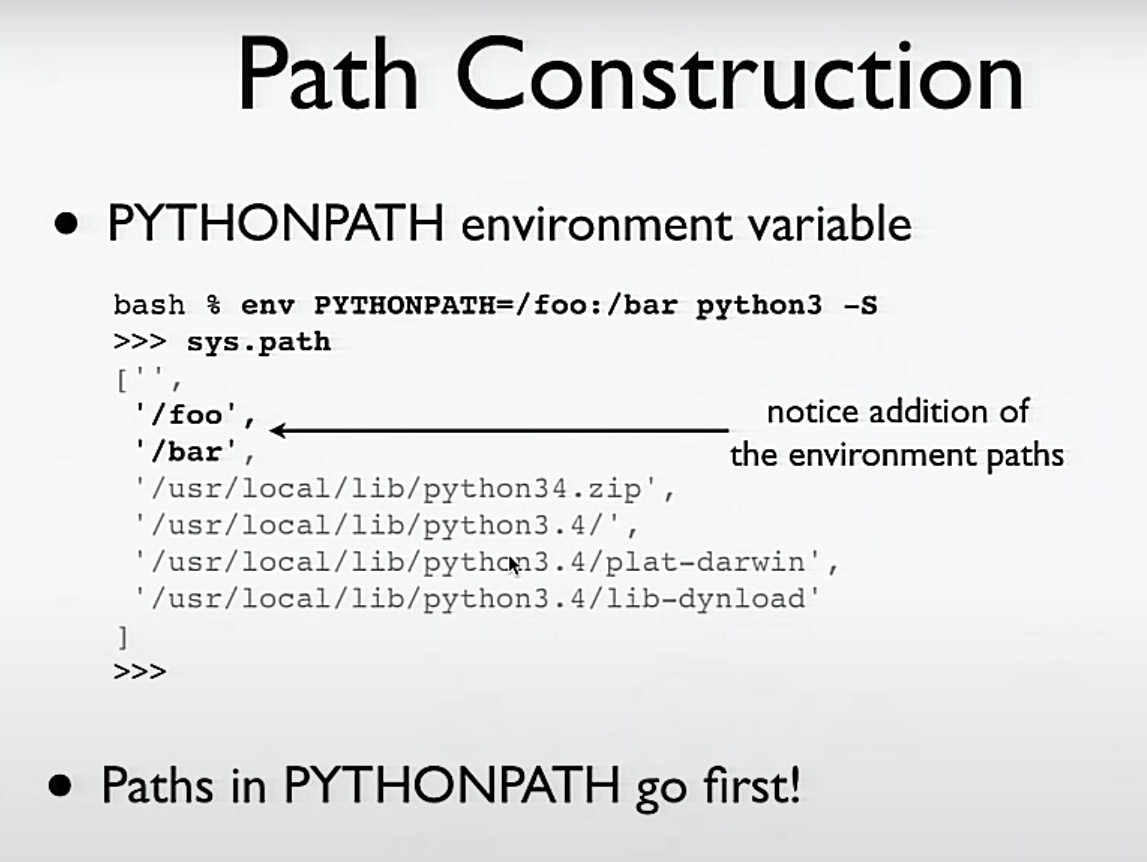
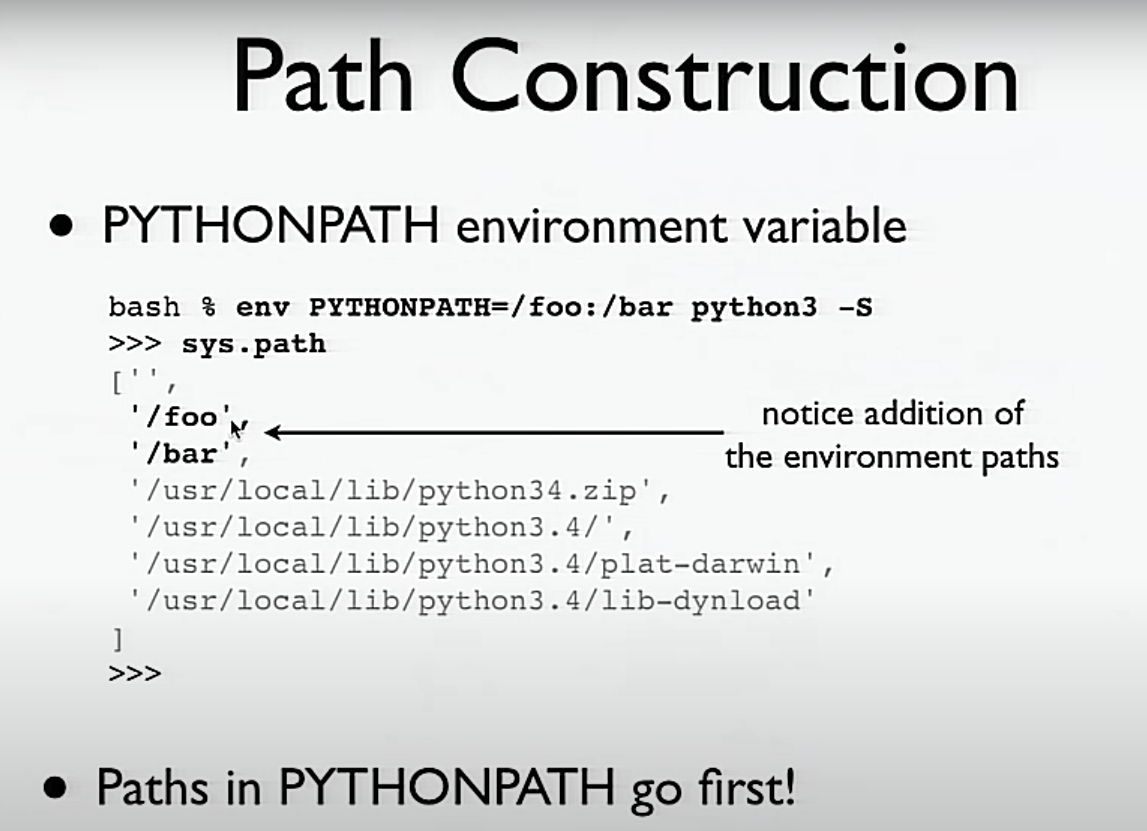
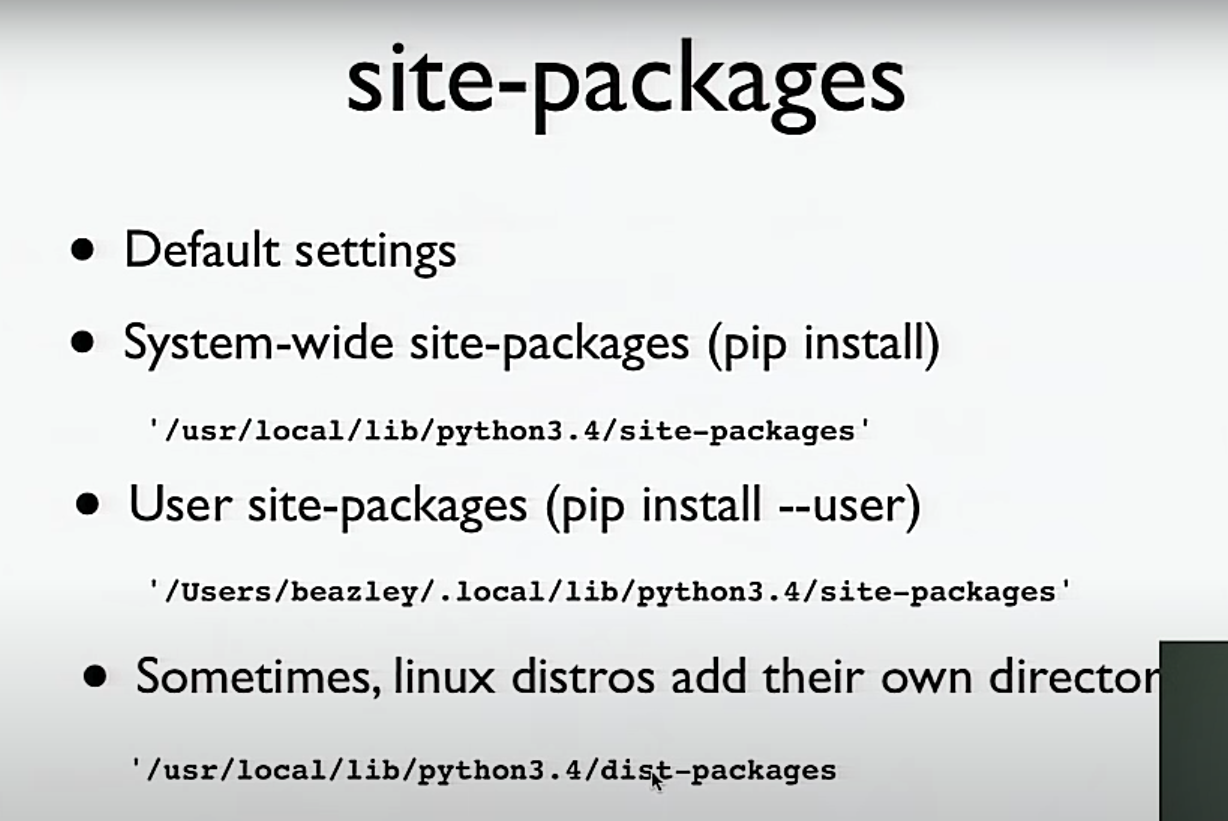
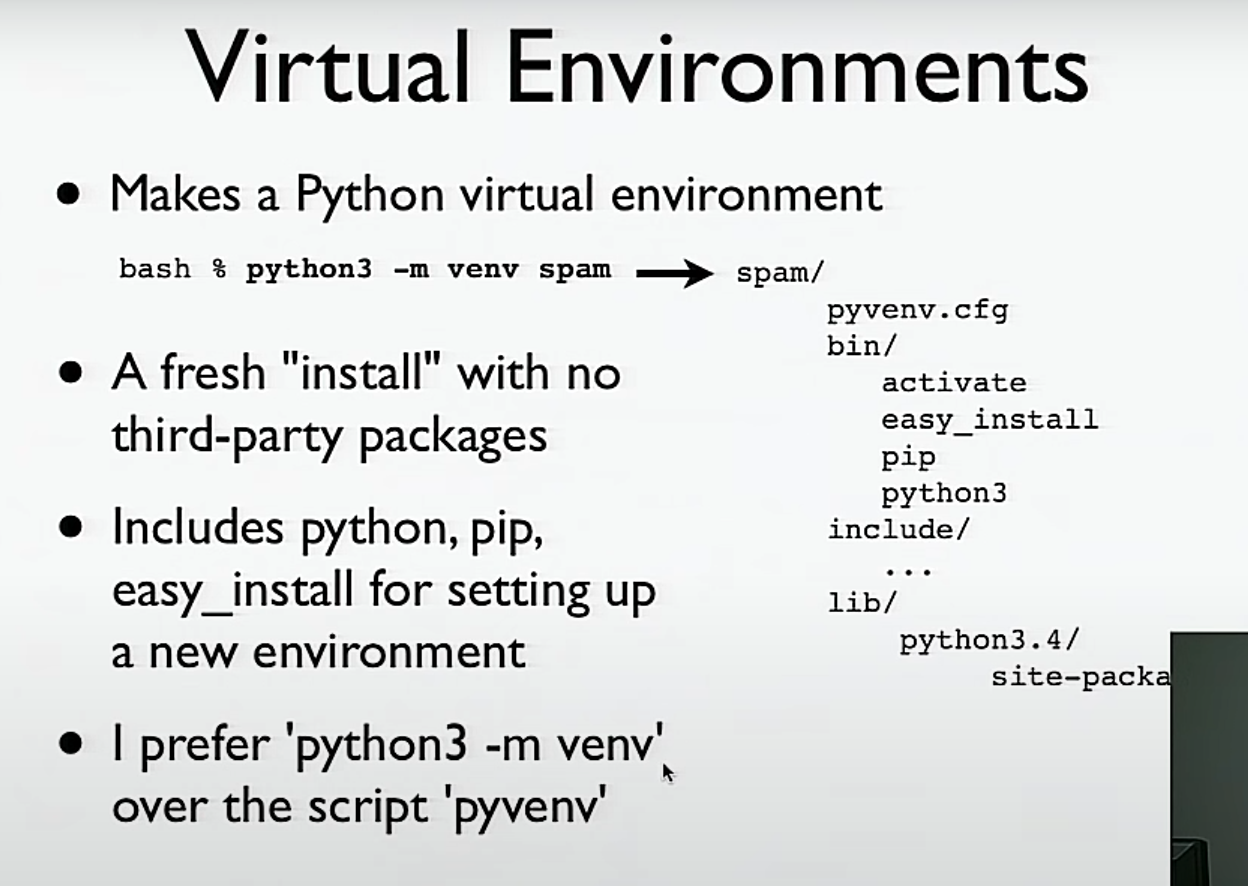
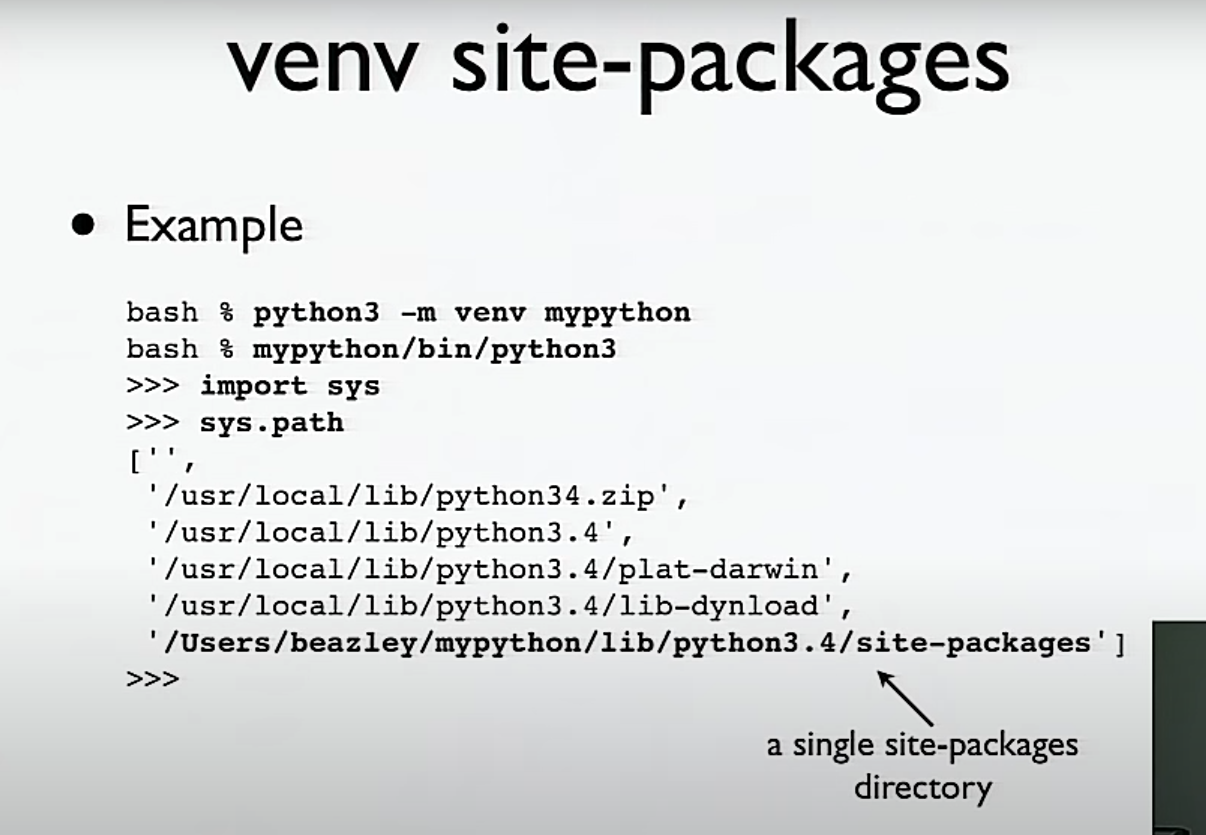
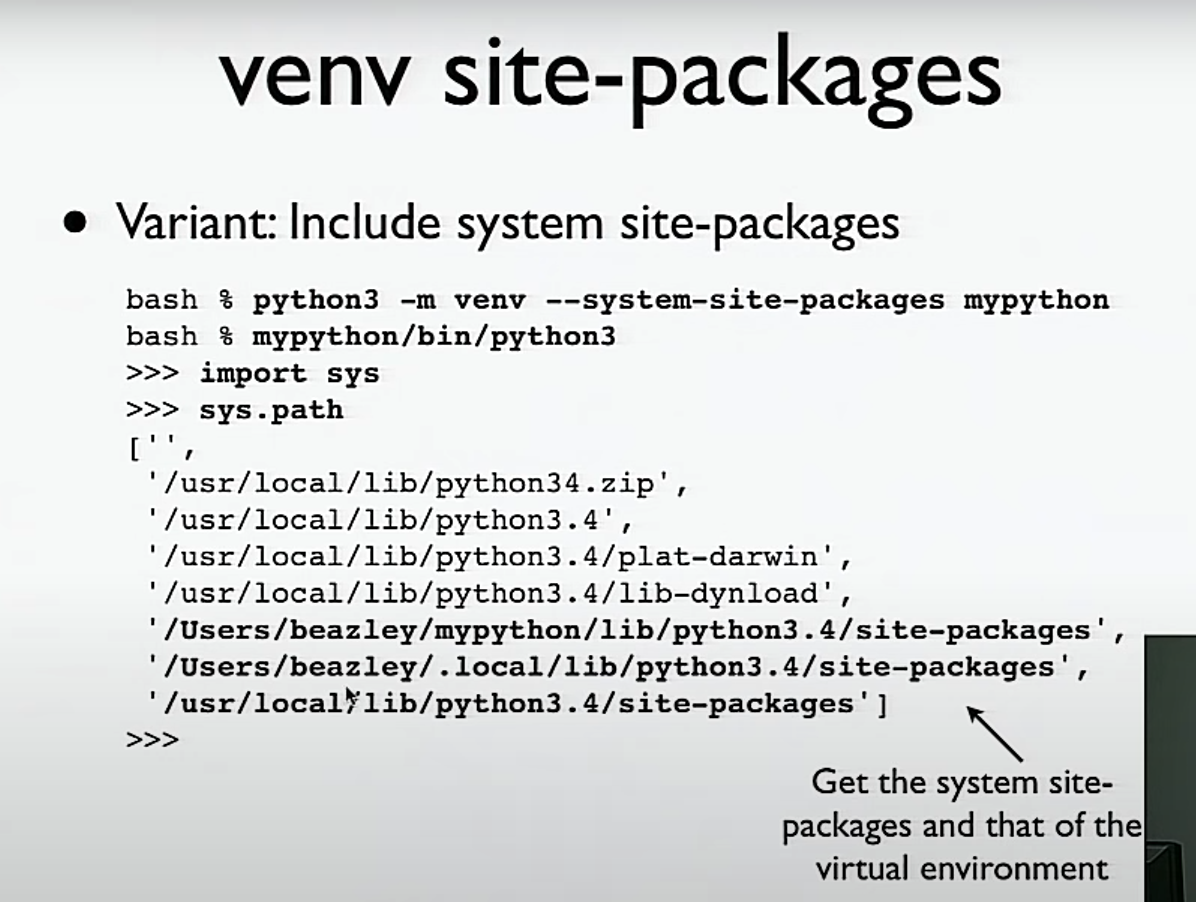
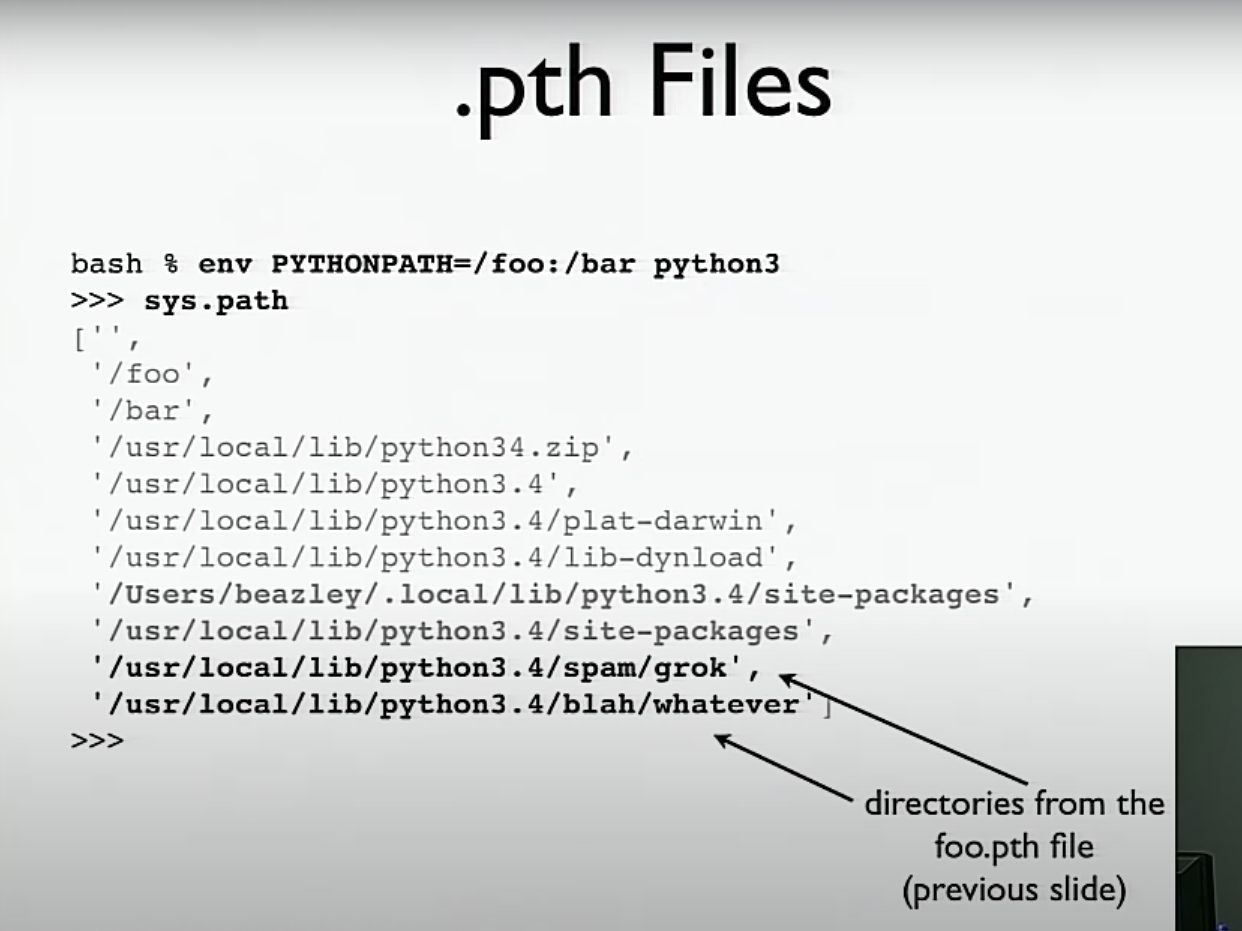
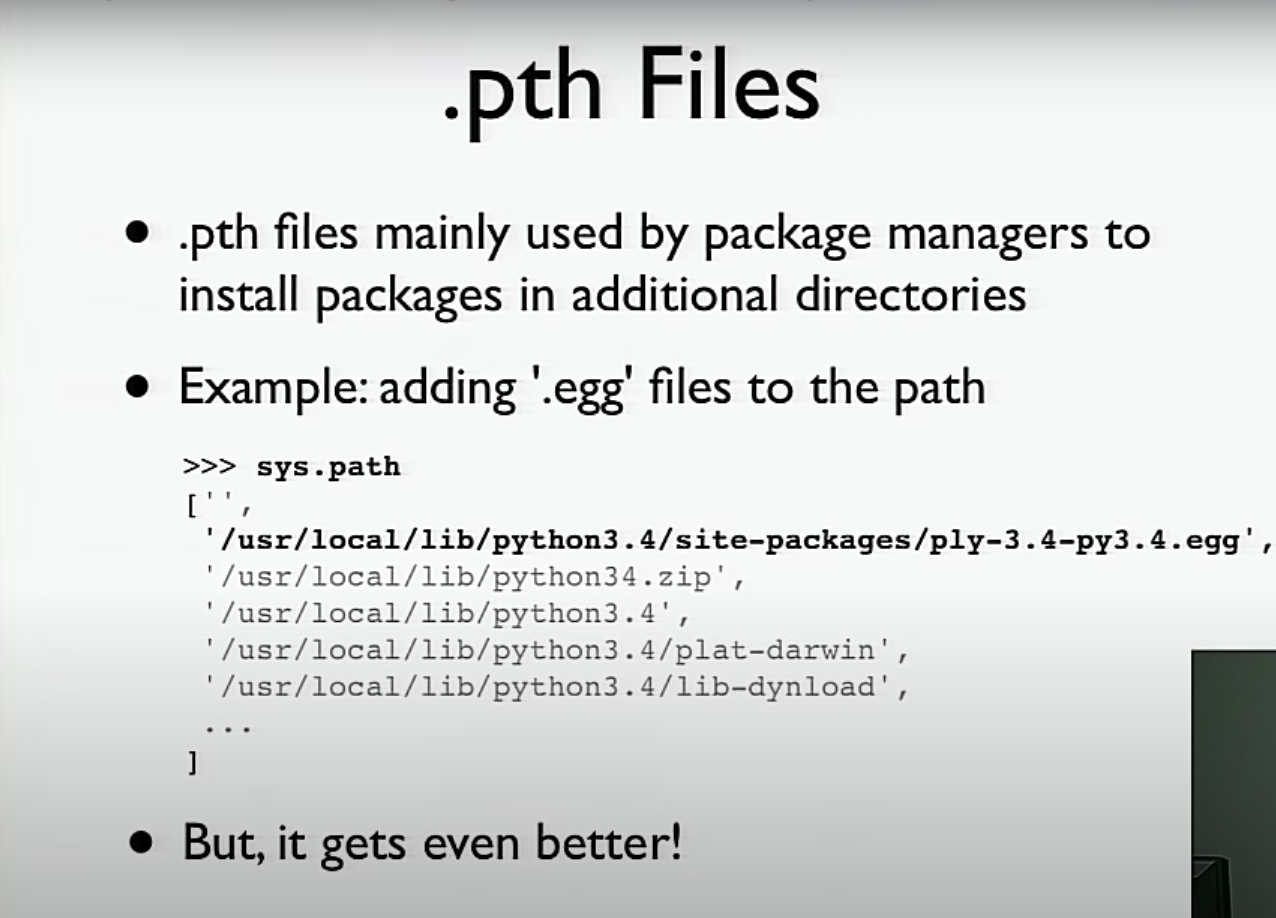
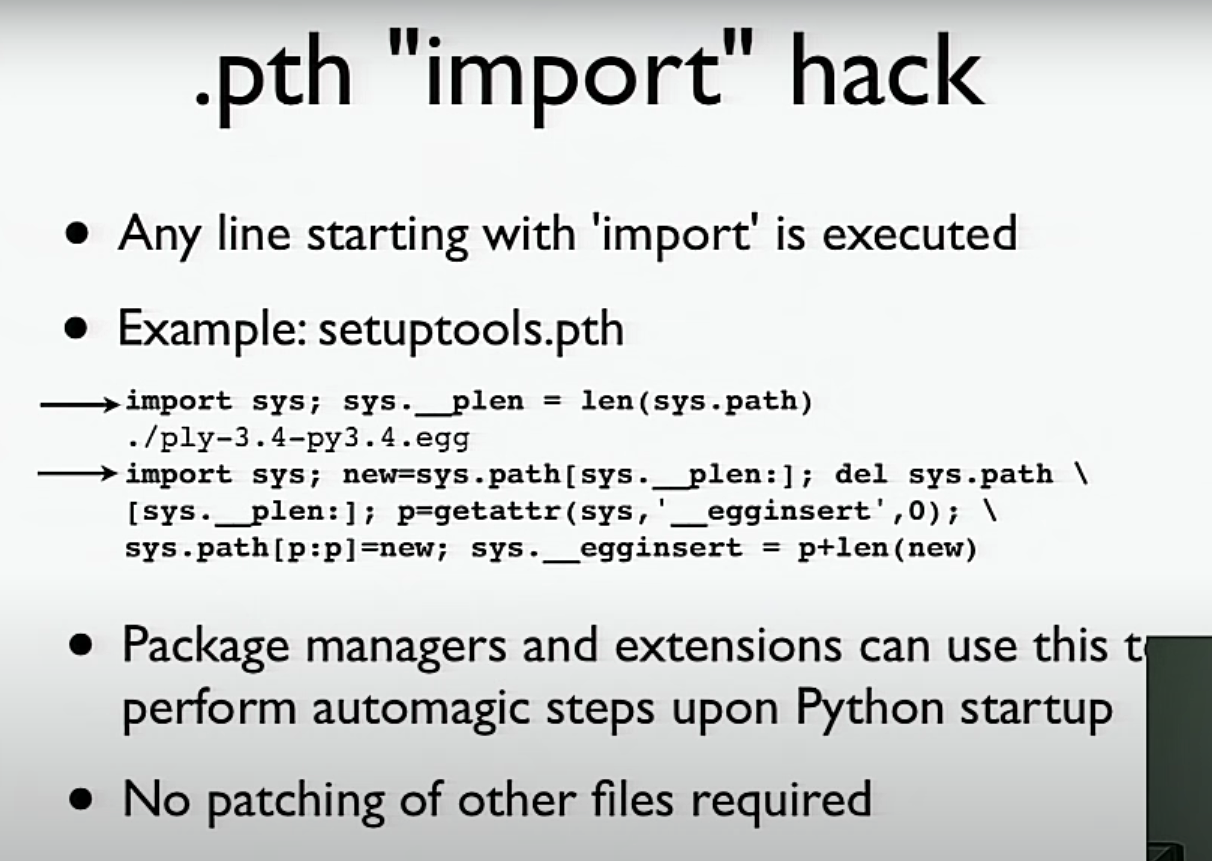
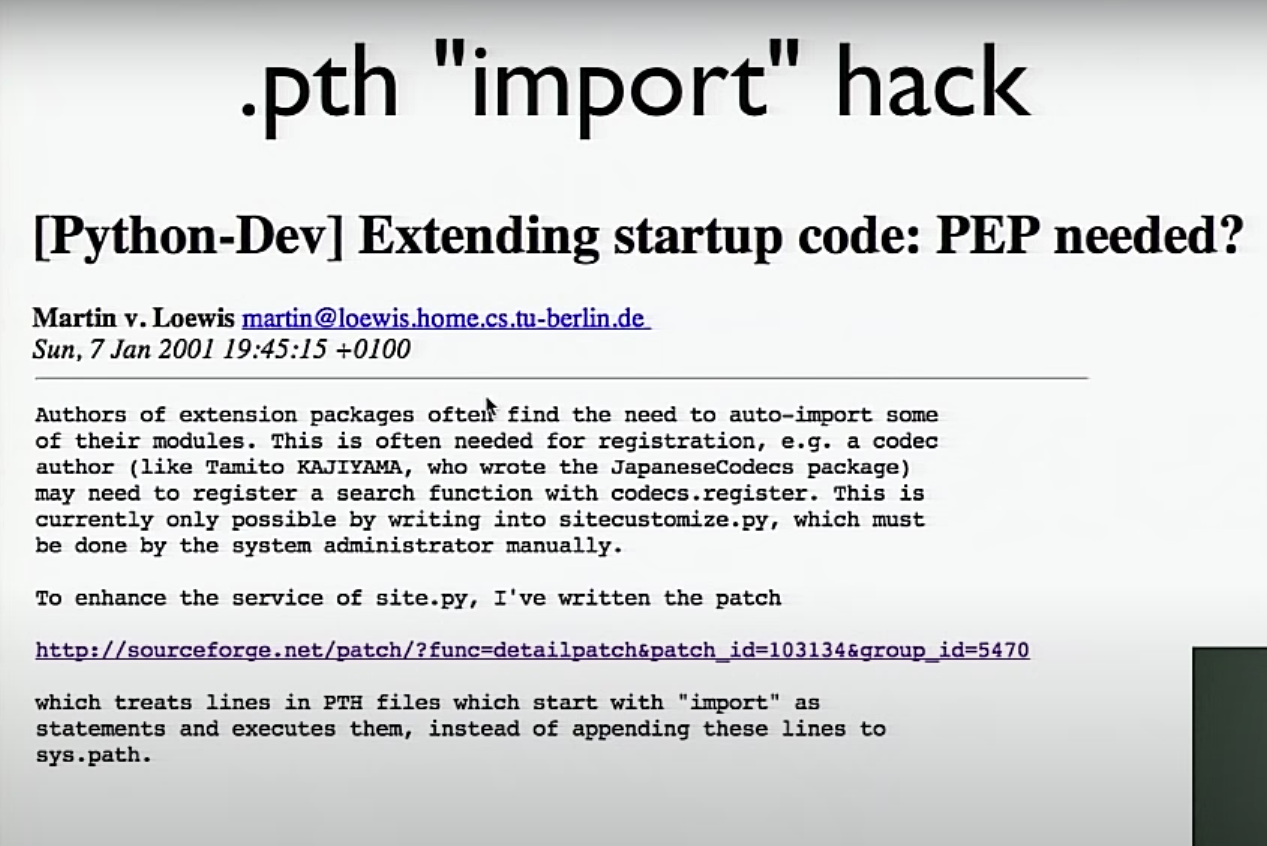
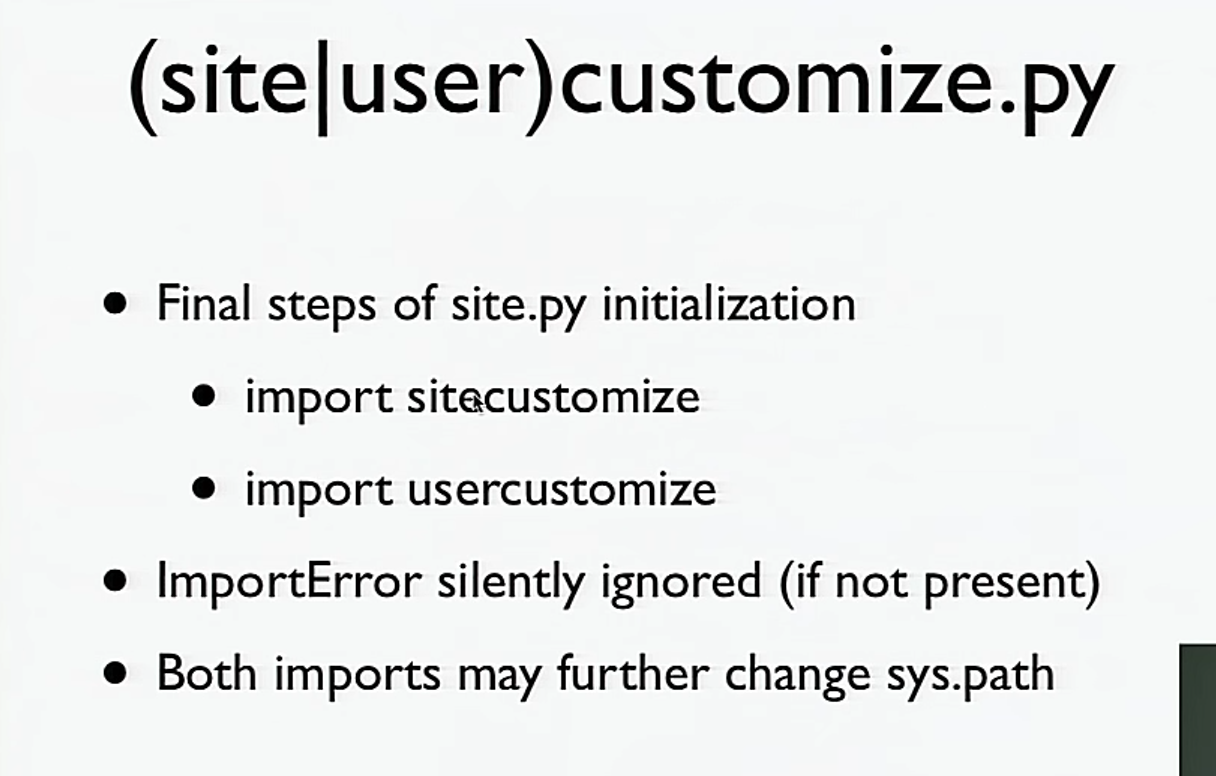
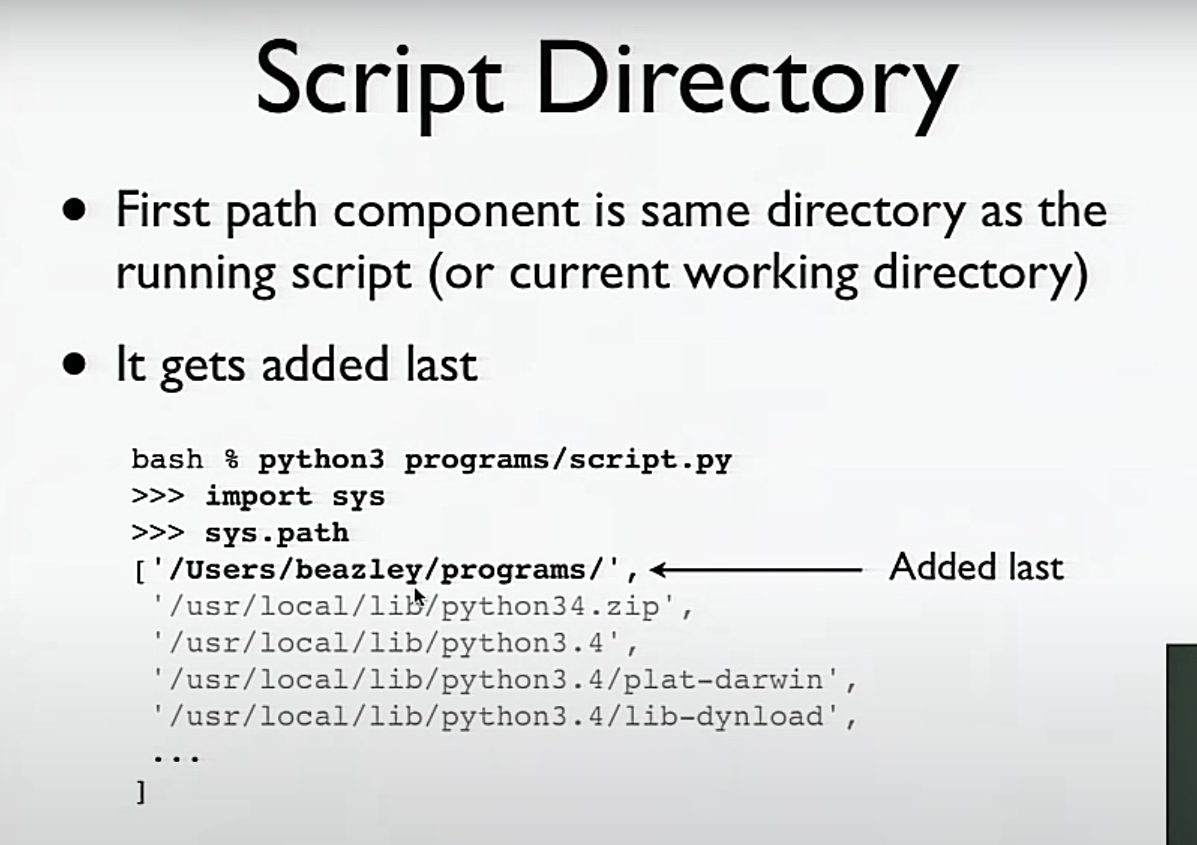
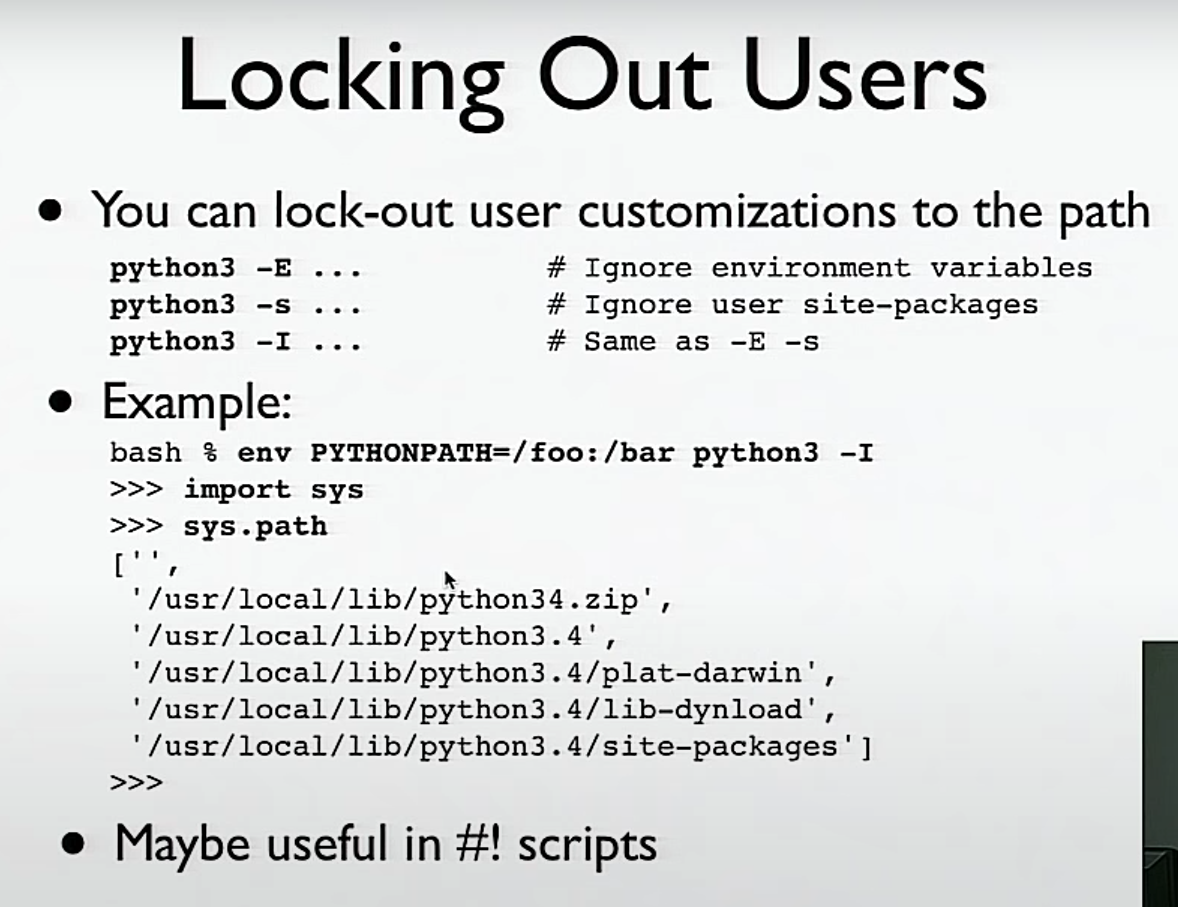
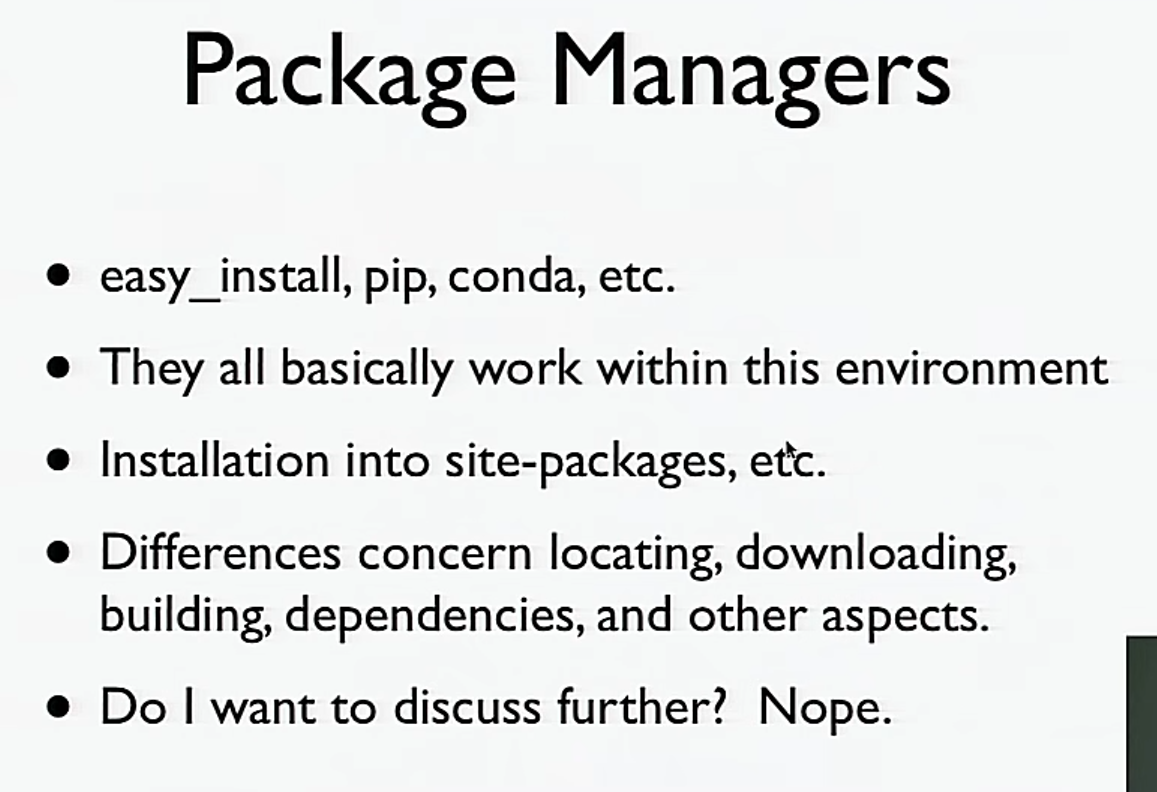
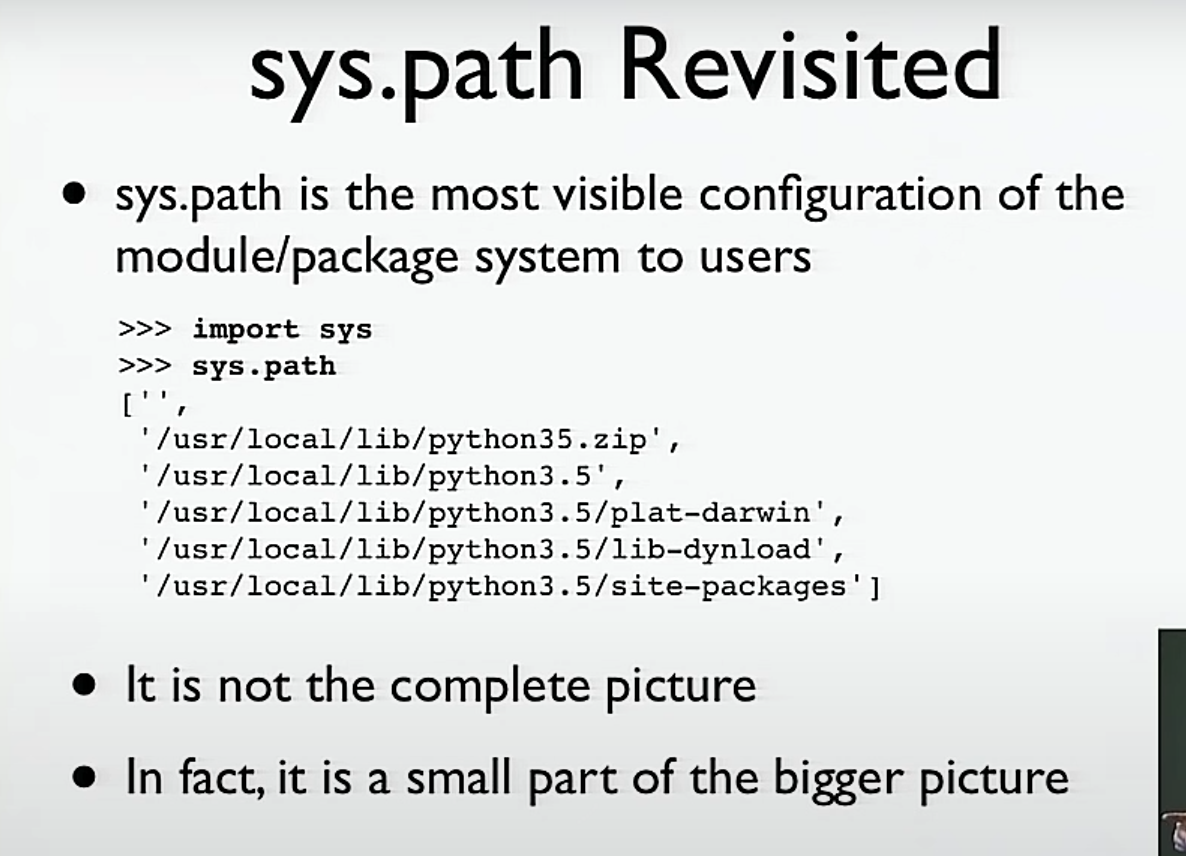
Part IV : sys.path
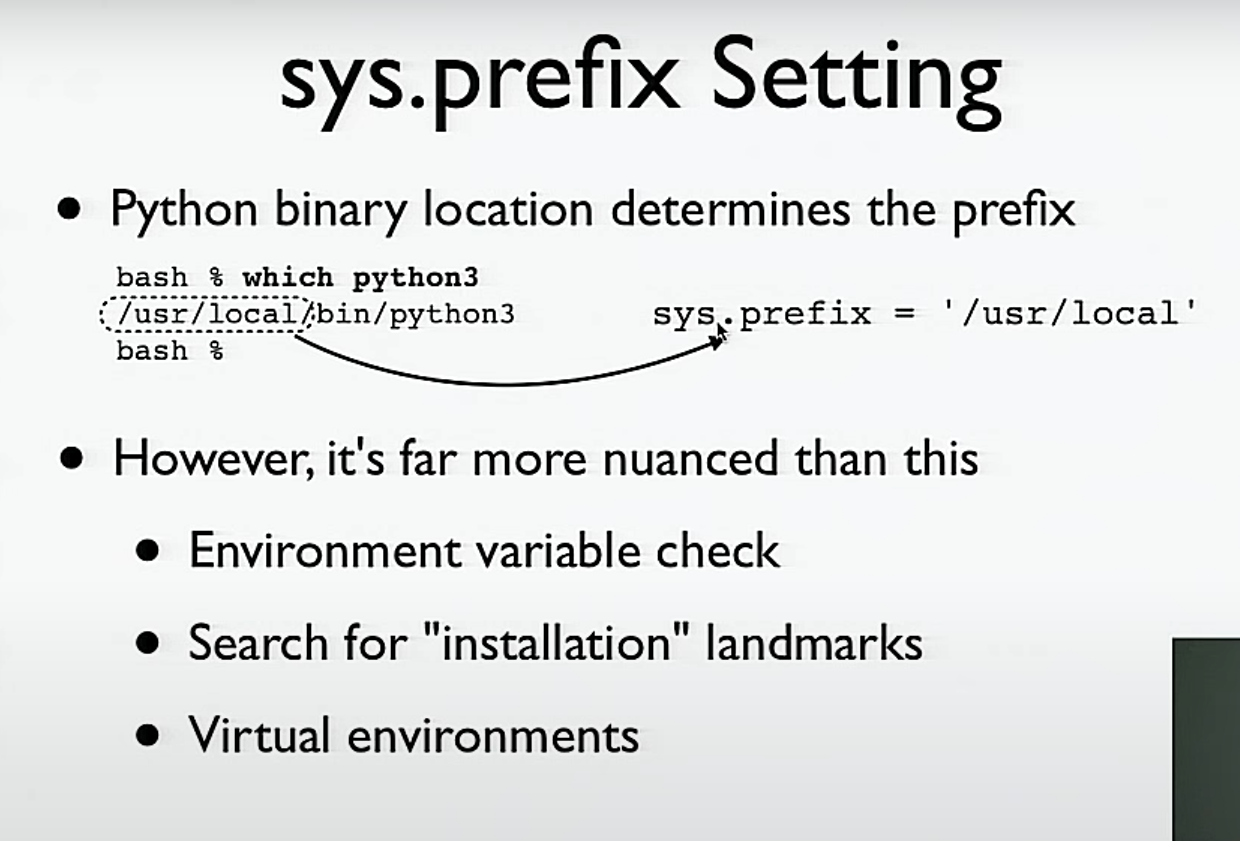
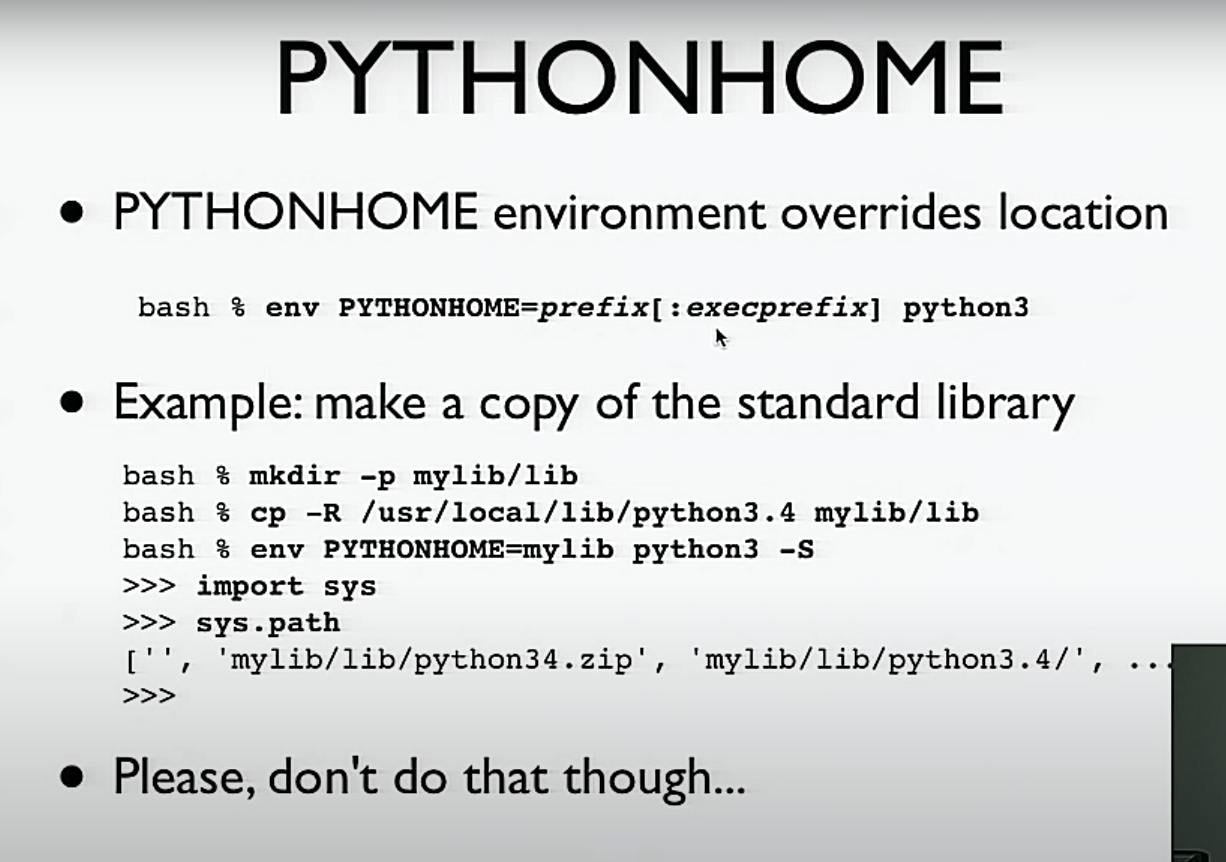
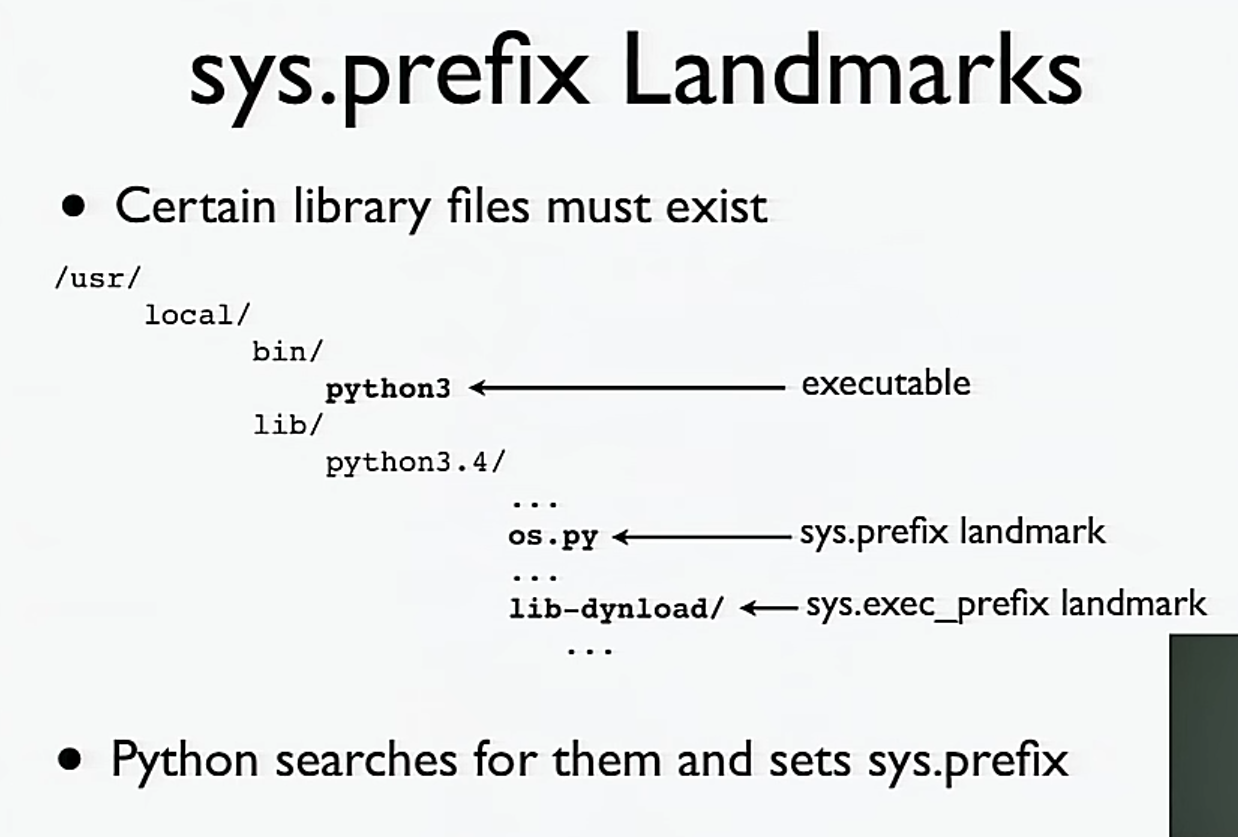
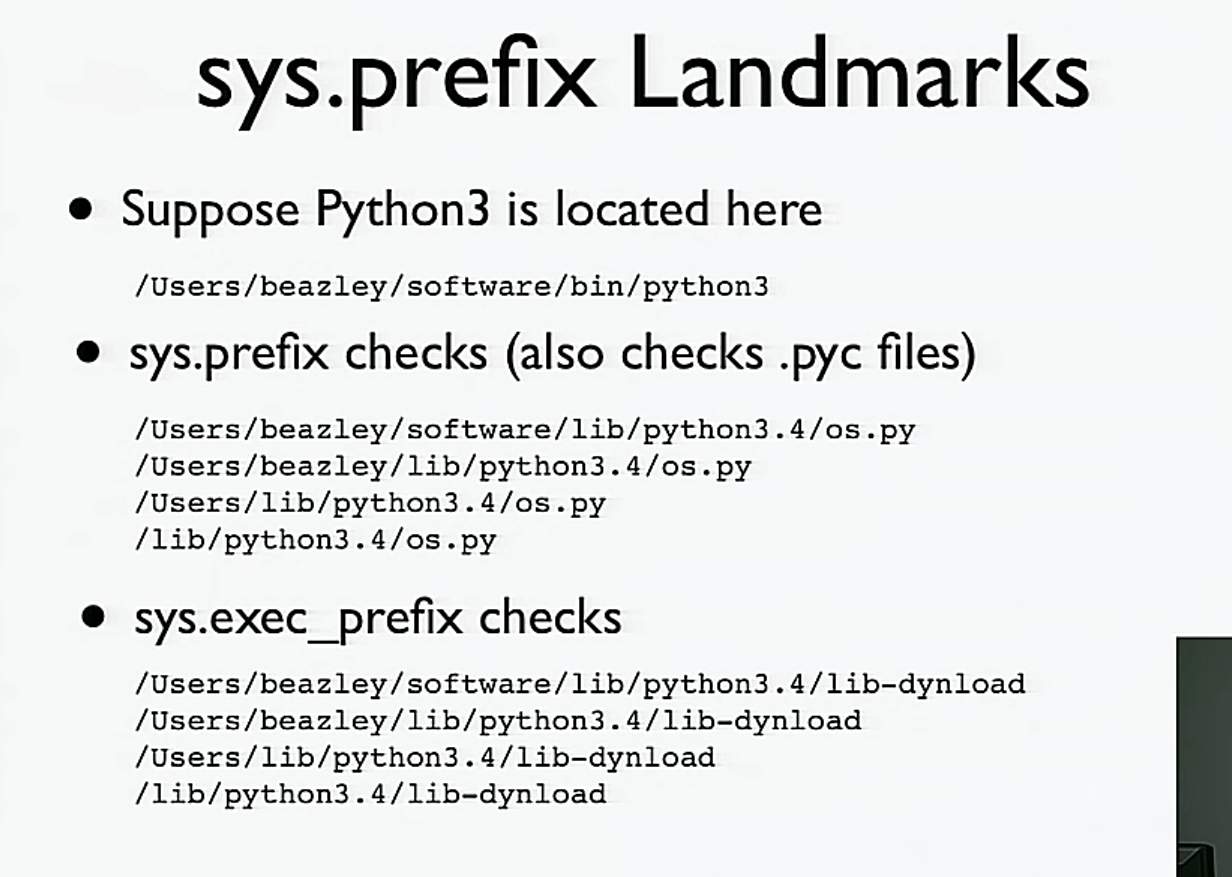
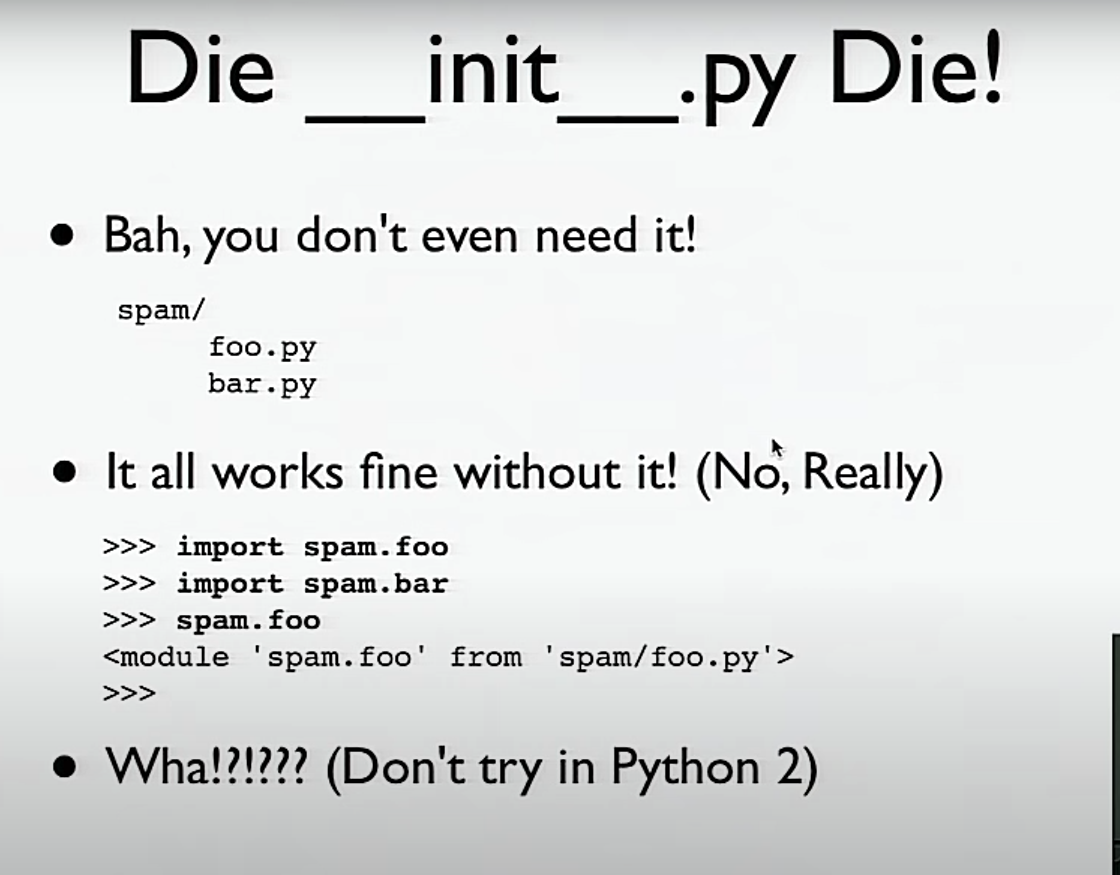
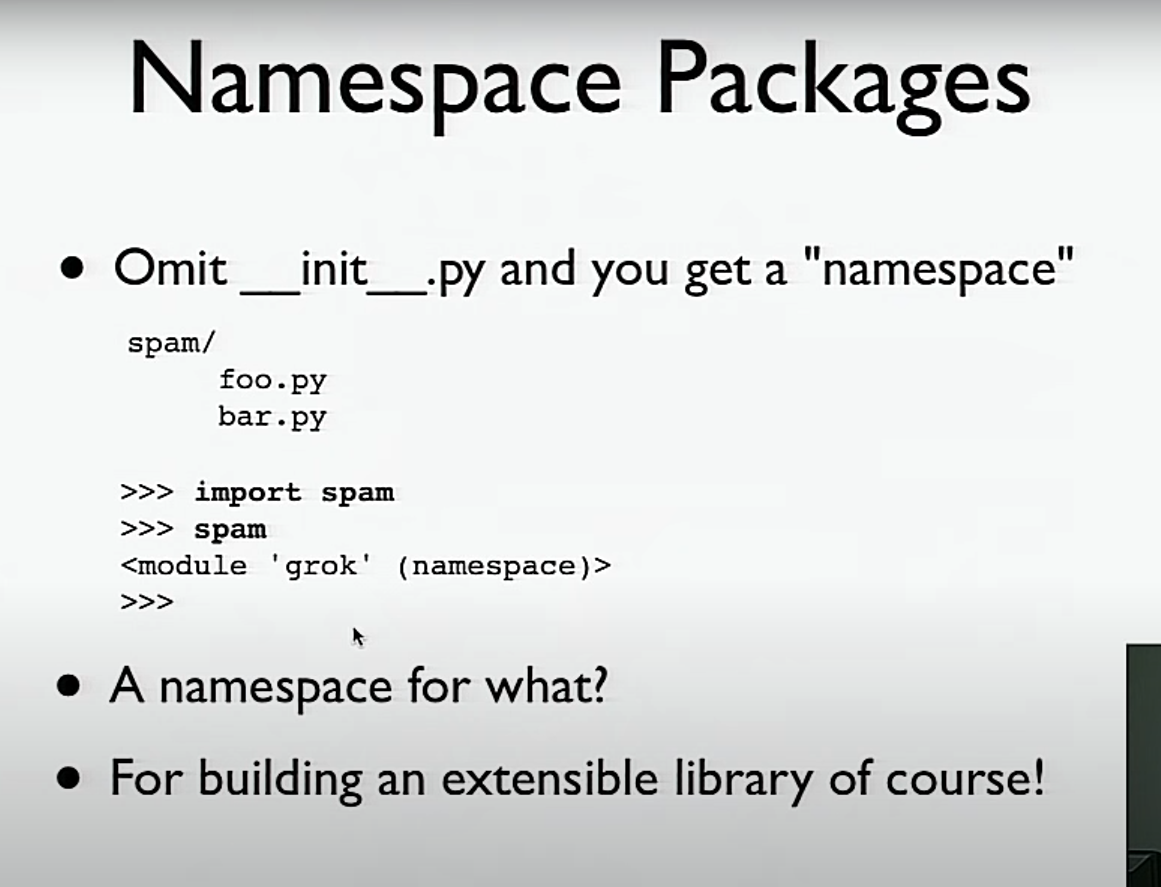
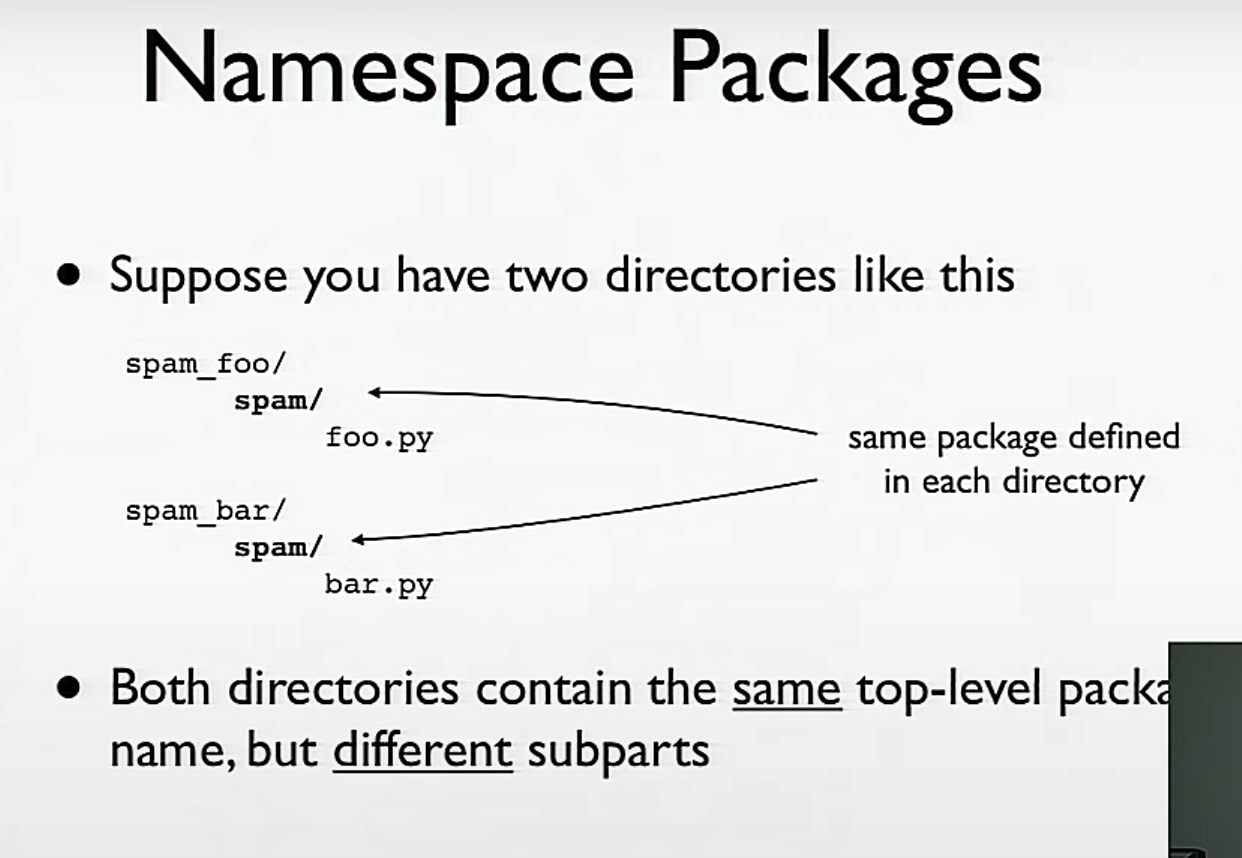
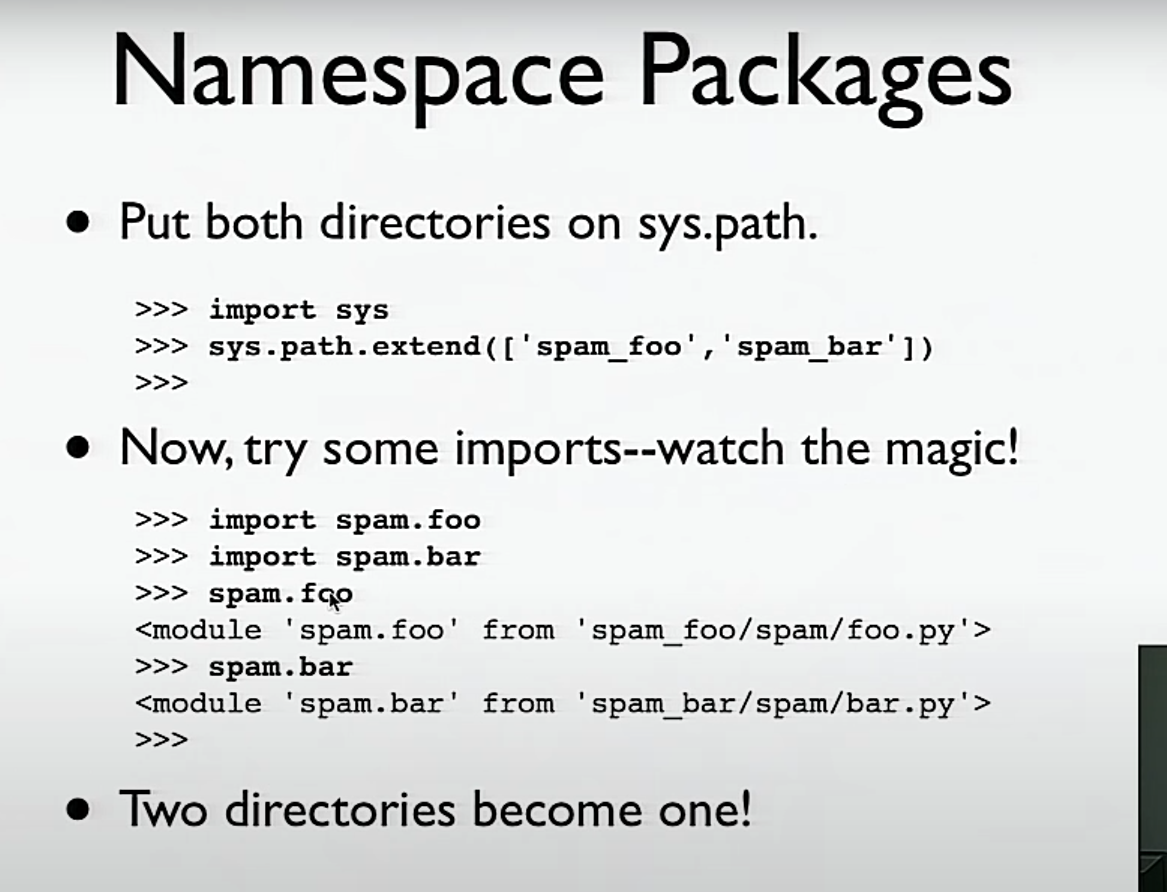
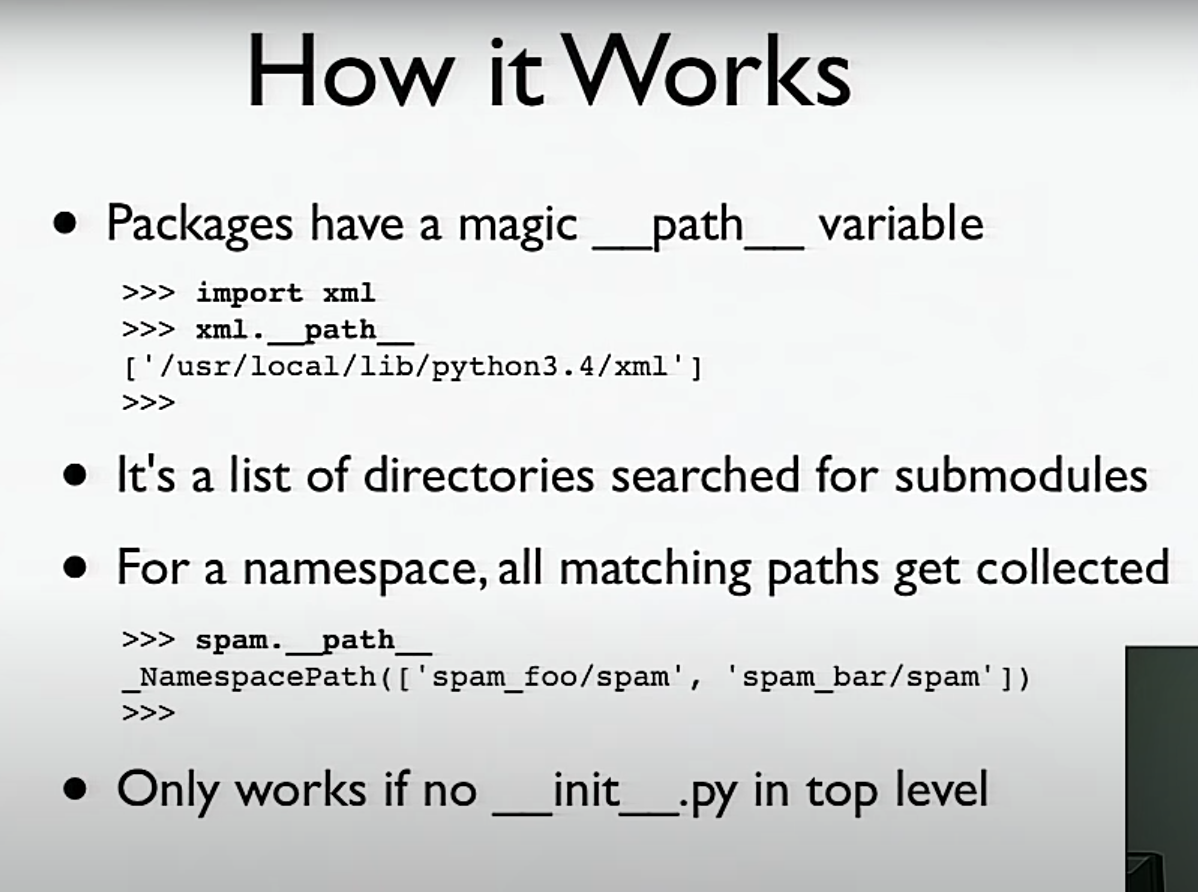
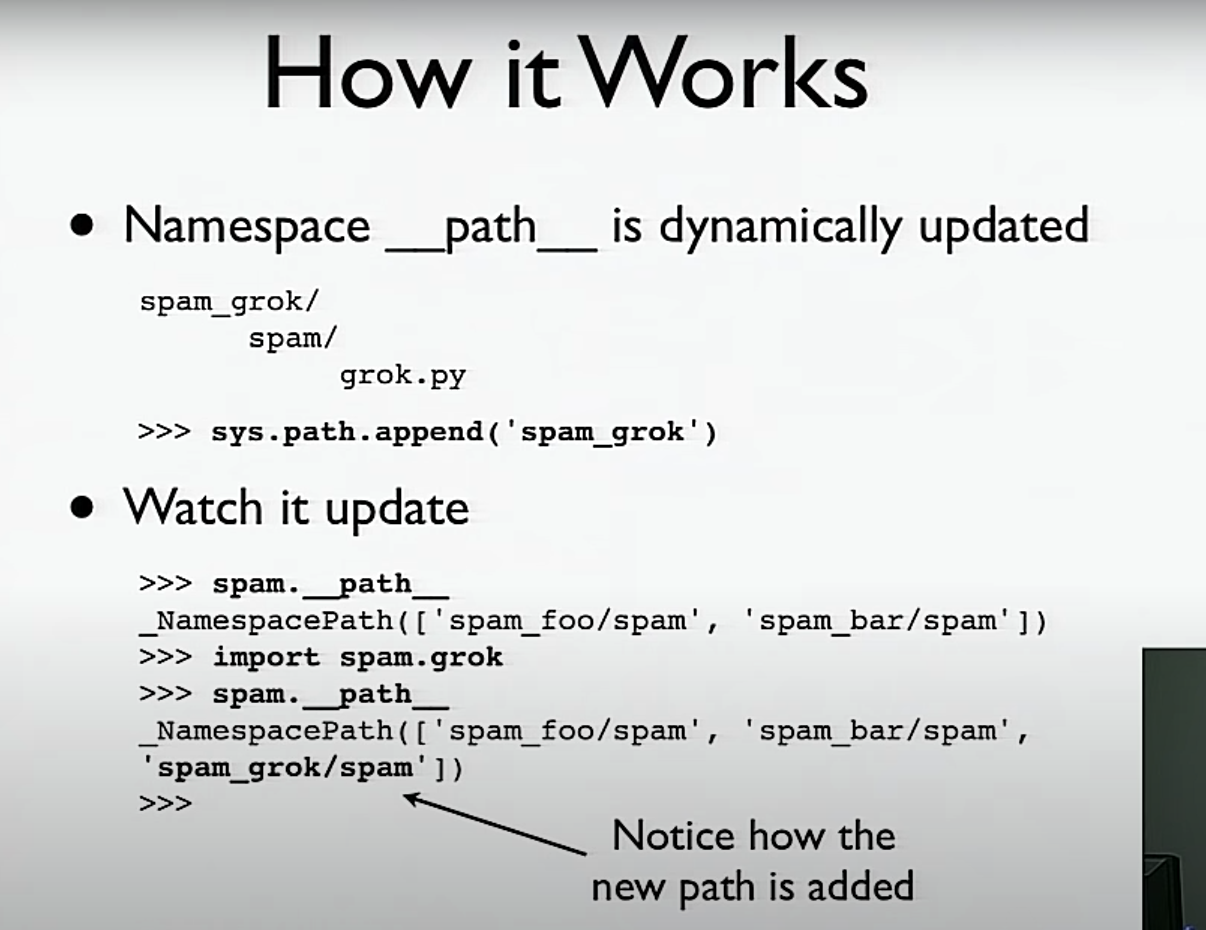
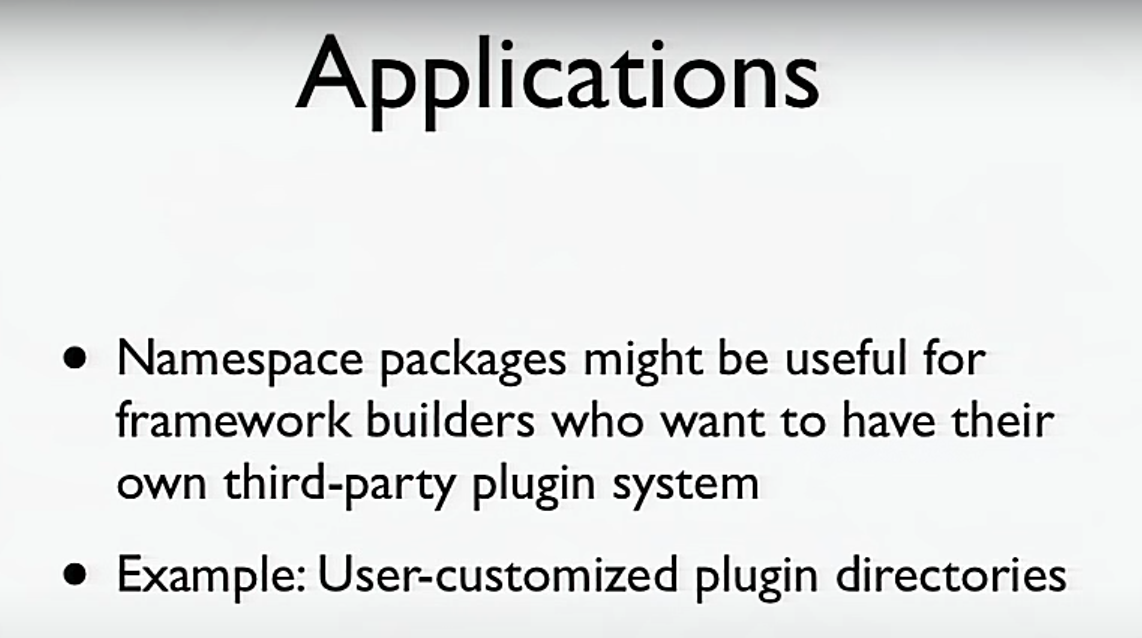
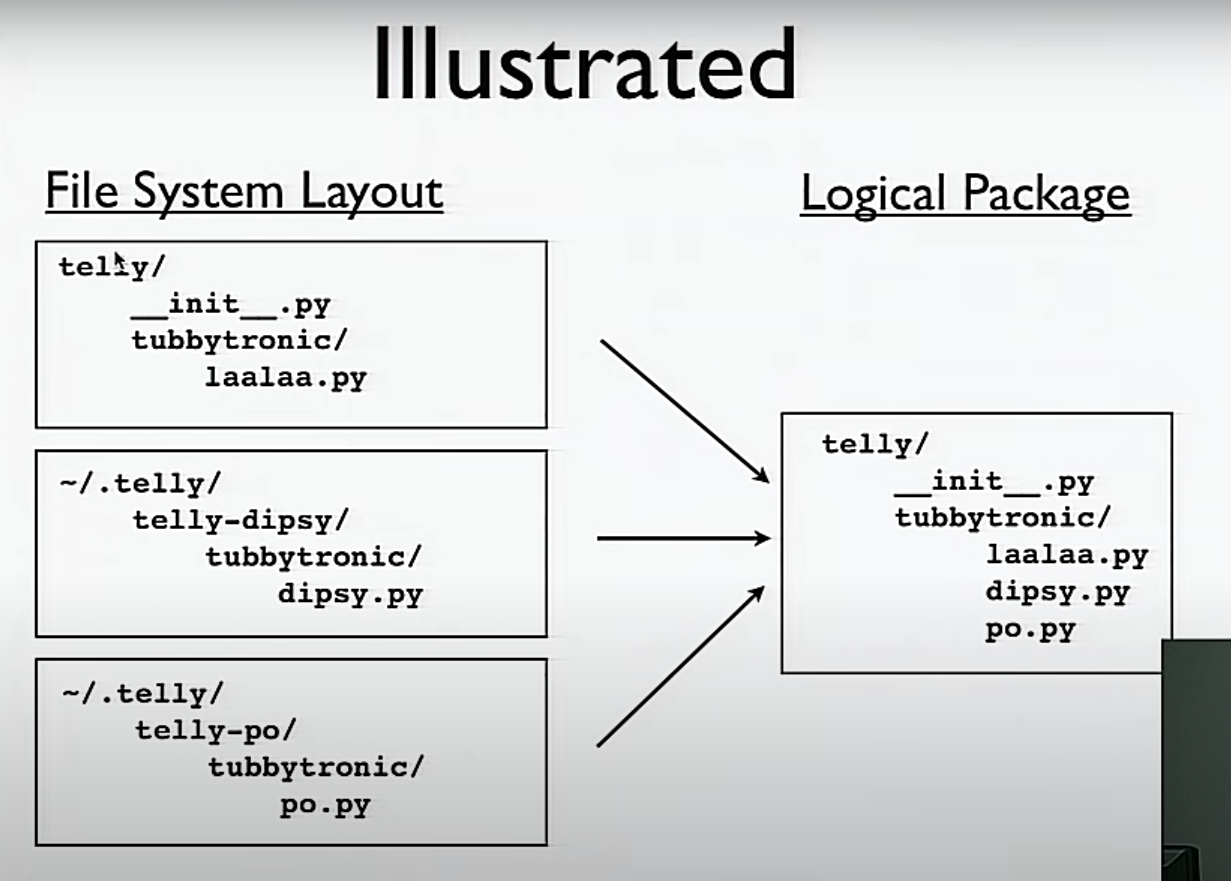
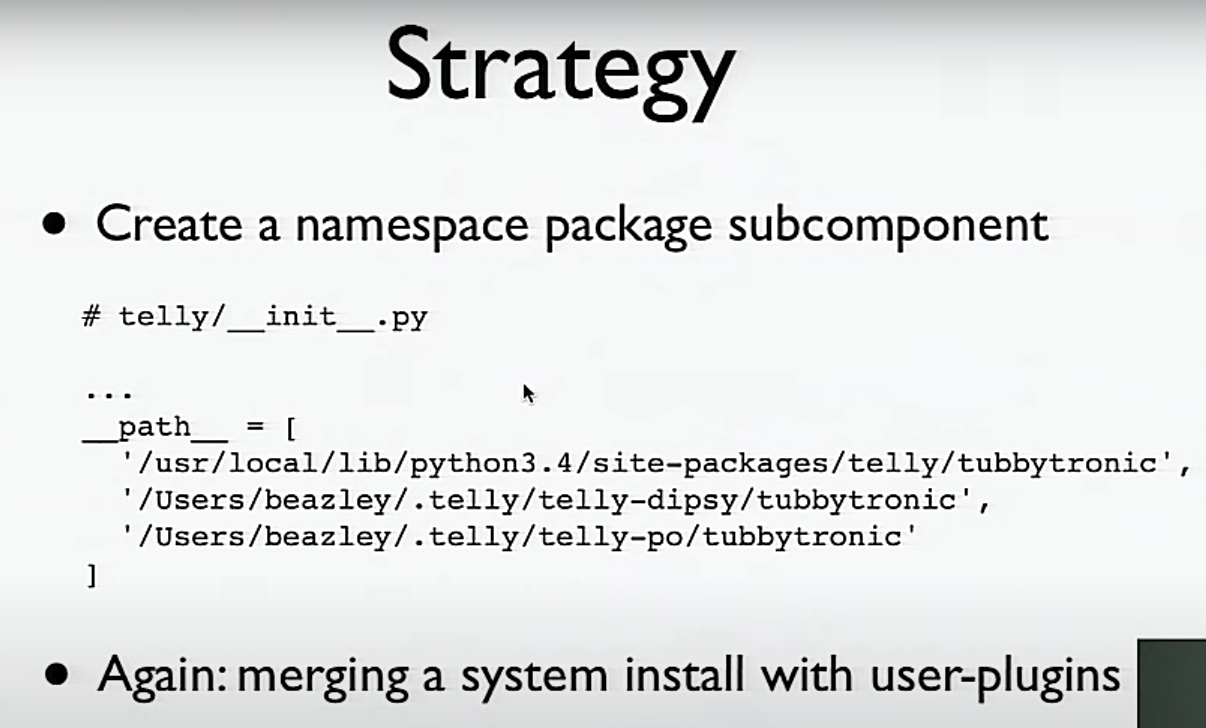
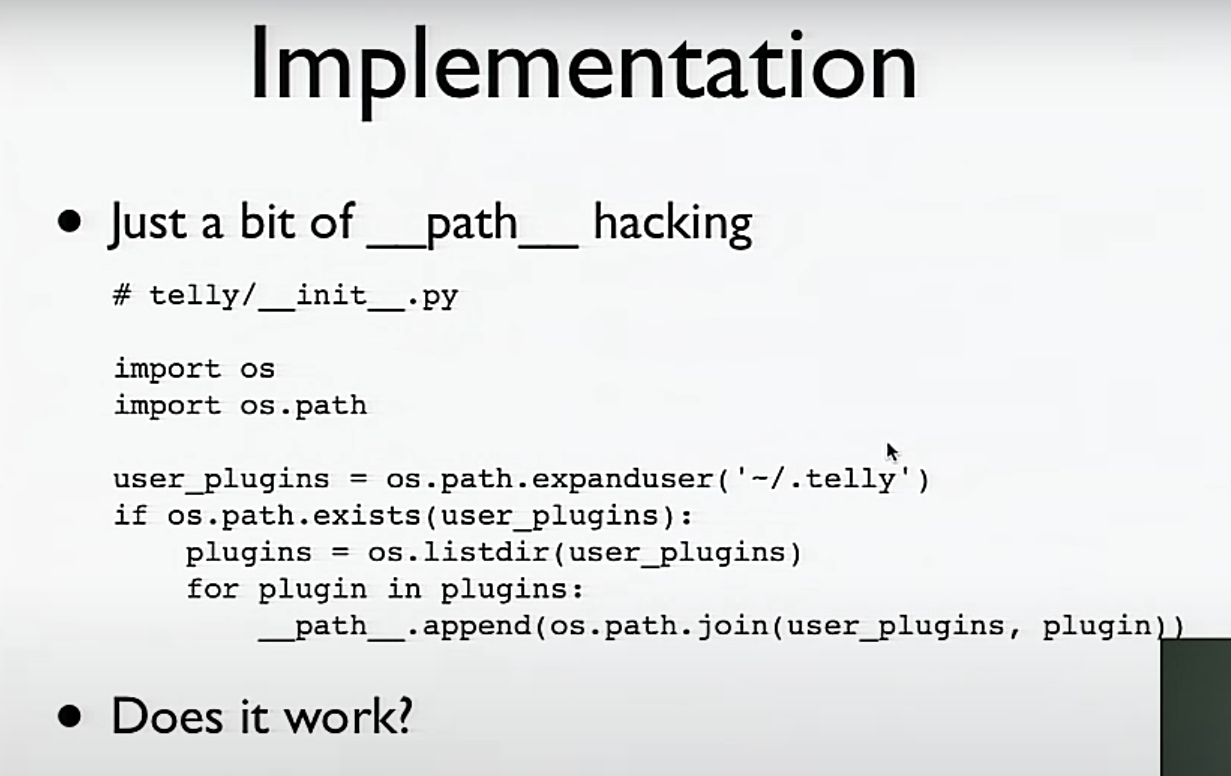
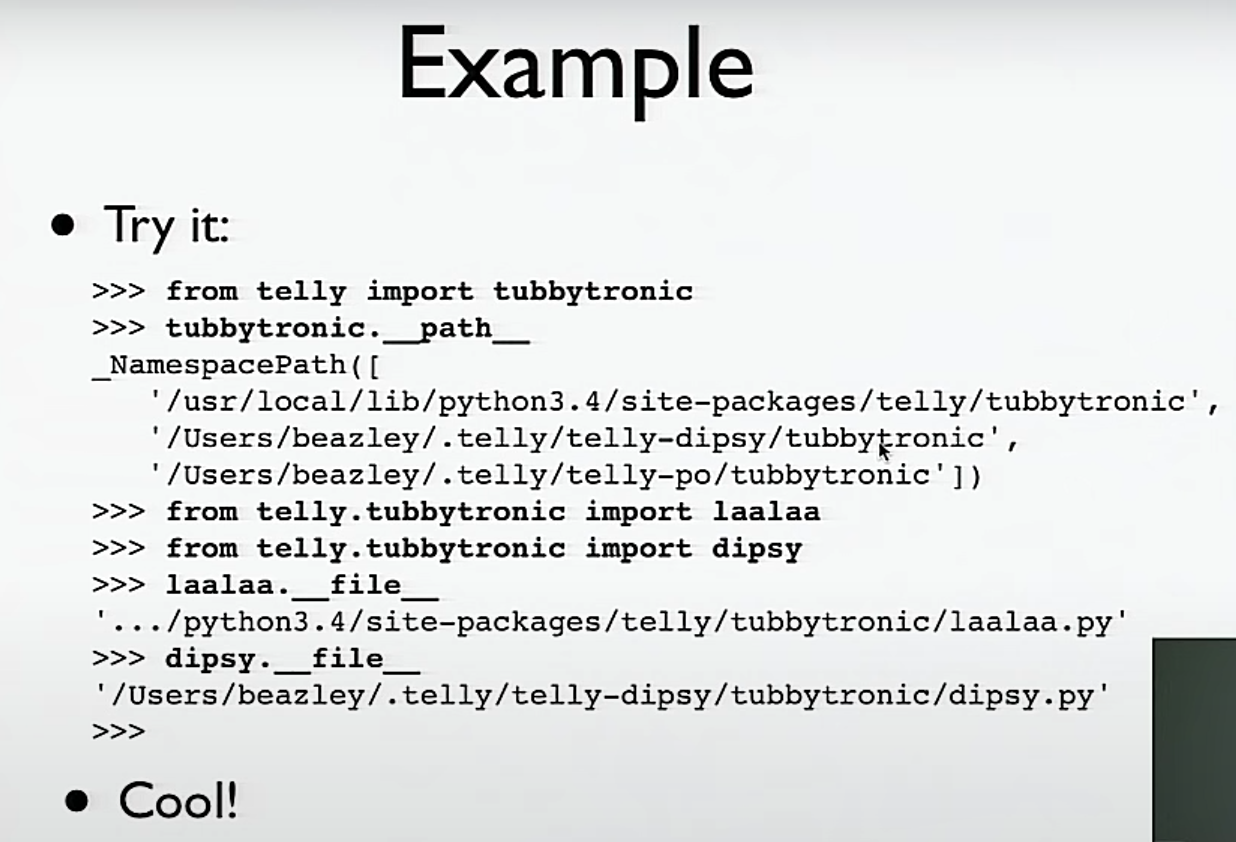
Part V : Namespace Packages
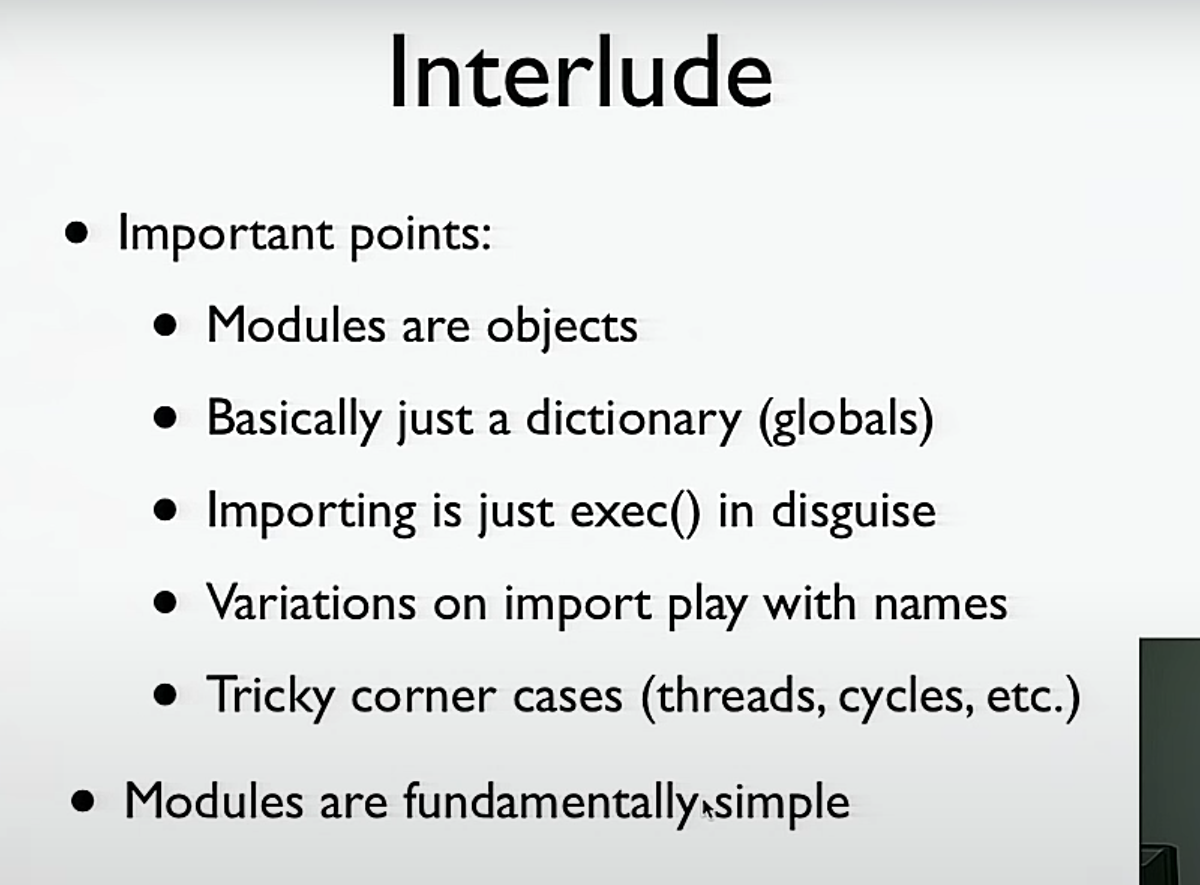
Part VI : The Module
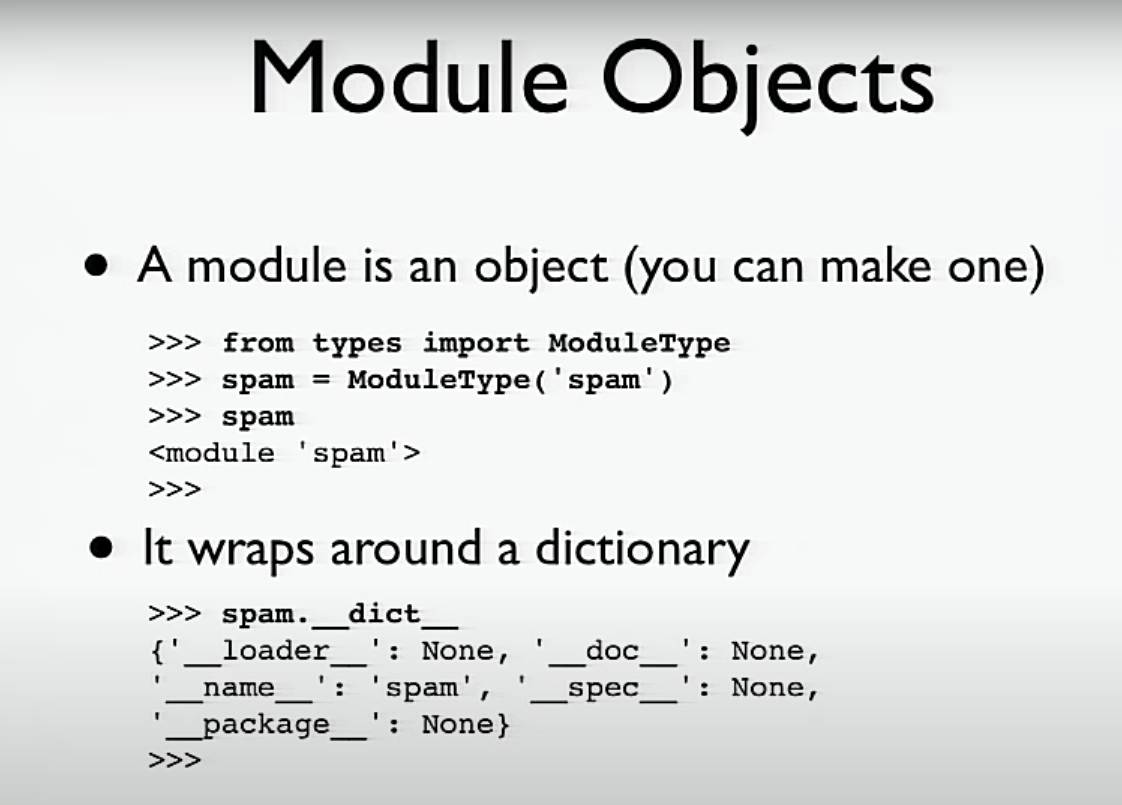
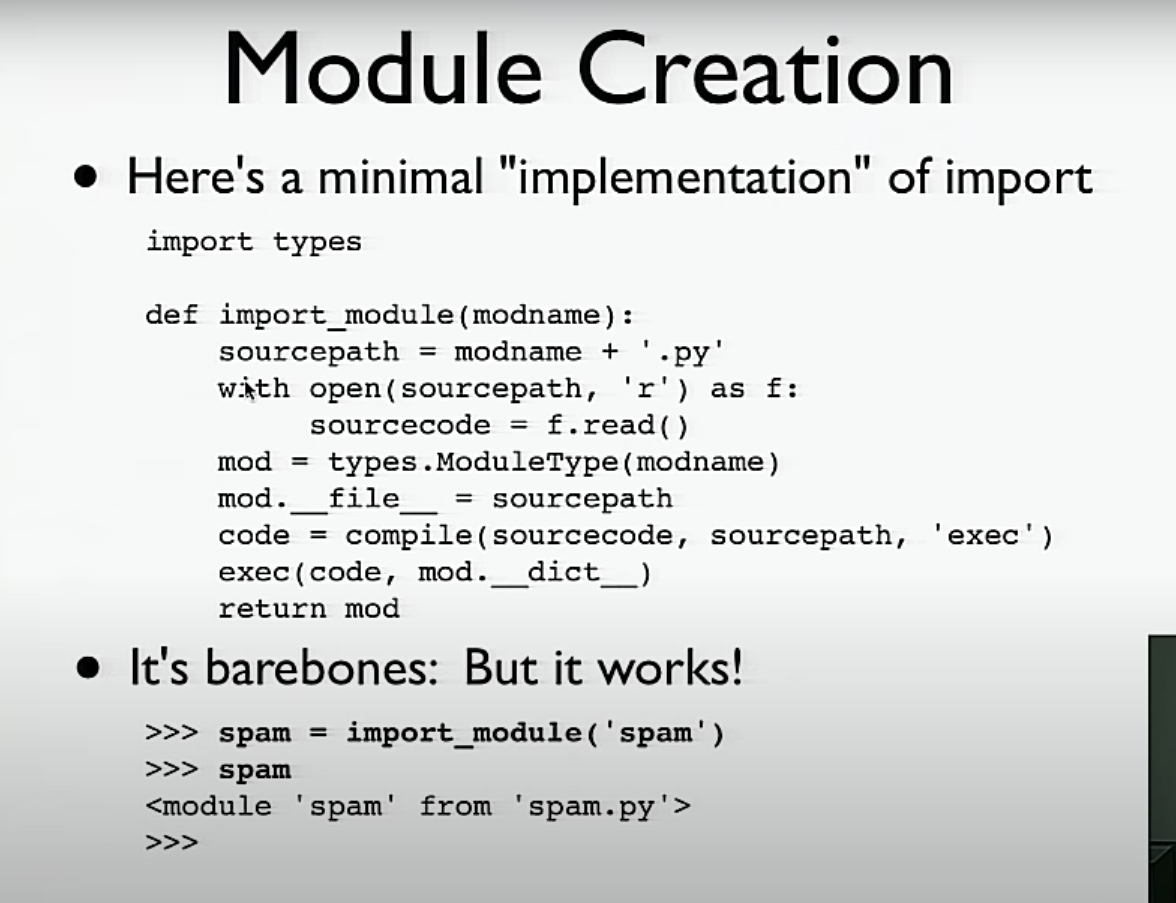
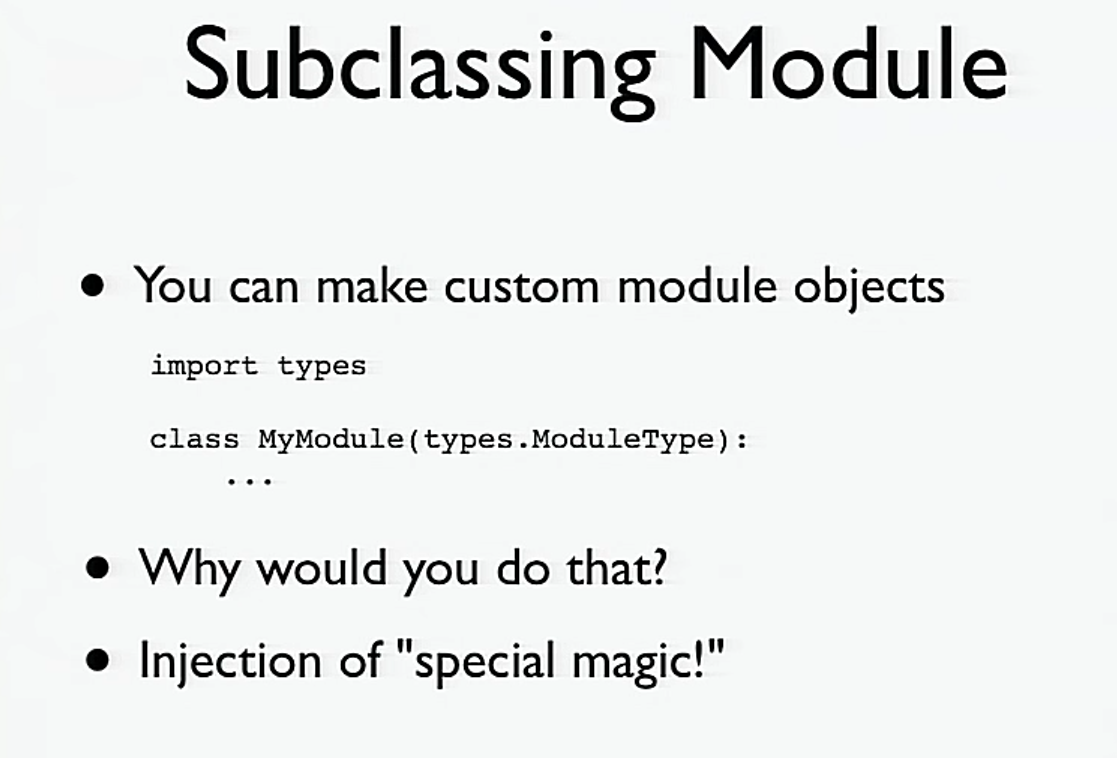
NOTE: A module is somenthing you can create on the fly:
import types
mod = types.ModuleType('spam')
print(mod)
# >> <module 'spam'>
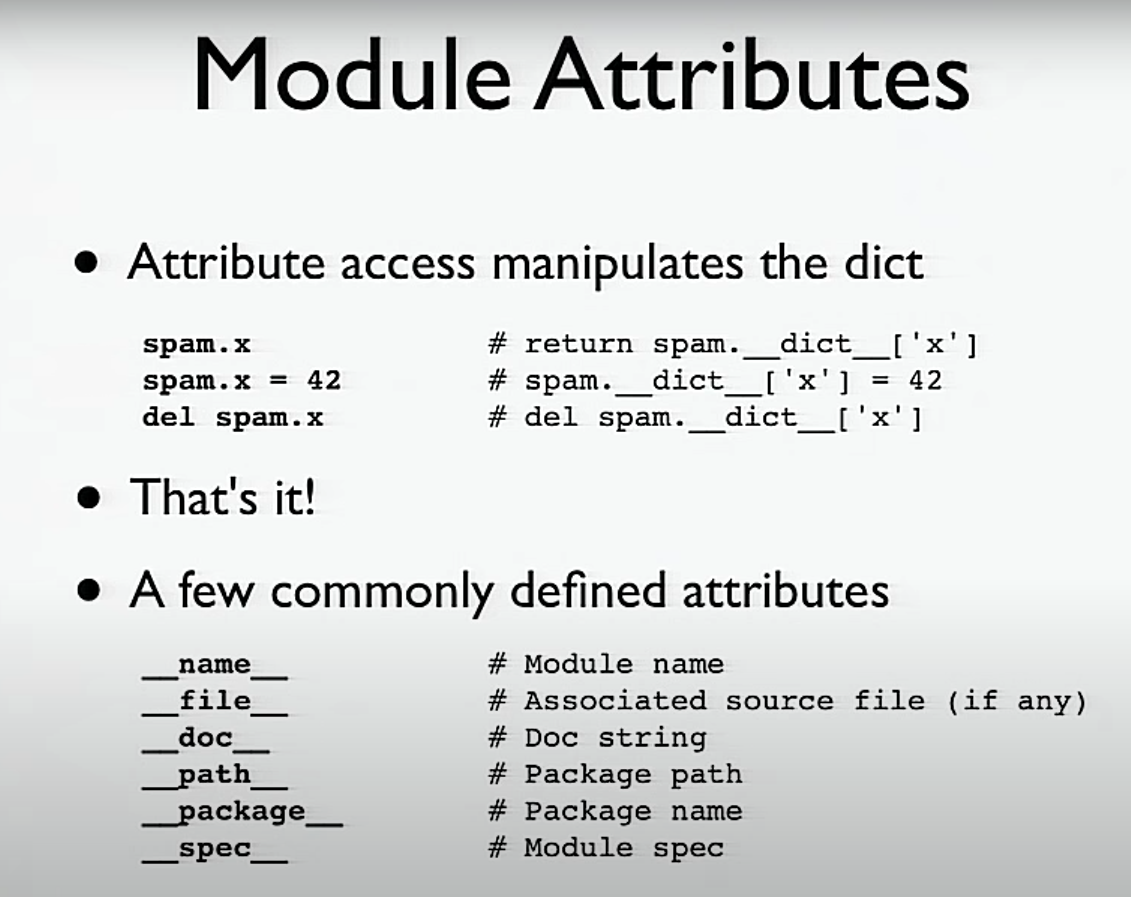
print(mod.__dict__)
# >> {'__name__': 'spam', '__spec__': None, '__doc__': None,  '__package__': None, '__loader__': None}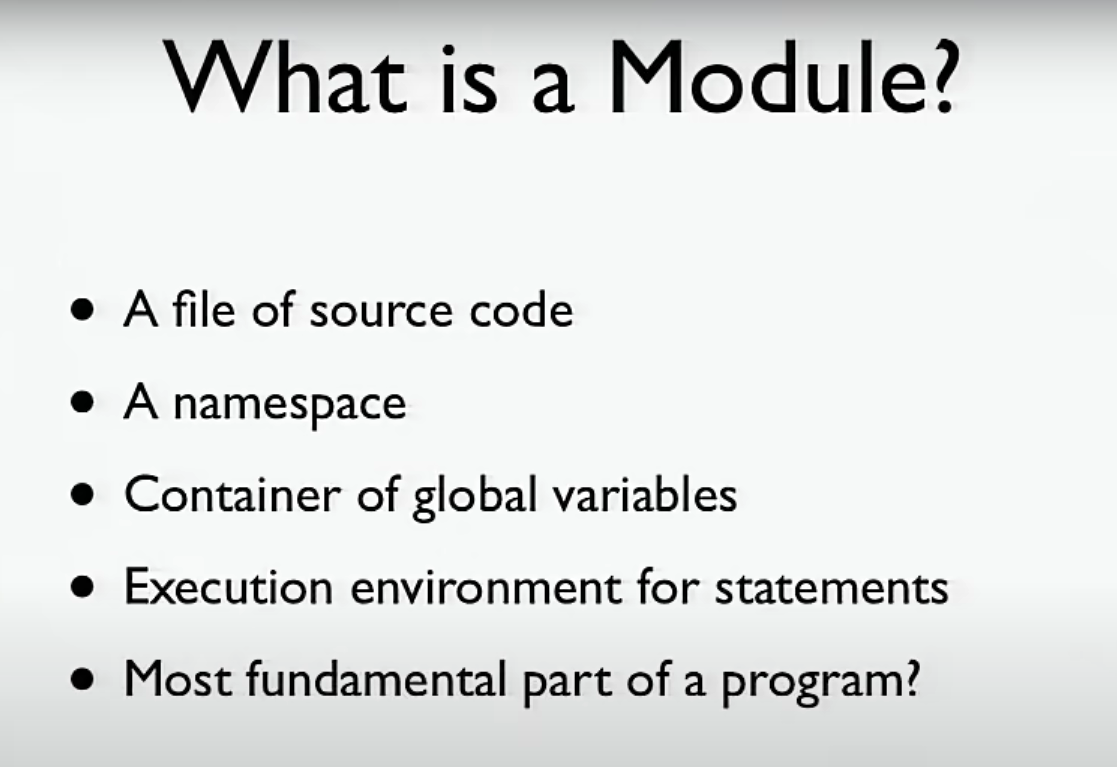
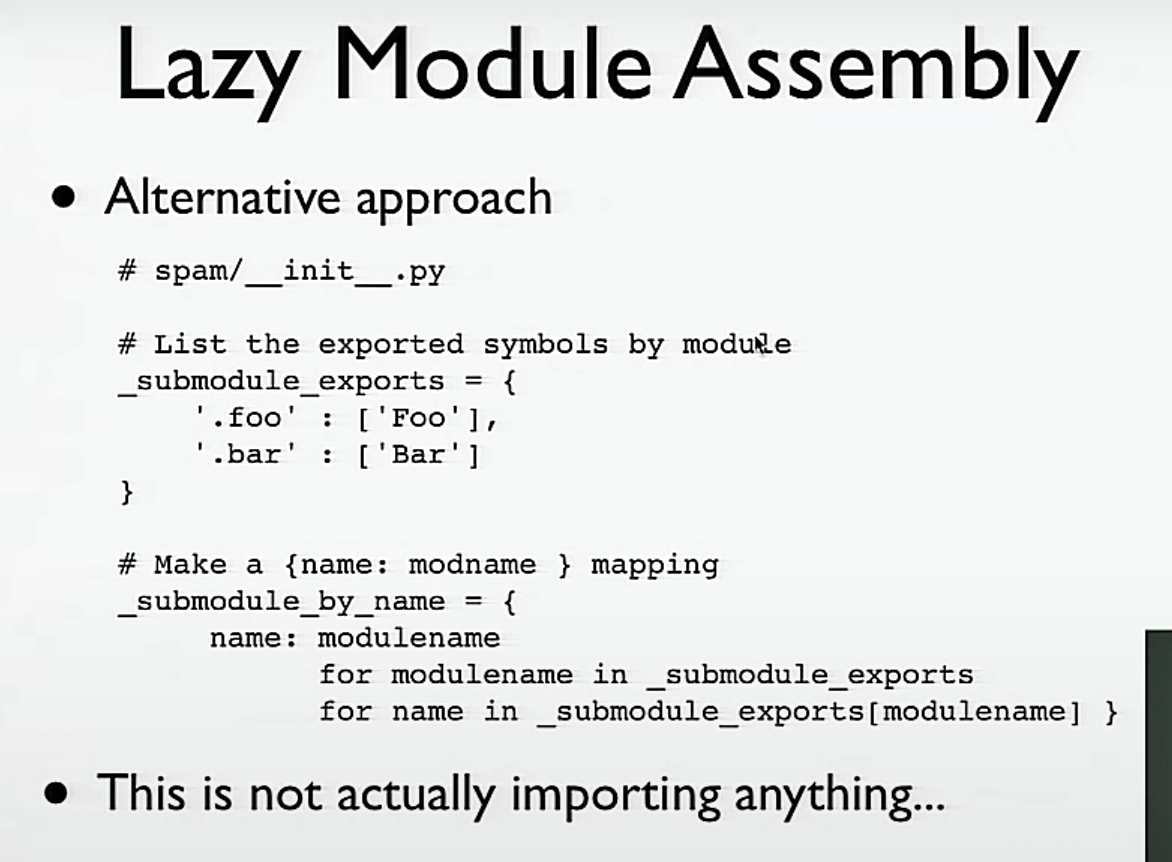
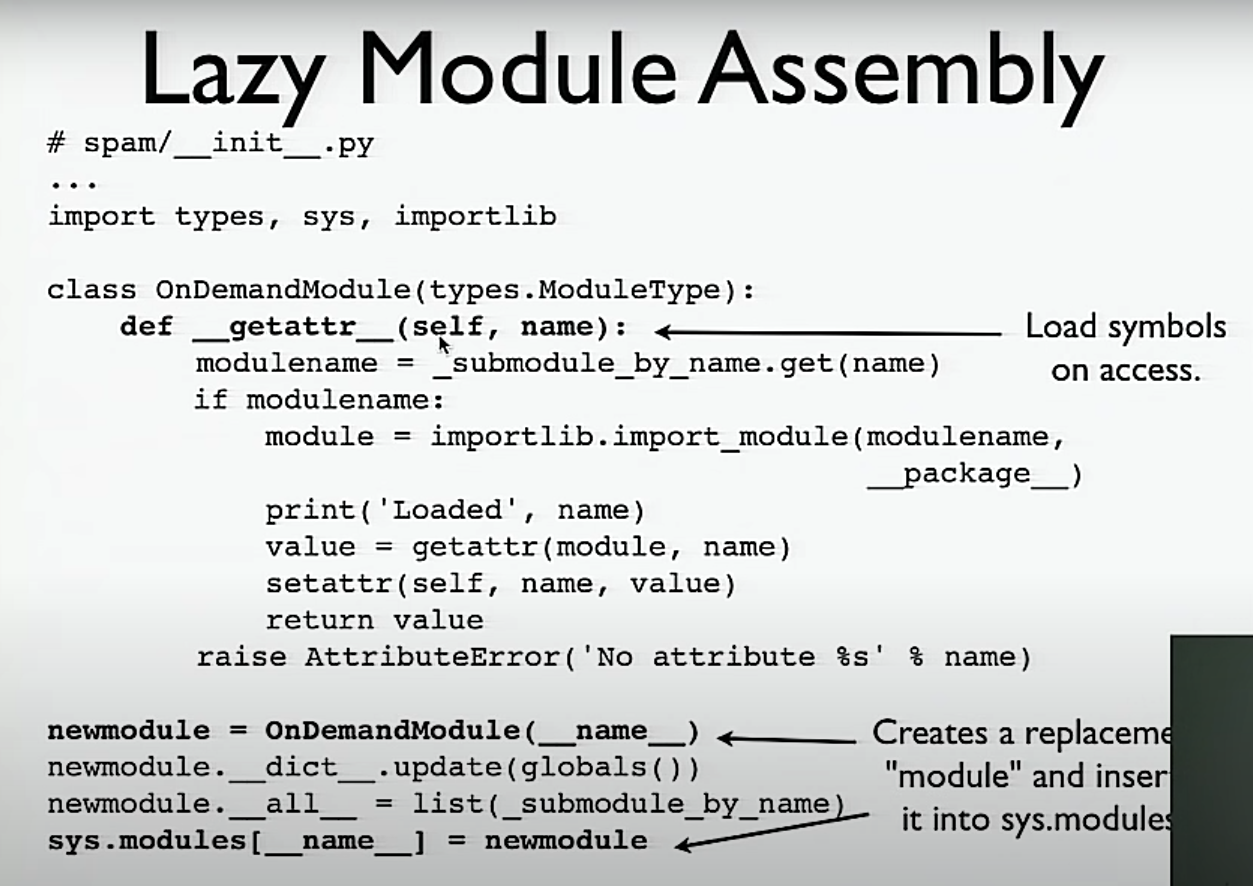
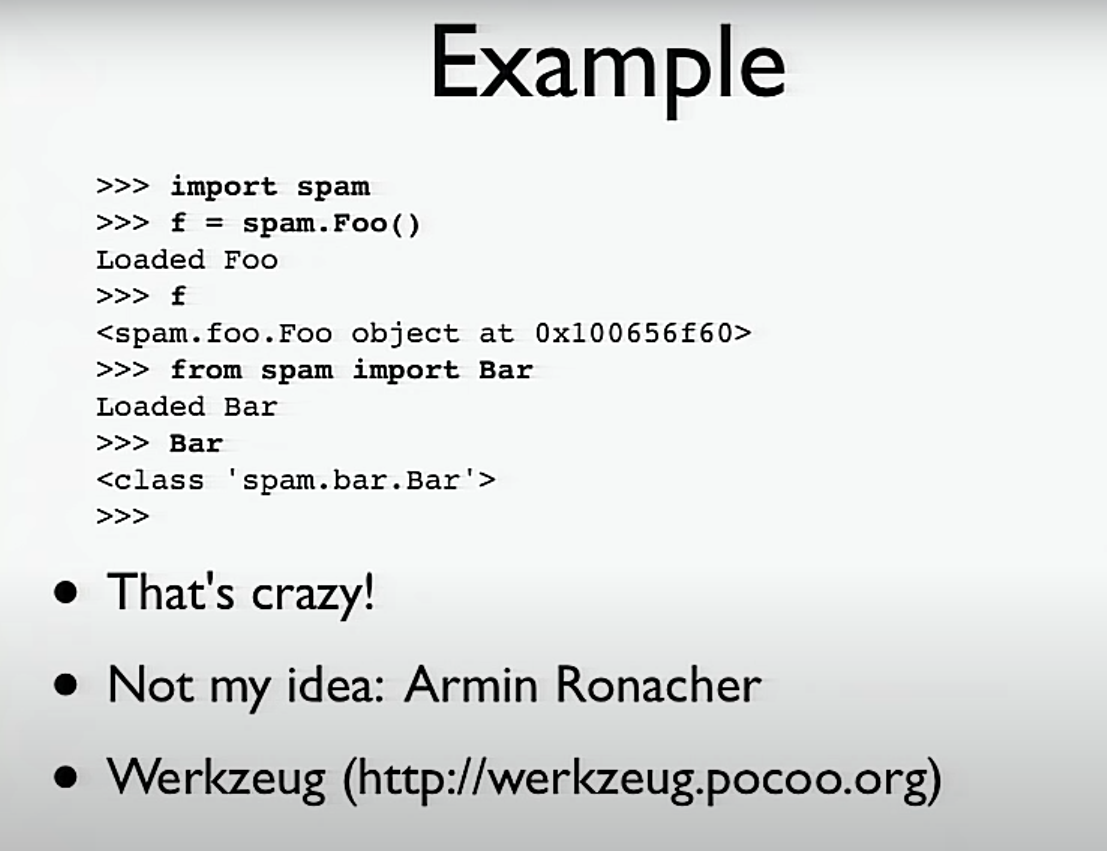
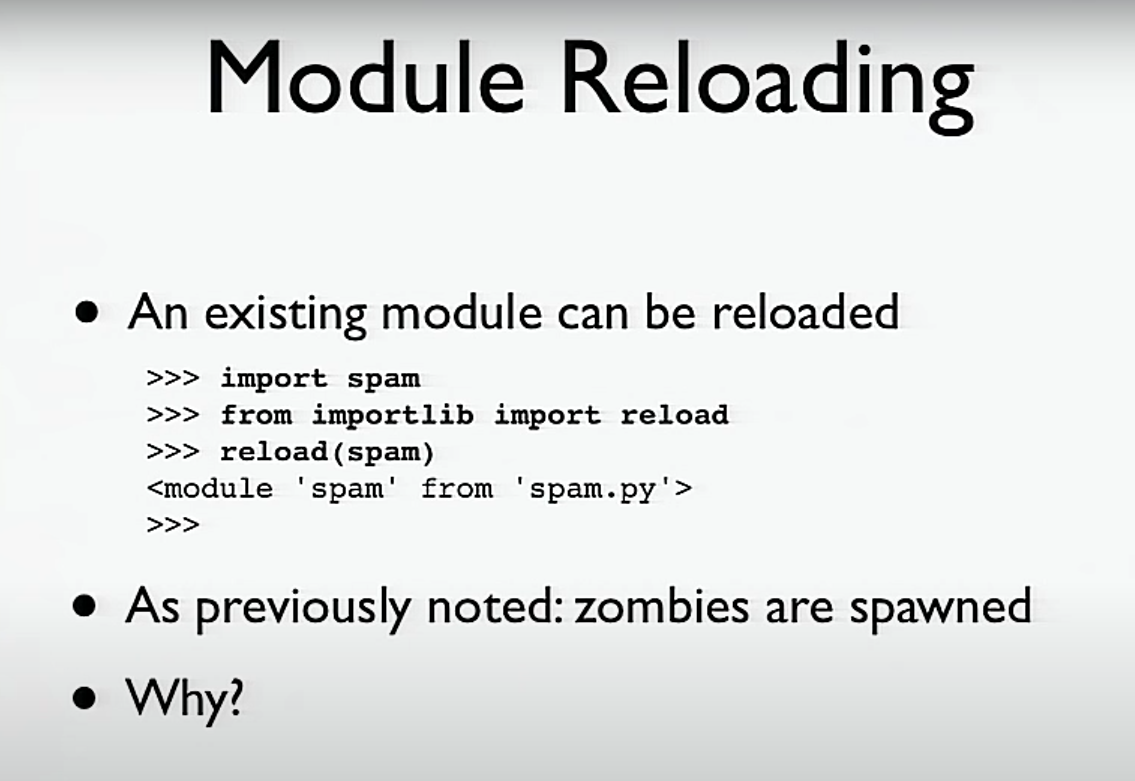
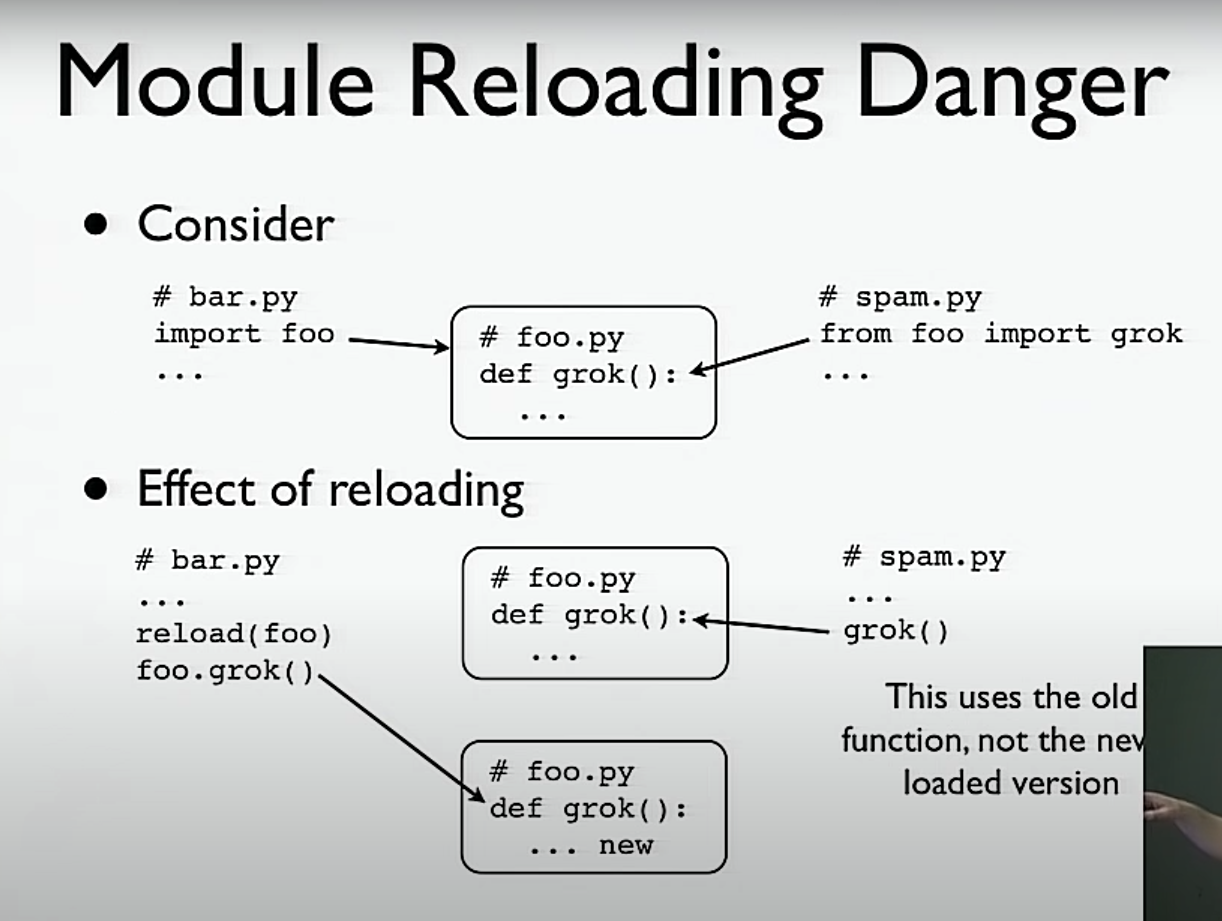
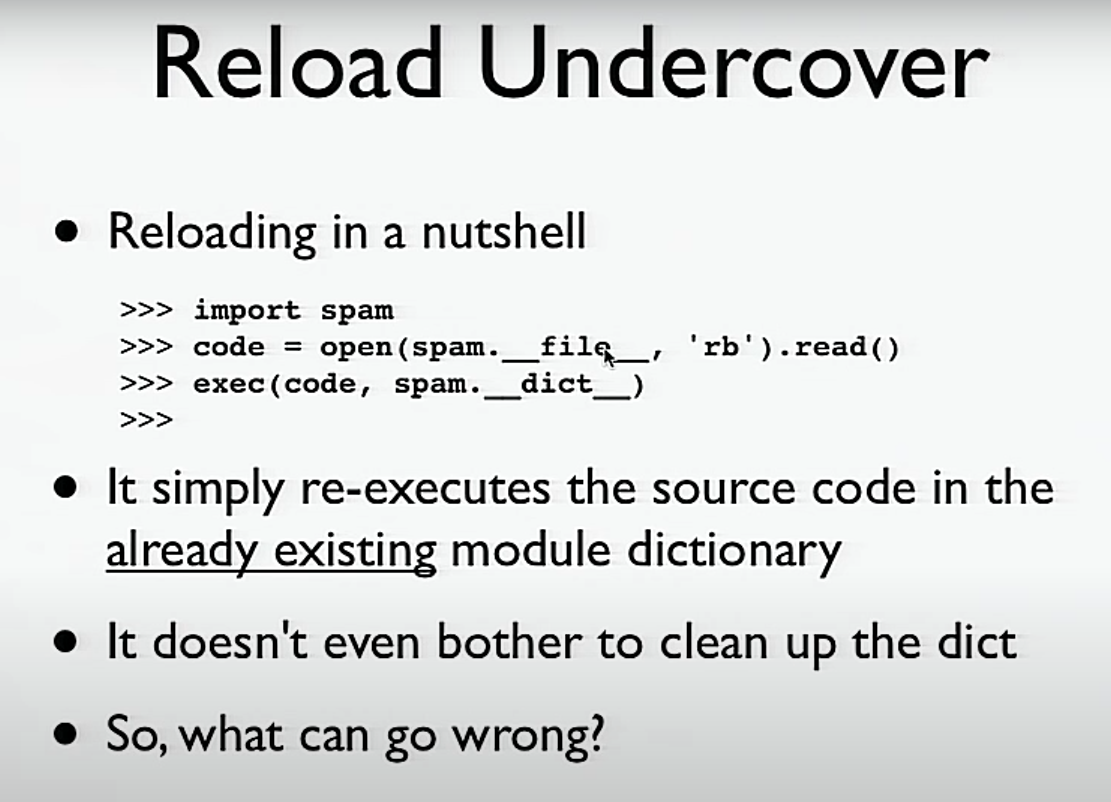
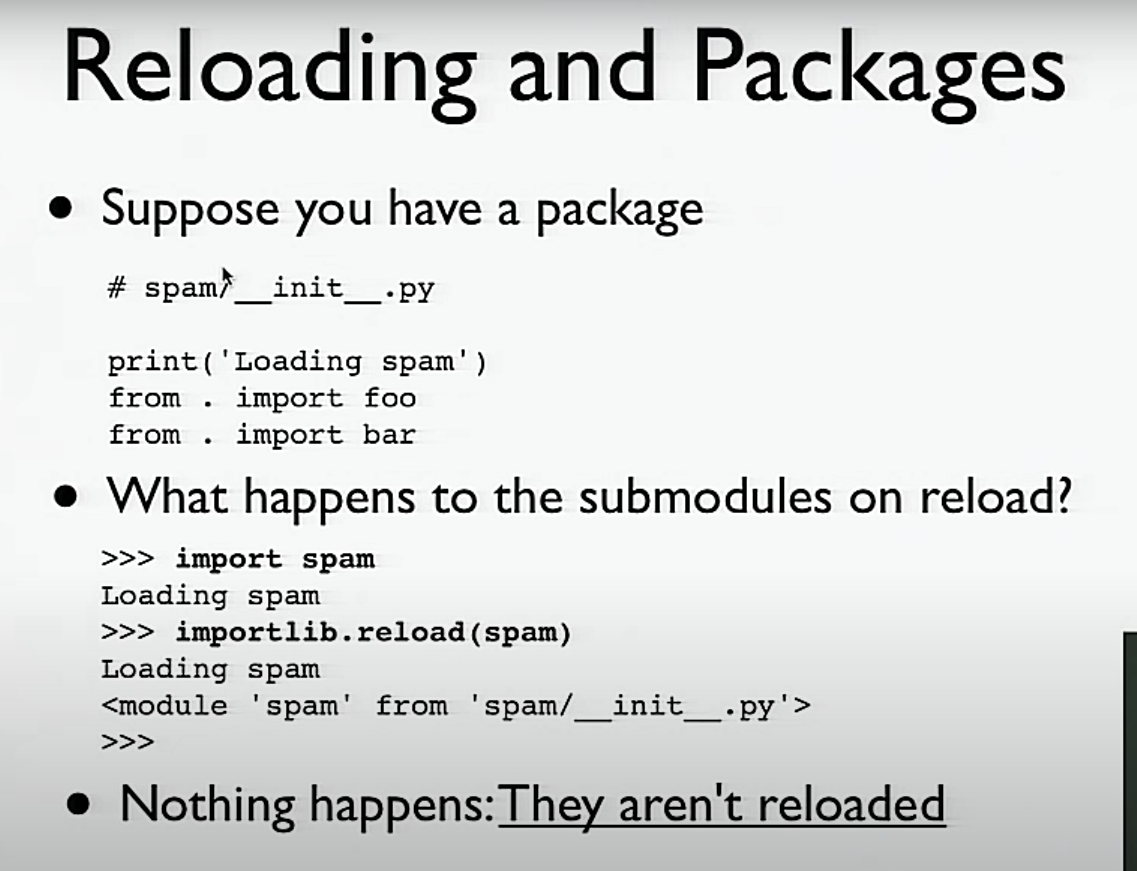
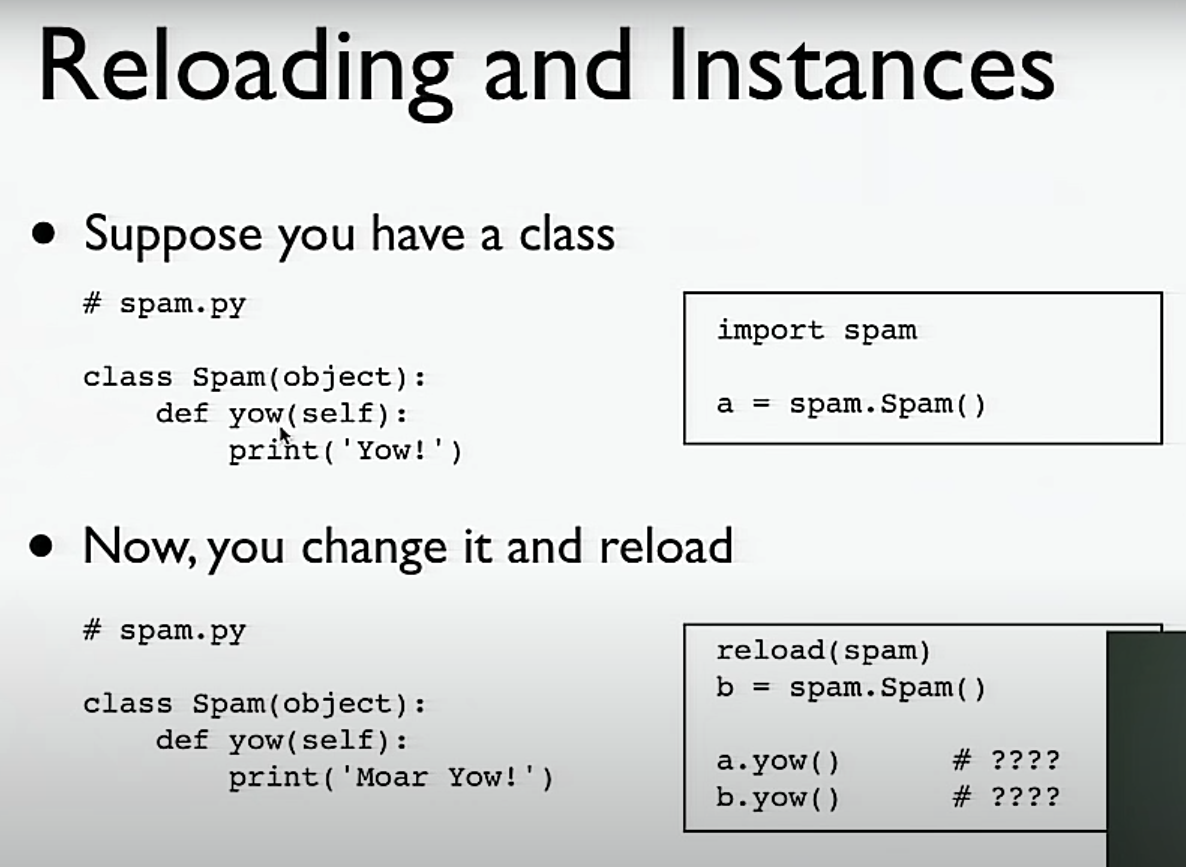
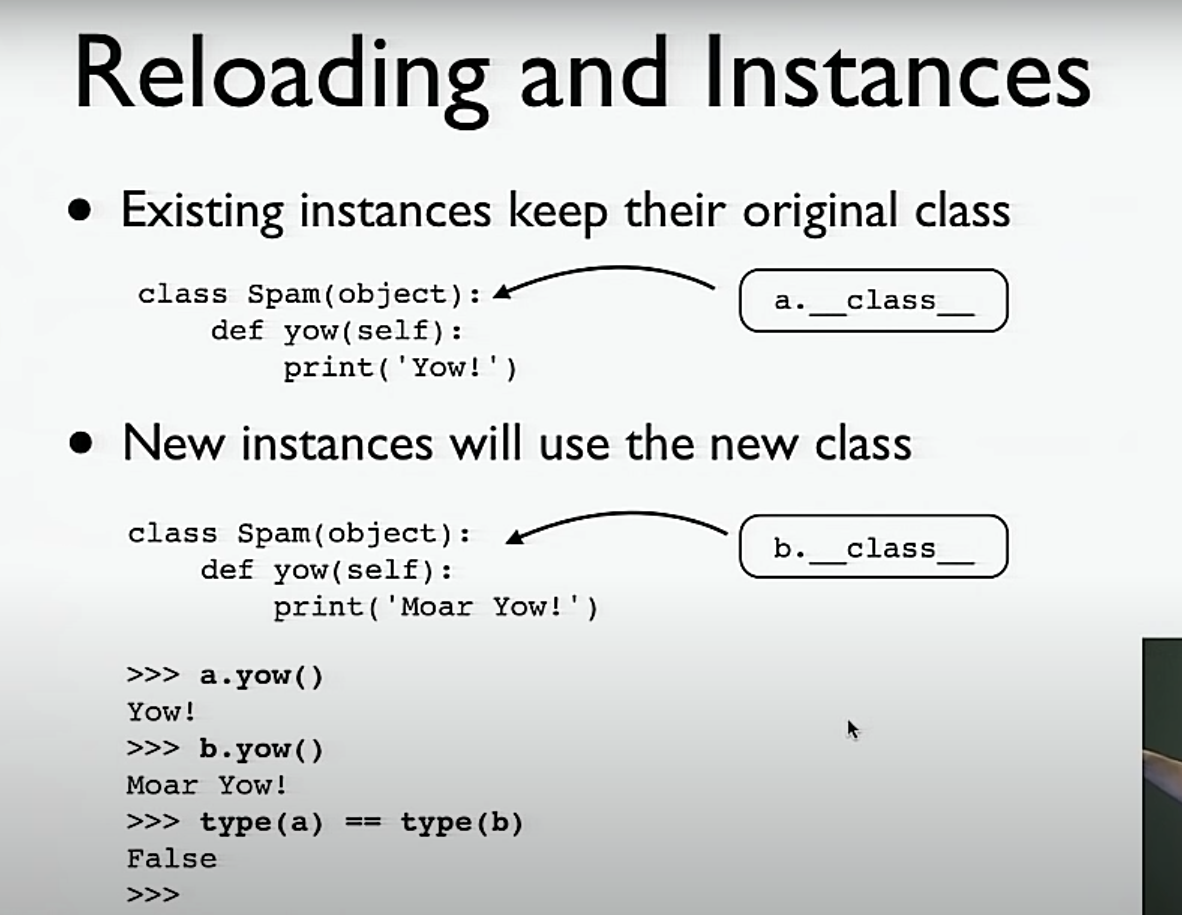
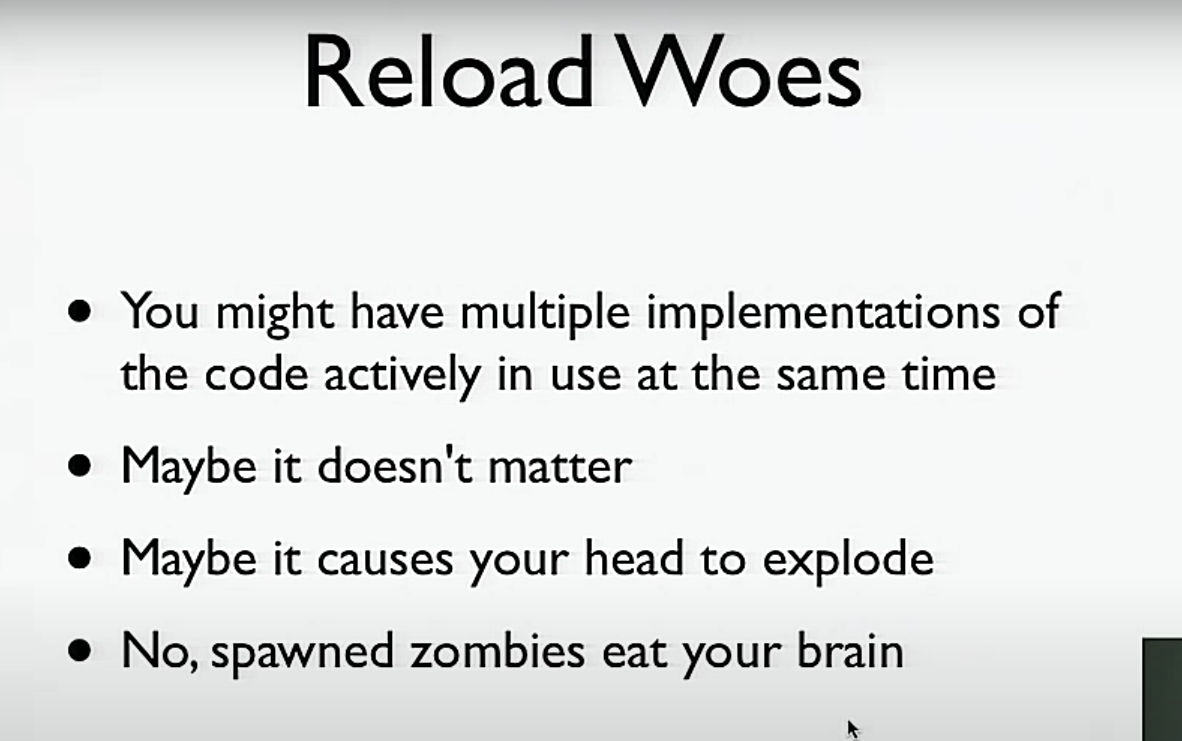
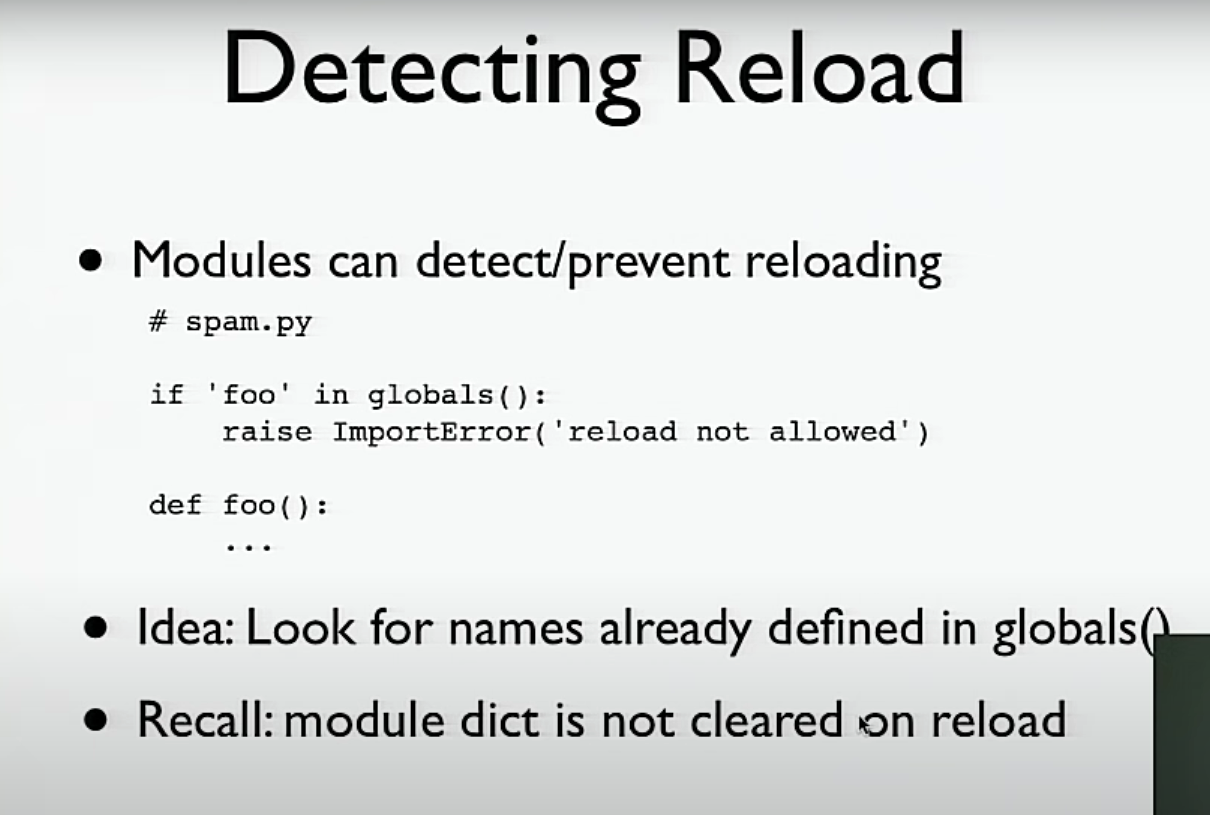
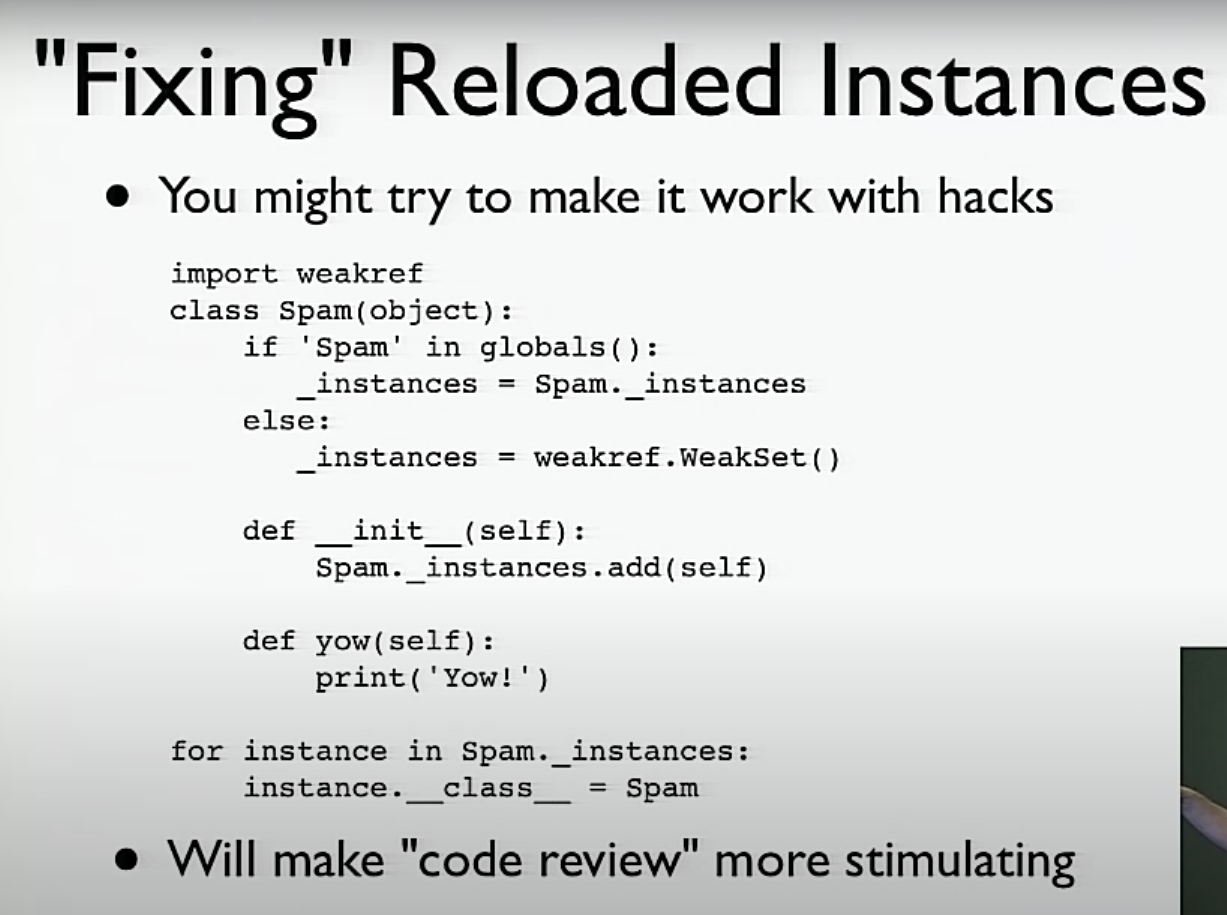
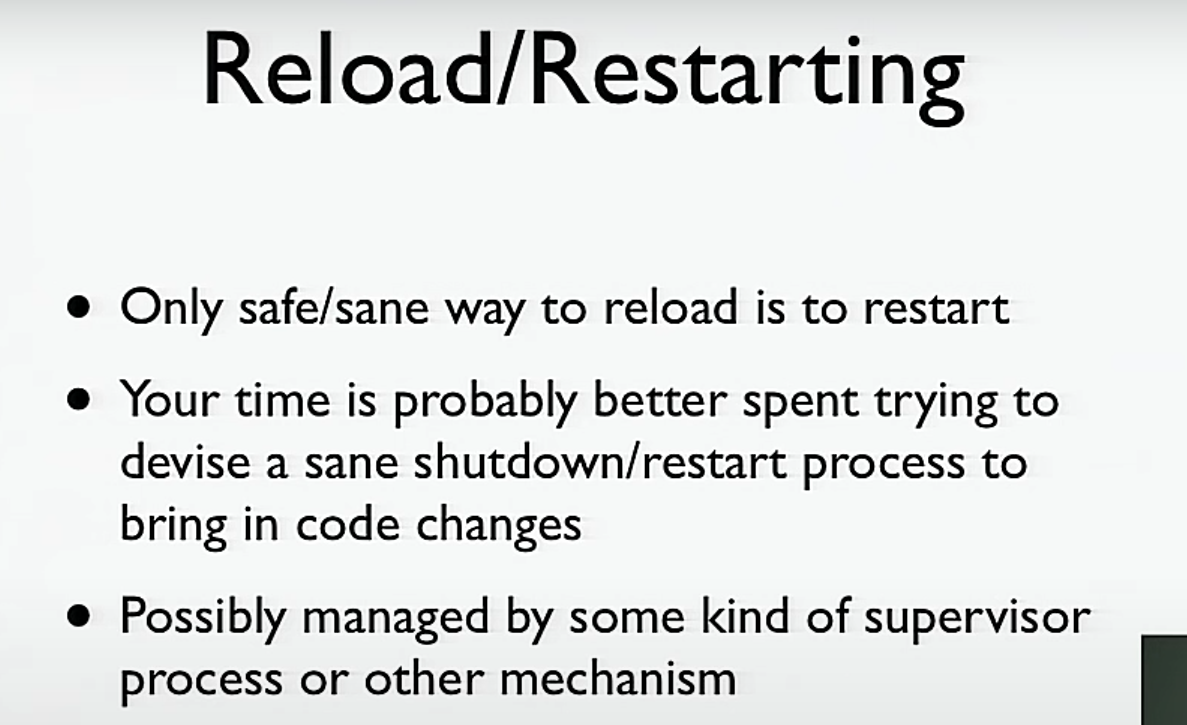
Part VII : The Module Reloaded
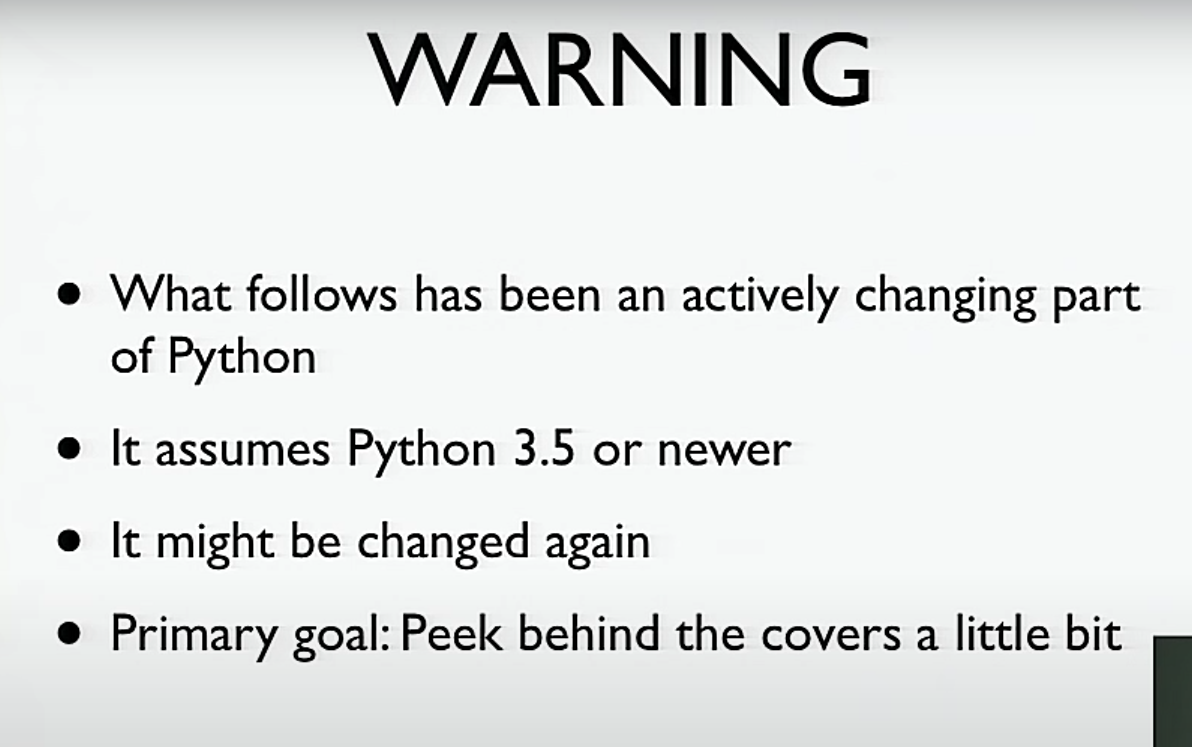
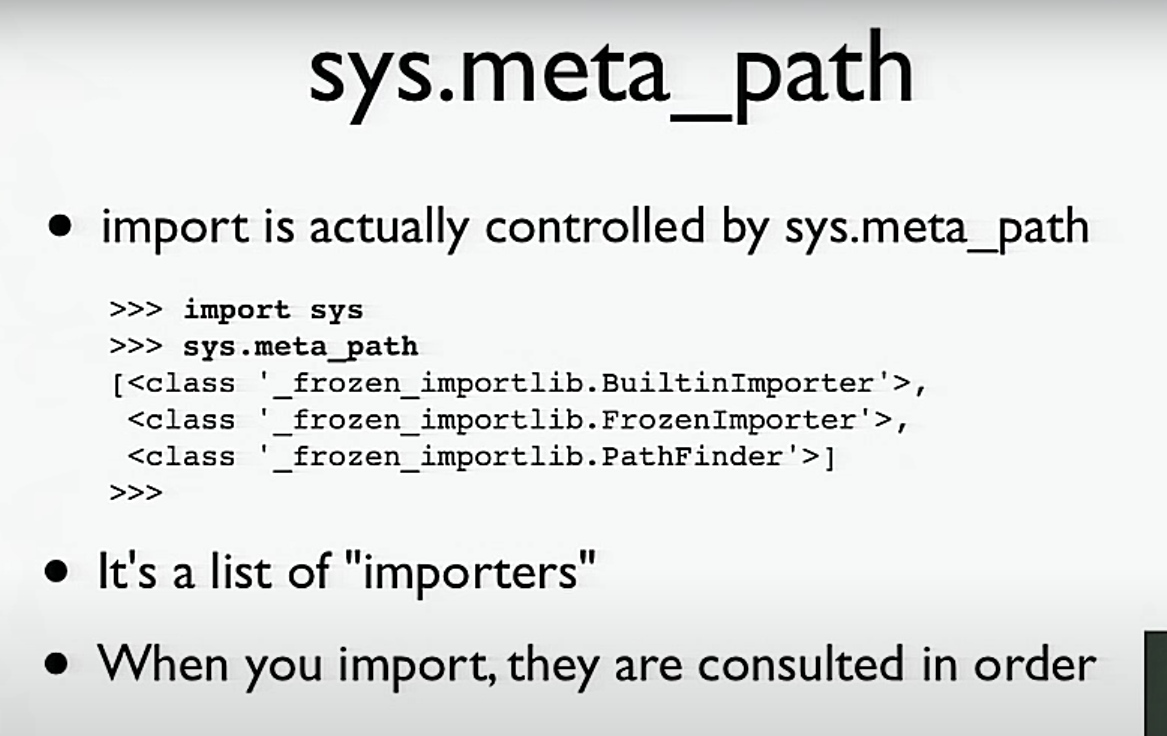
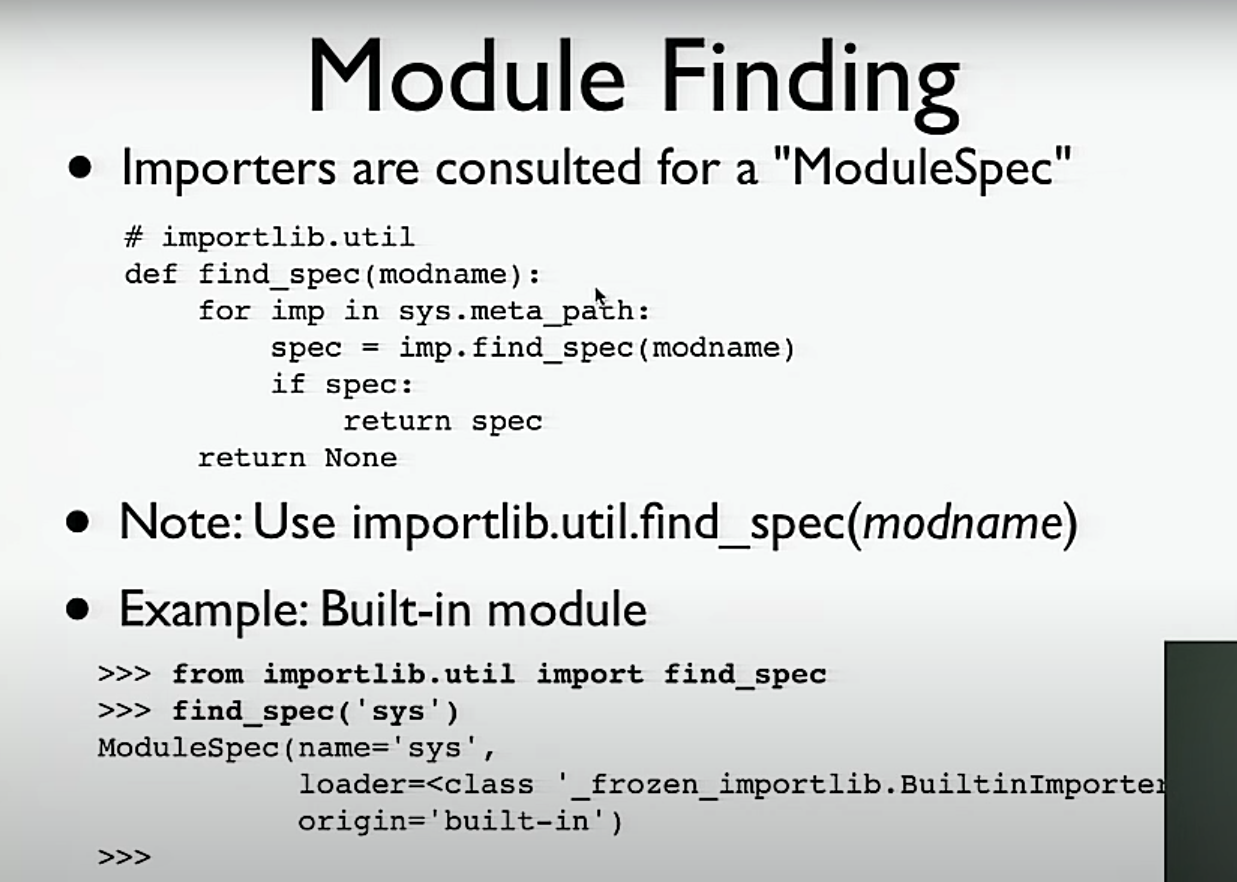
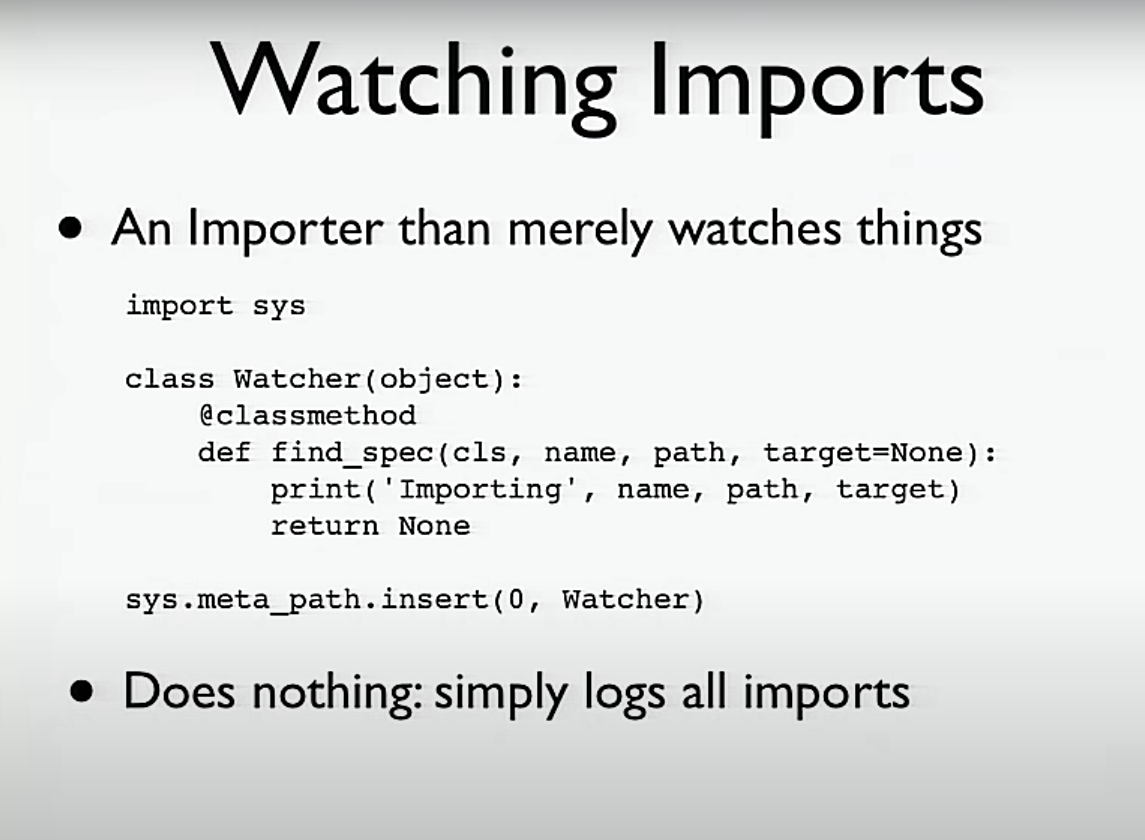
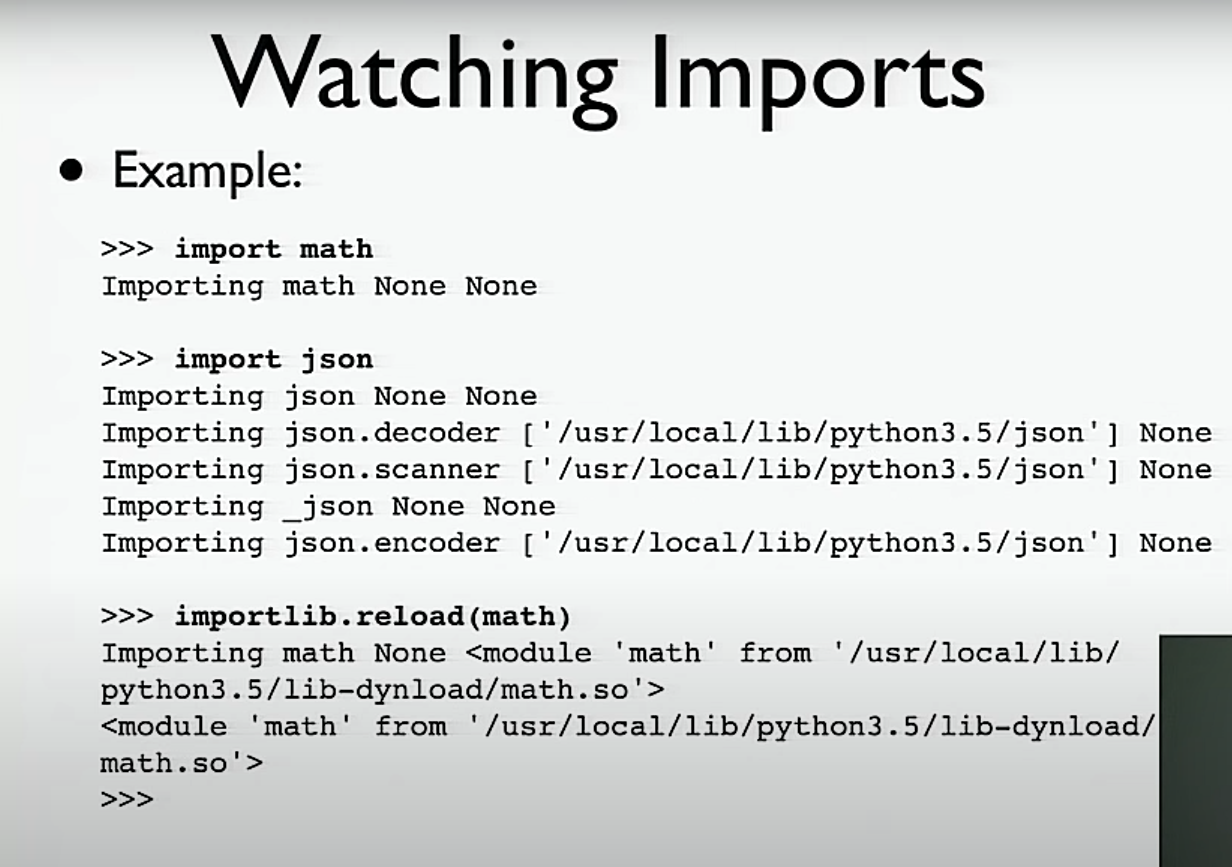
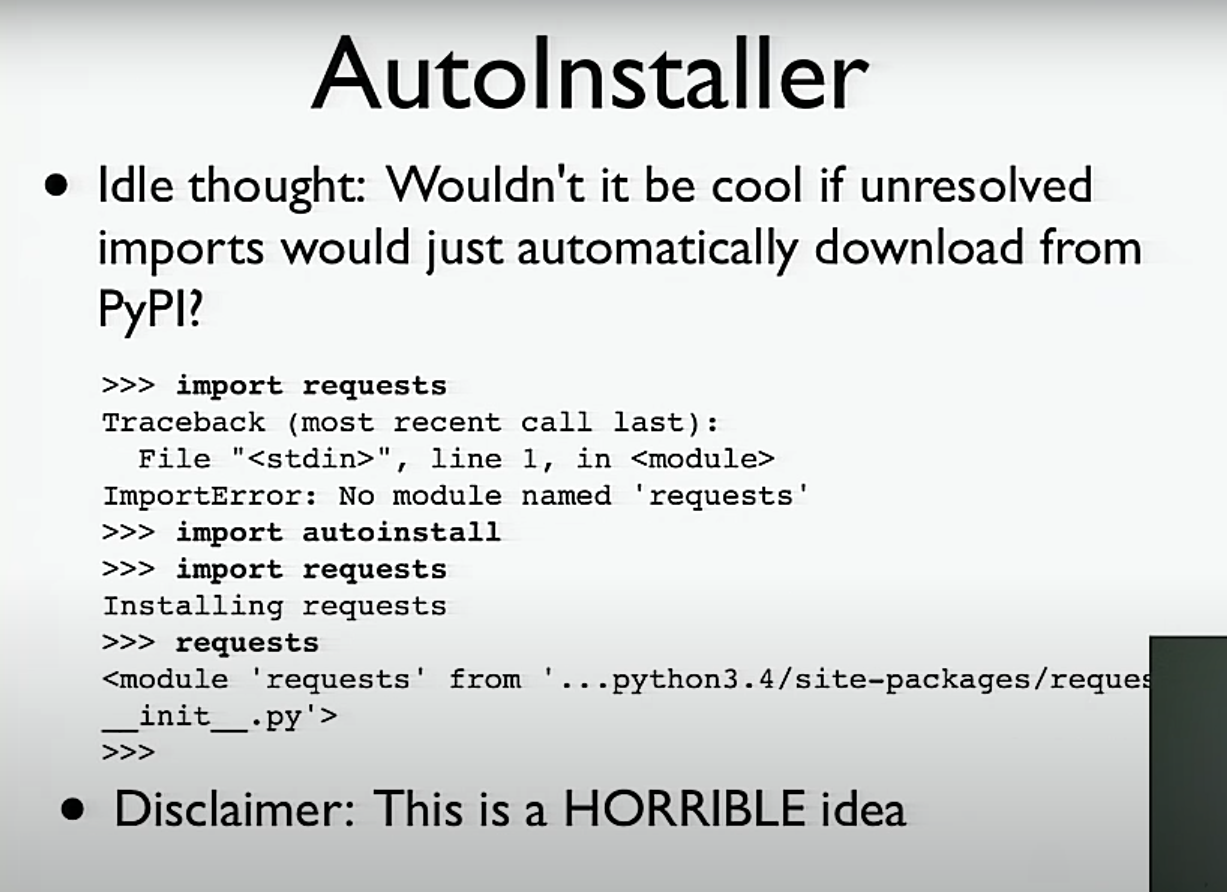
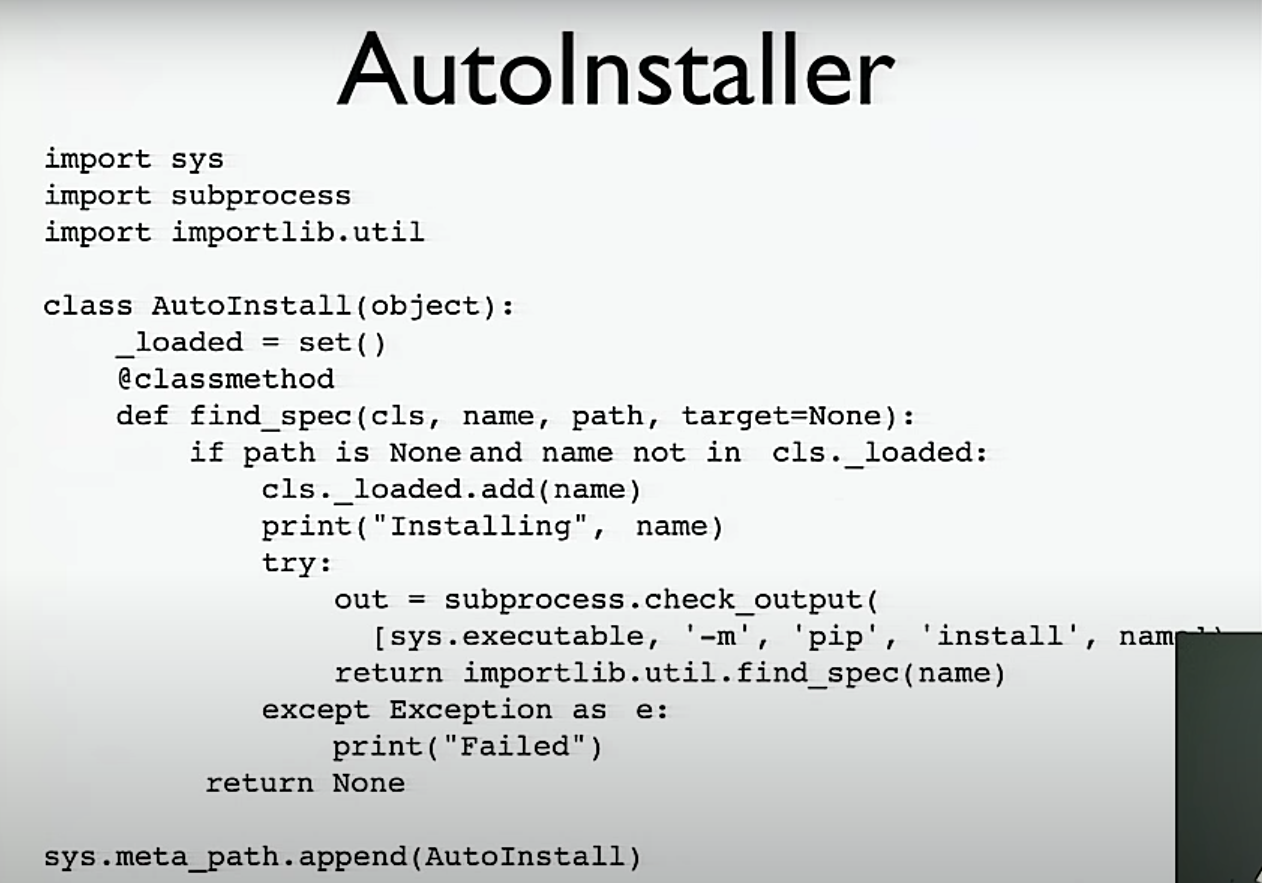
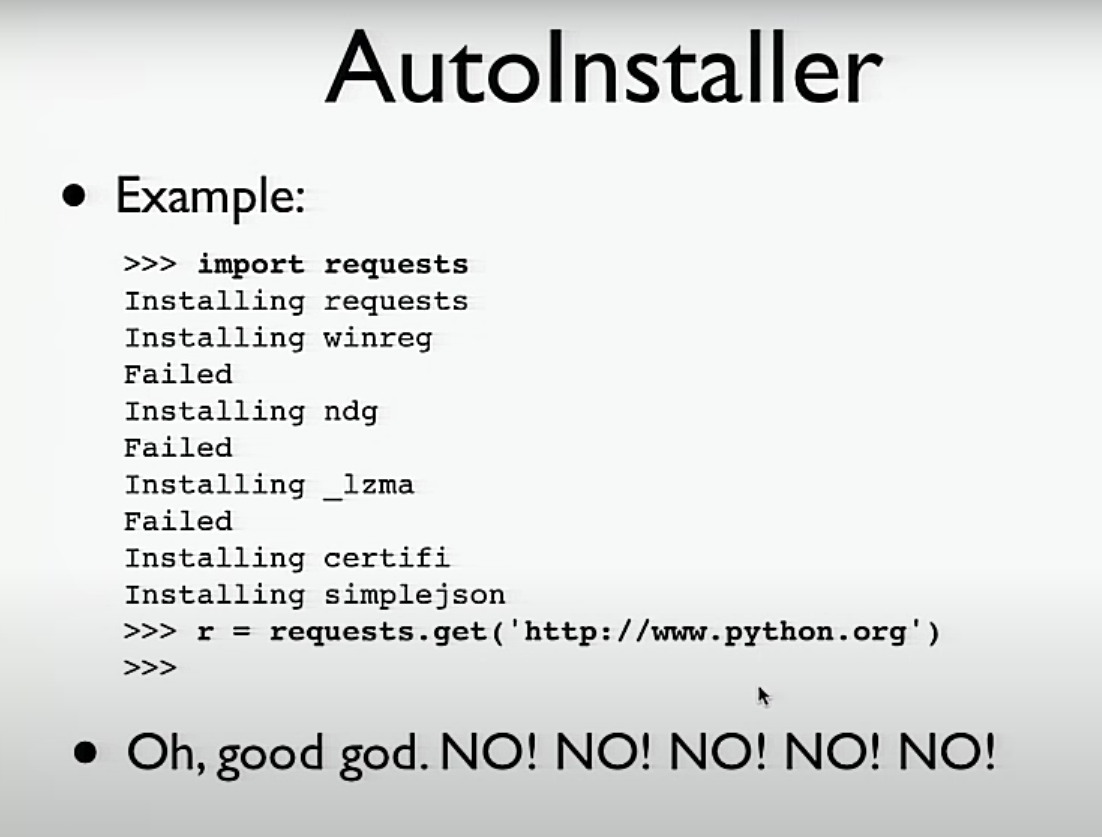
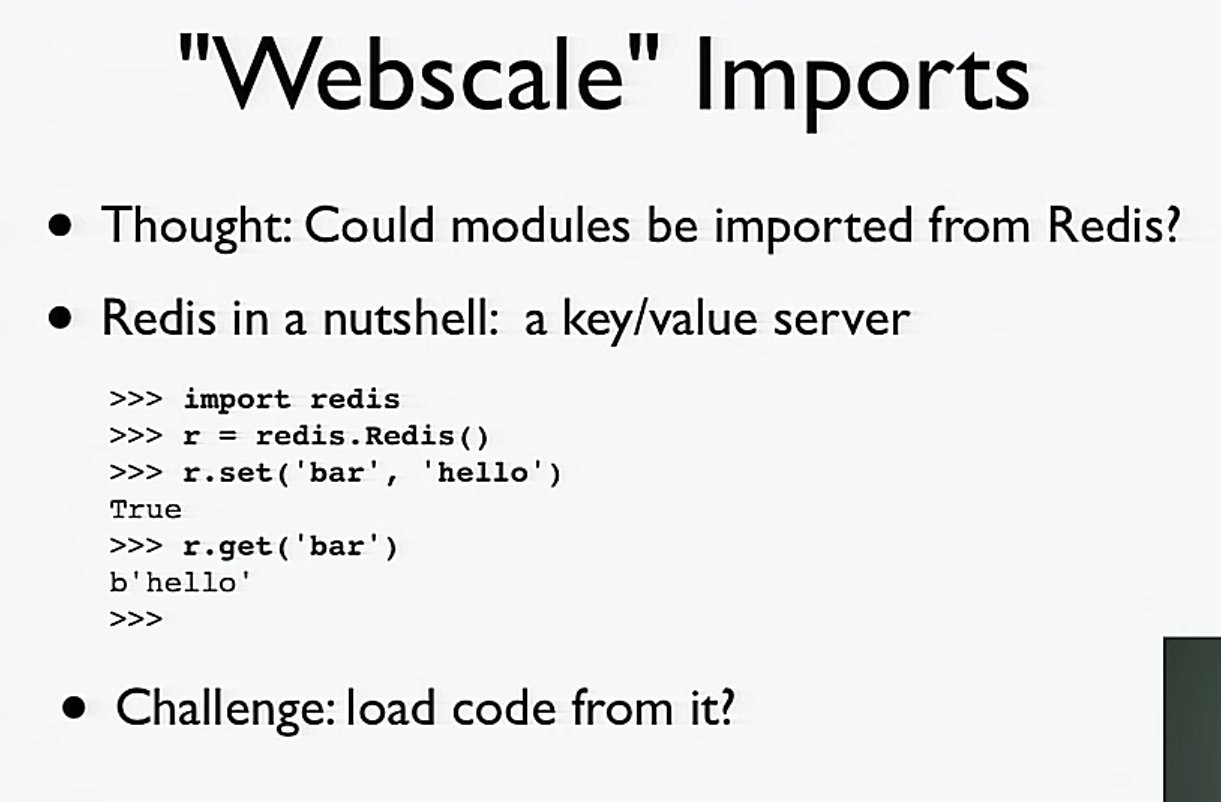
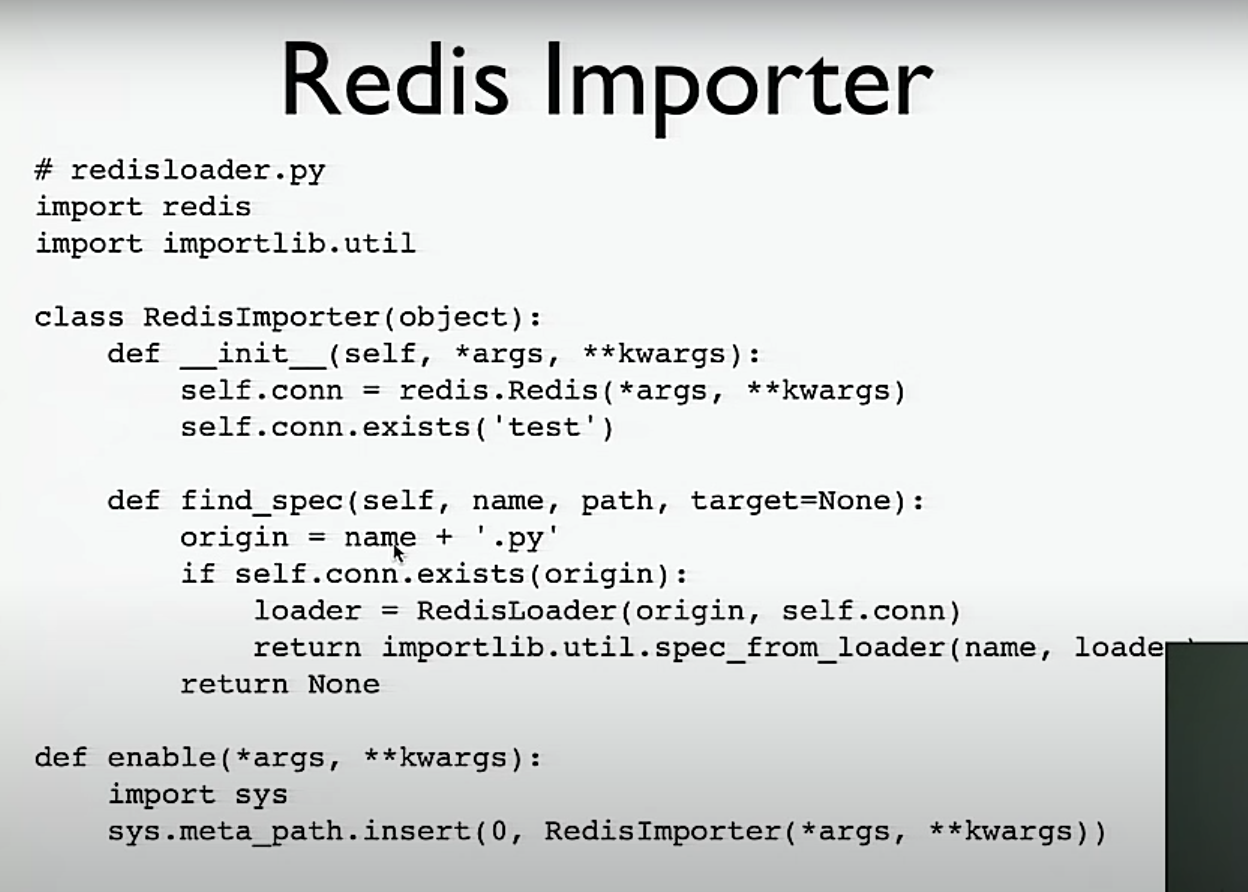
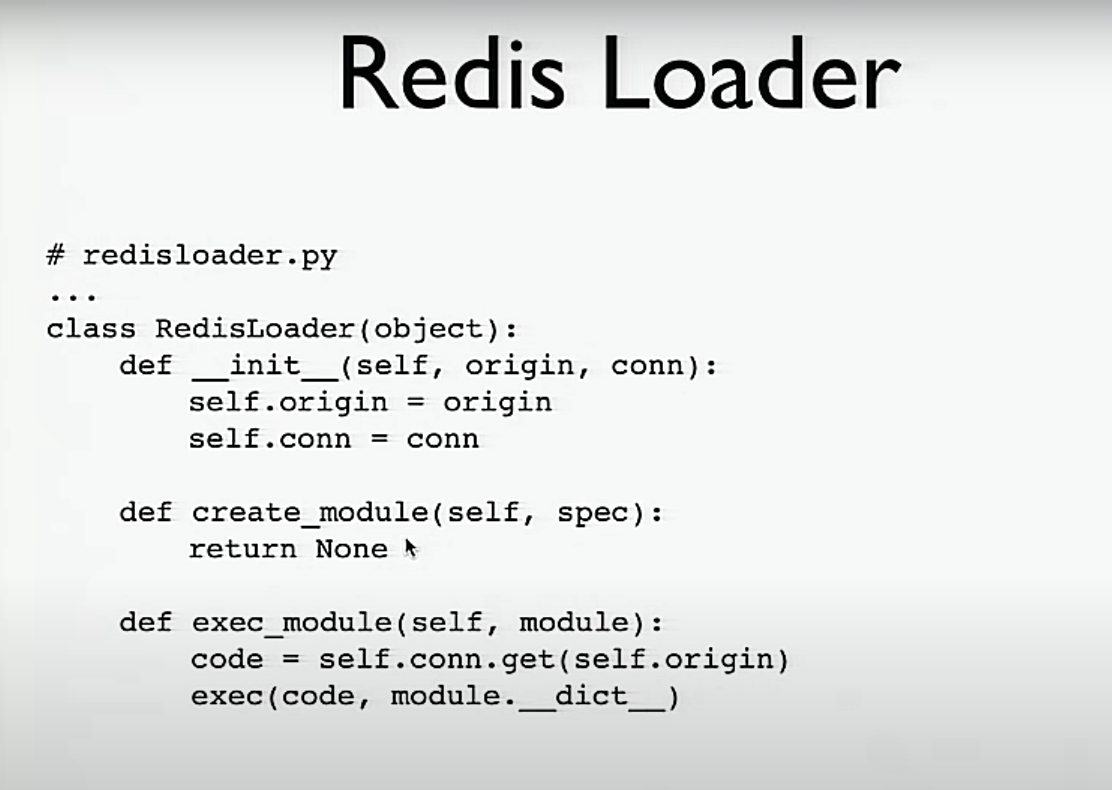
Part VIII : Import Hooks
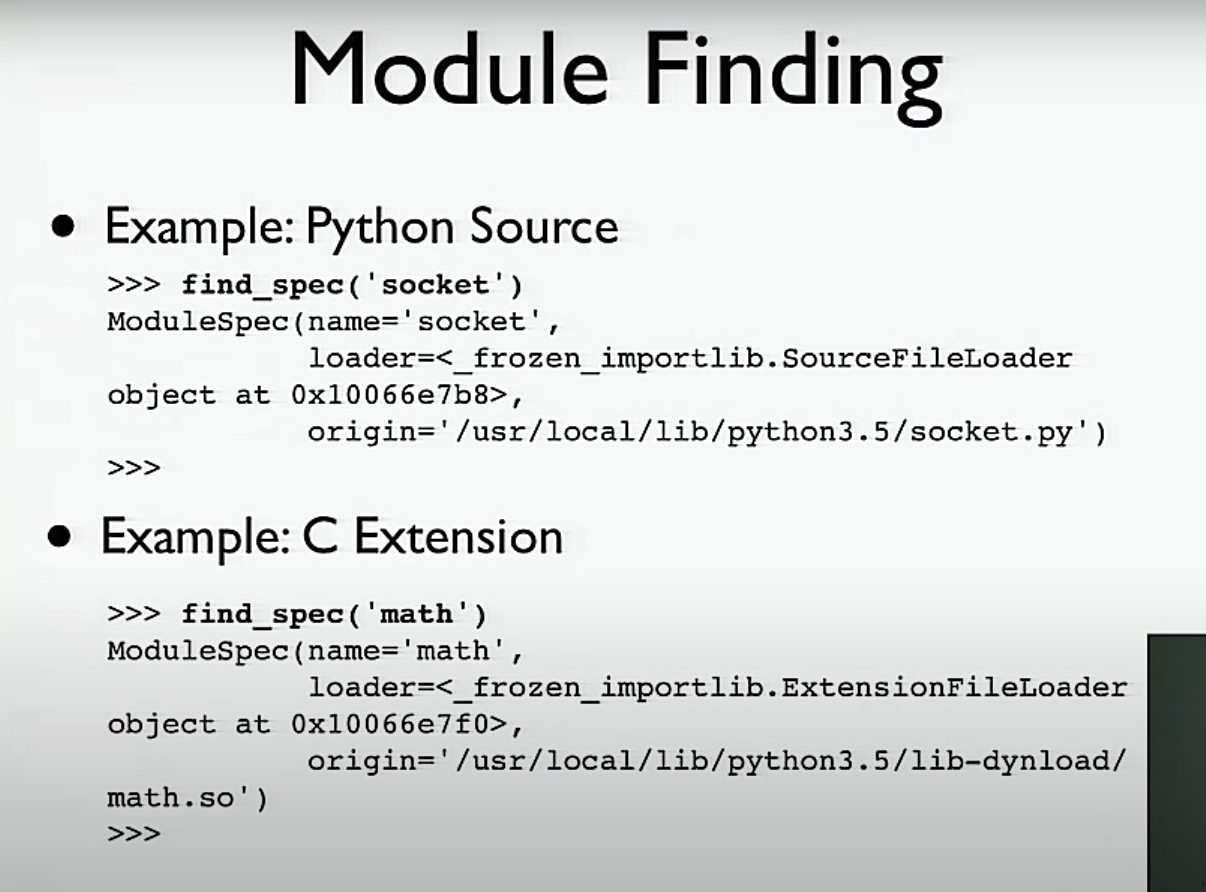
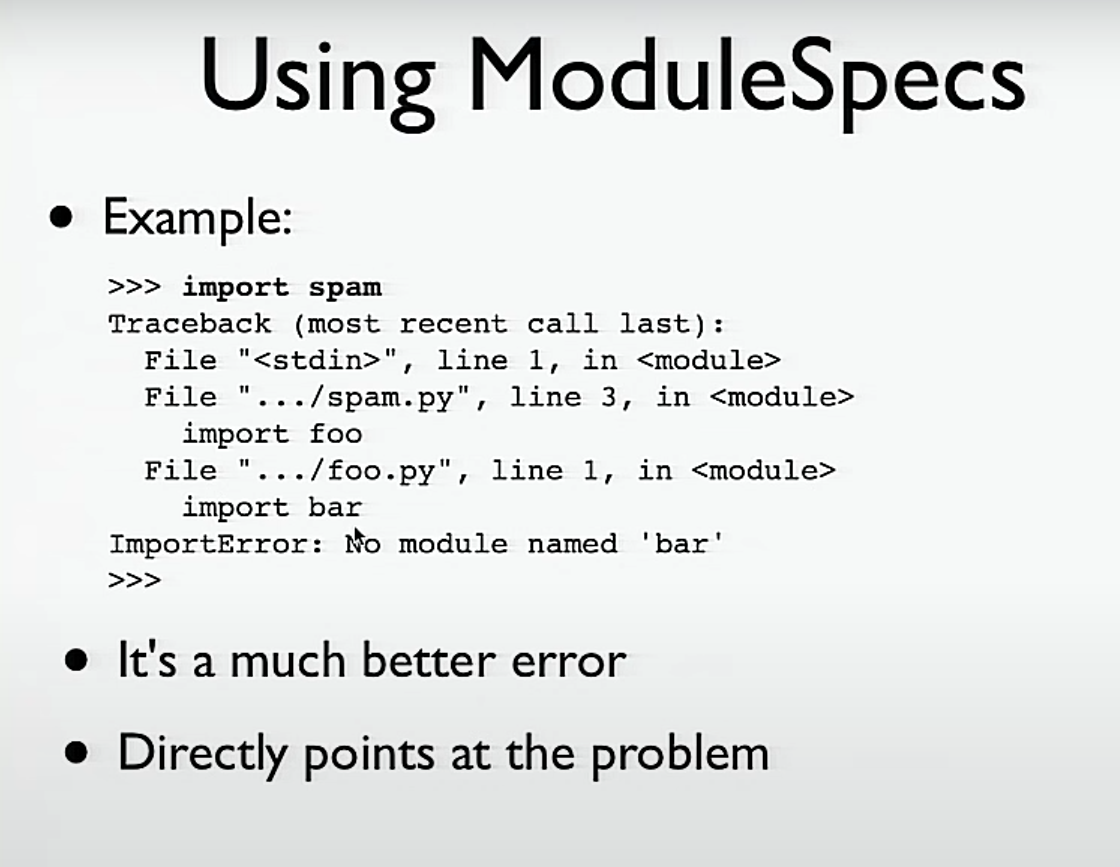
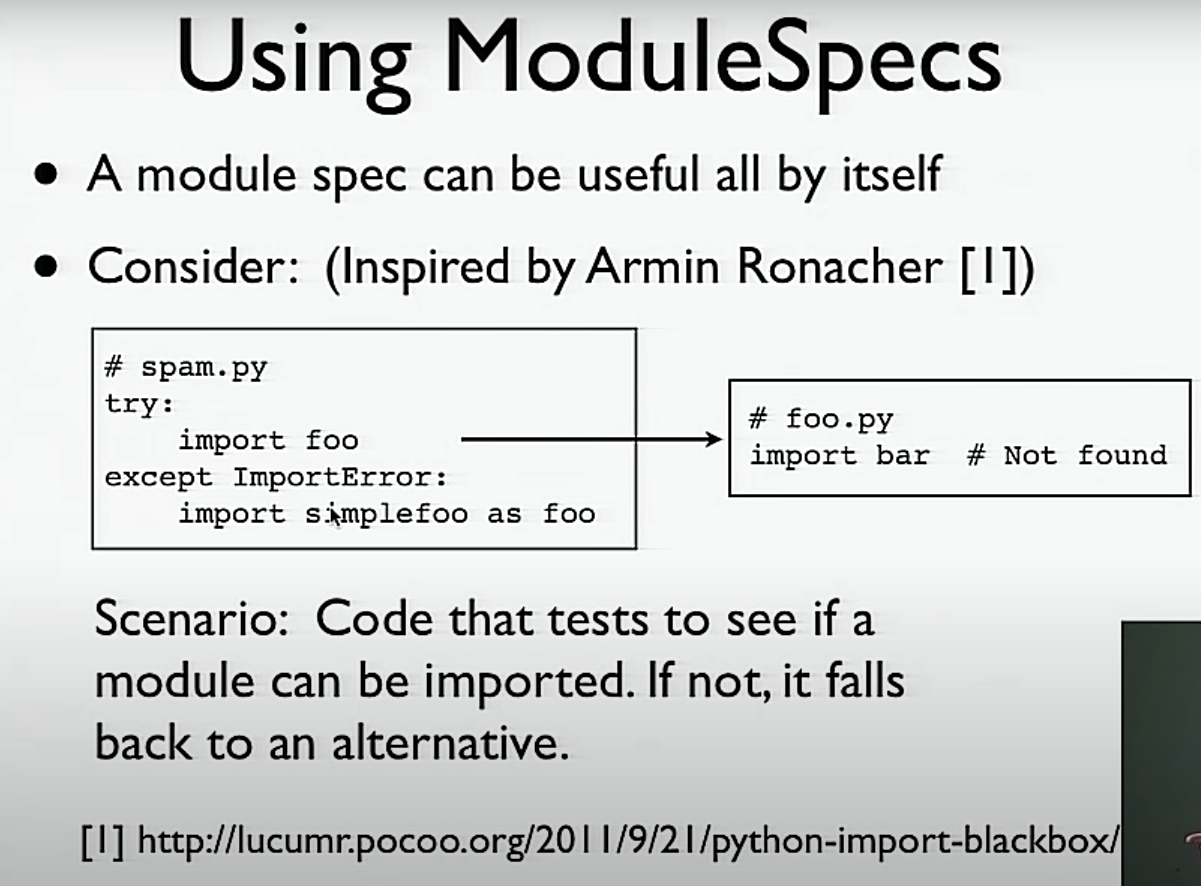
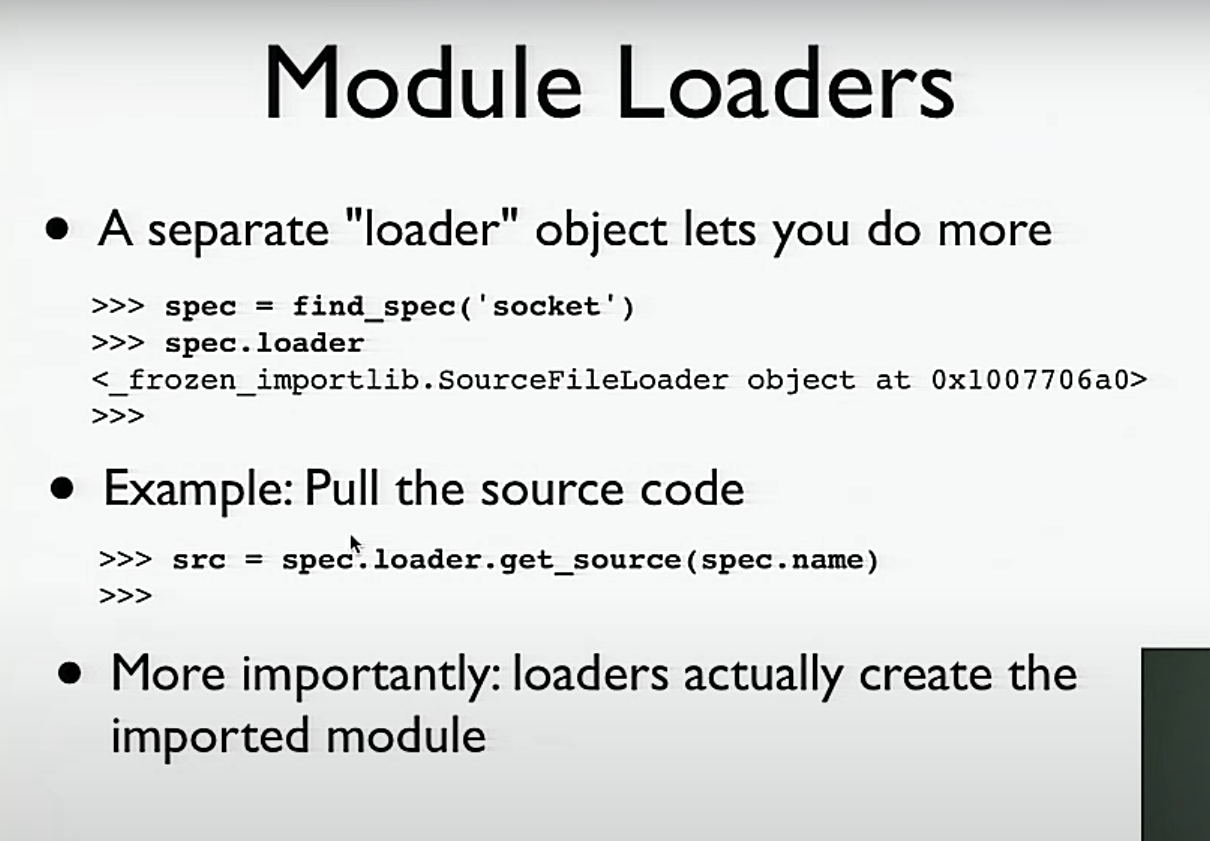
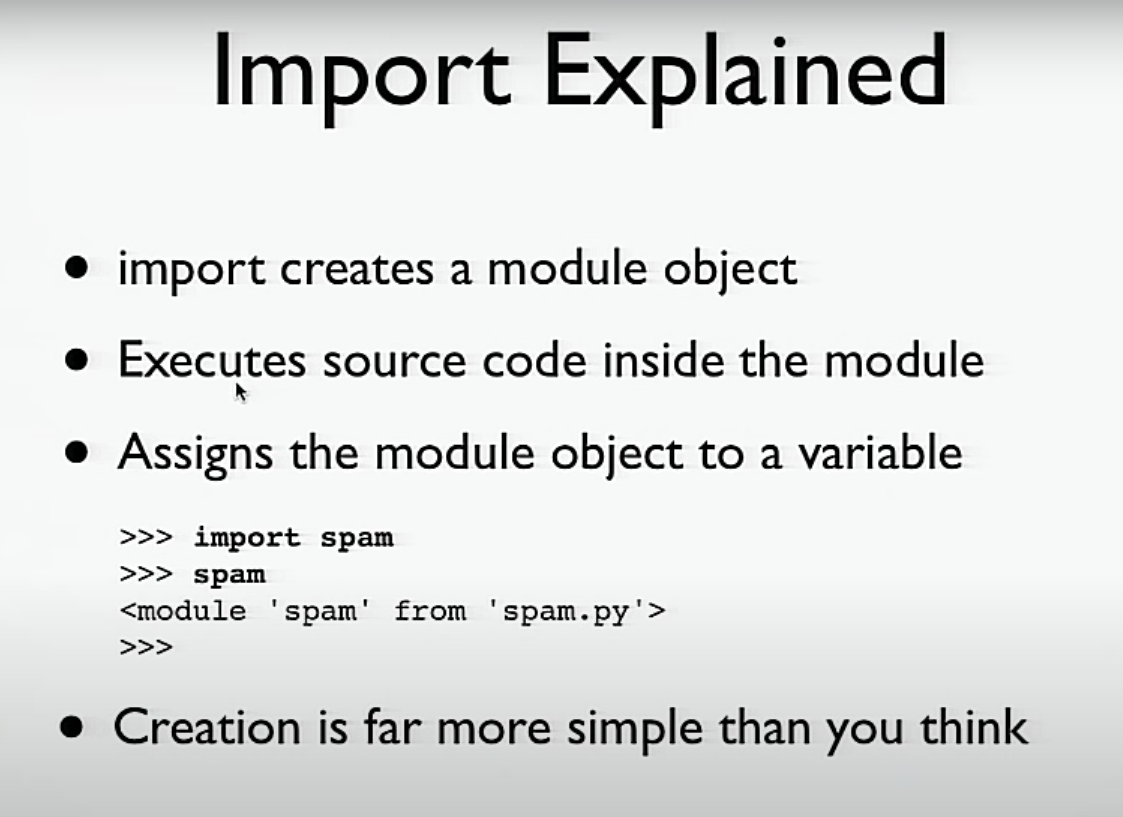
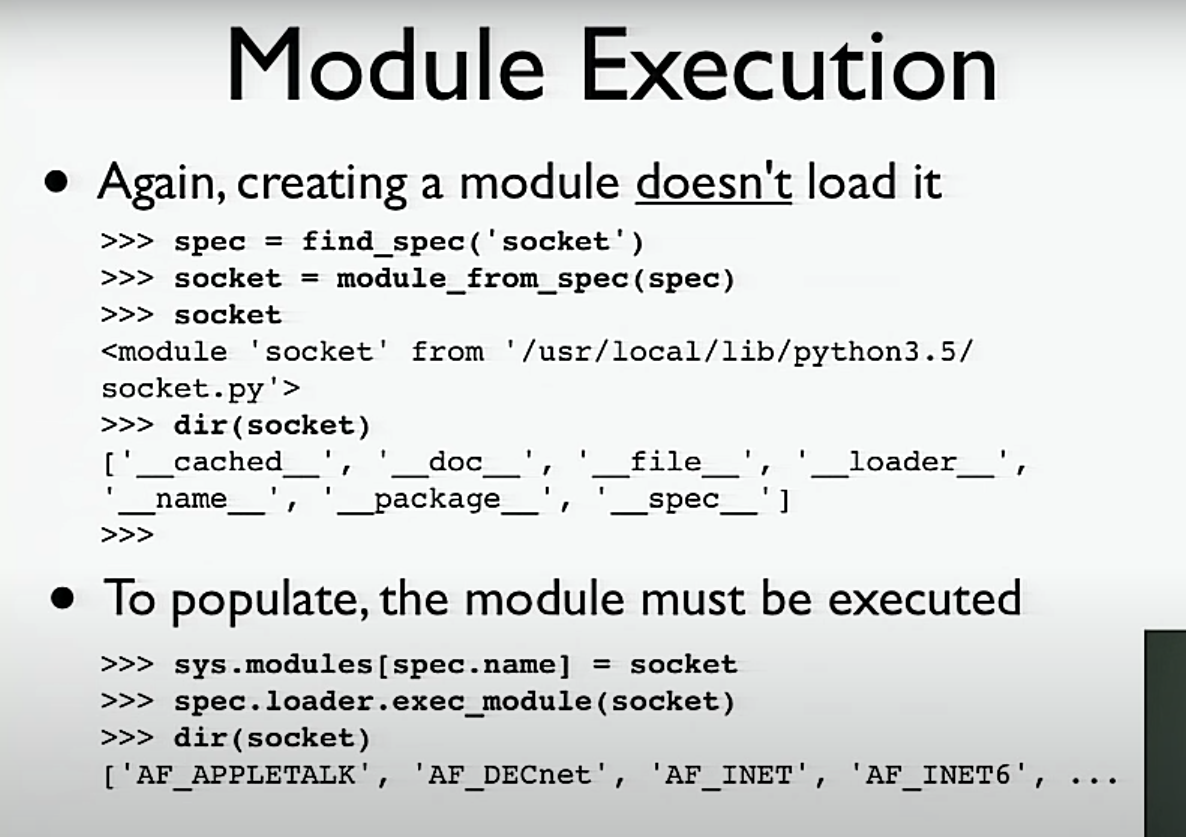
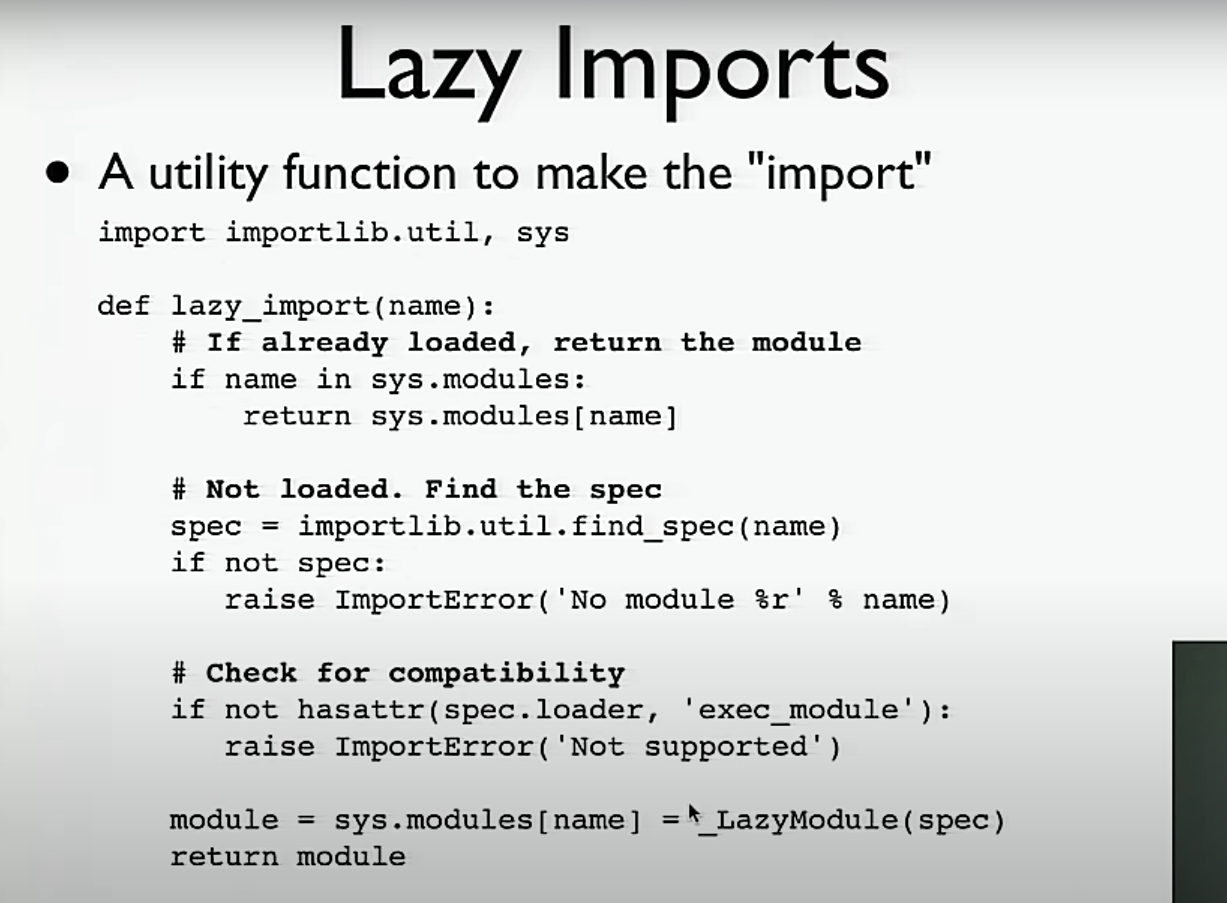
NOTE: You can “populate” a module you created with another module
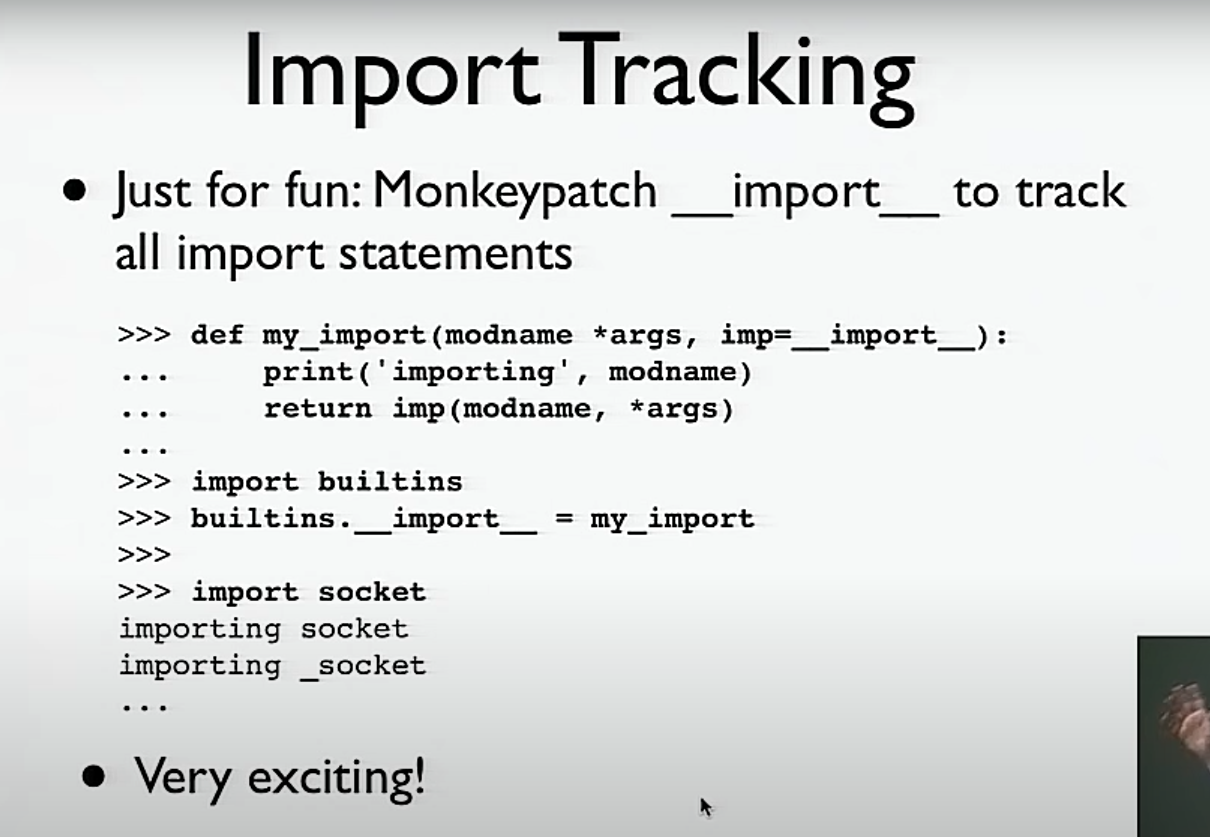
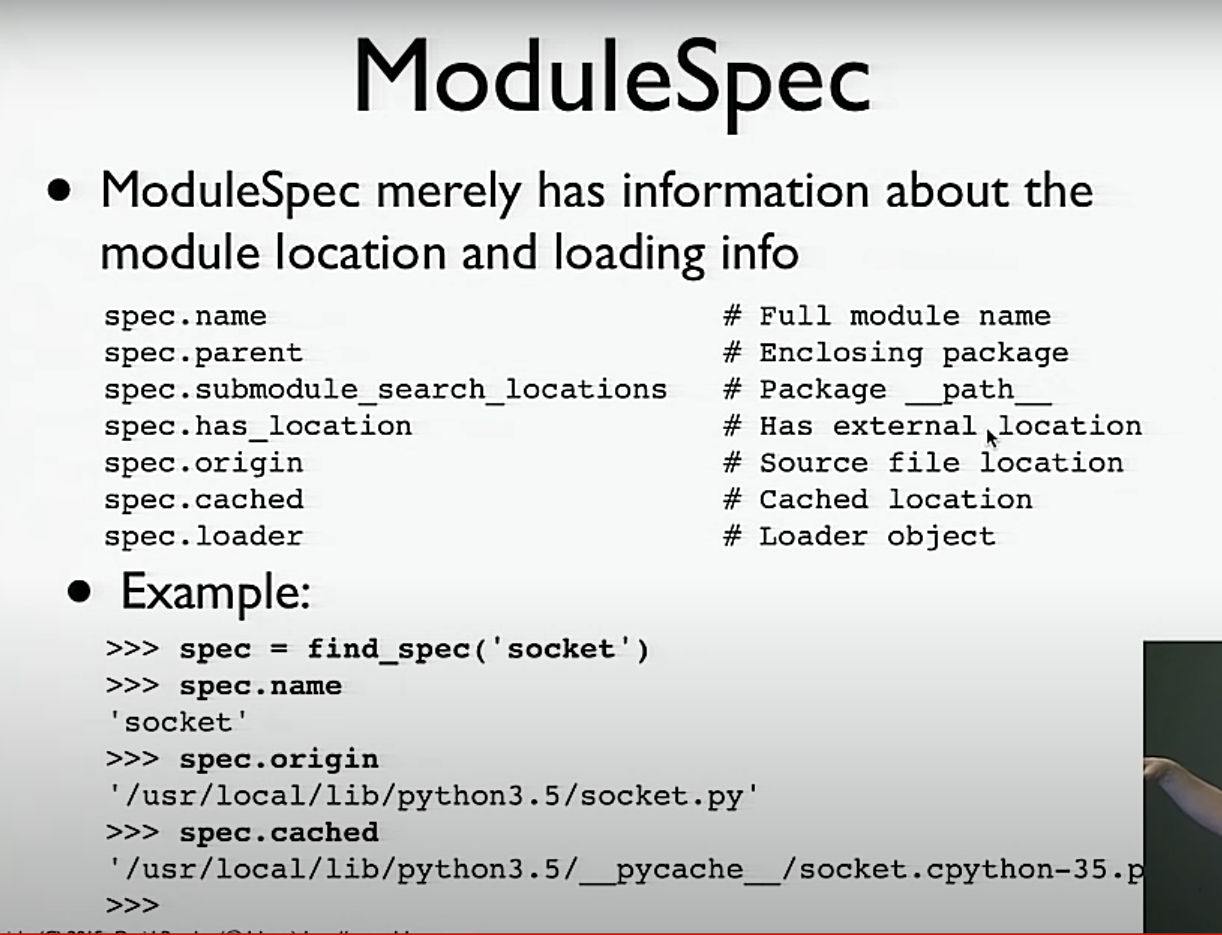
import types, socket
mod = types.ModuleType('my_socket')
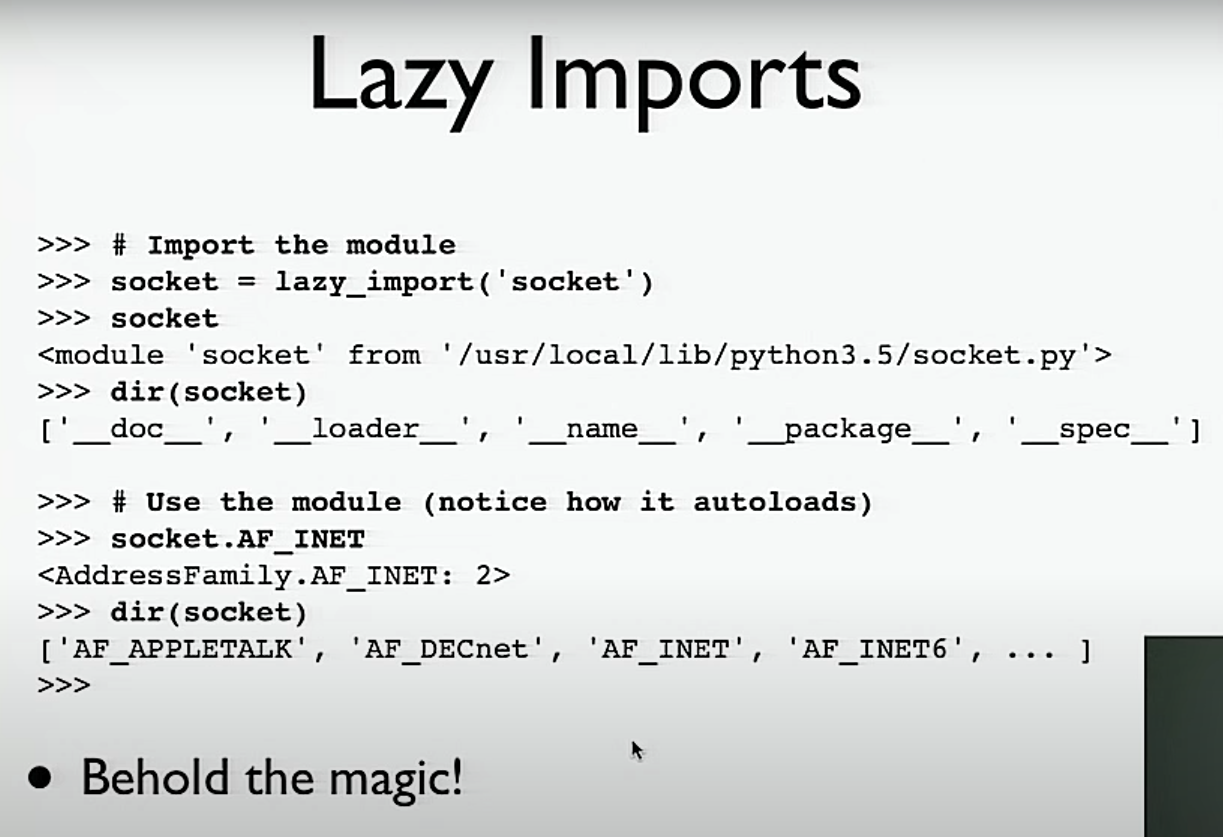
print(mod.__dict__)
# >> {'__name__': 'my_socket', '__doc__': None,  '__package__': None, '__spec__': None, '__loader__': None}
print(socket.loader)
# >> <_forzen_importlib.SourceFileLoader ...>
socket.loader.exec_module(mod)
print(mod.__dict__)
# now the mod.__dict__ is almost identical to the socket.__dict__ except for value in the '__name__'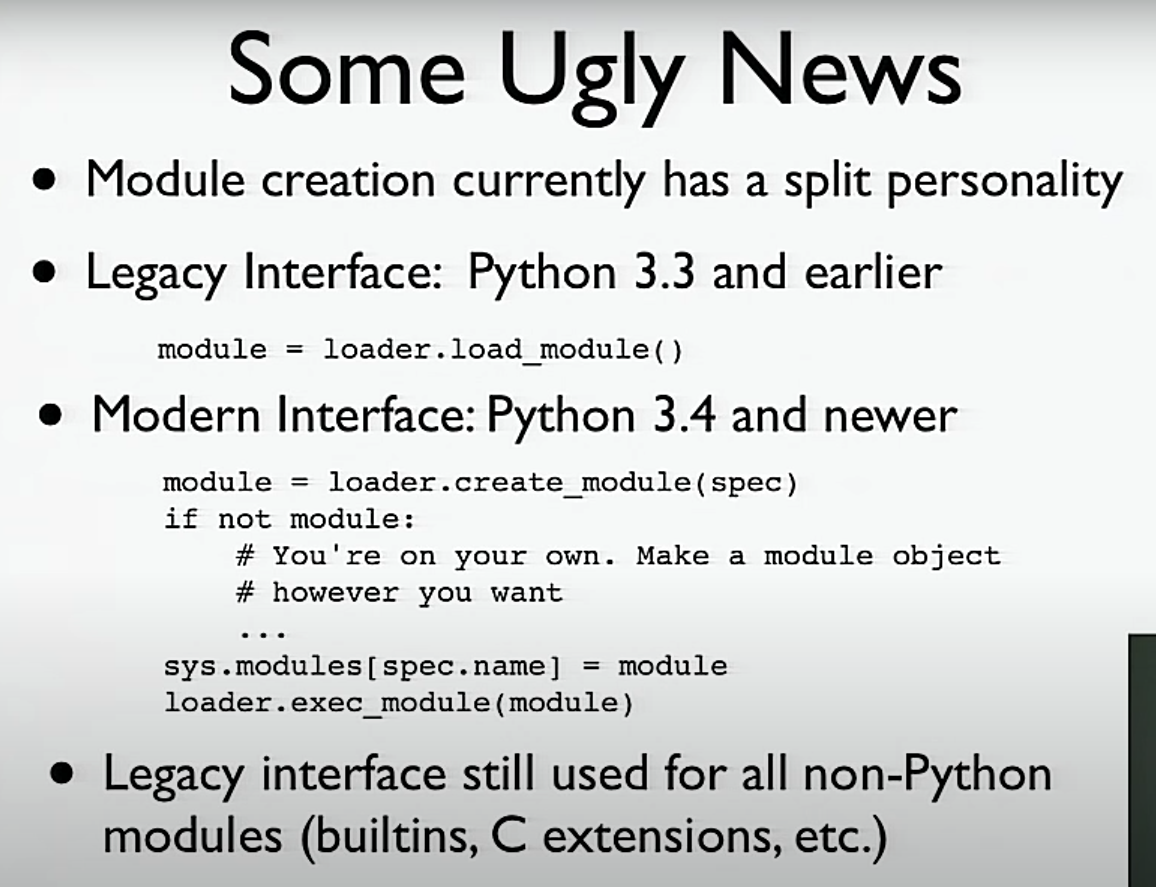
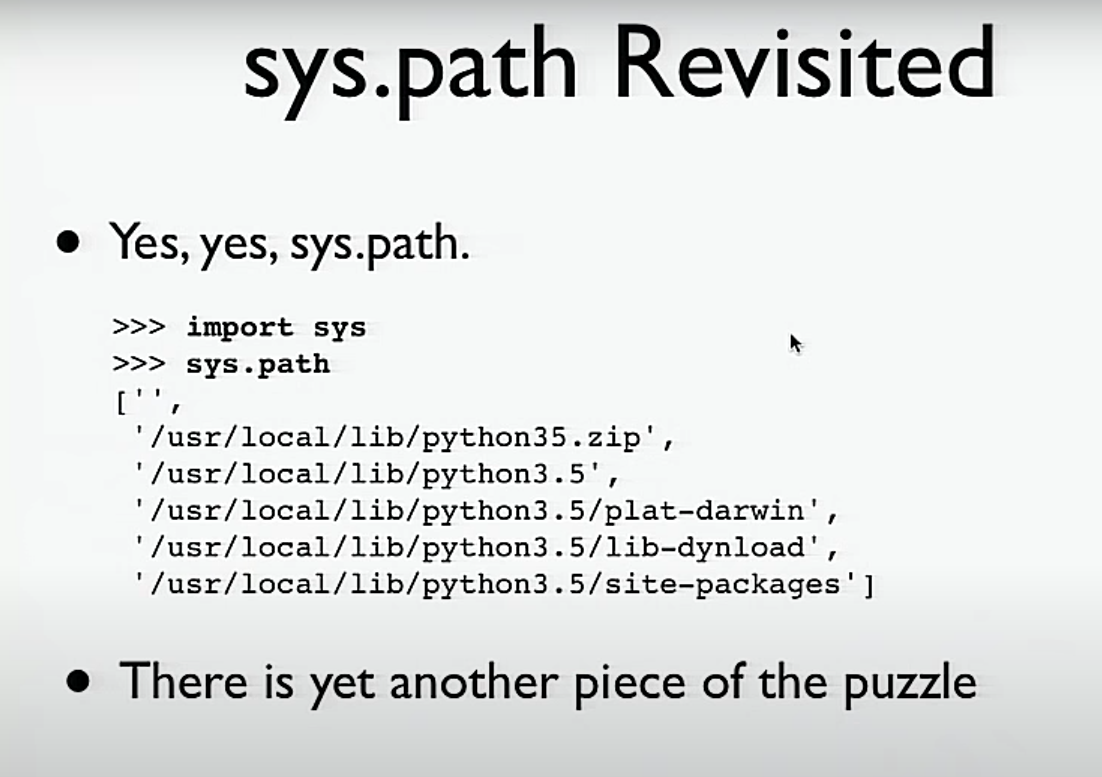
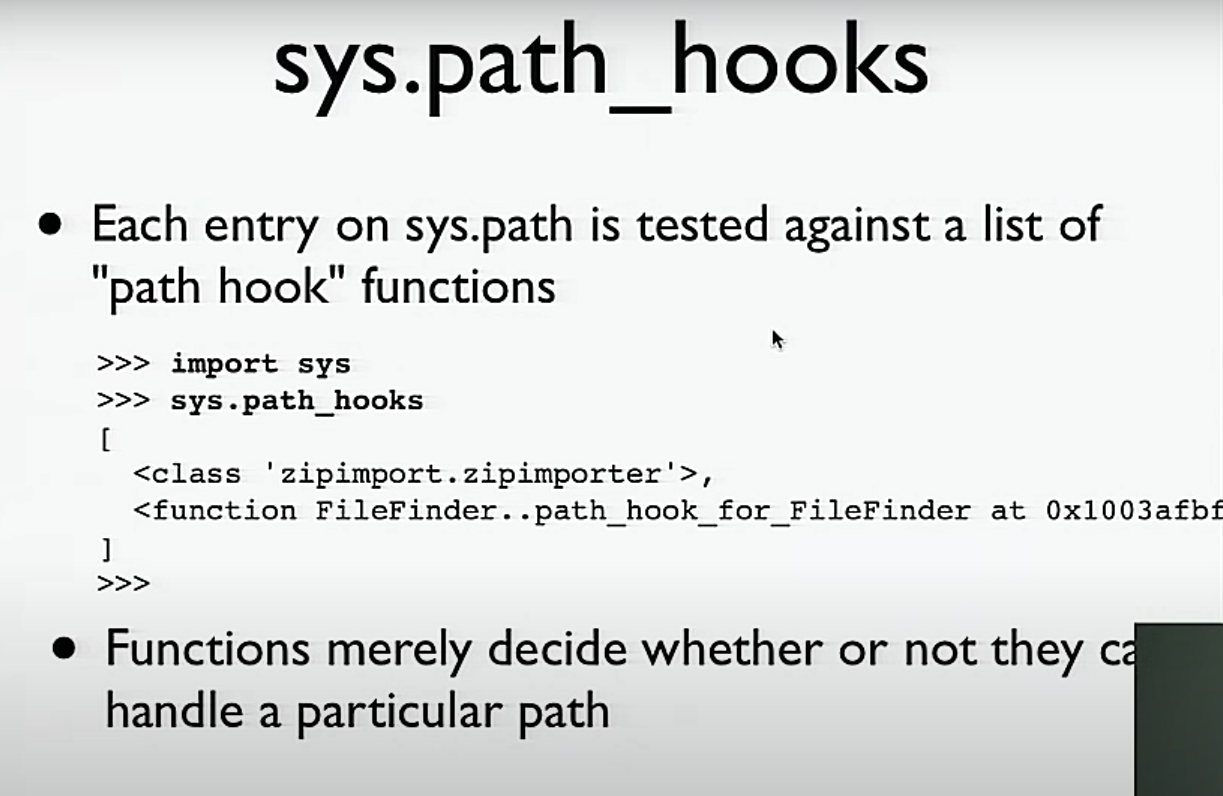
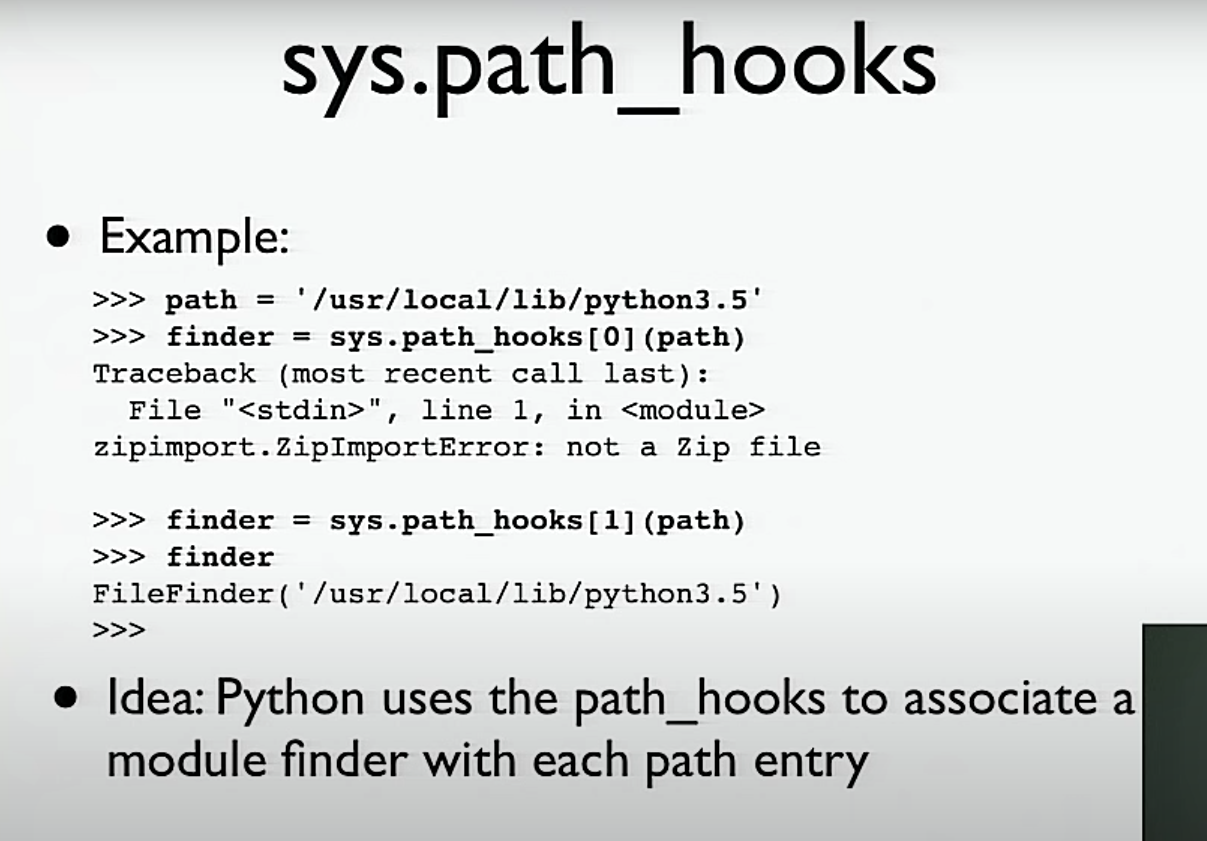
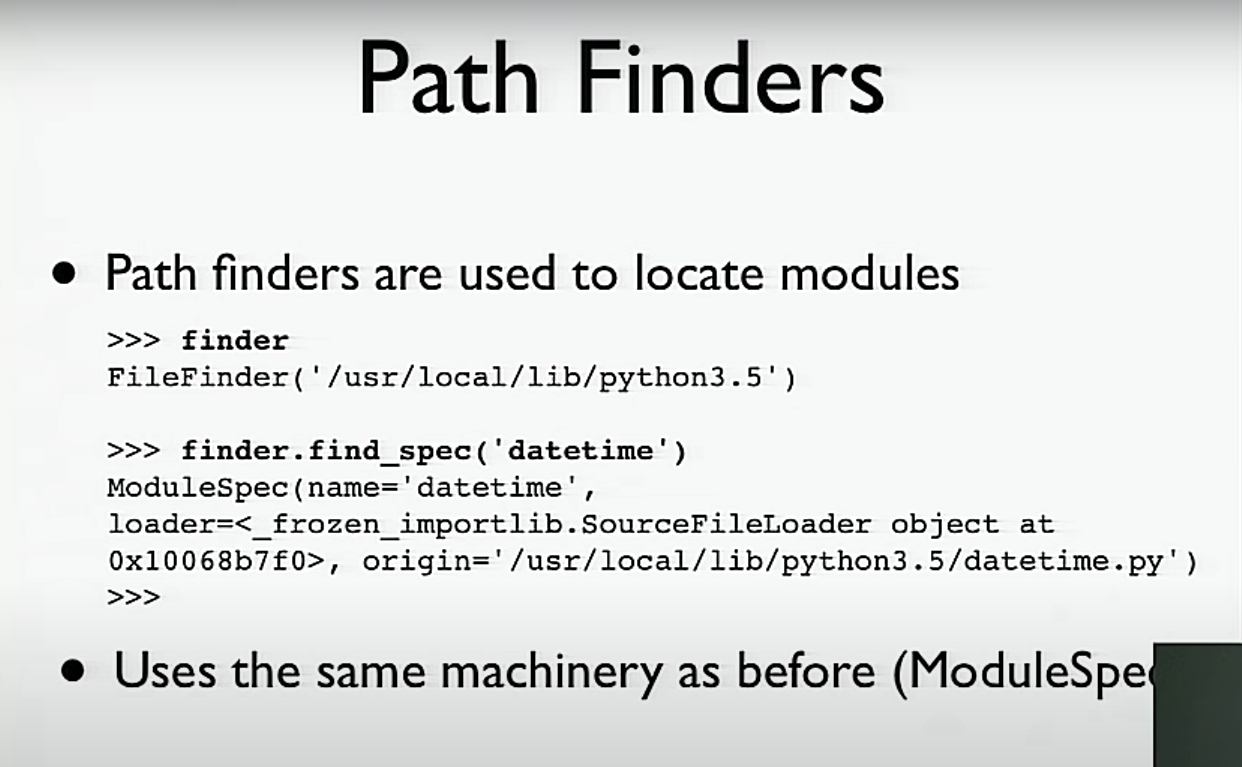
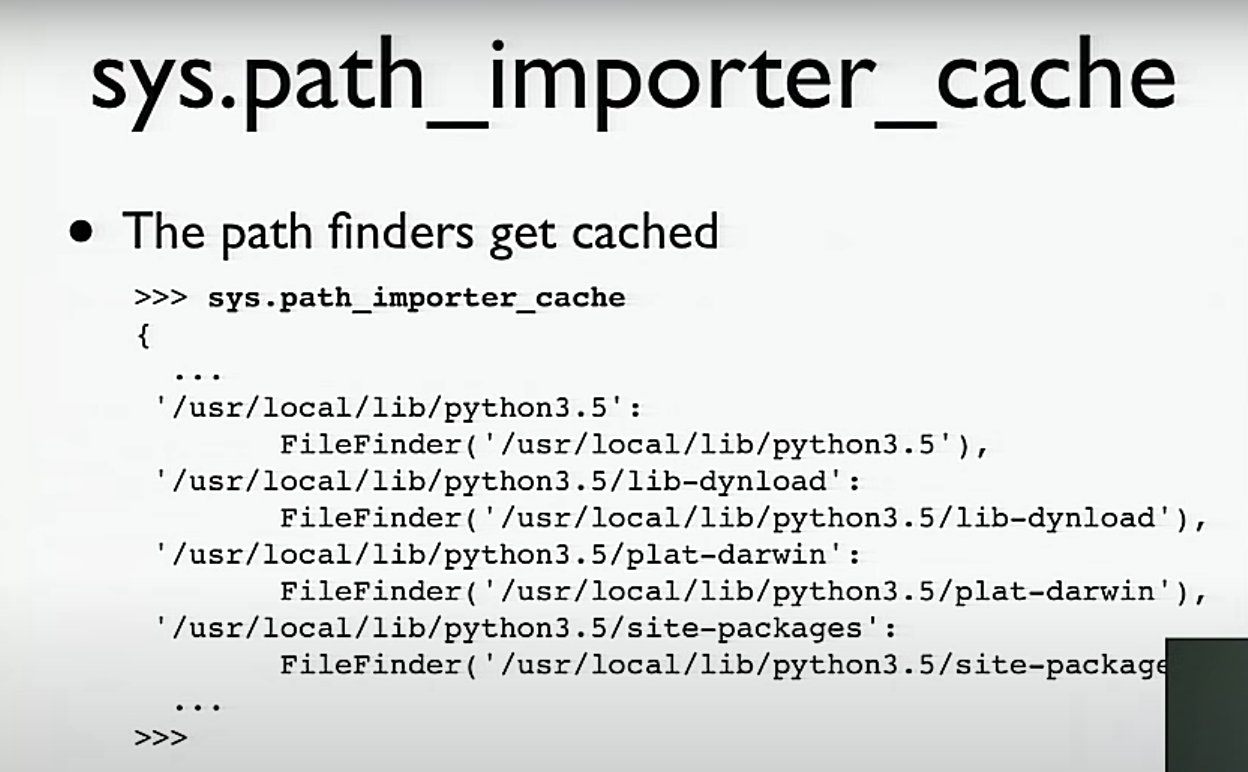
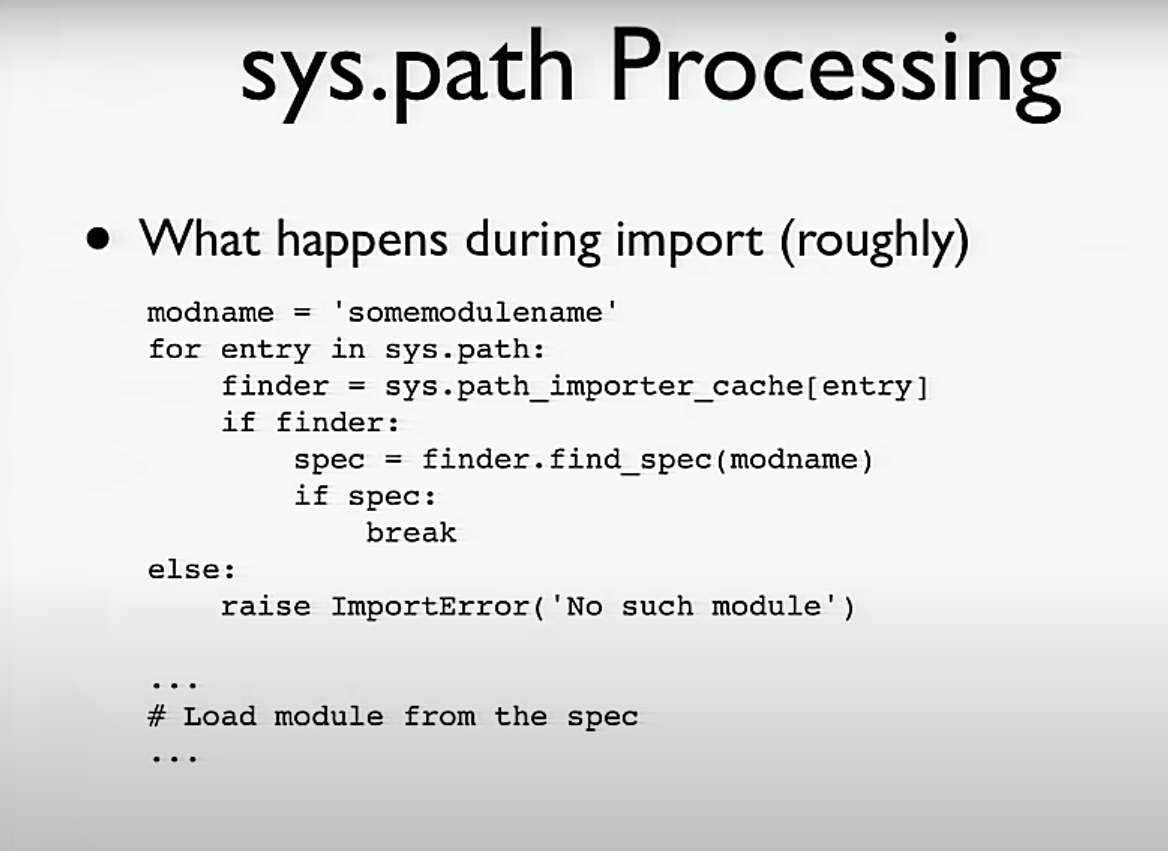
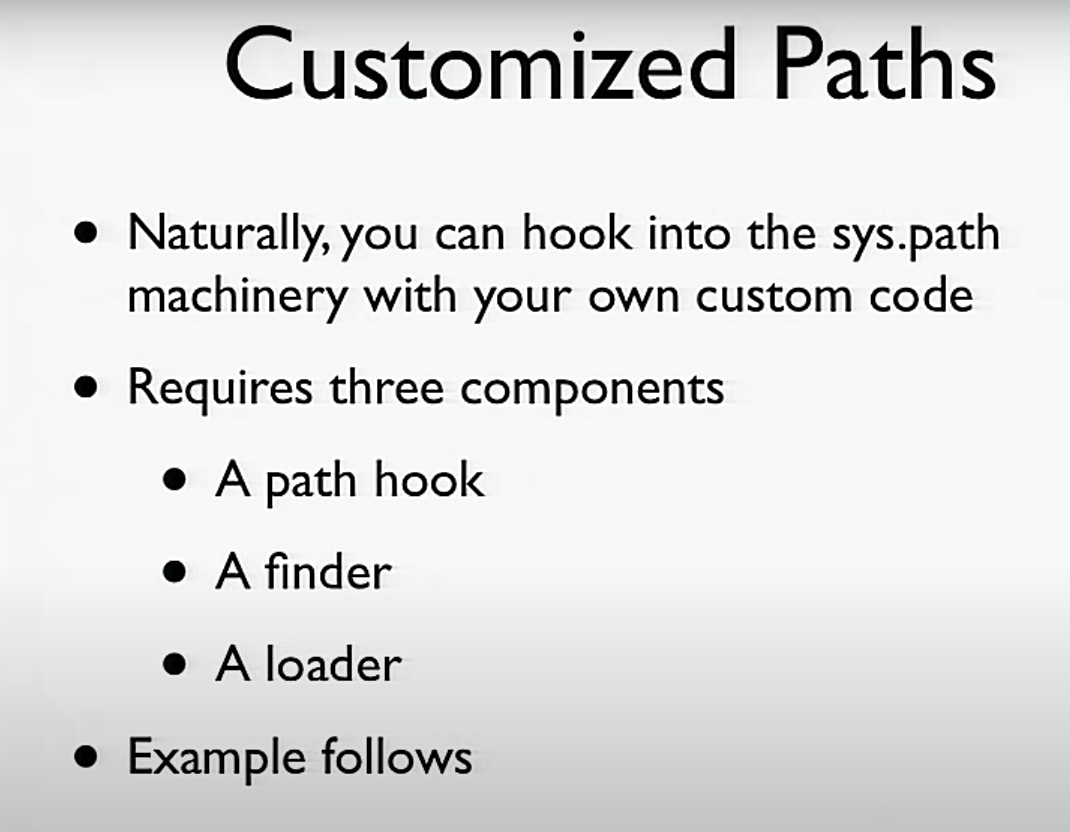
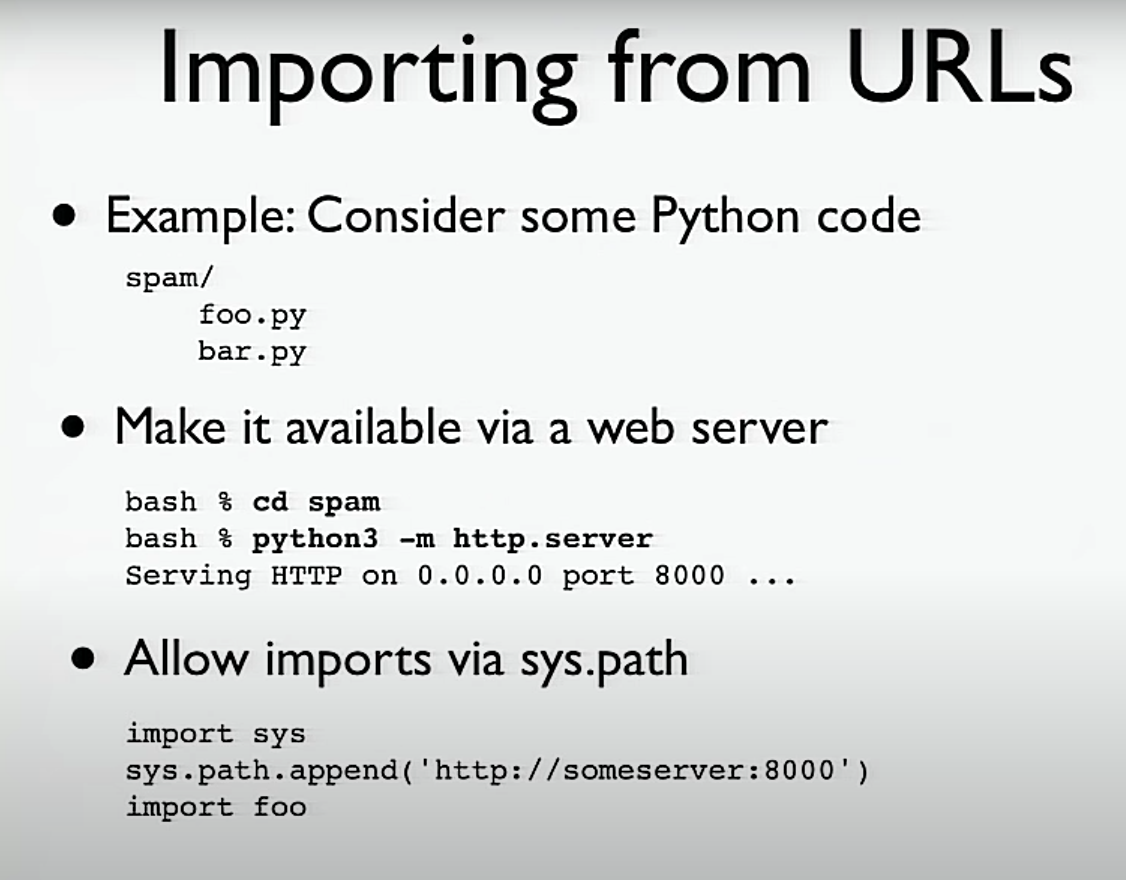
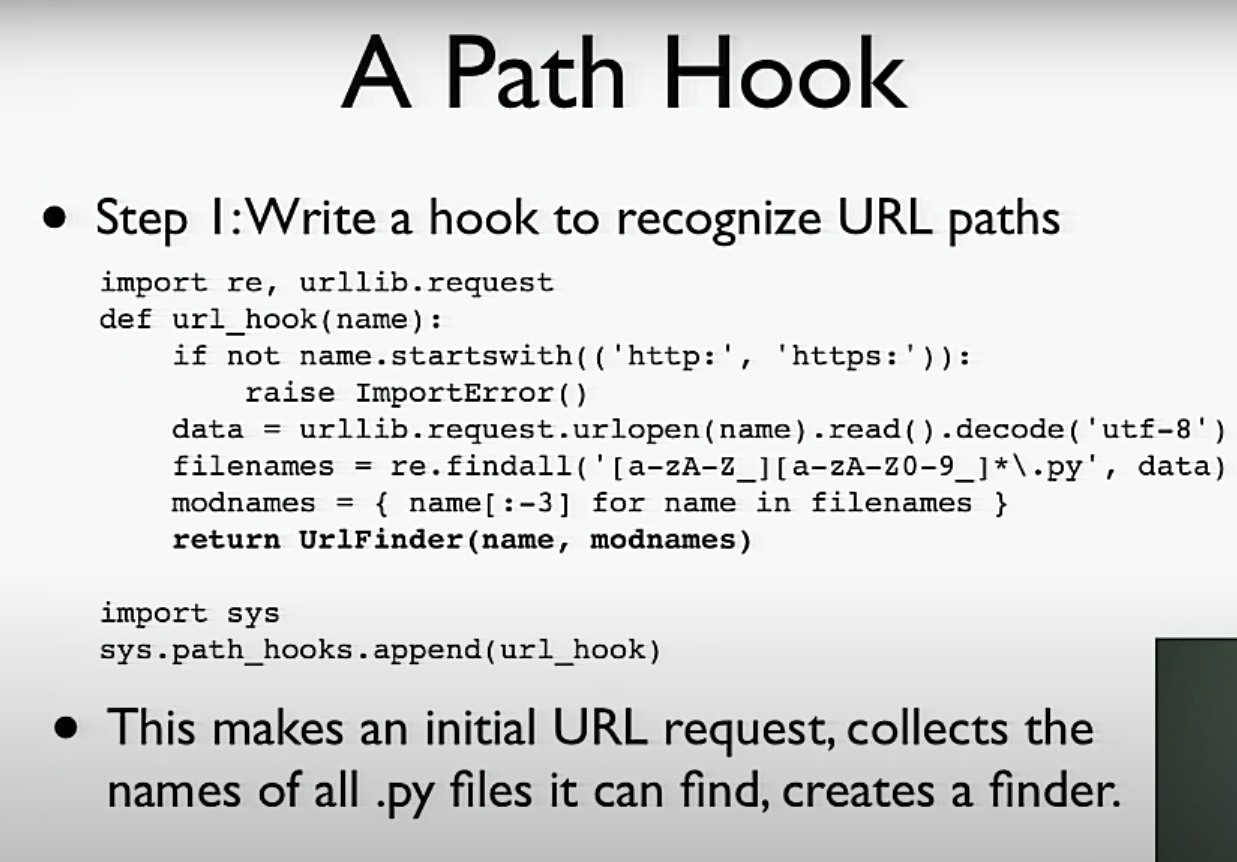
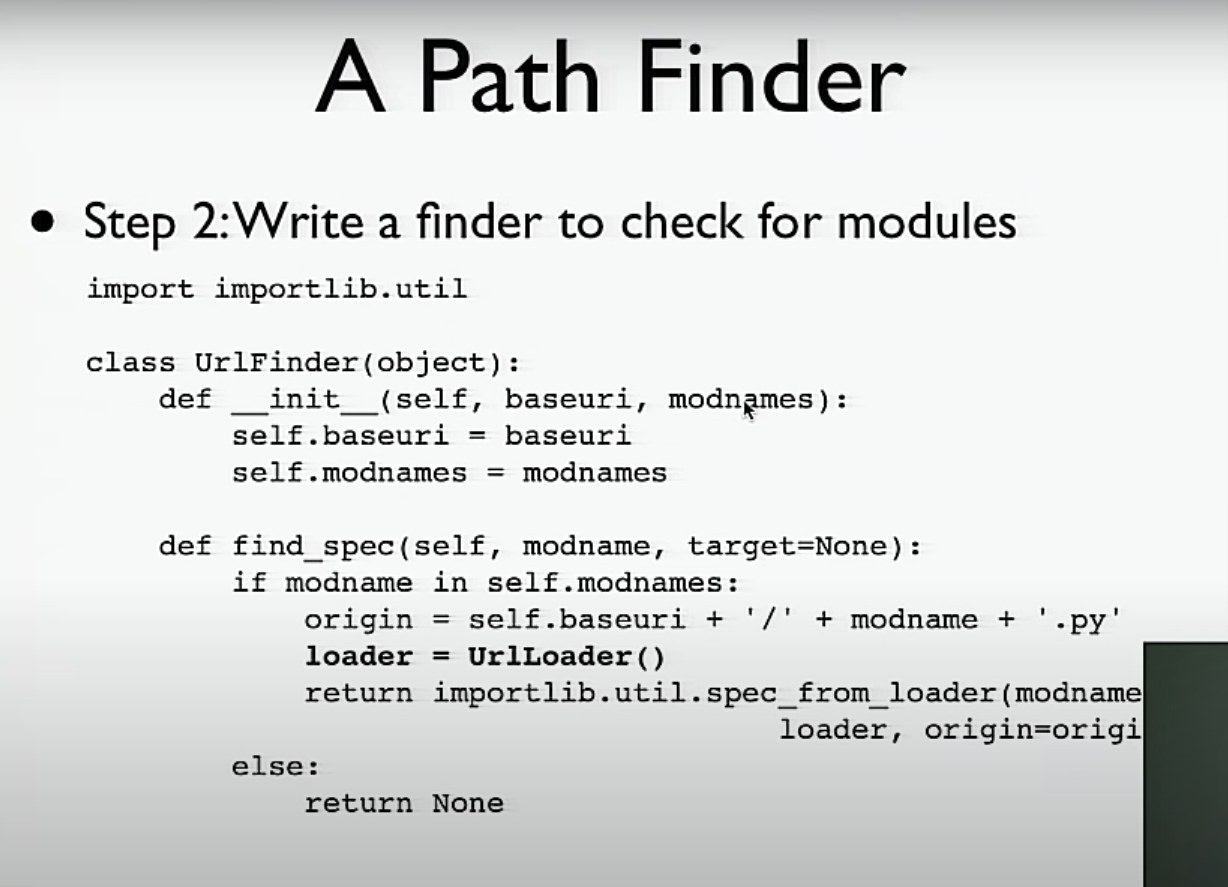
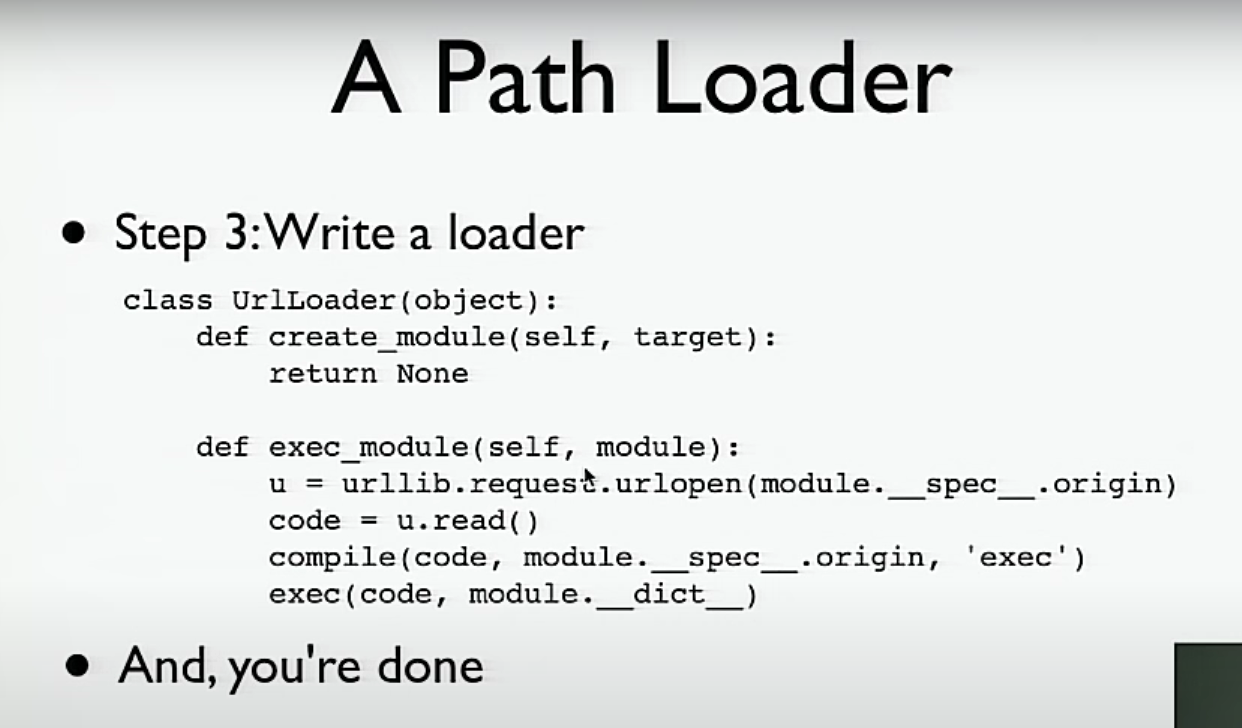
Part IX : Path Hooks
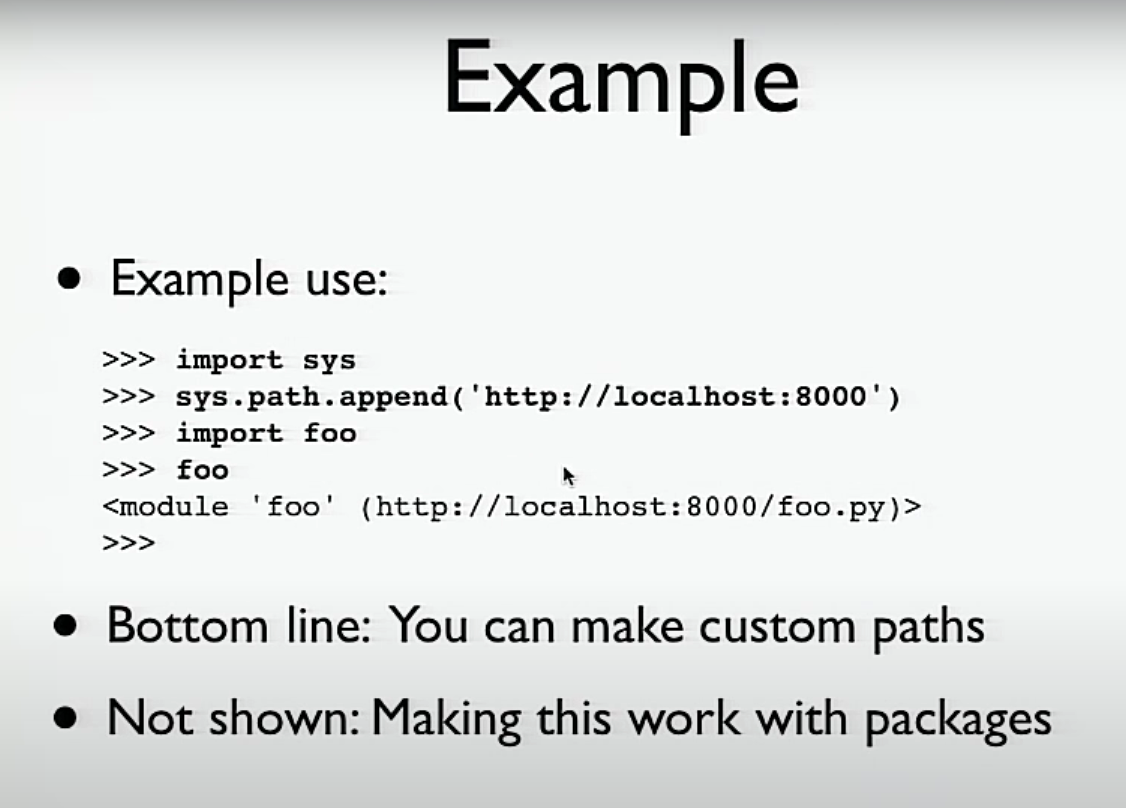
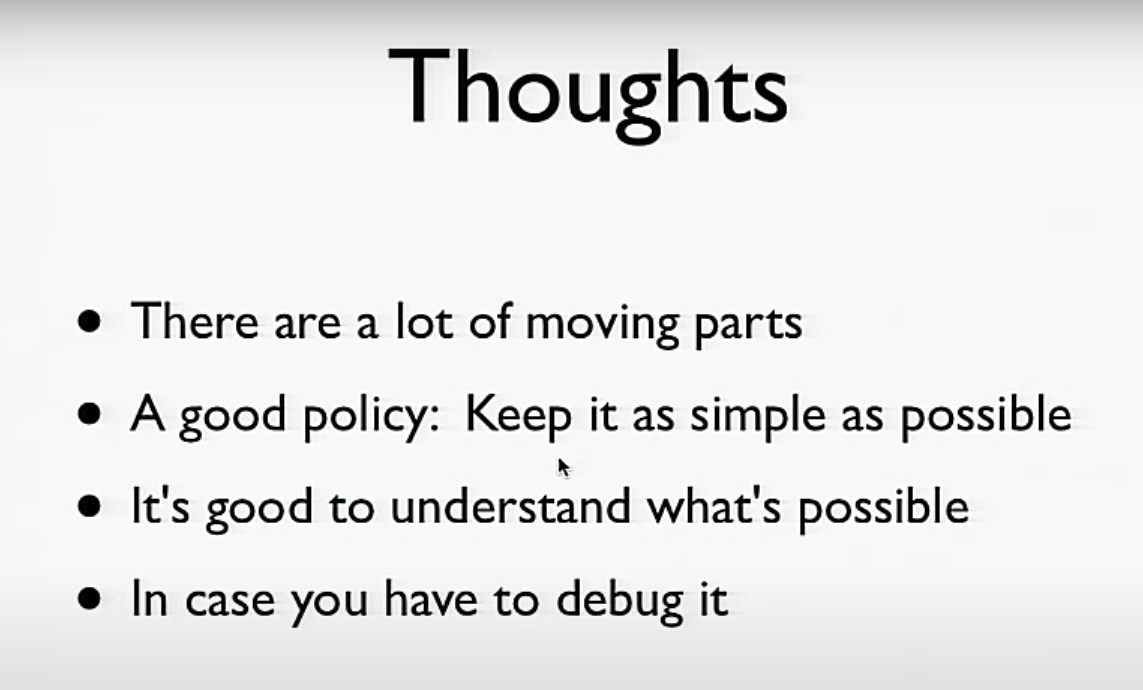
Part X : Final Comments
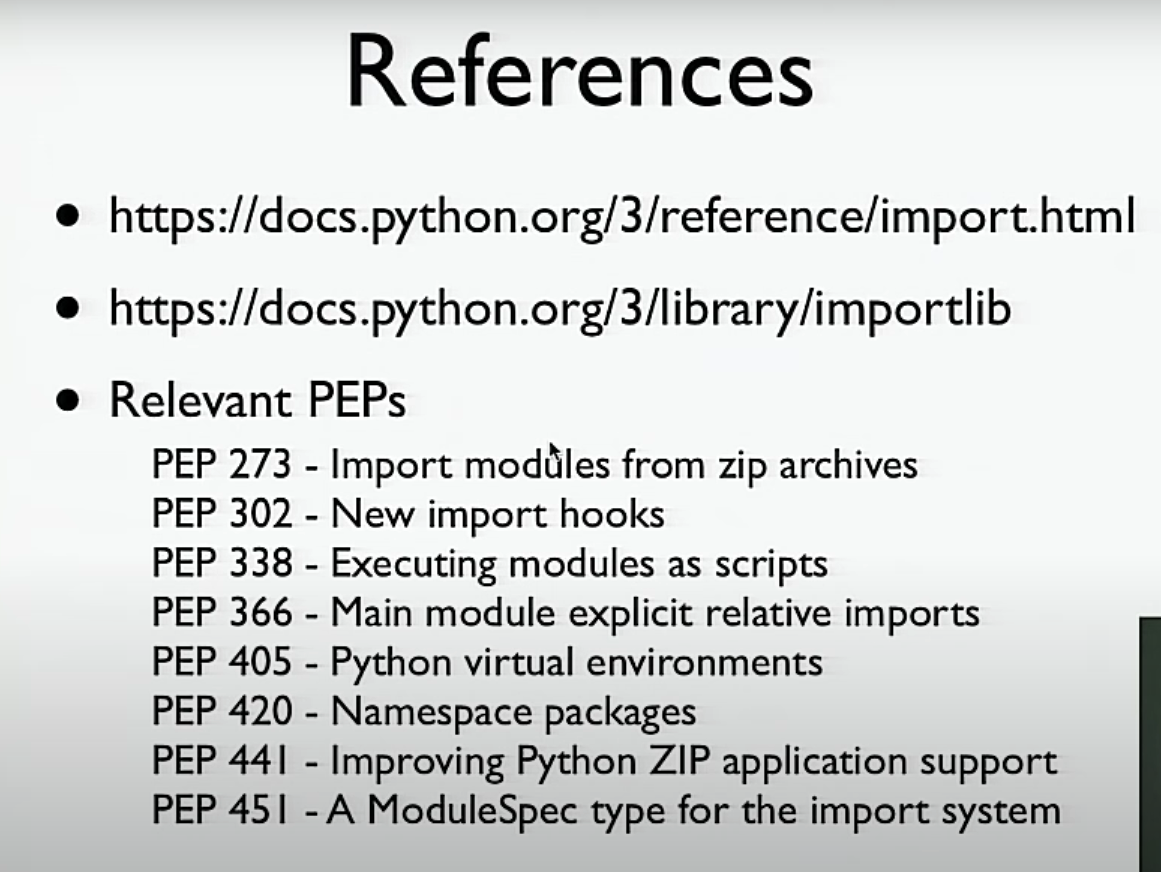
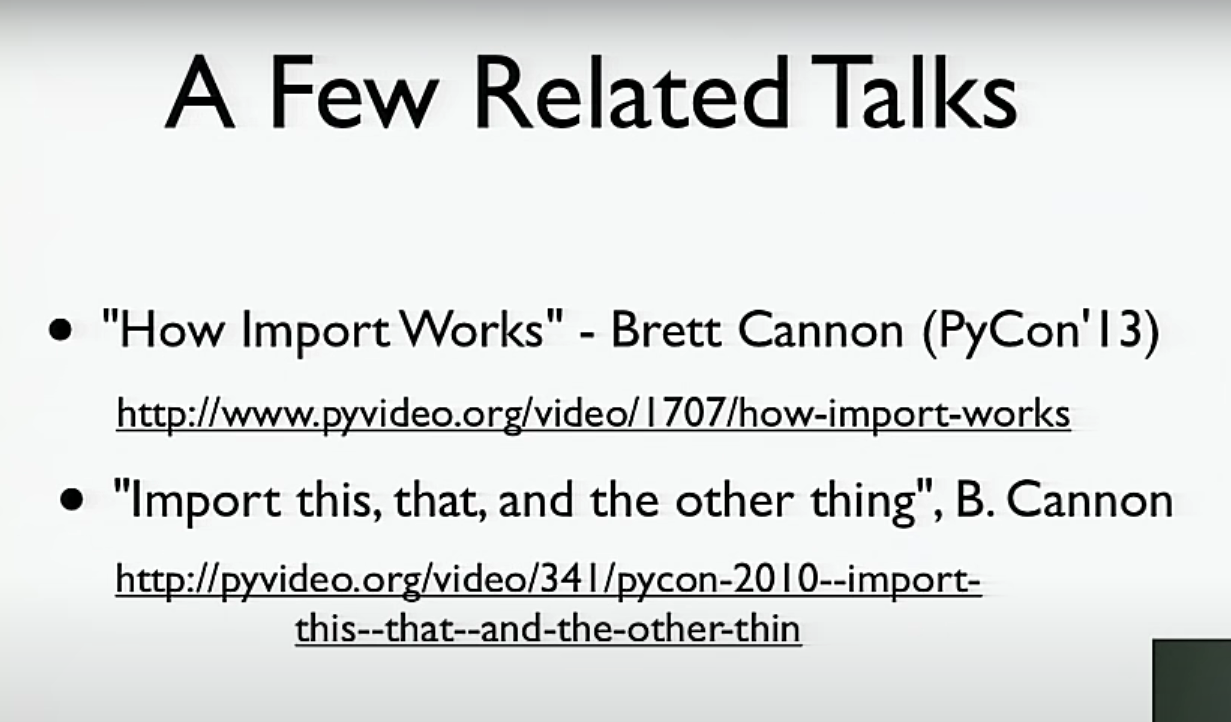
Online Resources:
THE BEST video on the topic i could find: Youtube by ‘Sreekanth’